
https://www.jpost.com/israel-news/politics-and-diplomacy/article-900236
Resurrecting Herodium: A royal desert fortress awakens After 2,000 years
.jpg)
Imagine standing in the heart of the Judean Desert, exactly where King Herod’s legendary palace once echoed with the sounds of a vibrant empire. This week, for the first time in two millennia, the ancient fortress of Herodium truly came back to life.
Drawing hundreds of attendees from across the globe, the site hosted the grand opening of the International Conference on Israeli Heritage and Antiquities in Judea and Samaria. Spearheaded by the Heritage Ministry, the evening transformed the monumental tomb and palace into a pulsating hub of culture, history, and national identity. It was a gathering of unprecedented scale, attended by Heritage Minister Amichai Eliyahu, the United States Ambassador to Israel, Mike Huckabee, alongside members of Knesset, international diplomats, and leading scholars.
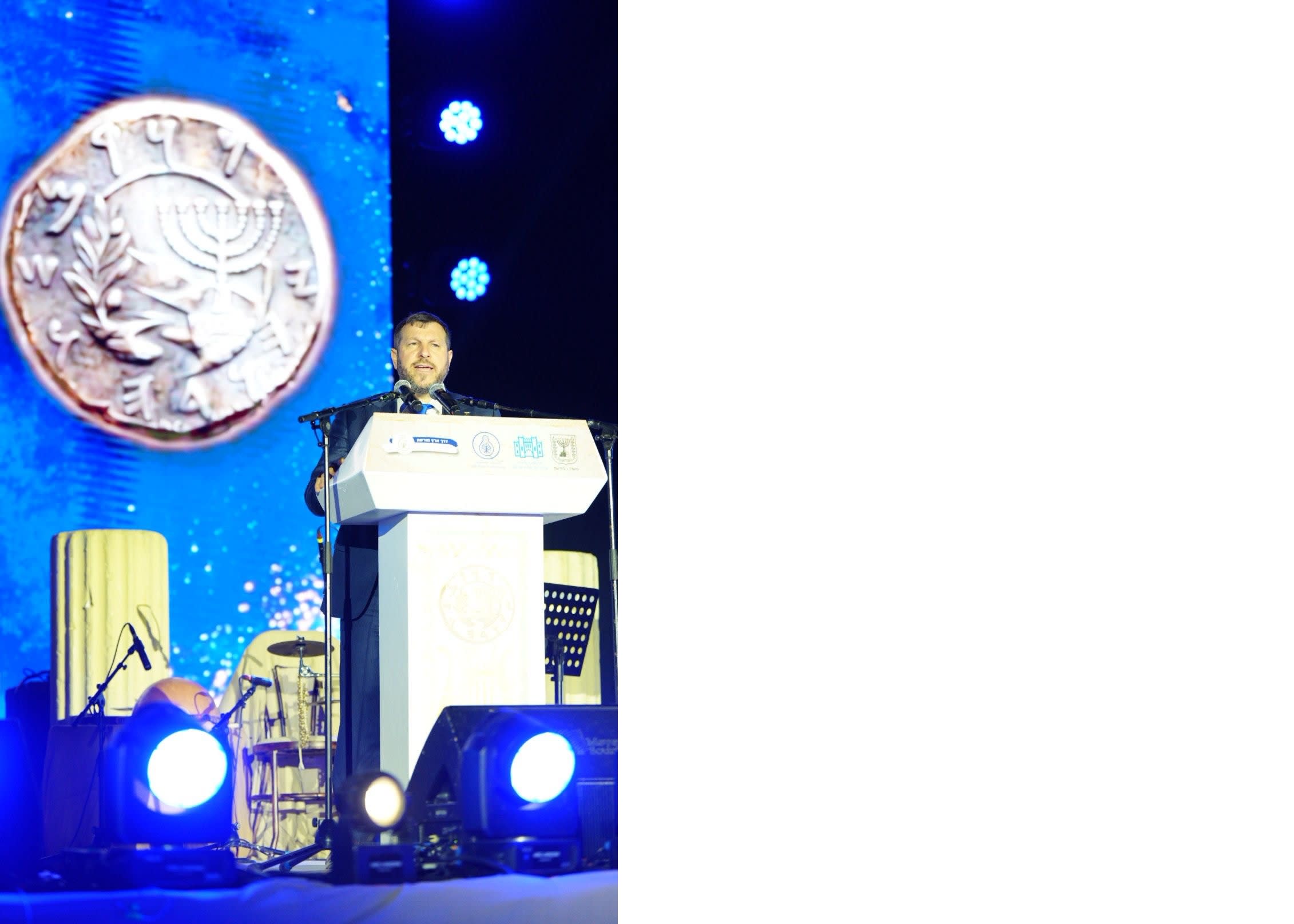
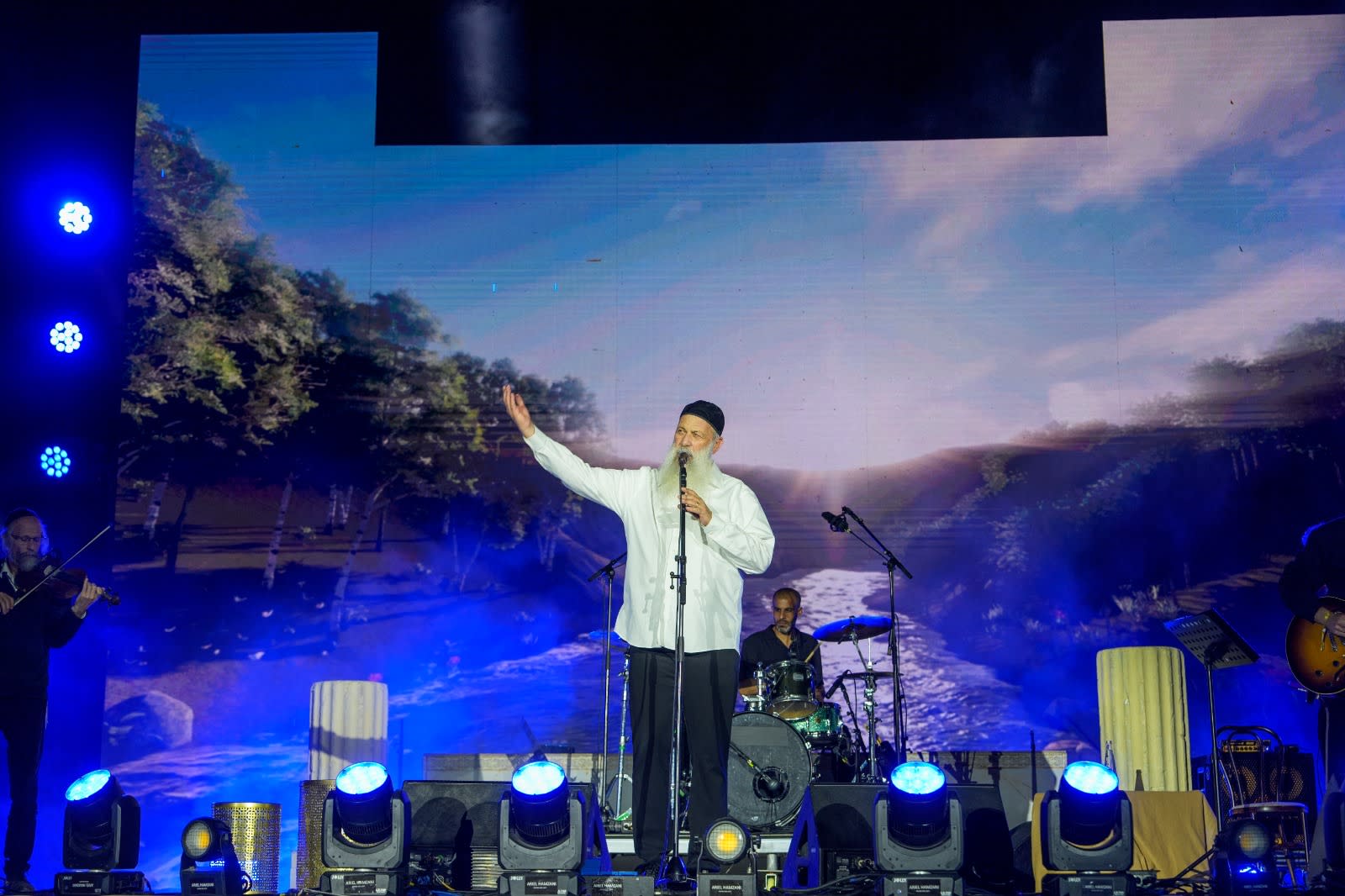
The crown jewel of the evening was a staggering, multi-sensory production titled “Herod VS Bar Kokhba: The Battle for Eternity.” Starring acclaimed actors Shuli Rand and Ron Shahar, the performance transported the audience back to antiquity. Through a dazzling combination of live music, street theater, pyrotechnics, and meticulous historical reenactments, dozens of performers resurrected the age-old tension between the might of the Roman Empire and the fierce Jewish quest for sovereignty. Experiencing this epic narrative on the very soil where these historical dramas unfolded added an electrifying layer of authenticity to the night.
This remarkable evening served as the flagship event for “Derech Eretz Moreshet” (The Path of Heritage), a visionary national project led by the Heritage Ministry. The initiative is investing substantial resources in the restoration, development, and accessibility of historical and biblical sites across Judea and Samaria. Far from treating these locations as mere archaeological ruins, the project reimagines them as premier educational, cultural, and tourism destinations. Herodium, where the grandiose vision of Herod intersects with the fierce legacy of the Great Revolt and the Bar Kokhba rebellion, stands as a shining centerpiece of this endeavor, designed to connect the public deeply with the foundational sites of history.
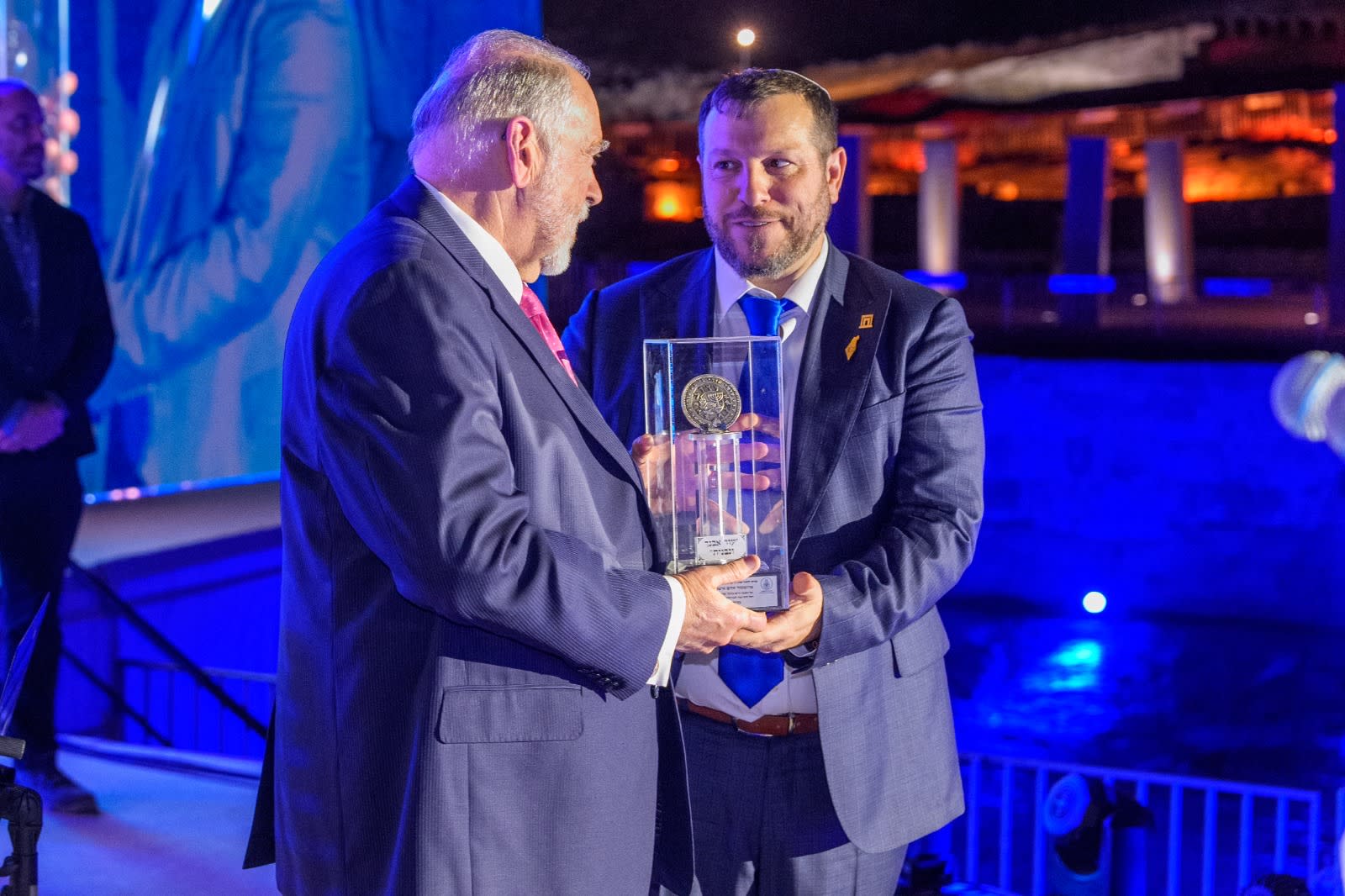
The international resonance of the initiative was underscored by the presence of U.S. Ambassador Mike Huckabee, who was awarded the Heritage Prize during the ceremony, for his dedication to strengthening ties to the region's historical roots.
“My job is to represent the United States to the Israelis, but it is also my job to represent the meaning of Israel to the U.S.,” Huckabee remarked to the crowd. “Your heritage is also our heritage; without your heritage, there is no heritage for the United States. The only way to erase Israel’s heritage is to close your eyes and plug your ears, because history is carved here into every rock.”
Heritage Minister Amichai Eliyahu echoed this sentiment of resilience and international partnership. “There are those who claim Israel is isolated and that relations with America are strained. Some turn to UNESCO and attempt to steal our history,” Eliyahu stated. “Today, they are invited to look at Herodium, at this international archaeological conference, and at a 2,000-year-old pool that has returned to life. This is our answer to those who try to weaken us from within and without, not with words, but with actions.”
As the conference continues this week, offering a robust itinerary of lectures, professional panels, and tours for global experts, the overarching message is clear. As Benny Har Even, Staff Officer for Archaeology, beautifully summarized: “Great things are happening in archaeology in Judea and Samaria. The earth continues to reveal the foundational chapters of Jewish history, artifact by artifact; the ancient roots are being brought back into the light.”
https://www.jpost.com/israel-news/politics-and-diplomacy/article-900236
History
Construction
In 40 BCE, after the Parthian conquest of Syria, Herod fled to Masada. On the way, at the location of Herodion, Herod clashed with Jews loyal to his enemy Antigonus, and emerged victorious. According to the Roman Jewish historian Josephus, he "built a town on that spot in commemoration of his victory, and enhanced it with wonderful palaces... and he called it Herodion after himself".[15]
Josephus describes Herodium as follows:
Archaeologists believe that the palace was designed by architects and built by slaves and paid workers (contractors). [citation needed] Herod was considered one of the greatest builders of his time and was not daunted by geography—his palace was built on the edge of the desert and was situated atop an artificial hill.[18] The largest of the four towers was built on a stone base 18 meters in diameter. This was most likely where Herod lived; he decorated his rooms with mosaic floors and elaborate frescoes. The other three towers, which consisted of living spaces and storage, were 16 meters in diameter. Outside, several cisterns were built to collect water that was channeled into the palace.
The city of Herodium served as a capital of a toparchy.[19][20]
Great Jewish Revolt
During the First Jewish–Roman War (66–73 CE), Herodium was held by Jewish rebels. At some point during the revolt, the fort's defenders transformed Herod's triclinium into a synagogue.[21][22] In 68 CE, rebel leader Simon bar Giora, then operating from nearby Teqoa, attempted to seize Herodium. He sent an emissary, Eleazar, to persuade the garrison to surrender, but the defenders uncovered the plot and expelled him. Eleazar then threw himself from the fortress ramparts.[23][24][25]
After the fall of Jerusalem in 70 CE, Herodium remained one of three major fortresses (alongside Machaerus and Masada) still under rebel control, though the specific faction holding it is uncertain.[25] By this time, the site appears to have been defended by a relatively small force, likely joined by refugees fleeing Jerusalem.[25] Herodium was ultimately captured, likely in early 72 CE, by the Roman legate Sextus Lucilius Bassus.[22][25] The fortress seems to have fallen rapidly, as Josephus provides only a brief mention of its surrender.[26][25]
Bar Kokhba revolt
At the beginning of the Bar Kokhba revolt sixty years later, Simon bar Kokhba declared Herodium as his secondary headquarters. The fortress was commanded by Yeshua ben Galgula, who was likely in Bar Kokhba's second or third line of command. Archaeological evidence for the revolt was found all over the site, from the outside buildings to the water system under the mountain. Inside the water system, supporting walls built by the rebels were discovered, and another system of caves was found. Inside one of the caves, burned wood was found which was dated to the time of the revolt.
As in other parts of Judea during the final stages of the Bar Kokhba revolt, the rebels active in Herodium likely sought shelter in nearby refuge caves, including the cave of El Matzia.[27]
Excavation history


Upper Herodium
The archaeological excavation of Herodium was begun in 1962 by Virgilio Canio Corbo and Stanislao Loffreda, from the Studium Biblicum Franciscanum of Jerusalem, and it continued until 1967: they discovered the upper citadel, at the top of the hill.[28]
Lower Herodium
From 1972, excavations were carried out by Ehud Netzer, working on behalf of the Hebrew University of Jerusalem, and they were intermittent until the archaeologist's death in 2010. Netzer excavated mostly the lower palace, at the base of the hill.
Description

Herod's hilltop palace
Herod the Great built a palace within the fortress of Herodium. Herod himself commissioned a lavish palace to be built between 23 and 15 BCE atop Herodium for all to see. The palace itself consisted of four towers of seven stories, a bathhouse, courtyards, a Roman theatre, banquet rooms, a large walkway ("the course"), as well as extravagant living quarters for himself and guests. Once Herod died and the Great Revolt started, Herodium was abandoned. The Jews eventually had a base at Herodium where they built a synagogue which can still be seen today, unlike much of Herod's Palace.[29]

Bathhouse
The Roman bathhouse consisted of three areas, the caldarium, the tepidarium, and the frigidarium. It also had a very impressive dome which is still in good condition today despite thousands of years of earthquakes and wars. The caldarium had vaulted ceilings, raised floors, and channels in the walls to conduct heat. The tepidarium had mosaic floors and frescoes just like the living quarters of the palace. The frigidarium, the last stop in the bathhouse, was where guests would cool off in a large pool.
Synagogue
During the First Jewish–Roman War, the defenders of Herodium repurposed an existing structure within the upper palace as a synagogue,[21] considered one of the earliest in the Levant. The original space, formerly Herod's triclinium, underwent renovations that involved installing benches along the walls and constructing a mikveh outside the entrance. There is minimal evidence regarding any alterations made by the defenders to the existing decor or furnishings, and the space essentially functioned as a simple communal hall. The entrance faced eastward, while Jerusalem lay almost due north. The repurposed synagogue lacked specialized features commonly found in synagogues, such as a niche for housing the Torah scrolls and a reading desk.[21]
Theatre
Netzer discovered the Roman Theatre just before his death in late 2010. The royal theatre was uncovered near the base of Herod's tomb. The theatre contained an elaborately decorated loggia, or a theatre box, was discovered. This means that when Herod or other notable officials went to see a play, they would receive luxury treatment. The rest of the audience would be seated below on benches that could accommodate about 450–650 people. What is quite unique about this find is that frescoes of landscapes were discovered, of a kind suggesting that the painters were well travelled; they depict scenes of Italy and even the Nile River in Egypt. It is also assumed that the painters were on loan to Herod from Caesar in Rome.[30][31][32]
Pilate ring
In 1968–1969, during excavations directed by archaeologist Gideon Foerster, at a section of Herod's burial tomb[dubious – discuss] and palace hundreds of artifacts were found, including a copper alloy ring. The ring was overlooked but in 2018 it was given a thorough laboratory cleaning and scholarly examination. At the center of the ring is an engraved krater, or amphora similar in style to the monumental urn (handleless amphorae or acroteria) of Herodium[33] which is encircled by "partly deformed" Greek letters spelling out "of Pilates" in Greek. Although scientists were not sure about who is the "Pilates" mentioned on the ring, media published that it could have possibly belonged to Pontius Pilate. Archaeologist Roi Porat said that all explanations are equally possible for the owner of the ring: "It was important to publish a careful scientific article, but in practice we have a ring inscribed with the name Pilate and the personal connection just cries out."[34][35][36] While much of the debate has focused on the Greek name inscribed on the ring, the image is of equal significance and may further support that this was the ring used by Pilate's administrative assistant for sealing documents for Pilate. The image on the ring is possibly associated with Roman religious ceremonies (i.e., suovetaurilia, bacchanalia) and the imperial cult that were characteristic of the images on the coins that Pilate had minted during his term as governor.[33]
https://en.wikipedia.org/wiki/Herodium


No comments:
Post a Comment