Thursday, 11 March 2021

Britain backs most of the world’s repressive regimes, new analysis shows


Britain backs most of the world’s repressive regimes, new analysis shows


By Phil Miller• 11 March 2021


Egyptian police training in 2019. (Photo: EPA-EFE / Khaled Elfiqi)


More than half of the countries in the world rated as ‘not free’ are ruled by regimes that the British government supports.

Freedom House, a Washington-based think tank funded almost entirely by the US government, published a report last week designating 64 of the world’s 210 countries or territories as “not free”.

More than half of them are ruled by regimes supported to varying degrees by the United Kingdom, Declassified has found.

Britain sells arms, provides security training or has troops deployed to at least 36 of the countries listed as “not free”, comprising 56% of the total.

The regimes range from absolute monarchies to those run by authoritarian leaders who hold unfair elections or subject territories to military occupation.

The findings undermine the British government’s constant claim to be a “force for good” in the world. 

Boris Johnson’s 2019 election manifesto said “our alliances with like-minded democracies” were a reason “for the UK to hold its head high”.

Freedom House ranks countries according to their electoral systems, freedom of speech and rule of law.

Although many of the countries listed by the think tank as “not free” are opposed by the UK — such as Russia, China, Syria and Iran — most are UK allies.

These include Gulf regimes like Saudi Arabia, Bahrain and the United Arab Emirates, as well as Egypt, Turkey, Uganda, Rwanda, Azerbaijan, Uzbekistan and Brunei.

Anyone opposing authoritarian rule in these states — whether political activists, human rights advocates or journalists — is vulnerable to being killed, kidnapped or sentenced to jail.
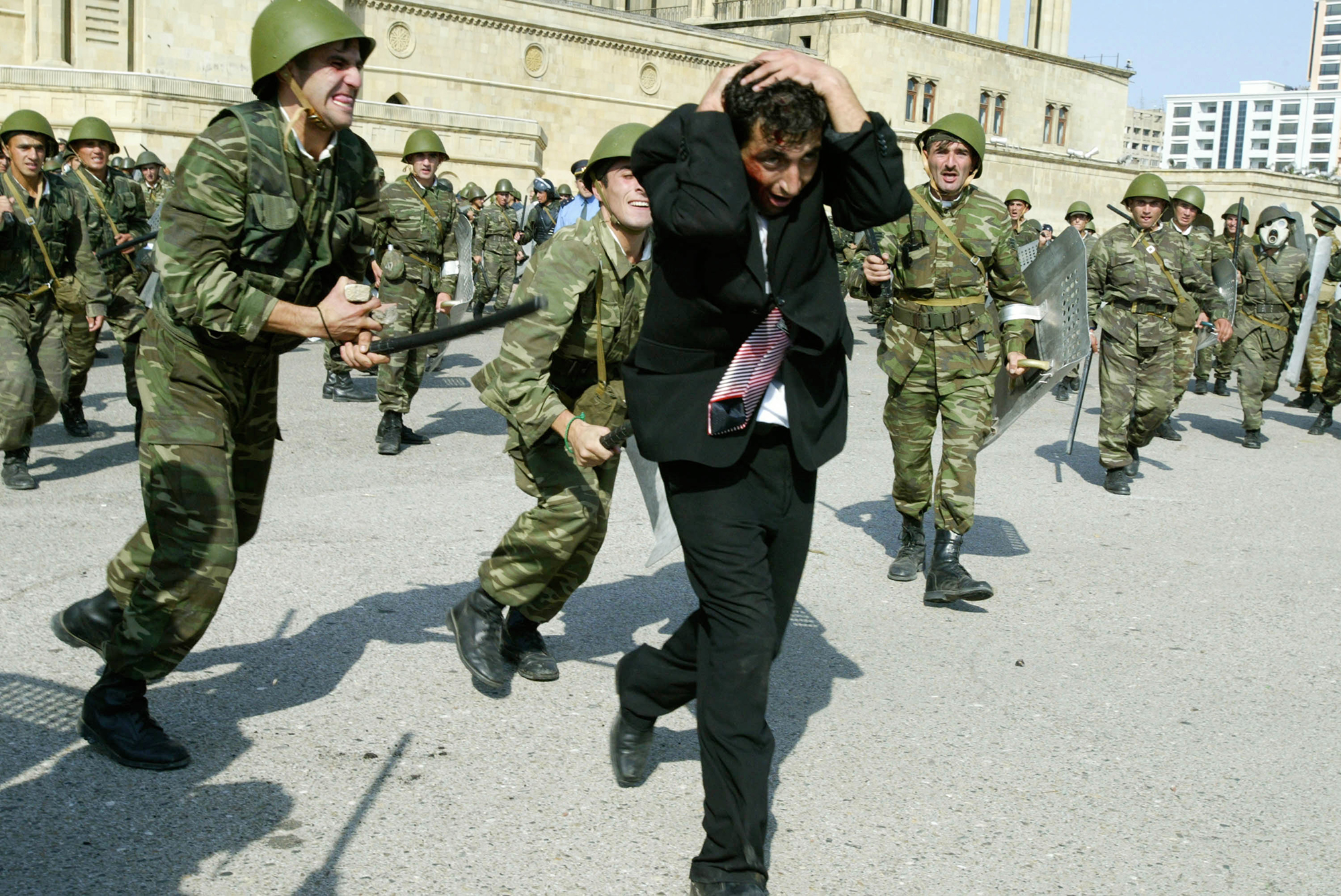
Soldiers in Azerbaijan beat an opposition supporter after Ilham Aliyev won unfair elections in 2003. The same ruler remains in power today (Photo: Oleg Nikishin / Getty Images)

‘Not free’

Africa has a number of countries designated as “not free” where regimes receive strong UK support.

One is Egypt’s military junta, which has arrested as many as 60,000 political prisoners since overthrowing the country’s democratically elected President Mohamed Morsi in 2013.

Morsi died after being put on trial and his son Abdullah is believed to have been assassinated by poisoning. Last year Egypt hanged 152 prisoners, including activists from Morsi’s party, the Muslim Brotherhood.

The central African country of Rwanda has a draconian president, Paul Kagame, who is a close friend of Tony Blair and won his last election with 98% of the vote.

Kagame runs a police state that pursues critics beyond its borders. His regime kidnapped a leading dissident from Dubai and put him on trial in Rwanda’s capital Kigali last month.

The dissident, Paul Rusesabagina, was portrayed in the film Hotel Rwanda as helping to save more than 1,000 people during the Rwandan genocide. 

The 66-year-old businessman is now charged with “terrorism and murder” over his support for an armed opposition group and could spend the rest of his life in prison.

Front row from left: Egypt’s President Abdel Fattah al-Sisi, British Prime Minister Boris Johnson and Rwanda’s President Paul Kagame at the UK Africa Investment Summit in London, 2020. (Photo: EPA-EFE / Hollie Adams)

In the Sahara desert, another African state, Mali, fell from “partly free” to “not free” after a military coup toppled its elected government last August. 

Britain stepped up its engagement in Mali after the coup, deploying 300 troops to the country on a UN counter-terrorism mission. 

Other African countries rated “not free” include Cameroon, where Paul Biya has ruled the country “with an iron fist” since 1982 and acts as a president-for-life. This week the UK government signed a £200-million trade deal with his regime.

Biya’s troops receive British military training — despite him admitting they killed civilians in English-speaking parts of Cameroon where there is a separatist movement.

In Europe, Freedom House rates Turkey — a Nato member and close UK ally — as “not free”, owing to the authoritarian policies of its president, Recep Tayyip Erdoğan.

On Monday 8 March, Boris Johnson spoke to Erdoğan by telephone and agreed to increase military cooperation between the two countries.

Erdoğan’s government has put more journalists behind bars than any other country in the world. Many of them come from Turkey’s Kurdish minority.

Elif Sarican from the Kurdish Peoples’ Assembly, a grassroots group based in the UK, told Declassified that repression in Turkey should “outrage anyone who believes in even the most basic level of democracy”.

She said: “Particularly for the Kurdish people, Turkey has never been a haven, but the past decade has made it impossible for political representation and social expression on any level. 

“Elected mayors and MPs are consistently and systematically removed from their posts and arrested, to be replaced with government trustees.” 

Sarican added: “It is a shame and disgrace that the UK government not only stays silent on these atrocities, but actively supports and signs trade deals with Turkey in the name of a post-Brexit Britain.” 

‘Abominable stain’

The Middle East has a particular panoply of “unfree” countries ruled by dictatorships receiving an array of British military, diplomatic and intelligence support. 

Just this week, Bahrain’s king was pictured with what Declassified has identified as a British-made sniper rifle — the same type of weapon his troops allegedly used to shoot protesters during the 2011 Arab Spring uprising.

The king’s highly repressive regime, which is closely allied to the UK and houses a British naval base, is accused of beating child protesters arrested last month and threatening them with “rape and electric shocks”.

Sayed Ahmed AlWadaei of the Bahrain Institute for Rights and Democracy said: “A police officer who threatens a 13-year-old with rape or electric shocks from a car battery is an abominable stain on Bahrain’s reputation.”
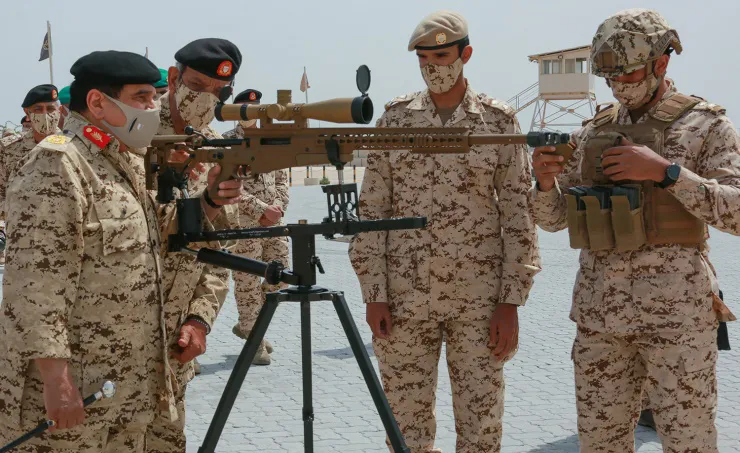
King Hamad of Bahrain (left) inspects a British-made sniper rifle on Monday. (Photo: Bahrain News Agency)

Other Gulf dictatorships which enjoy major UK military support include the UAE, Oman, Qatar and Saudi Arabia — where over 30 imprisoned human rights activists are currently staging a hunger strike in the capital, Riyadh. 

The prisoners include Mohammed al-Qahtani, a 55-year-old economics professor who co-founded the Saudi Civil and Political Rights Association, a group calling for an elected parliament. He is serving 15 years in jail for his peaceful activism.

On Tuesday 9 March, a Saudi court upheld the conviction of Loujain al-Hathloul, an activist who has gained worldwide attention for championing the right of women to drive cars in the kingdom. 

The ruling means that despite her recent release from prison, she is still subject to a five-year travel ban.

The proportion of the world’s autocratic regimes supported by the UK would be even higher if Freedom House’s methodology was not so clearly tailored to Washington’s geopolitical priorities. Last year, 94% of the think-tank’s revenue came from the US government.

For example, the group designates several territories as “not free” which are occupied by US adversary Russia, such as Crimea.

But Freedom House does not include similar territories illegally occupied by the US or UK, such as Guam in the Pacific or the Chagos Islands in the Indian Ocean.

Britain forcibly removed Chagossians from their islands in the 1960s and 70s to make way for a US military base. 

Despite decades of campaigning, their descendants have not been allowed to resettle on the Chagos Islands, which remain under UK military rule.

A UK government spokesperson told Declassified: “The UK will always stand up for our values and defend and promote human rights. The Government takes its export responsibilities seriously and rigorously assesses all export licences in accordance with strict criteria. We will not issue any export licences where to do so would be inconsistent with these criteria.” DM

Phil Miller is staff reporter at Declassified UK, an investigative journalism organisation that covers the UK’s role in the world. 

https://www.dailymaverick.co.za/article/2021-03-11-britain-backs-most-of-the-worlds-repressive-regimes-new-analysis-shows/

Elite philanthropy does little to solve problems caused by rising social inequalities

MARCH 11, 2021, by University of Bath
https://phys.org/news/2021-03-elite-philanthropy-problems-social-inequalities.html

pic of top philanthropists from Goo search added by CC
I only recognise B. Gates

Giving at scale by the super-wealthy has done little to redistribute wealth from rich to poor, helping perpetuate social inequalities rather than remedying them, while paying considerable dividends to donors in the form of privilege and influence in society and politics, new research shows.

In the research paper 'Elite philanthropy in the United States and the United Kingdom in the new age of inequalities' researchers at the University of Bath School of Management and Newcastle University Business School also conclude that giving by the super-wealthy has failed significantly to benefit poor countries in the developing world, contrary to popular belief.

"This is a difficult area for many to come to terms with—it can be argued that any philanthropy is a good thing and that holds true if it is genuinely altruistic. But what we have identified is that elite philanthropy may actually be perpetuating inequality by favouring elite causes, by increasing the influence and power of the super-rich, and by increasing tolerance of inequalities by ordinary people," said Professor Mairi Maclean of the University of Bath School of Management.

Maclean said the research shows how elite philanthropy conspicuously increases the social standing of the super-wealthy, with donors receiving honours, distinctions and favourable media coverage. She said much elite philanthropy supports elite causes and institutions, a source of prestige for donors but a factor in sustaining or even increasing social inequality.

Maclean acknowledged that some very wealthy people have given away sizeable parts of their fortunes but said the research shows that most of their peers do not, with combined donations amounting to only a small percentage of the total wealth of the super-rich. "The fact is most super-wealthy people give very little relative to their means."

Her co-researcher at Newcastle University Business School, Professor Charles Harvey, said, "The greater part of funding stays at home in developed countries. The Bill and Melinda Gates Foundation is one of a handful of foundations to embrace international development, but even in this case much of the spend is on research and development in developed countries. Development funding by philanthropic foundations is in fact dwarfed by taxpayer funded spending on overseas development assistance."

The research shows that funding frequently comes with strings attached, with the super-rich able to pursue personal and political agendas through major charitable foundations. Some, by dint of their financial clout, are able to influence governments and the prestigious educational institutions that attract a major part of high-end donations.

"Universities like Harvard and Yale in the United States, and Oxford and Cambridge in the UK gobble up the lion's share of philanthropic funding, conferring on them a significant competitive advantage and arguably sustaining social inequality," Maclean added.

Maclean said the research team identified several incentives for elite philanthropists, including the amassing of 'social and cultural capital', such as receiving honours like as knighthoods in the United Kingdom for their services to charity. Viewed in this light, donors can effectively buy their way into circles of influence and networks. Tax advantages also play a part.

"In both the US and UK, philanthropists have their giving power boosted by being able to offset their donations against their tax bills. This looks, on the face of it, like a good thing to encourage giving. But it means those funds can be diverted into areas in which they have an interest or wish to exert influence or gain prestige. They, rather than governments, are effectively deciding how and where their taxes should be spent," Harvey said.

Maclean said attempts to reform this tax issue—most notably an initiative by former British Chancellor George Osborne to put a cap on tax relief on donations—had failed in the recent past. Philanthropists had almost universally opposed any changes to a system that many critics believe is an unjustifiable form of state conferred elite privilege.

"It is easy to be cynical about this. We do accept that many elite philanthropists act sincerely to improve the lives of others and that there are many generous and outstanding philanthropists, but we suggest that altruism alone does not explain their actions. It is far more likely that philanthropy yields substantive rewards beyond the emotional satisfactions of beneficence—and our research bears this out," Maclean said.
Recommend this post and follow The Coconut Whisperer
https://disqus.com/home/forum/the-coconut-whisperer/

Posted by ChuckinCardinal
https://disqus.com/home/forum/lifeofearth/


The Namibians for whom Czechoslovakia is forever home


The Namibians for whom Czechoslovakia is forever home


By Rebecca Davis• 11 March 2021


In 1985, during Namibia’s struggle for independence, 56 Namibian children were taken from camps in Zambia and Angola to live in Czechoslovakia. Theirs is a strange and heartbreaking tale of alienation and loss – never before told. Until now. By Rebecca Davis

The official version had it that they were war orphans. In reality, most of the children had at least one parent who was very much alive, and some had two. They were born in the exile camps run by Swapo in Zambia and Angola during the Namibian liberation struggle.

“We cannot get a lot of information, but we know these were not randomly chosen children,” Czech academic Katerina Mildnerova told DM168. “Many of them were the children of prominent liberation fighters.” One was the grandchild of the independent Namibia’s first president, Sam Nujoma.

Little is known, too, about how the children were collected for their long, strange voyage. They were not told where they were going. Czech caregivers would later recall small boys telling them that they had been caught in a net by soldiers before being carried on to a military plane.

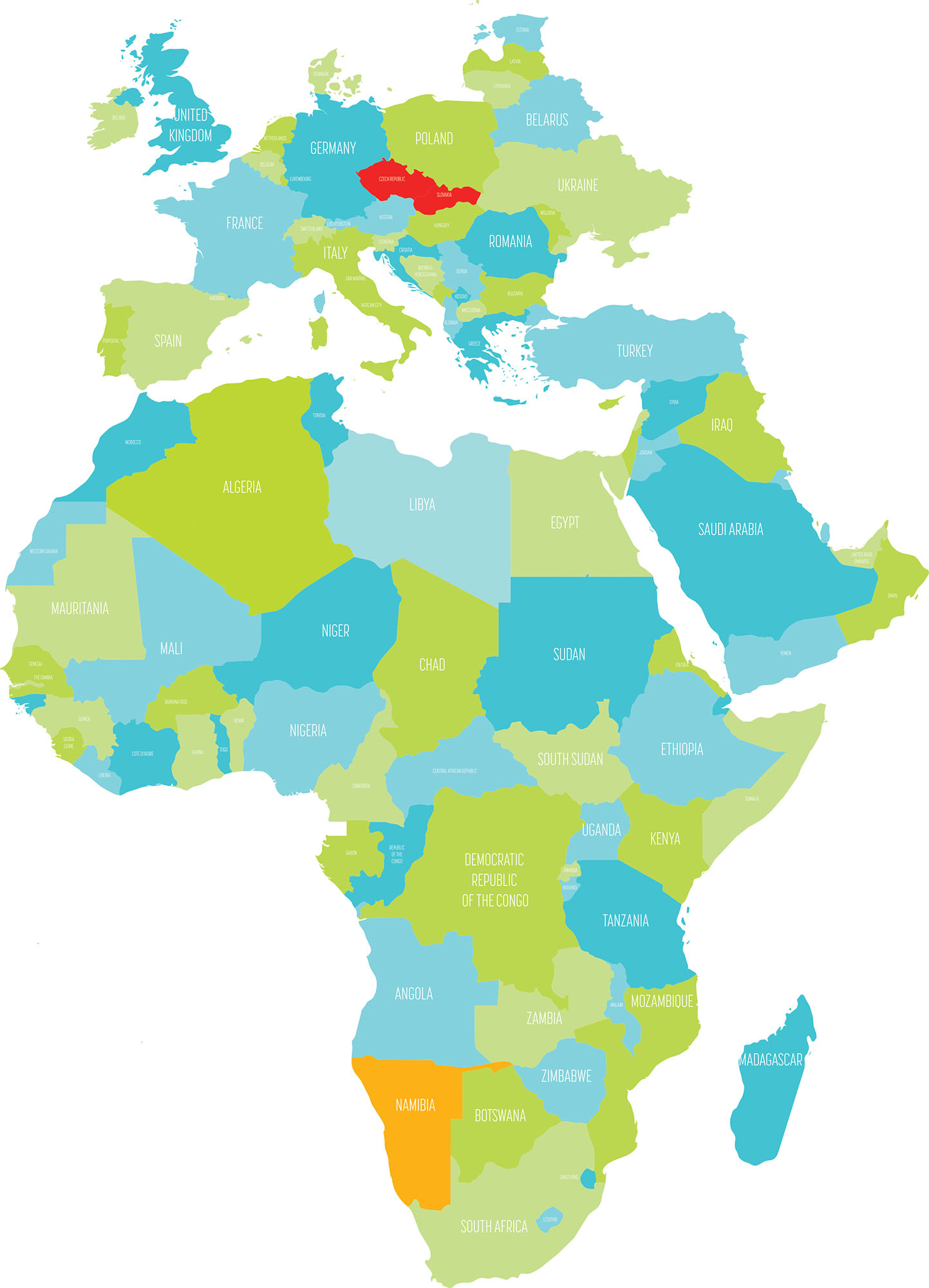
Here are the facts, though they read more like fiction: one day in 1985, 56 Namibian children aged between five and nine years old were picked up from Swapo camps, separated from their families and friends, and flown to what was then the Czechoslovak Socialist Republic. They were taken to a small village, where they would live, together with their caregivers, in an abandoned castle.

This astonishing historical episode has been made public for the first time in Mildnerova’s book Namibian Czechs, launched in January 2021. A prominent historian of Namibia, contacted by DM168, said she had no knowledge of these events.

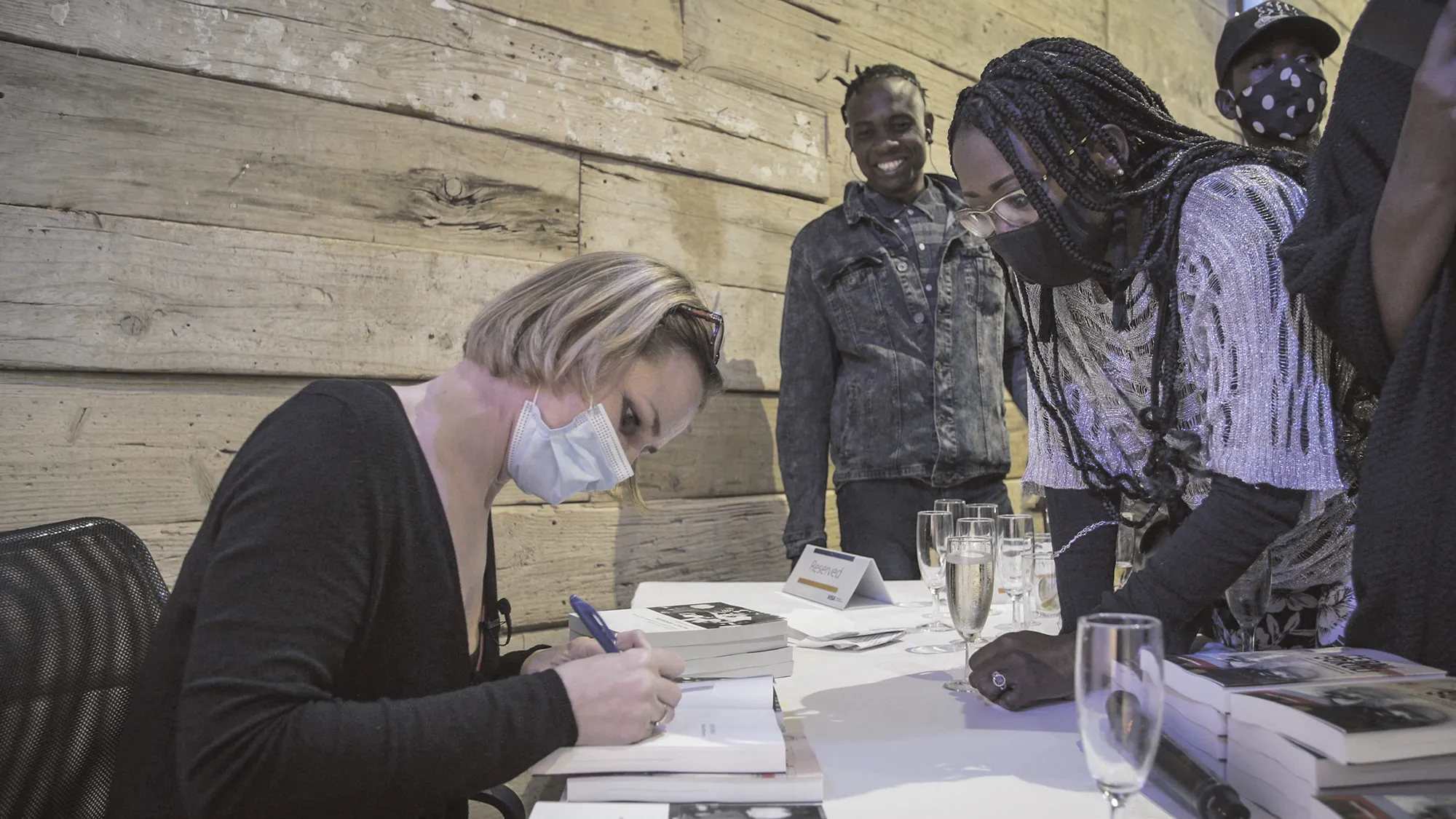
Author Kateřina Mildnerová at the launch of her book ‘Namibian Czechs’ in Windhoek last year.Photos:Embassy of Czech Archives Pretoria

Yet it was not an isolated incident. Beginning in the late 1970s, Swapo sent Namibian children to Cuba and to the former East Germany; those stories are better known. The children sent to East Germany are still known in Namibia as the “GDR [German Democratic Republic] kids”, identifiable by their fluent spoken German. One member of this cohort, Lucia Engombe, went on to write a memoir of her experience, Child No 95.

It was by chance that Mildnerova stumbled on the subject. She met two of the so-called Namibian Czechs during her studies and heard their stories firsthand.

“They seemed incredible to me,” she says. “These children were the same age as me, and they were living not far from the place I was living. They were here and we never knew about them!”

At the time of the children’s arrival in Czechoslovakia, Czech media were banned from reporting on them. Swapo was bent on keeping the children’s location a secret to protect them from political enemies, which is why they were kept so isolated from Czech society at first.

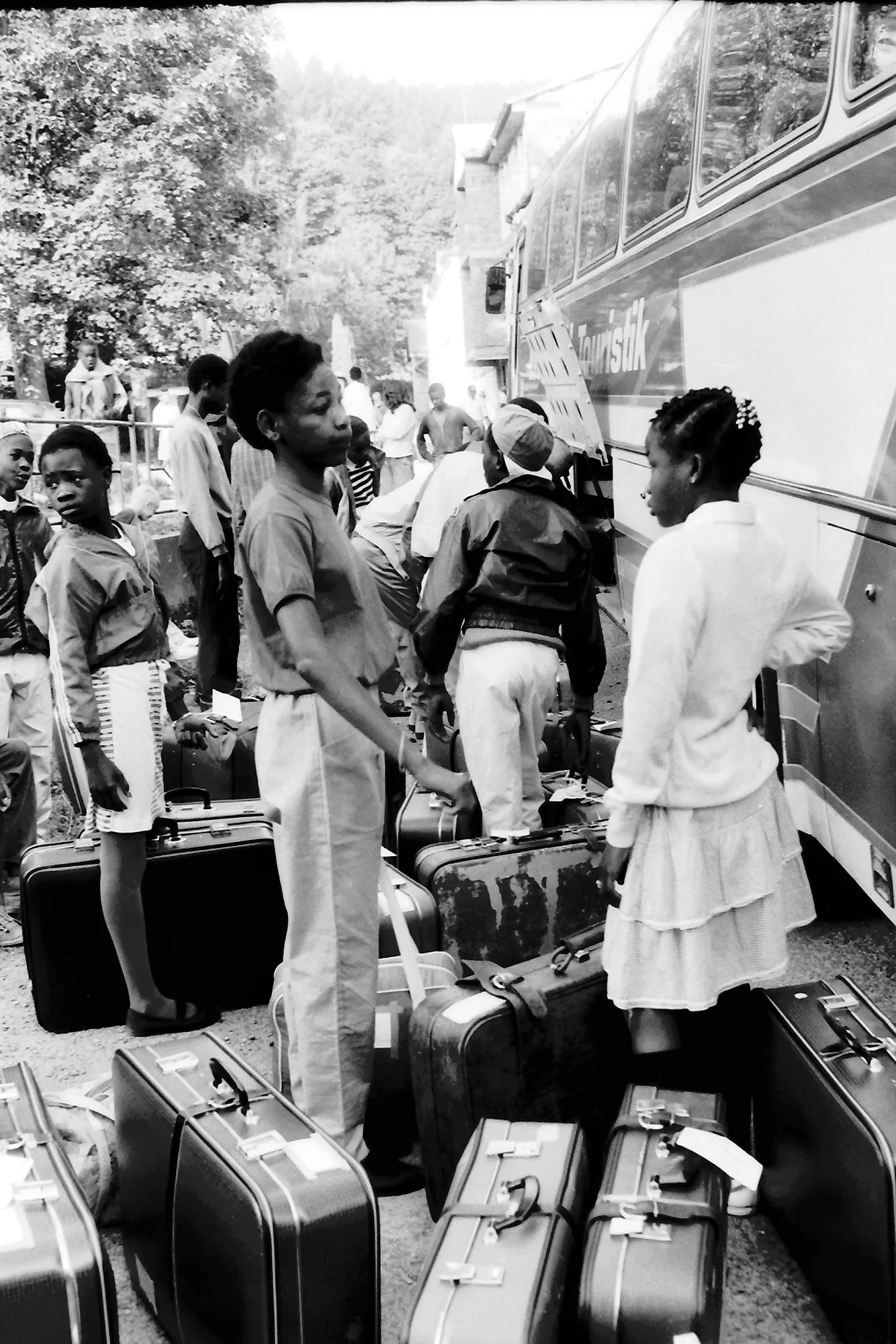
The children were repatriated to Namibia in 1991, travelling on buses from Prachatice to Frankfurt, from where they travelled to Windhoek on a special government plane.

Today, there is no reading of this chapter in Namibian history that does not come across as deeply cruel to the children involved. Swapo, now the governing party of Namibia, has maintained official silence on the matter. DM168 reached out to party spokesperson Hilma Nicanor and received no response.

There is little doubt, however, that Swapo believed at the time that it was acting in the best interests of both the children and the future of Namibia. Sending young children to countries run by allied communist governments was, in Mildnerova’s description, “an educational project which had an element of social engineering”.

Says Mildnerova: “Its main purpose was to raise children into obedient soldiers, ardent communists and convinced Namibian patriots.” Namibian tutors were sent with them to ensure that the children were familiarised with Swapo ideology and infused with enthusiasm for the idea of a free Namibia – a country in which, even in its colonial incarnation as South West Africa, none of the children had ever set foot.

Mildnerova’s book is the culmination of several years of fieldwork in the Czech Republic and in Namibia, incorporating archival research and interviews with the Namibian Czechs themselves, former caregivers, teachers and government representatives.

Arrival

“When we came to Czechoslovakia we saw whites everywhere. We thought Swapo had sold us to the enemies to kill us,” one of the Namibian Czechs recalled to Mildnerova.

In the exile camps where they had been living, the children had been warned to be distrustful of white people – just one reason why their sudden uprooting from the camps to the overwhelmingly white Czechoslovakia was so confusing to them. Some of the children arrived traumatised by the liberation war; mood disorders, bed-wetting and sleep terrors were common.

But there are other, sweeter memories. Czech caregivers recalled heavy snow on the day of the children’s arrival. Thinking it was sugar, the children started to eat it and stuff it in their pockets. Accustomed to the deprivations of the exile camps, they could not believe the relative luxury of their Czech castle, or the constant availability of food.

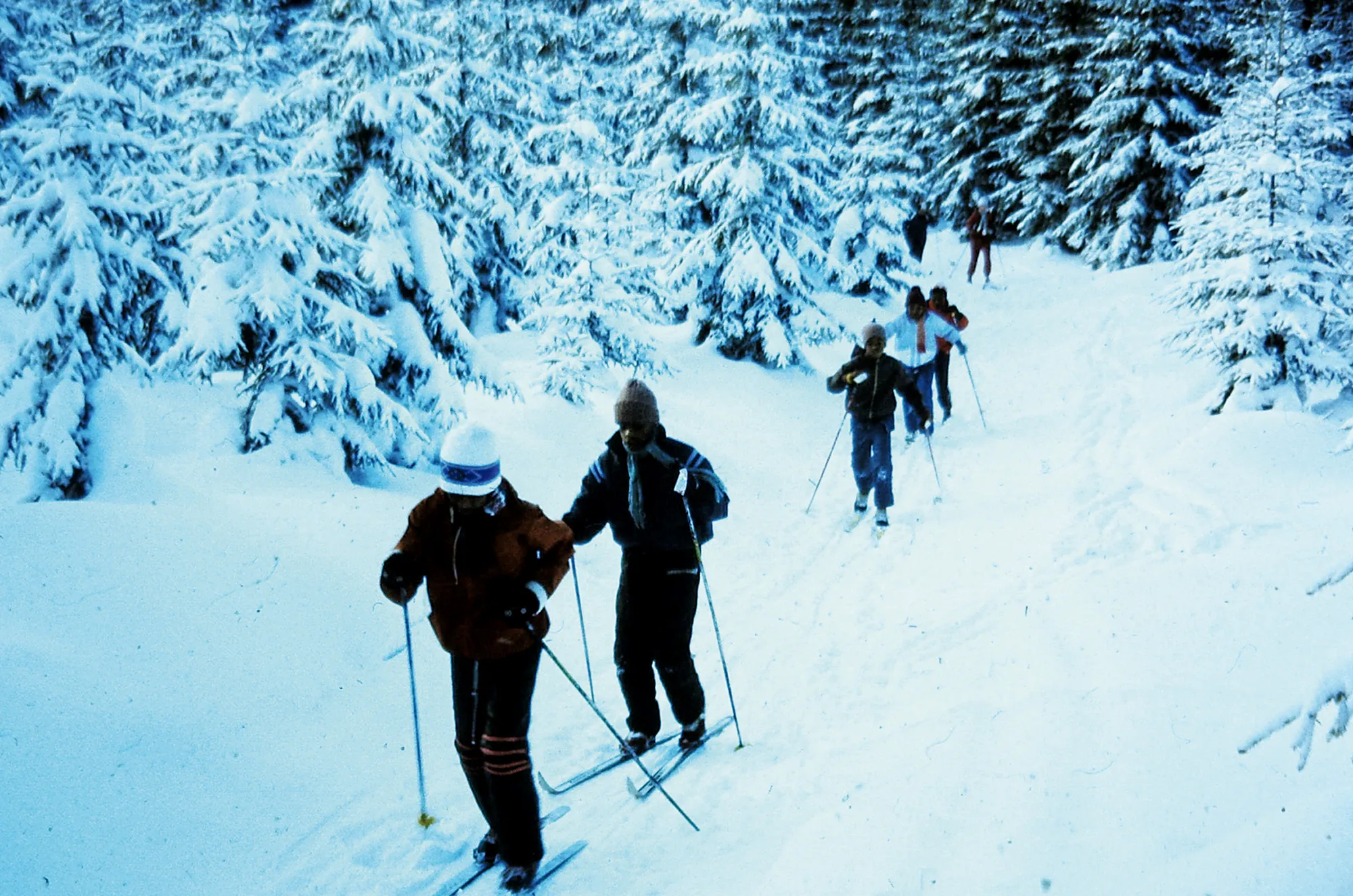
A Czech-Namibian team participates in a cross-country skiing competition in the Šumava mountains in Czechoslovakia in 1989.Photo:Photos:Embassy of Czech Archives Pretoria

None of the children knew a word of Czech, so they were immediately given intensive language lessons, for hours each day, to ready them for education in the tongue. During the day, the children would speak Czech and be taught by Czech tutors; in the evenings and on weekends, they were addressed in Oshivambo by their Namibian caregivers.

It amounted to what Mildnerova terms “cultural schizophrenia”. She says: “The educational project was confusing and not well understood by the children themselves.”

On an interpersonal level, the children developed extremely warm bonds with their Czech wardens, who saw themselves not just as carrying out their communist duty but as sincerely caring for African orphans they perceived as brutal victims of war. After interviewing eight of their former Czech wardens, Mildnerova says she is convinced that they showed “extraordinary personal commitment”, including making the children part of their families during the holidays.

Perhaps counterintuitively, the Namibian Czechs had far more negative memories of their Namibian caregivers.

“They were very strict. They were also soldiers and they had a clear mission,” says Mildnerova. “They tried to stop the de-nationalisation of the children so they didn’t become Czech because they needed them to be patriots when they came home.”

But Mildnerova also has empathy for the Namibian caregivers, whom she says were in a strange and frustrating position. They, too, had left family behind in Angola. They could not speak the Czech language, and when the children spoke it they assumed they were being made fun of.

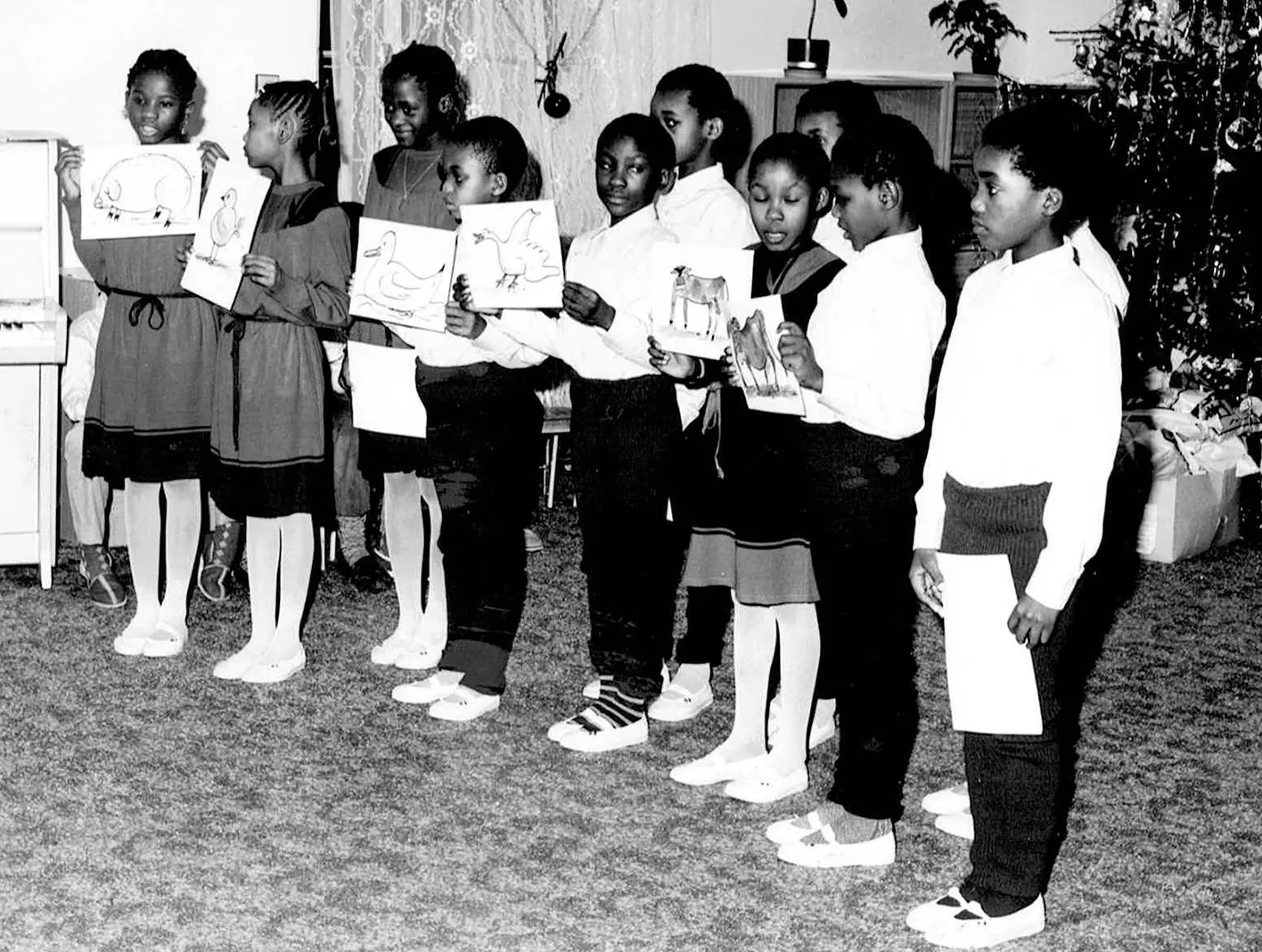
After a year, the children were fluent in Czech and had mostly adapted well. They became adept at Czech leisure pursuits, such as hiking and skiing. But they were never integrated into Czech society; everywhere they went, people would stare and touch their skin and hands. The children were also expected to constantly give performances of Ovambo circle dances and Czech folksongs, sometimes performing more than 20 times in a single month.

The Namibian children perform at a Christmas party in 1988 in Prachatice, Czechoslovakia.Photos:Embassy of Czech Archives Pretoria

There were separate, political-themed performances for important days in the Swapo calendar. On these occasions, the children would march in uniform, salute and sing Swapo liberation songs.

The late 1980s and early 1990s were a period of considerable global turmoil, and everything would change politically for both Czechoslovakia and South West Africa within six months after November 1989. In Czechoslovakia, the communist regime fell; the country that would become Namibia won its independence shortly after.

Intense negotiations immediately ensued as to the fate of the Namibian Czechs. Mildnerova says the Czech state wanted the children to finish their education where they were, but Swapo exerted “enormous pressure” for the children to be repatriated.

The children were repatriated to Namibia in 1991, travelling on buses from Prachatice to Frankfurt, from where they travelled to Windhoek on a special government plane. Photos: Embassy of Czech Archives Pretoria

In 1991, the children – some of whom were now teenagers – were sent to Namibia, the country that they had never visited but of which they had trained so hard to become citizens. “You know no one from us wanted to leave Czechoslovakia… It was like going from paradise to hell,” Mildnerova was told.

Culture shock

The children’s culture shock in Namibia was extreme. Reintegration into families they barely remembered was rendered more traumatic by the fact that the children were not fluent enough in Oshivambo to communicate properly. Czech had become their mother tongue;  a language which almost nobody in Namibia, except their 50-odd peers, could understand.

And neither did they have the support of their peers to rely on, since the children were separated and sent to families all over the country. Some went to rural villages, where continuing school was out of the question and their lives became taken up with helping hoe fields and carry water. They were generally viewed with suspicion and resentment by Namibian society more widely, accused of seeing themselves as European and being spoilt.

This is not a story with a happy ending. Of the 56 children, who should now be in their late 30s, six are dead. Mildnerova has been unable to track down another six. About half are unemployed, and only eight have high-ranking jobs.

The advent of WhatsApp and social media has made it easier to keep in touch with each other, and speak Czech together.

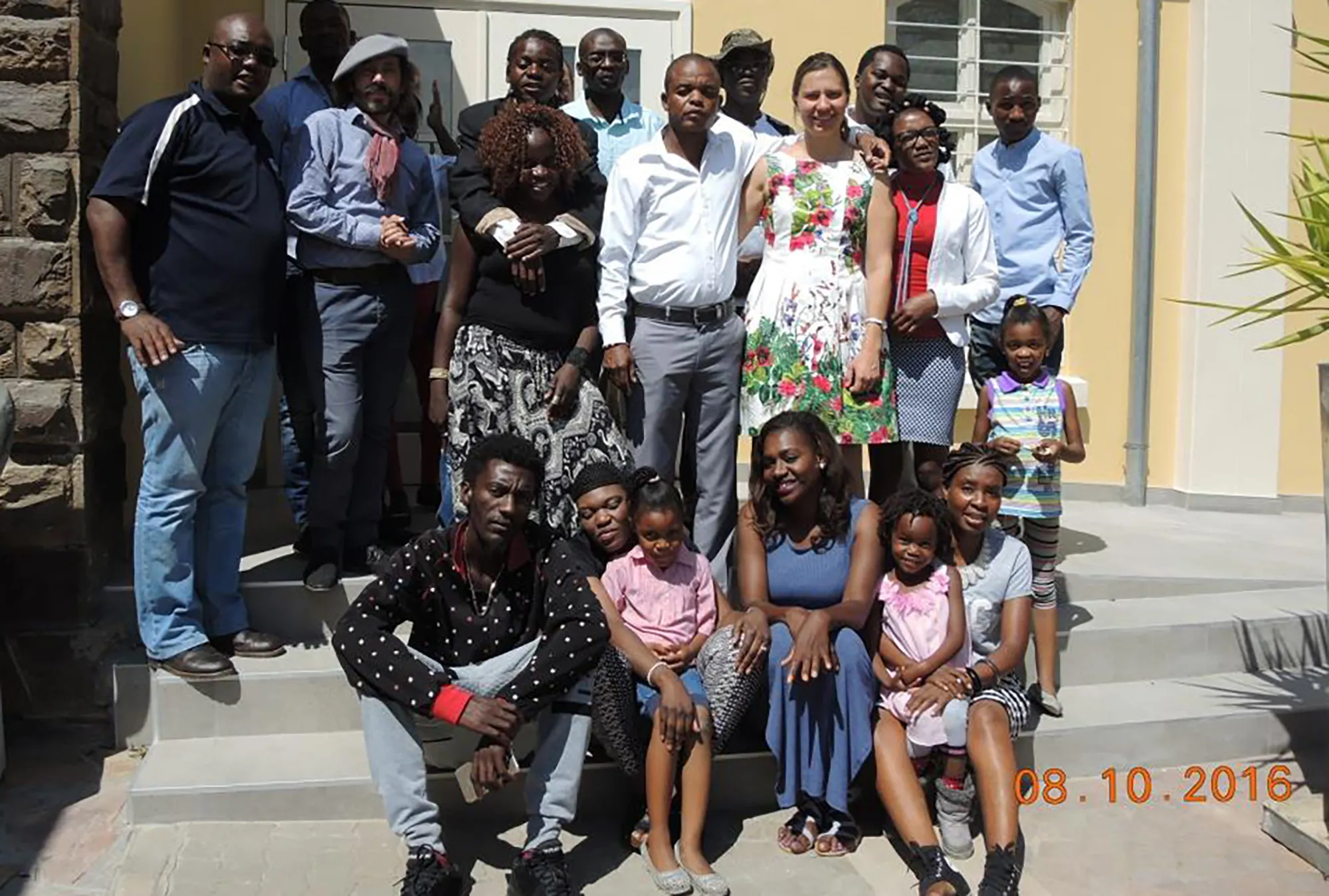
Meeting of Czech-Namibian Children 2017.Photo: Anna Syková

Mildnerova says they see their childhood in Czechoslovakia now as a kind of fairytale to which they return mentally when things are tough. That country no longer exists – except as a kind of imagined homeland to which they will always hold passports of the soul. DM168

https://www.dailymaverick.co.za/article/2021-03-11-the-namibians-for-whom-czechoslovakia-is-forever-home/

Wednesday, 10 March 2021

The Coconuts Recipe Corner: Corned Beef Cabbage Recipe with Canned Corned Beef


Corned Beef Cabbage Recipe with Canned Corned Beef

By Chef Buck, Sep 26, 2020

Try this delicious corned beef cabbage recipe. It’s super easy to make, especially if you’re using canned corned beef. The vinegar and Worcestershire give the dish a nice zing, and it’s a terrific comfort food that’s filling without requiring a ton of ingredients.

Give Canned Corned Beef a Try!

I prefer searing the beef in a separate skillet because it gives the canned meat a better flavor if it’s seared well. You can simply add the beef right out of the can into the cabbage if you prefer, but I think searing the beef well is worth the added effort.

This is an easy and exceptionally tasty dish. I like my corned beef cabbage recipe kind of mild, but adding a little hot sauce or cooking fresh chiles into the onions is an easy way to add heat.

corned beef cabbage recipe

Ingredients for Corned Beef Cabbage Recipe

12oz canned CORNED BEEF
1 small CABBAGE
1 large ONION
1 large CARROT
3-4 cloves GARLIC
2-3 Tbsp VINEGAR
2 Tbsp WORCESTERSHIRE SAUCE
1 tsp CARAWAY SEEDS
1 Tbsp dried ITALIAN SEASONING
SALT and PEPPER to taste
OIL for cooking

Directions for how to make Corned Beef and Cabbage

  • Heat oil on medium heat in a large, heavy bottomed pot.

  • Add in chopped onions. Sauté onions for about five minutes.

  • Season onions with salt, pepper, and herbs.

  • Add in garlic and sauté for another minute.

  • Add in the cabbage and carrots and continue to cook on medium heat for 5 minutes, stirring occasionally.

  • Add in the Worcestershire sauce and vinegar and mix well.

  • Reduce the heat to medium low and let cook uncovered until much of the water has cooked out of the dish. Stir occasionally.

  • While cabbage continues to cook, open canned corned beef and cut into slices. 

  • Heat a skillet on medium high heat and then sear the beef until well browned on each side. 

  • Then cut beef into smaller pieces. 

  • When cabbage has reached desired doneness, add in the seared beef and toss lightly. Serve hot.
For more directions watch the video:

Best Corned Beef and Cabbage Recipe with Canned Corned Beef


The Case Against Reparations: Part 2


The Case Against Reparations: Part 2

Repudiating false narratives.


[Read Part 1: HERE]

With reparations, there is the issue of who pays. Do African countries owe reparations to Black Americans? After all, Harvard's director of the Hutchins Center for African & African American Research, Henry Louis Gates, wrote that 90% of those enslaved and shipped to the New World were sold by Africans to European slavers. All whites? Only whites? Nonwhites? Are payments owed before the United States became a country?

Former University of California, Los Angeles, historian Roger McGrath writes:

"The reparationists claim that the United States must compensate the descendants of slaves for 400 years of slavery. Since the United States was not established until 1788 (when the required three-fourths majority of the states approved the Constitution), slavery existed for only 77 years before the 13th Amendment abolished it." McGrath also writes about the number of whites who owned slaves in the January issue of Chronicles Magazine:

"While the cotton economy enriched the owners of the large plantations and insured that millions of Blacks would live as slaves, it didn't do much for most Southern whites, who saw the most fertile bottom lands owned by a small number of powerful families. Depending on the era, only 25 percent or so of Southern whites owned slaves or belonged to a family who did."

On former President Barack Obama's maternal side, there were slave owners. Obama's father came from Kenya, a slave-trading area. Does Obama get a check, or does he cut a check? Similarly, Vice President Kamala Harris' Jamaican father has acknowledged slave owners in his family. Does Harris, whose mother is from India, get a check or cut a check?

Slavery, sadly, has been part of human history since the beginning. Muslim slave traders took whites out of the Mediterranean area and enslaved them in Northern Africa. European slavers took Blacks out of Africa and shipped them to the New World. Europeans enslaved Europeans. Asians enslaved Asians. Africans enslaved Africans. Even Native Americans enslaved other Native Americans.

Again, who pays whom? When and where does the pursuit of reparations stop, if ever?

The Arab slave trade took more Blacks out of Africa and for a longer period of time then did the European slavers. In "Prison & Slavery," John Dewar Gleissner writes: "The Arabs' treatment of Black Africans can aptly be termed an African Holocaust. Arabs killed more Africans in transit, especially when crossing the Sahara Desert, than Europeans and Americans, and over more centuries, both before and after the years of the Atlantic slave trade. ... African slaves transported by Arabs across the Sahara Desert died more often than slaves making the Middle Passage to the New World by ship."

As to the trans-Atlantic slave trade, historian Gates says:

"Between 1525 and 1866, in the entire history of the slave trade to the New World, according to the Trans-Atlantic Slave Trade Database, 12.5 million Africans were shipped to the New World. 10.7 million survived the dreaded Middle Passage, disembarking in North America, the Caribbean and South America.

"And how many of these 10.7 million Africans were shipped directly to North America? Only about 388,000. That's right: a tiny percentage."

And that tiny percentage has prospered to a far greater degree than did those who went to the Caribbean, Central and South America and, in some cases, Mexico.

In 1940, 87% of American Blacks lived below the federally defined level of poverty. By 1960, that number had fallen to 47%, the greatest 20-year period of economic expansion for Blacks in American history.

Who receives reparations? How is this determined?

Since slavery ended nearly 156 years ago, determining legal heirs to the stolen slave labor would be impossible.

When assessing the amount of reparations to be paid, is it relevant that the descendants of slaves here have prospered to a far greater degree than have the descendants of slaves shipped to Central and South America? If Black America were a separate country, its gross GDP would make it the 17th wealthiest country in the world. Economist Walter Williams said Blacks have come further ahead from further behind — and over a shorter period of time — than any people in the history of the world.

To be concluded next week.

https://www.frontpagemag.com/fpm/2021/03/case-against-reparations-part-2-larry-elder/

Farm attack, 3 attackers invade home with crowbars, man hospitalised, Rietfontein


South Africa: Farm attack, 3 attackers invade home with crowbars, man hospitalised, Rietfontein

Oorgrens veiligheid

Farm attack, 3 attackers invade home with crowbars, man hospitalised, Rietfontein

A farm attack took place on 9 March 2021, at 22:30 on a smallholding in Drift Blvd, Rietfontein, Muldersdrift in the Gauteng province of South Africa. Three armed attackers invaded a home by breaking in using crowbars and brutally attacked the Dean family.

The male victim was badly assaulted and his wife was assaulted and tied up. The attackers then ransacked the home taking tv’s, phones, laptop and other household items.

The attackers then fled on foot.

The man is currently in hospital receiving treatment for head injuries. The family have been severely traumatised and are receiving the necessary assistance.

Police are investigating but there have been no arrests. There is no other information available at this stage.

Read about more farm attacks here

Information supplied by Oorgrens veiligheid

South Africa Today – South Africa News

https://southafricatoday.net/south-africa-news/gauteng/farm-attack-3-attackers-invade-home-with-crowbars-man-hospitalised-rietfontein/