Showing posts with label Africa News.. Show all posts

Tuesday, 11 January 2022

Airports company says feet on counter 'not condoned'


Namibia: Airports company says feet on counter 'not condoned'

by Shante Mahalie


The Namibia Airports Company (NAC) says it is looking into the behaviour of an employee who was photographed sitting with her bare feet resting on an airport check-in counter.

The NAC employee was photographed with her feet on a counter in the presence of travellers at Hosea Kutako International Airport.

NAC spokesperson Dan Kamati told The Namibian on Monday that the NAC's management is looking into the matter for the necessary action to be taken.

"We do not condone such behaviour,” said Kamati, adding that the company is committed to efficient and friendly customer service ethics.

https://www.namibian.com.na/108915/read/Airports-company-says-feet-on-counter-not-condoned

Saturday, 16 October 2021

“Zim dollar now in real peril,” back on the slippery slope again


Letter from Zimbabwe: "Zim dollar now in real peril," back on the slippery slope again 


by Cathy Bucle


Dear Family and Friends,

When it started raining at dusk and went on all night I knew I had a problem. With a friend on the banks of a river in a mountainous area where the roads are all steep hills, sharp corners and red soil I knew it was going to be a treacherous 17km journey the following morning. Still raining at 7.30am we had to abandon one last walk along the banks of the beautiful crystal clear river and leave it rushing along the pebbles and gushing over the rocks. The first 15 km were bad: heart pounding, hands gripping the wheel and sideways driving we crept along, the red roads sticky, clingy and slick. Three or four bends from the end the wheels gave up, thick red mud in the tread and then another inch on top of that and a steep slippery slope ahead. We were going nowhere without help, a tow rope and a powerful pull.
 
Being dragged up the hill was very appropriate for the state of Zimbabwe which again finds itself driving sideways and backwards and on a slippery slope to nowhere. Zimbabwe is on the cusp of another economic crisis. The last one was between 2005 and 2008 and in just thirteen years our leaders are doing the same things all over again: shouting, blaming, arresting, accusing, threatening. (See my book "Millions, Billions, Trillions" for that slice of our history)
 
Foreign currency is in such short supply that the value of US dollars against the Zimbabwe Bond dollar is soaring. The government’s auction system where companies and businesses have to bid for US dollars to meet their costs and imports is a joke. Successful bids for US dollars which are supposed to result in currency arriving in two days are now taking 15 weeks before funds are allocated by the Reserve Bank. It’s all but impossible for importers and retailers to do business when they have to wait almost four months for the currency they need to keep operating.
 
In 2019 President Mnangagwa ordered the return of the Zimbabwe dollar saying it was “the strongest currency in the region.” At that time one US dollar was the same value as one Zimbabwe dollar. Two years later one US dollar is equivalent to 170-200 Zimbabwe dollars on the street. Meanwhile the government continues to insist that one US dollar is worth 88 Zimbabwe dollars but you can only get that one US dollar on the black market and it costs 170 to 200 Zimbabwe dollars. 
 
Over the past few weeks scores of foreign currency traders have been arrested. Government says they are weeding out ‘saboteurs’ and ‘fraudsters.’ Government is threatening to suspend operating licences of businesses they accuse of using black market rates to price their goods and services. Vice President Chiwenga said the Zimbabwe dollar was being deliberately sabotaged and said “I wish to warn perpetrators of this heinous crime that the long arm of the law will soon catch up with them.” Chiwenga said people being arrested on “currency manipulation” charges will spend Christmas in prison. The CZI (Confederation of Zimbabwe Industries) said: “The Zimbabwe dollar is now in real peril” and“ clamping down on informal foreign exchange trading in the absence of a viable formal market will have catastrophic consequences for the economy.” 
 
Meanwhile for ordinary Zimbabweans the nightmare is getting worse. Food prices are increasing because retailers are charging more in order to keep up with the cost of buying US dollars to import goods to restock their shelves. Tel One, the country’s telecommunications provider which is owned by the government, just increased their prices by 30%. Fuel prices increased from US$1.25 a litre to US$1.35 this week. And then, to make life harder my home town is crippled by electricity power cuts which are lasting up to14 hours at a time, three or four or five times a week. An enquiry to the local electricity supplier (ZESA) requesting the schedule of power cuts they said they aren’t following their own recently  published Load Shedding Schedule anymore saying they just get instructions from HQ to load shed which they do. Oh Zimbabwe, the slippery slope needs a different approach this time surely?
 
There is no charge for this Letter From Zimbabwe but if you would like to donate please visit my website. Until next time, thanks for reading this Letter From Zimbabwe now in its 21st year, and my books about life in Zimbabwe, a country in waiting, love cathy 15 October 2021. 

https://cathybuckle.co.zw/zim-dollar-now-in-real-peril-back-on-the-slippery-slope-again/


Thursday, 19 August 2021

30 CIVILIANS AMONG DOZENS KILLED IN BURKINA FASO JIHADIST ATTACK


30 CIVILIANS AMONG DOZENS KILLED IN BURKINA FASO JIHADIST ATTACK

In an ensuing gun battle, security forces killed 58 "terrorists" and put the rest to flight, according to the government. Wednesday's was the third attack in the past two weeks against Burkinabe soldiers in which 10 or more people have died, including one on August 4 with a toll of 30, 11 of them civilians.

Picture: Pixabay.com

OUAGADOUGOU - Suspected jihadists have killed 47 people, including 30 civilians, in an attack on a convoy in northern Burkina Faso, the government said Wednesday.

The assault left 14 soldiers and three militia volunteers dead 25 kilometres (15 miles) from Gorgadji, said the communications ministry.

Gorgadji is in the notorious "three-border" zone where Burkina Faso meets Mali and Niger, a focus of the jihadist violence that plagues the wider Sahel region. The soldiers and militia had been "guarding civilians setting off for Arbinda", another town in northern Burkina.

In an ensuing gun battle, security forces killed 58 "terrorists" and put the rest to flight, according to the government. Wednesday's was the third attack in the past two weeks against Burkinabe soldiers in which 10 or more people have died, including one on August 4 with a toll of 30, 11 of them civilians.

Burkina Faso, a poor country in the arid sub-Saharan Sahel region, has been confronted since 2015 with increasingly frequent and deadly attacks by jihadist groups affiliated with the Islamic State group and al-Qaeda.

These attacks along with inter-communal violence have left more than 1,400 people dead and forced 1.3 million to flee their homes, according to official estimates.

https://ewn.co.za/2021/08/19/30-civilians-among-dozens-killed-in-burkina-faso-jihadist-attack

Wednesday, 28 July 2021

RAMAPHOSA CONFIRMS SANDF DEPLOYMENT TO MOZAMBIQUE TO COST NEARLY R1BN


South Africa: RAMAPHOSA CONFIRMS SANDF DEPLOYMENT TO MOZAMBIQUE TO COST NEARLY R1BN

The amount was confirmed by President Cyril Ramaphosa, who wrote to Parliament informing the legislature that he had authorised the deployment of soldiers.

The SANDF takes to the streets of Alexandra encouraging residents of the township to stay indoors. Picture: Kayleen Morgan/EWN

CAPE TOWN - South Africa will spend just over R984 million on the deployment of nearly 1,500 SANDF members to help Mozambique fight terrorism.

The amount was confirmed by President Cyril Ramaphosa, who wrote to Parliament informing the legislature that he had authorised the deployment of soldiers.

It’s been a busy month for the defence force, which recently deployed 25,000 members to help quell the unrest and looting that ravaged Gauteng and KwaZulu-Natal.

The deployment, which ends on 12 August, cost R615 million.

But almost R1 billion will be spent by government to send a peace-keeping force to Mozambique.

President Ramaphosa has told Parliament that the Mozambique deployment was to combat acts of terrorism and violent extremists in the Caba Delgado province.

Thousands of people have been displaced there.

The SANDF members will be stationed in Mozambique until 15 October.

South Africa isn't the only country sending soldiers.

Rwanda has started deploying a 1,000-strong force.

https://ewn.co.za/2021/07/28/ramaphosa-confirms-sandf-deployment-to-mozambique-to-cost-nearly-r1bn

Tuesday, 1 June 2021

PAP VIOLENCE A WAKE-UP CALL TO DO MORE TO DE-COLONISE AFRICAN MINDS - MOTSHEKGA


PAP VIOLENCE A WAKE-UP CALL TO DO MORE TO DE-COLONISE AFRICAN MINDS - MOTSHEKGA

Pan-African Parliament member Mathole Motshekga said that Monday's violence duringa sitting  in Midrand, Johannesburg, South Africa, where a woman was kicked was a disgraceful 'wake-up call', adding that it was important that there was unity among members.

Members of the Pan-African Parliament clashed in the House in Midrand on 31 May 2021. Picture: YouTube screengrab.

JOHANNESBURG - Pan-African Parliament member Mathole Motshekga said that Monday's violence during a sitting where a woman was kicked was a disgraceful "wake-up call". The sitting was marred by chaos, walkouts, physical violence and desperate calls for the police to step in to break up fights between delegates. African National Congress (ANC) chief whip Pemmy Majodina was kicked by Djibril War from Senegal during a heated argument.

READ
• 'I will kill you' – Malema threatens Pan-African Parly member during a sitting
• 'Please call the police' – Violence erupts at Pan-African Parliament
• ANC's Majodina to lay assault complaint after being kicked at PAP

Last week, South Afria's Economic Freedom Fighters (EFF) leader Julius Malema also threatened to murder a delegate from Mali.

Motshekga said that it was important that there was unity among members.

"There is no basis to discriminate against anybody but it is the colonised minds and spirits of our people that are creating problems. For me, this is just a wake-up call that we must do more to de-colonise the African people."

Motshekga said that urgent steps needed to be taken to address the action of those in the Pan-African Parliament.

"People were moving chairs, threatening. Even school children don't do that. Because of this kind of behaviour it is this colonised minds that dominate us."

https://ewn.co.za/2021/06/01/pap-violence-a-wake-up-call-to-do-more-to-de-colonise-african-minds-motshekga

Saturday, 29 May 2021

SPAIN SAYS MOROCCO'S USE OF MINORS TO BREACH BORDER 'UNACCEPTABLE'


SPAIN SAYS MOROCCO'S USE OF MINORS TO BREACH BORDER 'UNACCEPTABLE'

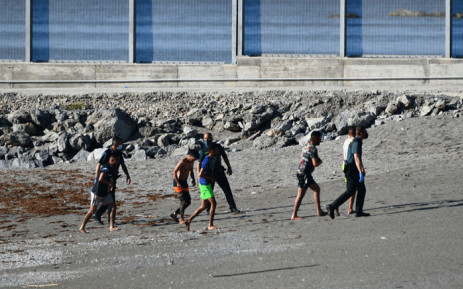
Spain and Morocco have been locked in a diplomatic spat over Western Sahara, which set off a chain of events that last week saw up to 10,000 mainly young people cross into the Spanish North African enclave of Ceuta as Moroccan guards looked the other way.

Migrants speak with Spanish Civil guards after swimming to the Spanish enclave of Ceuta from neighbouring Morocco on May 17, 2021. Antonio Sempere / AFP

MADRID - Spanish Defence Minister Margarita Robles on Saturday denounced as "unacceptable" Morocco's use of young people to violate Spain's borders following a record influx of arrivals early last week.

"One thing is clear: when minors are used as an instrument to breach Spain's territorial borders, this is unacceptable," she told RTVE public television at a ceremony to mark armed forces day.

Spain and Morocco have been locked in a diplomatic spat over Western Sahara, which set off a chain of events that last week saw up to 10,000 mainly young people cross into the Spanish North African enclave of Ceuta as Moroccan guards looked the other way.

The arrivals overwhelmed the tiny enclave and although most have been sent back, there are still more than 800 mostly Moroccan minors in Ceuta, where the authorities are working around the clock to track down their parents.

The incident has sparked a war of words between Madrid and Rabat, with Robles last week accusing Morocco of "aggression" and "blackmail".

"It's unacceptable from any point of view, whether you're talking international law or humanitarian law," she said on Saturday.

"No country acting in a spirit of good neighbourliness could use minors in that way."

Spain, she said, had always been "one of Morocco's main supporters, but we demand respect from Morocco... because that is key to coexistence."

Madrid said 1,500 of the arrivals were minors while Amnesty International gave a figure of 2,000. Ceuta has accused Rabat of using "manipulative tricks" to encourage youngsters to cross to put pressure on Spain over Western Sahara.

The influx was made possible because Moroccan border forces deliberately looked the other way in what was widely understood as a punitive gesture after Spain offered hospital treatment to the leader of Western Sahara's independence movement.

Spain's two tiny enclaves of Ceuta and Melilla have Europe's only land border with Africa, making them a magnet for migrants desperate to escape grinding poverty and hunger.

The huge influx of people had triggered fears of an upsurge in Covid-19 infection, but by Friday, that number stood at just 39 imported cases, health ministry figures showed.

https://ewn.co.za/2021/05/29/spain-says-morocco-s-use-of-minors-to-breach-border-unacceptable

Friday, 28 May 2021

DR CONGO CITY EMPTIES OVER FEARS VOLCANO COULD ERUPT AGAIN


DR CONGO CITY EMPTIES OVER FEARS VOLCANO COULD ERUPT AGAIN

Goma, located on the shore of Lake Kivu, has been gripped by fear since Africa's most active volcano erupted on Saturday, leaving 32 people dead.

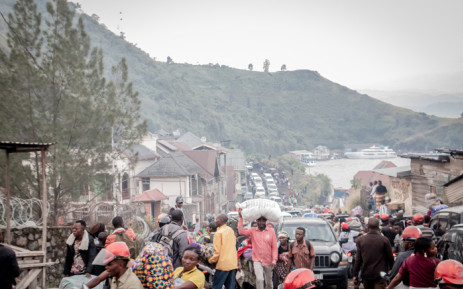
Goma residents are seen leaving after an evacuation order was given on 27 May 2021. The authorities in Goma, in the east of the Democratic Republic of Congo (DRC),  ordered the evacuation of part of the city because of the risk of eruption of the Nyiragongo volcano, immediately causing the exodus of tens of thousands of people. Picture: Guerchom NDEB/AFP

Goma, located on the shore of Lake Kivu, has been gripped by fear since Africa's most active volcano erupted on Saturday, leaving 32 people dead.

Scientists monitoring the volcano have warned of a potentially catastrophic scenario - a "limnic eruption" that could smother the area with suffocating carbon dioxide.

Goma was bizarrely quiet early on Friday after the authorities ordered a "preventative" evacuation, triggering an exodus that choked roads out of the city.

All the shops were closed and just a handful of people and some motorcycle taxis were on the streets.

Security guards were deployed around the local mansions, their windows shuttered, on the shore of the lake.

A few families were seen leaving the city on foot, bags of belongings on their heads, with their children holding hands. There was no special deployment of police or military personnel.

QUIETER NIGHT

Local volcanologists recorded hundreds of aftershocks after Nyiragongo, which lies just a dozen kilometres from Goma, roared back to life last Saturday.

But tremors eased overnight, both in numbers and intensity, an AFP journalist said.

Experts have been carrying out a risk assessment at the volcano's summit, the government says.

General Constant Ndima, the military governor of North Kivu province, ordered the evacuation of districts that potentially applies to nearly 400,000 out of Goma's 600,000 residents, according to an estimate by the UN humanitarian agency OCHA.

The wider Goma area has a population of around two million people.

"Right now we can't rule out an eruption on land or under the lake, which could happen very soon and without warning," Ndima said.

The authorities arranged transport towards Sake, around 25 kilometres west of Goma, he added.

Tens of thousands of people had fled Goma after Nyiragongo kicked into life on Saturday night but many then returned when the eruption ended the following day.

The volcano spewed out two rivers of molten rock, one of which came to halt on the edge of Goma after obliterating villages in its wake.

OCHA said more than 4,500 homes were destroyed, affecting some 20,000 people.

'LIMNIC' RISK

The worst-case scenario is of an eruption occurring both from the flanks of the volcano and under the floor of Lake Kivu.

An eruption under the lake could release hundreds of thousands of tonnes of carbon dioxide (CO2) that are currently dissolved in the water's depths.

This gas would rise to the surface of the lake, forming a huge invisible cloud that would displace oxygen, asphyxiating life.

In 1986, one of these so-called limnic eruptions killed more than 1,700 people and thousands of cattle at Lake Nyos in western Cameroon.

A so-called strato-volcano nearly 3,500 metres high, Nyiragongo straddles the East African Rift tectonic divide.

Its last major eruption, in 2002, claimed around 100 lives.

The deadliest eruption on record killed more than 600 people in 1977.

TROUBLED REGION

The latest episode adds to the many woes in the east of the vast Democratic Republic of Congo, a country the size of the continental western Europe.

Scores of armed groups roam the east, many of them a legacy of two regional wars that ran from 1996 to 2003.

At least 26 people were killed earlier this week in the Beni region in an attack attributed to the notorious Allied Democratic Forces (ADF), which the US says is linked to the so-called Islamic State group.

https://ewn.co.za/2021/05/28/dr-congo-city-empties-over-fears-volcano-could-erupt-again

Wednesday, 26 May 2021

Abubakar Shekau: battle for supremacy among Islamist groups bodes ill for the Sahel

 Abubakar Shekau: battle for supremacy among Islamist groups bodes ill for the Sahel

Saturday, 22 May 2021

The AU’s words of solidarity for Palestine are no longer enough

The AU’s words of solidarity for Palestine are no longer enough

It’s time for the AU to return to its anti-colonial roots, and adopt substantial measures against Israel.


Abdel Fattah el-Sisi, President of Egypt, Moussa Faki Mahamat, Chairperson of the African Union Commission (AUC), Paul Kagame, President of Rwanda and Abiy Ahmed, Prime Minister of Ethiopia stand for a group photo during the opening of the 32nd Ordinary Session of the Assembly of the Heads of State and the Government of the African Union (AU) in Addis Ababa, Ethiopia, February 10, 2019. [Tiksa Negeri/Reuters]


On May 11, the Chairperson of the African Union Commission, Moussa Faki Mahamat, released a statement “strongly condemning” Israel’s deadly bombardment of the Gaza Strip and expressing the AU’s strong support for the Palestinian people’s “legitimate quest for an independent and sovereign State with East Jerusalem as it’s capital”.

You may think the statement is familiar, because it is – Mahamat’s words are almost identical to the many bold and straight-to-the-point statements issued by the AU in response to Israel’s persistent assaults on Gaza over the years.

In May 2018, when Israel killed 266 people and injured tens of thousands during Gaza’s Great March of Return protests, for example, Mahamat promptly expressed his organisation’s strong and persistent support for the Palestinian struggle and called for a “just and lasting solution to the conflict…within the framework of the relevant United Nations pronouncements”.

And in July 2014, when Israel killed some 2,310 Gaza Palestinians, injured more than 10,000, and practically demolished Gaza’s infrastructure and economy, the then-African Union Commission Chairperson, Nkosazana Dlamini-Zuma, strongly condemned the “outbreak of hostilities and the attacks against the inhabitants of the Gaza Strip”. Dlamini-Zuma also reiterated the AU’s “full support” towards Palestinians and backed the “restoration of their legitimate right to establish an independent State co-existing peacefully with the State of Israel”.

Today, as far as diplomatic posturing and proclamations on Israel’s comprehensive repression of Palestinians go, the AU appears to be one of the most vocal and persistent defenders of Palestinian rights in the international arena. And the AU’s strong support for Palestine is hardly a recent occurrence.

As a body born out of the continent’s anti-imperialist struggle, the AU has always been eager and ready to publicly “stand up” for Palestine.

In 1975, the Organisation of African Unity (OAU), the predecessor to the AU, adopted the Resolution on the Middle East and Occupied Arab Territories in response to Israel’s “barbaric attacks and raids of refugee camps and bombardment of civilian targets in the towns and villages of Southern Lebanon in violation of all principles of international and human laws”.

Struck by the cold-heartedness of the systemic violence Israel inflicts on the Palestinian people, the OAU reaffirmed “its total and effective support for the front-line states and the Palestinian people in their legitimate struggle to restore all the occupied territories and usurped rights by every possible means”.

It condemned Israel’s shameful attempts to alter the “demographic, geographic, economic and cultural features” of occupied Palestinian territories. It castigated the United States’ role in the Middle East conflict and said the “flooding of Israel with such enormous quantities of weaponry is to establish it as an advanced case of racism and colonialism in the heart of the Arab and African World and the Third World”.

Moreover, the OAU determined that Israel’s systemic and persistent brutality against the Palestinian people could not be countered or expunged by stately appeals, or worse still – empty diplomatic posturing. So it requested all African states to “extend all possible potentialities” to Palestinians to fortify their struggle against Zionist aggression and called for the imposition of sanctions against Israel by international organisations such as the UN.

All this may cause some to conclude that the AU has not wavered from its principled anti-colonial stance on Palestine for nearly half a century.

Sadly, this is not the case.

In 1975, the OAU not only condemned Israel’s crimes, but also mapped out a substantial plan of resistance to Israeli colonisation of Palestinian lands.

Today, however, the AU’s vocal condemnations of Israel’s occupation and routine aggression against the Palestinians are no longer backed with concrete policy plans or actions – they are, in fact, merely symbolic gestures. Moreover, the union’s member states appear not to be interested in upholding the anti-colonial ideals promoted by the OAU in the 1970s.

When Israeli security forces cracked down on Palestinian protesters at Al-Aqsa Mosque on May 10, for instance, the only African leader who took the time to publicly condemn Israel’s actions was South Africa’s President Cyril Ramaphosa.

The deliberate and disappointing silence elsewhere on the continent demonstrated clearly how most African states have abandoned their commitment to support the Palestinians in their righteous anti-colonial struggle for freedom and justice.

Indeed, in recent years, most African states have been more interested in building stronger diplomatic, economic and military ties with Israel, and being rewarded for their efforts by Israel’s Western allies, than showing solidarity with the Palestinians.

Zimbabwe, Equatorial Guinea and Angola are actively working to “build stronger economic relations” with Israel. Uganda and Malawi are “looking into” establishing diplomatic missions in Jerusalem. Morocco and Sudan recently “celebrated” the normalisation deals they signed with Israel.

The demonstrable pro-Israel posturing of these African states, coupled with the complete silence on Palestine of many others, clearly show that the AU’s recent strong condemnations of Israel are nothing but empty rhetoric.

Today, Israel is violating Palestinians’ most basic human rights on a daily basis, subjecting them to apartheid rule, and killing them with impunity, but the AU is doing nothing other than issuing statements of condemnation. This, with respect to the AU’s stated commitment to supporting the Palestinian struggle against colonial occupation, is just inadequate. For an organisation whose ranks are teeming with anti-imperialists who participated in many liberation struggles, merely paying lip service to the Palestinian struggle is not enough.

US President Joe Biden or British Prime Minister Boris Johnson may struggle to explicitly define or condemn Israel’s systemic racism, lawless occupation and murderous policies, but no African leader can pretend they do not understand what the Palestinians are currently going through. They do understand, because their countries were in the same situation not too long ago. So why are they not speaking up? And, most importantly, why is the organisation representing them not doing more than issuing well-written and emotive but essentially inconsequential media statements on the issue?

When did African states stop acknowledging their shared anti-colonial struggle with Palestine and start turning a blind eye to Israel’s crimes and even actively supporting them at the UN?

The AU is still not hesitating to publicly condemn Israel’s persistent crimes against humanity, so why is it not coming up with a resistance plan to help Palestinians find justice and freedom? Why have its member states not committed themselves to adopting practical measures that can help compel Israel to simply respect international laws and the human, land and economic rights of Palestinians?

The “advanced case of racism and colonialism” so famously enunciated by the OAU in 1975 clearly remains unresolved and deadly as always. So why are African states not implementing the very same policies that helped to apply pressure on apartheid South Africa in the 1970s and 1980s? Beyond the symbolic gestures and condemnations, where are the academic, cultural and sports boycotts of Israel? Why are African states not applying economic sanctions on Israel?

For far too long, the AU’s timidity and indecisiveness have helped normalise Israel’s brutal repression of Palestinians. It’s time for the AU to return to its anti-colonial roots, and adopt substantial measures against Israel.

Tafi Mhaka

Friday, 21 May 2021

Namibia's Vote on UN Genocide Resolution Shameful


Namibia's Vote on UN Genocide Resolution Shameful


On Monday, the Namibian government looked the other way as 115 other countries voted for the resolution: 'The responsibility to protect and the prevention of genocide, war crimes, ethnic cleansing and crimes against humanity'.

Some 15 countries among the 193 UN member states were recorded as voting against the anti-genocide resolution. 
Namibia's international relations minister Netumbo Nandi-Ndaitwah gave what amounts to a flimsy excuse for why Namibia abstained.

“That is a very dangerous resolution. Powerful countries can always invade countries where there is unrest under the guise of the right to protect.”

She told The Namibian that the 'responsibility to protect' provides powerful countries the carte blanche to intervene in internal conflicts, as was the case in Libya.

Nandi-Ndaitwah claims they chose abstention to avoid Namibia feeling guilty if powerful countries abused the resolution.

Namibian officials should have the courage of their convictions and admit their vote was meant to support several of their allies who are prone to committing crimes against humanity. And the likes of Libya under Muammar Gaddafi or Zimbabwe's Gukurahundi massacre may well fall into those categories.

Powerful nations, especially Russia, the United States, and China have been invading weaker states or communities at will – with or without UN resolutions.

This is no reason for Namibia to oppose a resolution that places the responsibilities on countries to protect human kind against genocide and war crimes. 

In 2017, when president Hage Geingob and several cabinet ministers were attending a UN General Assembly session, Namibia showed its true colours by expressly voting against a motion that led to this latest resolution.

Australia and Ghana wanted the motion 'Responsibility to Protect and the Prevention of Genocide, War Crimes, Ethnic Cleansing, and Crimes Against Humanity' included on the 72nd UN General Assembly's agenda.

Namibia was much clearer then not to have the issue even discussed. Now Namibia has chosen to rather do nothing, which in essence amounts to letting the powerful do what they want against the powerless.

It is shameful for a country that has suffered two major crimes against humanity in a space of 100 years to now choose to look the other way when regimes are given the responsibility of protecting vulnerable people.

Shame on Namibia.

https://www.namibian.com.na/101864/read/Namibias-Vote-on-UN-Genocide-Resolution-Shameful

JUST A GLIMPS INTO A PEACEFUL AFRICAN COUNTRY'S NEWS - TOTUS TUUS