
Milky Way mystery uncovered? Black matter may be the source of the galaxy’s mysterious glow
New research suggests that dark matter may be the key to uncovering the mysteries of the Milky Way. The scientific team led by Dr. Moorits Muru has opened a new path for space studies worldwide.
By Anouk Carter-Dorf, Jerusalem Post, November 10, 2025
https://www.jpost.com/science/space/article-872657

Dark matter may be behind the Milky Way Galaxy's ethereal glow, according to a recent study.
The study was published in the peer-reviewed academic journal Physical Review Letters by Dr. Moorits Muru, along with Dr. Noam Libeskind and Dr. Stefan Gottlöber from the Leibniz Institute for Astrophysics Potsdam (AIP), in collaboration with Prof. Yehuda Hoffman of the Hebrew University of Jerusalem's Racah Institute of Physics, and Prof. Joseph Silk of Oxford University.
Dr. Moorits Muru and his team decided to approach the subject of the galaxy's glow from a new angle, using an array of high-resolution simulations that model conditions in the Milky Way. The scientists reconstructed how the Milky Way might have formed, sparking new discussion among the scientific community.
Bright research on dark matter: Solving the mystery of the Galactic Center Excess
For years, scientists have known about the unexpected concentration of gamma rays at the Milky Way’s core, known as the "Galactic Center Excess." However, their origin had long been questioned. Early on, theorists proposed that dark matter particles might collide and annihilate, producing bursts of radiation in the process, but, as more data were gathered, the spatial pattern of the rays didn’t line up in the expected way with the predicted dark matter distributions.With the most recent discovery of Dr. Muru and his team, the world now faces a different perspective on how to deal with the Milky Way. Their results reveal a more complex, nonspherical dark matter structure than previously assumed. This structure could reproduce the observed gamma-ray spread without requiring additional sources, such as rapidly spinning neutron stars called millisecond pulsars.
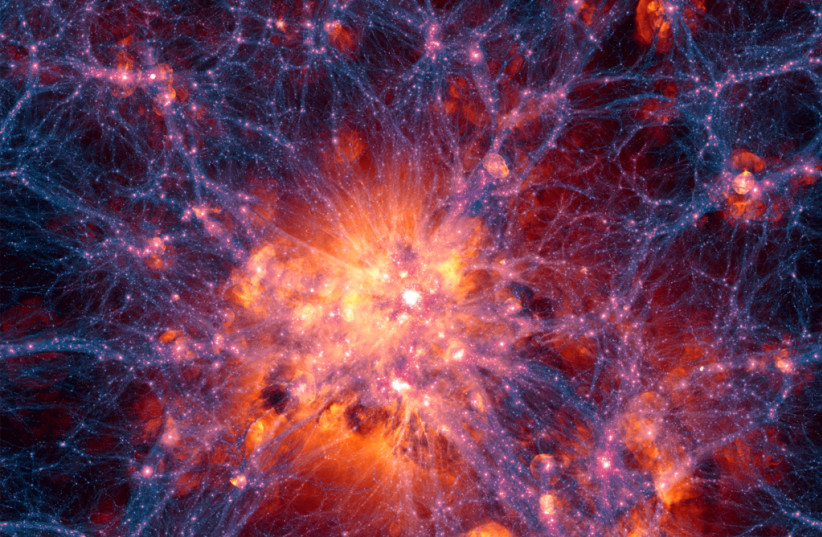
“The Milky Way’s history of collisions and growth leaves clear fingerprints on how dark matter is arranged at its core. When we account for that, the gamma-ray signal looks a lot more like something dark matter could explain,” the team declared.
While the study doesn’t provide a definitive answer, it opens new directions for understanding both dark matter and our galaxy’s evolution.
“This study gives us a fresh way to interpret one of the most intriguing signals in the sky,” the team added. “Either we’ll confirm that dark matter leaves an observable trace — or we’ll learn something entirely new about the Milky Way itself.”


https://disqus.com/home/forum/the-coconut-whisperer/

No comments:
Post a Comment