Friday, 18 July 2025

New Discoveries at site of Ancient Troy

Groundbreaking discovery at ancient city of Troy may prove legendary Trojan War true

Archaeologists digging at the ruins of ancient Troy have unearthed fresh evidence of a violent Bronze Age conflict, one that mirrors Homer's Iliad.

According to Homer's Iliad, the war began after Paris of Troy abducted Helen, wife of the Spartan king, triggering a Greek siege lasting 10 years. 

The most famous scene of the tale is the wooden horse used by the Greeks to sneak into the city and destroy it from within. 

Now, a team of Turkish researchers have uncovered dozens of clay and smoothed river rock sling stones, unearthed just outside what would have been the palace walls, along with arrowheads, charred buildings, and hastily buried human skeletons.

Together, experts say, the clues paint a chilling picture of close-range fighting and a sudden, catastrophic fall, just as the ancient Greeks described.

'This concentration of sling stones in such a small area suggests intense fighting, either a desperate defense or a full-scale assault,' said Professor Rustem Aslan of Canakkale Onsekiz Mart University, who is leading the excavation.

The sling stones, smoothed to aerodynamic perfection, were one of the Bronze Age's deadliest weapons, capable of cracking skulls at range when hurled from leather slings.

The stones found at the site date to around 3,200 to 3,600 years ago, exactly the period believed to match the Trojan War, which according to Greek historians took place around 1184 BC. 

Archaeologists have uncovered 3,500-year-old evidence at the ancient city of Troy that may point to a real war behind Homer’s legendary tale

Archaeologists have uncovered 3,500-year-old evidence at the ancient city of Troy that may point to a real war behind Homer's legendary tale

According to the archeologists, sling stones were common battlefield weapons in the Bronze Age, and their concentrated presence points to a siege, not a peaceful decline

According to the archaeologists, sling stones were common battlefield weapons in the Bronze Age, and their concentrated presence points to a siege, not a peaceful decline. [This is the first time I've seen pictures of the rocks used by the slingers, one of the main and most deadly types of fighters in those days. We used to call them "skipping rocks", good for skipping across the surface waters of rivers and bays. -AA]

For centuries, scholars dismissed Homer's Iliad as pure myth, a poetic fantasy centered on a quarrel over Helen, the 'face that launched a thousand ships,' and a wooden horse that tricked an entire city.

But the new finds suggest there may have been a real war behind the legend.

This summer's excavation, part of the Legacy for the Future Project, backed by Turkey's Ministry of Culture and Tourism, focused on the palace, marketplace, and defensive walls of Troy, a heavily fortified city once known as Wilusa in Hittite texts.

There, archaeologists discovered a cache of war relics: bone tools, a pointed 'biz' used for piercing leather armor, and even a knucklebone likely used as a gaming die, hinting at the lives of soldiers waiting for battle.

But it's the destruction layer, first uncovered in 2024 and now further expanded, that has stunned researchers. 

It contains burned ruins, broken weapons, and human remains buried in haste, signs of a sudden, brutal attack, not a slow decline.

The team's discovery, combined with arrowheads from previous digs, strongly suggests close-quarters fighting erupted in this part of the city, a likely battleground where defenders made a final stand. It also lines up with ancient texts.

Both Herodotus and Eratosthenes, Greek historians writing centuries later, claimed the Trojan War was a real event, while Roman poet Virgil immortalized its aftermath in the Aeneid, describing survivors fleeing the burning city.

There, archaeologists found war relics clustered together including, bone tools, a pointed “biz” used for piercing leather, and a knucklebone likely used as a gaming die

There, archaeologists found war relics clustered together including, bone tools, a pointed 'biz' used for piercing leather, and a knucklebone likely used as a gaming die

Archaeologists are continuing excavations at the ancient city of Troy in northwestern Turkey, a UNESCO World Heritage Site with a history spanning 5,500 years, aiming to uncover new evidence connected to the legendary Trojan War

Archaeologists are continuing excavations at the ancient city of Troy in northwestern Turkey, a UNESCO World Heritage Site with a history spanning 5,500 years, aiming to uncover new evidence connected to the legendary Trojan War

According to legend, one such survivor, Aeneas, would go on to found the line that led to Rome itself.

Ancient Troy was no backwater. Its location near the Dardanelles made it a vital trade hub between Europe and Asia, rich with goods and strategically placed to control naval access.

The city boasted stone towers, long walls, and a complex urban structure, making it a prized, and well-defended, target.

Modern archaeologists have worked the site since the 1870s, but attention has now turned to a very specific window: 1500 to 1200BC, the era most commonly associated with the Iliad.

Experts widely agree that Troy existed, but now, many also believe it suffered a real war during the Bronze Age collapse, a time when empires across the Mediterranean crumbled amid invasion, rebellion, and mass migration.

There’s still no physical evidence of a wooden horse, and scholars caution it may have been poetic symbolism, a metaphor for subterfuge or betrayal.

https://www.dailymail.co.uk/sciencetech/article-14908647/Groundbreaking-Trojan-War-discovery-prove-legendary-tale-true.html

Pictured, a depas goblet (depas amphikypellon), excavated by German archeologist Heinrich Schliemann in the 19th century, measuring about 6 inches (15cm) high. This was one type of goblet from which the people of Troy drank wine

Pictured, a depas goblet (depas amphikypellon), excavated by German archeologist Heinrich Schliemann in the 19th century, measuring about 6 inches (15cm) high. This was one type of goblet from which the people of Troy drank wine

The site of Troy was first settled in the Early Bronze Age, from around 3000 BC. Troy fell into ruin at the end of the Bronze Age, around 1180 BC

The site of Troy was first settled in the Early Bronze Age, from around 3000 BC. Troy fell into ruin at the end of the Bronze Age, around 1180 BC

Pictured, a Trojan Horse replica at Çanakkale, the site of ancient Troy, Turkey

Pictured, a Trojan Horse replica at Çanakkale, the site of ancient Troy, Turkey

Pictured: A Trojan horse is shown in a scene from 2004 action film Troy starring Brad Pitt

Pictured: Another version of the Trojan horse 

Painted onto a black background, the scene shows Helen of Troy, a beautiful woman in Greek mythology (left with a nurse or maid), meeting Paris, prince of Troy (right with his dog). The little Greek writing says: Alexander Helen. Alexander is another name for Paris

Painted in Ancient Pompeii onto a black background, this scene shows Helen of Troy, a beautiful woman in Greek mythology (left with a nurse or maid), meeting Paris, prince of Troy (right with his dog). 

Here, Leda, mother of Helen of Troy is about to conceive with Greek god Zeus disguised as a randy swan

Leda, mother of Helen of Troy, about to conceive with Greek god Zeus, disguised as a randy swan

Pictured is an image of soldiers fighting during the Trojan War that was started because the Prince of Troy stole a Spartans wife

Soldiers fighting during the Trojan War, that was started because the Prince of Troy stole a Spartan's wife

Stunt co-ordinator Franz Spilhaus revealed it took weeks to prepare Hector's (pictured) fight against Achilles. Menelaus also famously fought with Paris

Movie scene recreation of Hector's (pictured) fight against Achilles, attempting to show the types of weapons and shields used in those days.
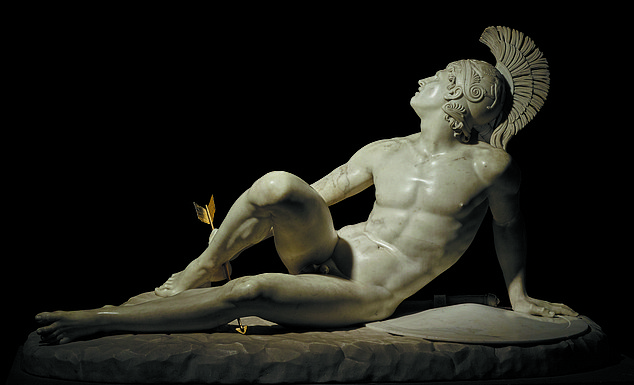
The first thing to say about Troy: Myth And Reality is that it’s big. That’s because, essentially, it’s three exhibitions rolled into one. (Above, The Wounded Achilles, 1825 by Filippo Albacini)
The Wounded Achilles, 1825 by Filippo Albacini) 

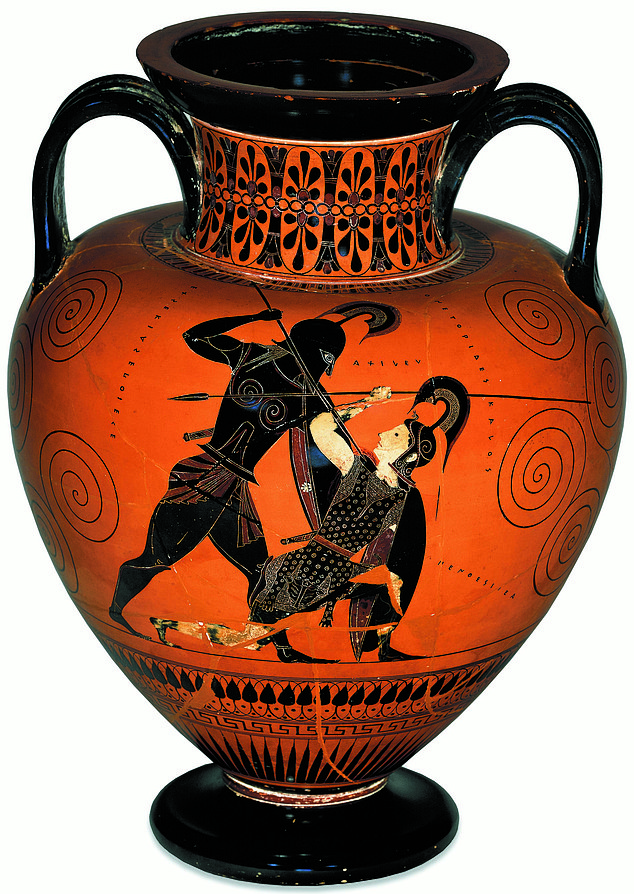
The opening section is excellent. Among its highlights is a huge wine-mixing bowl from 5th-century BC Athens. (Above, Athenian jar, c 530 BC, showing Achilles killing Penthesilia)

A huge wine-mixing bowl from 5th-century BC Athens. c 530 BC, showing Achilles killing Penthesilia

Thursday, 17 July 2025

Islamic Terror News: Terror risk at UK kids’ camp? UKLFI warns Islamic camp may be tool for radicalization


Terror risk at UK kids’ camp? UKLFI warns Islamic camp may be tool for radicalization

Girls who attend are required to wear the hijab and are mainly segregated "to ensure minimal overlap between girls and boys."

By Mathilda Heller, Jerusalem Post, July 14, 2025

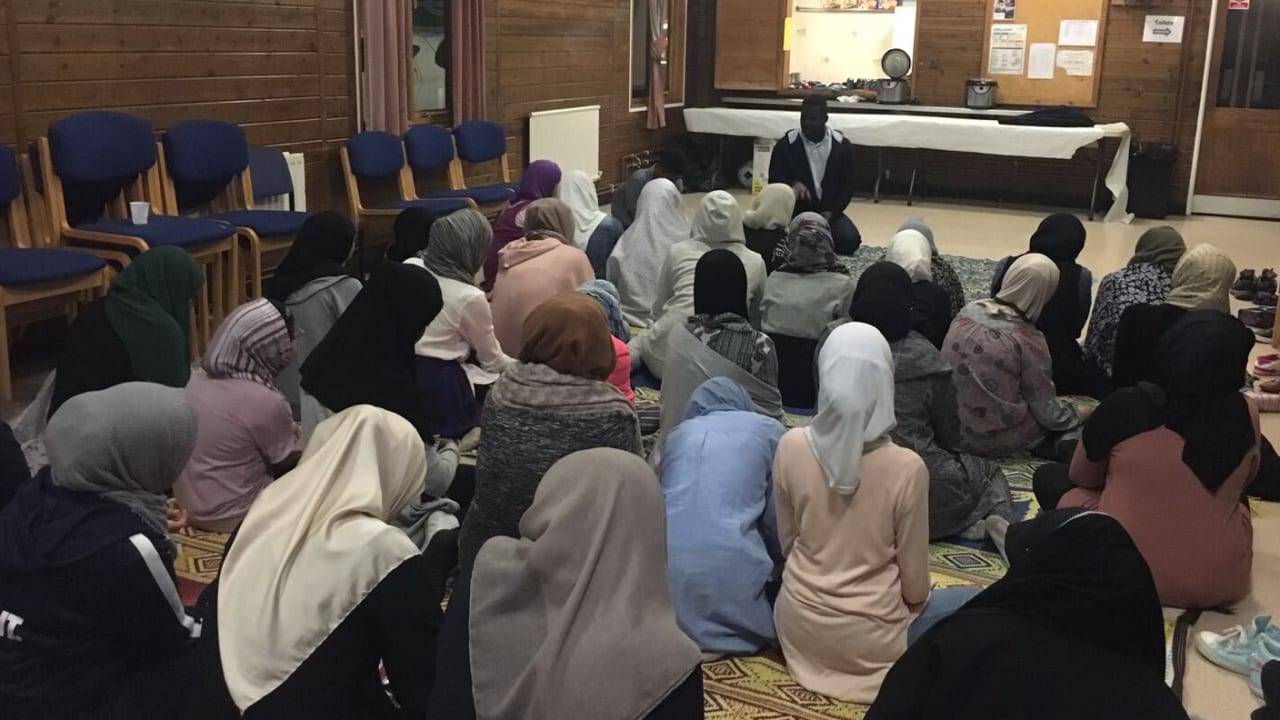
Camp Wilayah (photo credit: SCREENSHOT/X)


An Islamic summer camp for preteens in the UK may be a tool for extremism and radicalization, thus breaching the Terrorism Act, UK Lawyers for Israel (UKLFI) warned on Sunday.

These concerns relate to Camp Wilayah, which is set to take place in the Phasels Wood Activity Centre between August 22 and August 25. It is run by the Ahlulbayt Islamic Mission (AIM), a UK-based Shi’ite Muslim organisation established in 2003.

The camp’s stated aim is to allow “young campers [aged 8-13] to enjoy the outdoors, make new friends, and deepen their understanding of Islamic values – all in a fun and inspiring environment.” Girls who attend are required to wear the hijab and are mainly segregated “to ensure minimal overlap between girls and boys.”

AIM overtly supports the Islamic Republic and its Supreme Leader, Ayatollah Ali Khamenei. The charity sells both original works and commissioned translations on its website, including three books by Khamenei: Tabyeen: The Neglected Obligation, The Compassionate Family, and Islamic Beliefs: Reclaiming the Narrative.

It also features former Iranian Supreme Leader Ruhollah Khomeini’s Islamic Government and several books honoring IRGC jihadists.

The UKLFI highlighted AIM’s pro-Iranian regime dogma and claimed it “disseminates revolutionary Islamist ideology, glorifies martyrdom, and spreads antisemitic, conspiratorial, and extremist content online, including support for Hamas and Holocaust inversion.”

“Reports describe AIM as the British chapter of the AhlulBayt World Assembly, an Iranian-backed NGO operating globally to disseminate Khomeini’s vision of an Islamic Revolution,” according to the UKLFI.


Involving British authorities

The organization said that it wrote to the head of Safeguarding and Prevent at both the Brent Council, where AIM is based, and the Hertfordshire Council, where the camp will take place, calling on them to prevent the camp from proceeding and to take immediate action under the Counter-Terrorism and Security Act 2015 and the Children Act 1989.

It also warned the council heads that AIM poses a serious risk of radicalizing children and breaching terrorism and public order laws. “AIM promotes isolation from Western society, denigrates integration, and glorifies violent resistance.”

The UKLFI suggested that AIM may be breaching Sections 5 and 18, 19, 21, and 23 of the Public Order Act 1986, Section 26 of the Counter-Terrorism and Security Act 2015, and Section 47 of the Children Act 1989.

UKLFI’s Caroline Turner told The Jerusalem Post on Monday that the goal is for the authorities to investigate this camp to ensure that children are not being radicalized, but that it is not taking legal action.

While Iran and the IRGC are not proscribed in the UK, Hamas is, and Turner said that AIM has published justifications of Hamas’s October 7 massacre and has expressed opinions or beliefs that support the terrorist organization, which is potentially an offence under section 12 (1A) of the Terrorism Act 2000.

“We were concerned that AIM’s social media activity includes posts that advance an extremist ideology and promote antisemitic narratives,” she said.

“These include the glorification of martyrdom in violent conflicts,” such as statements saying that “AIM honors the martyrs of Palestine and Lebanon who have been killed by the Zionist regime,” Turner detailed.

“Glorifying individuals who have died in the context of the armed conflict with Israel risks encouraging others to seek martyrdom through violence and frames death in conflict as an aspiration,” she said.

“AIM’s dangerous and violent worldview could incite hatred and violence,” Turner added, “and we are concerned that this ideology would be inculcated in the children at its camp.”

The NUFDI report

The charity and the camp were mentioned in a May 2025 report on the Islamic Republic’s influence in the UK. The report, carried out by NUFDI, was previously written about by the Post.

NUFDI said that AIM’s London office is operated by the World Ahlul Bayt Foundation, which is currently directed by Hojjat al-Islam Muhammad Hassan Akhtari, a supposed co-founder of Hezbollah and a close ally of Khamenei.

It also claimed that AIM frequently posts controversial and partisan content on X/Twitter and its website, but removes it quickly soon after.

AIM also runs an e-commerce store called the House of Taha, which sells flags and insignia of Iranian-backed militias such as the Popular Mobilization Forces and Hezbollah, as well as texts from Khamenei and other Islamic Revolutionary Guard Corps commanders.

According to The Times, on October 12, 2023, AIM’s Instagram account shared a message saying that “a flood was inevitable” and the “Zionists brought this disaster on themselves”.

Lord Walney, the British government’s former extremism adviser, told The Times in May: “We cannot allow propaganda and influence from this theocratic dictatorship to be spread to children in the UK.”

“It is deeply alarming that schoolchildren are being taken to these camps. This raises further questions about the influence of Iran here in the UK,” he told the publication.

AIM’s response

In response to the reports on Sunday, AIM released a statement on Monday saying it “firmly rejects the defamatory and politicized claims made by certain media outlets, based on allegations from the UK Lawyers for Israel (UKLFI).”

“These accusations, framed in inflammatory language around ‘radicalization’ and ‘extremism,’ are part of a targeted smear campaign against a lawful British Muslim organization engaged in religious education, youth work, and community development.”

It added that it has continuously operated in “full compliance with UK law” and that Camp Wilayah has been operating as a “safe, well-supervised summer retreat for children” for 20 years.

AIM added that the claims of indoctrination at the camp are a means of “sowing fear and suspicion of Muslims” and are “Islamophobic in tone and discriminatory in impact.”

It lambasted the UKLFI specifically, calling the organization a “front group operating on behalf of the illegitimate and genocidal Zionist entity” and said that the platforming of it in the UK media is a sign of “decaying sovereignty in the UK.”

“We will not accept defamation, intimidation, or the outsourcing of UK civil society policy to the proxies of a foreign regime committing genocide against the indigenous people of Palestine.”

It made similar remarks following the publication of The Times report in May, saying, “Unlike the roughly 3,000 Zionist organizations in the UK, [AIM] neither takes orders from nor represents the interest of any foreign power.”

“We are proud of our record in opposing the 140-year Zionist campaign of genocide against the people of the Levant, which has included forced displacement, ethnic cleansing, and indiscriminate aerial bombardment, among many other crimes.”

According to AIM, “Times readers should ask themselves why this newspaper is so invested in laundering propaganda for the State of Israel and attempts to smear British citizens on behalf of a hostile and illegitimate foreign state.”

Turner told the Post that AIM’s statement about the UKLFI “illustrates that they are an extremist organization that doesn’t recognize the State of Israel or its legitimacy, even though it is a recognized state and a member of the United Nations.”

“Our statement was not Islamophobic or discriminatory, but merely concerned that children would be influenced by an extremist organization and inculcated with its views,” Turner continued.

She added that the matter should be handled by local authorities and the organization Prevent, which identifies individuals at risk of radicalization, offering them support and interventions, and countering extremist ideologies. 

“The UKLFI is an independent organization that is independent of the State of Israel,” Turner further said.

99% of ALL terrorist attacks carried out (globally) in just one month on record were by Islamists, explains senior Canadian intelligence veteran, Phil Gurski.


Please Recommend this page and follow us at

https://disqus.com/home/forum/the-coconut-whisperer/