Tuesday, 3 March 2026

Naval Court Martial in New Zealand

https://www.dailymail.co.uk/news/article-15607383/Female-navy-commander-faces-court-martial-New-Zealand-ship-struck-reef-autopilot-wasnt-turned-off.html

Female navy commander faces court martial after New Zealand ship struck a reef when autopilot wasn't turned off


A former Royal Navy officer will be court martialed after a New Zealand ship she was commanding hit a reef and sank after the crew failed to turn the autopilot off.

Commander Yvonne Gray, a former Royal Navy warfare officer, was commanding the HMNZS Manawanui when it hit the reef off Samoa on October 5 2024.

The ship was the Royal New Zealand Navy's specialist dive and hydrographic vessel and had been carrying out a reef survey near the Somoan island of Upolu.

It ran aground and caught fire before capsising.

Lieutenant Commander Matthew Gajzago and a third person will also face a court martial.

Cdr Gray, who served in the Royal Navy for almost 20 years, faces charges including that she was absent from the ship's bridge while within a nautical mile (1.8km) of a reef.

She also faces a charge of failing to manage the risks of conducting hydrographic work in uncharted waters close to reefs.

Cdr Gray faces a maximum of two years' imprisonment if convicted.

Commander Yvonne Gray was commanding the HMNZS Manawanui when it ran aground off Samoa in 2024

Commander Yvonne Gray was commanding the HMNZS Manawanui when it ran aground off Samoa in 2024

Black smoke was seen rising from the ship after it ran aground and caught fire - it later capsised

Black smoke was seen rising from the ship after it ran aground and caught fire - it later capsised 

The HMNZS Manawanui, pictured in front of the HMNZS Otago during a training exercise, cost NZ$103million (£45.6million)

The HMNZS Manawanui, pictured in front of the HMNZS Otago during a training exercise, cost NZ$103million (£45.6million)  

The ship is still on the seabed near the Samoan reef it struck

The ship is still on the seabed near the Samoan reef it struck

Divers survey the area around the sunken ship near the southern coast of Upulo, Samoa

Divers survey the area around the sunken ship near the southern coast of Upulo, Samoa

Her barrister Todd Simmonds said she had 'endured a lot of unjustified criticism' over the ship's sinking and his client denied the charges.

Cdr Gray is originally from Harrogate, north Yorkshire, and moved to New Zealand with her wife in 2012 before joining the country's Navy.

She took command of the Manawanui, her first such role, in December 2022.

A military court of inquiry found human error caused the ship to sink, with senior crew failing to notice autopilot was on as they struggled to control a thruster and stop it running aground.

Some 75 crew left the ship in lifeboats and were rescued despite tough currents and winds pushing them towards the reefs.

No one was 'heavily injured' and no lives were lost according to the Samoa Fire and Emergency Services Authority.

Two crew members were later hospitalised, with one suffering a dislocated shoulder and the other a back injury.

Another 12 crew suffered minor cuts and soreness.

Samoan police and emergency crews reportedly worked with Australian Defence personnel to pull the vessel's crew to safety

Samoan police and emergency crews worked with Australian Defence personnel to pull the vessel's crew to safety

Crews worked over Saturday night, battling fierce winds and currents, to bring the ships crew to shore

Crews worked over Saturday night, battling fierce winds and currents, to bring the ships crew to shore

All 75 crew members on board were rescued with no deaths or serious injuries. Pictured: the crew in Samoa after fleeing the ship

All 75 crew members on board were rescued with no deaths or serious injuries. Pictured: the crew in Samoa after fleeing the ship

New Zealand sent planes to repatriate the rescued crew (pictured)

New Zealand sent planes to repatriate the rescued crew (pictured) 

Pictured: the crew arriving home in New Zealand at RNZAF Base Auckland on October 7 2024

Pictured: the crew arriving home in New Zealand at RNZAF Base Auckland on October 7 2024

The 85-metre ship had cost the Kiwi government NZ$103million (£45.6million) to buy, modify and introduce.

Built in 2003, it was known as the MV Edda Fonn and was bought by New Zealand from Norwegian company Østensjø Rederi and delivered in May 2019.

It was New Zealand's first ship to be lost to the sea since the Second World War and the first to be lost in peacetime.

The ship's wreckage is still on sea floor near Upolu, Samoa.

https://www.dailymail.co.uk/news/article-15607383/Female-navy-commander-faces-court-martial-New-Zealand-ship-struck-reef-autopilot-wasnt-turned-off.html

HMNZS Manawanui hit a reef near Samoa, caught fire and sunk in New Zealand's worst peacetime navy sinking

HMNZS Manawanui hit a reef near Samoa, caught fire and sunk in New Zealand's worst peacetime navy sinking

Judith Collins, New Zealand's first female Defence Minister, (pictured) dismissed these claims on Thursday, describing them as coming from 'armchair admirals, people who will never have to make decisions which mean life or death for their subordinates'

Judith Collins, New Zealand's first female Defence Minister, (pictured)

Commander Gray took the helm of helm of HMNZS Manawanui in 2022 after the then-Prime Minister Jacinda Ardern gave a speech before releasing a bottle of champagne to wet the bow at the ship's commissioning (pictured: Ms Ardern with her then partner Clarke Gayford and their 11-month-old daughter Neve at the official ceremony at Devonport Naval Base)

Commander Gray took the helm of helm of HMNZS Manawanui in 2022 after the then-Prime Minister Jacinda Ardern gave a speech before releasing a bottle of champagne to wet the bow at the ship's commissioning 


Monday, 2 March 2026

How Israel and USA worked together to take out Iranian Leaders


How Israeli sleight of hand and US might led to the assassination of Ali Khamenei

An operation decades in the making took just 60 seconds to carry out.


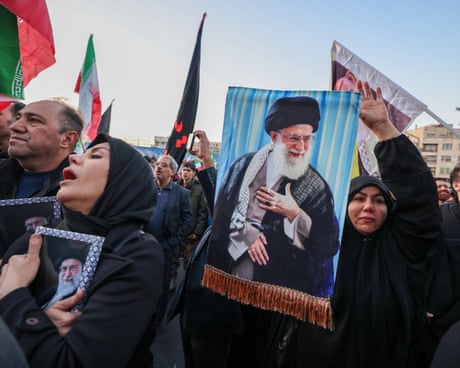
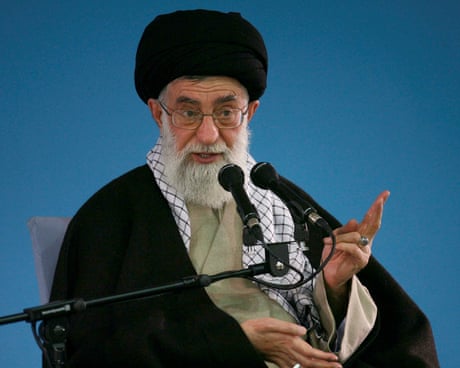
The assassination of Iran’s supreme leader, Ayatollah Ali Khamenei, was the culmination of decades of painstaking intelligence gathering by Israeli secret services, with crucial technological resources and manpower provided over the last six months by the CIA and other US intelligence services, which culminated in a single concentrated burst of lethal violence to decapitate the Iranian regime, according to experts, veteran spies and officials in Israel and the US.

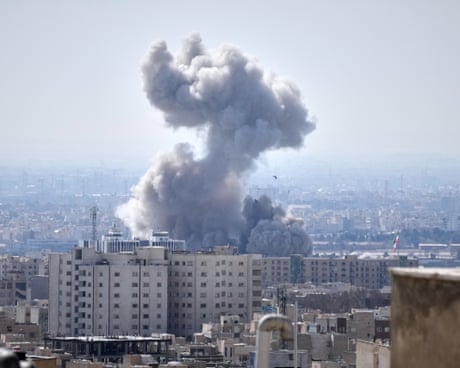
Khamenei was killed along with seven “members of the top Iranian security leadership who had gathered at several locations in Tehran” and about a dozen members of his family and close entourage in near-simultaneous strikes within 60 seconds, military officials in Israel said. Forty other senior Iranian leaders also died in the attack.

The killing of Khamenei, 86, opened the air offensive launched this weekend by Israel and the US in an effort to overthrow the radical clerical regime in Tehran, plunging the Middle East into renewed chaos and violence.

Amos Yadlin, a former head of Israel’s military intelligence service, said the strike was “a tactical surprise, an operational surprise” because the general expectation was that Israel would attack in darkness, replicating the surprise strike which opened the 12-day war in June.

The timing of the assassination was determined by information the CIA gleaned about a meeting of top Iranian officials at a leadership compound in the heart of Tehran scheduled for Saturday morning. Most critically, the CIA was able to tell Israeli counterparts that Khamenei would be at the site and the timing of the meeting, according to the New York Times.

Israeli spies had also been tracking Khamenei for many years, building a minutely detailed file on his daily routine and those of his family members, associates, allies and those charged with keeping him safe.

“It’s like a giant jigsaw puzzle. You are putting all these scraps of information together. Where you don’t have [reliable data] you look further into those. It will be everything: how do they get food, what happens to their trash … We all get up and go to bed, we all eat and drink,” said a former CIA veteran with decades of experience in tracking high-profile terrorist targets.

“We are in a world where information and data is so multi-layered that there is no one who doesn’t leave some kind of trail. Everything you do leaves a print.”

Reuel Gerecht, a former CIA targeting officer who worked on Iran and an analyst at the Foundation for the Defense of Democracies, said the US would have been able to bring significant technological assets into play, though it was Israel that had built the networks of agents on the ground capable of supplying human intelligence and carrying out covert operations within Iran.

Gerecht said reports in the Israeli media that a photograph of Khamenei’s remains were shown to Donald Trump and Israel’s prime minister, Benjamin Netanyahu, were plausible.

“The technological capacity of the US is extremely impressive and the tech does matter a lot, but I don’t think that the [CIA] had a lot to bring to the table in terms of [human intelligence] or covert action networks,” he said.

“If you combine the technological capacity with the networks on the ground that would certainly amplify its effectiveness.”

The Mossad, an abbreviation of the Institute for Intelligence and Special Operations in Hebrew, has been focused on Iran for decades, and has built deep networks of informants, agents and logistics there. This has allowed a series of operations including the assassination with a remote-controlled automatic machine gun of a top Iranian nuclear scientist travelling at speed in a car on a remote road, the infection with malware of computers running key parts of Iran’s nuclear programme and the theft of an archive of nuclear documents. The political leader of Hamas, Ismail Haniyeh, was assassinated in 2024 with a bomb placed in his favourite room in a government guesthouse in Tehran.

During the 12-day war in June, Israeli agents managed to identify the homes of Iranian nuclear scientists, intelligence officials and military commanders – information that allowed dozens to be killed in a first wave of surprise attacks.

Melman said the Mossad had made a key change of strategy almost 20 years ago, deciding to recruit local agents within Iran who were given state-of-the-art equipment and high levels of training.

David Barnea, who has led the Mossad since 2021, built a special department for a “foreign legion” of agents who have been deployed across the Middle East on sensitive missions.

Such agents were easier to recruit in Iran, where many people were opposed to the ruling regime, than elsewhere, Melman said.

Israel was poised to assassinate Khamenei last year, but Trump was reluctant to risk regional escalation and the reaction of allies concerned by the killing of a head of state. Such reservations appear to have disappeared in the months since the brief conflict last year, which ended shortly after US bombers attacked Iranian nuclear facilities.

Israeli military officials said there had since been “really very enhanced cooperation” between Israel and the US on Iran.

The flow of information from the Mossad’s networks on the ground in Iran would have been merged last week with intelligence gathered through communications intercepted by the US.

“I wouldn’t be surprised if they locked on to a variety of means to track [Khamenei],” said Gerecht. “The Iranians are pretty sloppy. They love their phones. So maybe the supreme leader had a stack of burner phones but it’s about people he was calling regularly.”

Finally, information would have been fed through to the US and Israeli militaries to allow precise targeting information to be compiled and the orders to be given for that brief but deadly and destructive minute.

“Sixty seconds. That’s all it took for this operation, but it is the product of years in the making,” said Oded Ailam, a former head of the Mossad’s counter-terrorism division and a researcher at the Jerusalem Center for Security and Foreign Affairs. “The modern battlefield is no longer defined only by tanks and aircraft. It is defined by data, access, trust and timing. One minute can change a region.”

https://www.theguardian.com/world/2026/mar/01/how-israeli-sleight-and-us-might-led-to-the-assassination-of-ali-khamenei