Saturday, 24 October 2026

Vacationing in Arazim Valley

https://www.jpost.com/travel/article-912505

Glamping in Arazim Valley: Historic farm becomes new hospitality hub

From fruit orchards to modern glamping: The legendary Tur Sinai farm near Jerusalem reopens its doors to visitors.


In 1952, Ze'ev and Sima Tur Sinai established a farm in the Arazim Valley (Emek Ha'arazim), situated at the western entrance to Jerusalem. They planted fruit orchards, developed mountain agriculture, and established the water plant, which purified wastewater for irrigation. This week, a new chapter opened on the farm’s historic grounds as the "I Belong. Israel" (Masa Israeli) organization launched a venue on the site combining educational activities with hospitality services.

The village was launched at an event attended by the chairman of "I Belong. Israel," Maj. Gen. (Res.) Eliezer Shkedi, and the organization's founder and CEO, Uri Cohen. As part of the launch, the renovated hospitality inn was inaugurated, offering 232 beds across air-conditioned glamping tents, cabins, and guest rooms.

I Belong. Israel Village in Arazim Valley, Jerusalem.
I Belong. Israel Village in Arazim Valley, Jerusalem. (credit: Masa Israeli)

The village will primarily serve as a hostel for thousands of youth and soldiers participating in the organization’s educational journeys. Additionally, it will host summer camps, instructor training programs, and group facilitation courses. The site is now also opening to groups from the general public, who will be able to combine their stay with traditional craft workshops, introductions to medicinal plants, and guided tours of the surrounding region.

"I Belong. Israel" was established 22 years ago with the goal of strengthening Zionist and Israeli identity, as well as fostering a sense of belonging to both the land and society. The organization works primarily with schools, alongside the IDF, corporate entities, and community organizations.

I Belong. Israel Village in Arazim Valley, Jerusalem.
I Belong. Israel Village in Arazim Valley, Jerusalem. (credit: Masa Israeli)

Development at the site remains ongoing. Renovations of the Tur Sinai event hall are expected to conclude in about three months, and an educational agricultural farm is scheduled to open in the village in 2027.

"There is special meaning in continuing our activity specifically in a place that tells a story of pioneering, cultivating the land, and initiative," said Cohen. "We want to enable youth, soldiers, and groups from all sectors of society to meet here and get to know one another."

https://www.jpost.com/travel/article-912505


Friday, 23 October 2026

Netanyahu blocks off West Bank travel after five wounded in terror shooting

Ambulances and security forces at the scene of a terror shooting in the West Bank, October 23, 2026.
(photo credit: MAGEN DAVID ADOM)

The military had announced earlier that morning that two terrorists involved in the attack had been killed. A manhunt for potential additional terrorists is still ongoing.


Prime Minister Benjamin Netanyahu ordered the city of Hebron to be cordoned off and for the entire West Bank to be blocked from entry and exit starting on Friday morning, after some five people were wounded in a terror attack in the area.

"We will pursue Hamas terrorists and those who send them, wherever they are and at any time," Netanyahu said. "You have nowhere to hide."

The military had announced earlier that morning that two terrorists involved in the attack had been killed. A manhunt for potential additional terrorists is still ongoing.

Magen David Adom said that five people had been wounded in the attack, with two in critical condition, one moderate, and two mild. The mildly and moderately wounded people were evacuated to the hospital.

Reportedly, the terrorists planned to carry out a larger attack on civilians, but were prevented from doing so thanks to the IDF units on the ground.

"This was a serious attack. The soldiers' swift actions prevented an even more serious attack and further harm to civilians and security forces. A large quantity of ammunition was found in the vehicle used by the terrorists to reach the scene of the attack, which was intended to be used to carry out an attack on a larger scale," IDF Chief of Staff Lt.-Gen. Eyal Zamir said in a statement. 

A discarded weapon used in the terror attack at the Judea Junction, October 23, 2026.
A discarded weapon used in the terror attack at the Judea Junction, October 23, 2026. (credit: ZAKA)

After the attack, the city of Hebron was placed under lockdown, and several surrounding villages were closed, the IDF said. The military also later blocked Highway 35 in both directions.

According to Army Radio, both terrorists, Hamouda and Firas Jua'ba, were from the same family in Hebron, both aged 27, and both married with two children each.

In a video recorded at the scene, a soldier can be heard saying that the terrorists had been actively shooting for over 20 minutes.

"The terrorist keeps shooting. There are still exchanges of fire with that son of a b***h terrorist. Our forces still haven't managed to get the wounded out," the person said in the video. "The terrorist has been shooting for more than 20 minutes now."

The Courage to Stand Alone


It takes courage to stand alone against the beliefs of an entire society. Few experienced this loneliness as deeply as Avraham. In a world steeped in idolatry, he introduced humanity to belief in one G-d. Avraham was the first lonely man of faith.

The Other Side

His radical ideas enraged those around him, who tried to burn him alive. Miraculously, he survived. He later left his homeland and journeyed toward the land of G-d, crossing treacherous terrain and the great rivers of the Tigris and Euphrates.

He became known as Avraham Ha'Ivri, a name that reflected three aspects of his identity. By ancestry, he descended from Ever, a descendant of Noach. The word Ivri also means someone from the other side, “ever.” Geographically, Avraham had traveled from beyond the great rivers, leaving his homeland to settle in a new land. Ideologically, he stood on one side of a great divide, bravely opposing an entire civilization that could not imagine a single G-d. Avraham came from the other side of the river and had the courage to stand on the other side of the world.

Soon after arriving in the land of Israel, Avraham found himself caught up in a regional war. The conflict became personal when his nephew Lot was taken captive. Avraham joined the battle and defeated four powerful warlords who had conquered and enslaved five neighboring populations. With his small force, he confronted armies far more powerful than his own. The name Avraham Ha'Ivri now took on another meaning. Beyond his ancestry and journey across rivers, he stood on one side against powerful enemies on the other. Significantly, the only time the Torah explicitly calls him Avraham Ha'Ivri is during this war.

A Nation Apart

Avraham's willingness to stand alone would become a defining feature of our nation. As his descendants, we would desperately need that same strength. We were meant to be a different people, committed to the values Hashem taught us even when others challenge them. We were chosen for responsibility rather than privilege, expected to live by higher standards and reflect the dignity of a life lived in G-d's presence. Throughout history, we would face a choice between Avraham's courage to remain different despite our loneliness and the temptation to surrender that difference for acceptance.

Exile intensified this loneliness. Scattered in small communities, we lived as guests in other people's homelands, often regarded as outsiders. Empires rose and great religions spread while we remained small and vulnerable. Yet we preserved our identity and faith, following Avraham's example. Wherever we lived, we held firmly to our faith and traditions, even when doing so set us apart from the surrounding society. The price of remaining different was often high.

With the birth of Israel, that loneliness began to ease in two ways. We could finally live together in our homeland, speaking a common language and sharing a national identity. We could preserve our distinctiveness while enjoying the dignity of sovereignty. We no longer had to explain why our lives were different.

At the same time, Israel gradually gained acceptance abroad. Over 75 years, our military strength, economy, and technological achievements earned international respect. Diplomatic relationships expanded. Countries sought our expertise, welcomed our innovations, and increasingly treated Israel as a valuable partner even when old prejudices lingered. We felt less alone both because we had one another and because the wider world seemed increasingly willing to accept us.

Alone Again

October 7 shattered much of that confidence in our "acceptance." The massacre in the south had barely ended, yet by October 8, protesters were already condemning Israel and portraying us as the aggressors. As we fought a just war against those who attacked us, we faced fierce condemnation and spurious accusations of terrible crimes. Israel has been sidelined, marginalized, and boycotted. Even our right to exist has been questioned, a challenge rarely directed at other nations. After decades in which we believed that our legitimacy had become an accepted fact, we discovered how quickly old arguments could reappear. Once again, we find ourselves in the footsteps of Avraham Ha'Ivri, standing on the other side of a world that struggles to accept us.

This renewed Ivri status extends far beyond Israel. Across the Western world, opposition to Israel has frequently spilled over into antisemitism. Jewish students face intimidation on campuses, Jewish institutions require heightened security, and many Jews feel increasing pressure to conceal their identity. Generations of hard-won acceptance suddenly feel fragile. Jews who once felt completely at home in their countries are discovering how quickly they can be made to feel like an outsider.

Whether in Israel or abroad, we are once again being called upon to follow in the footsteps of our common ancestor Avraham and summon the courage to be Ivrim, even when that means standing alone.

The Courage to Be Different

Most Jews are answering the Ivri call. Since October 7, hostility toward Jews has only strengthened the Jewish identity of many who had previously felt disconnected from our people. Many Jews who had placed great faith in liberal democracies and their promises of equality have begun to reconsider that confidence. We cannot always rely on others to defend our rights nor can we assume that social justice movements will also stand up for Jews. Sadly, many who champion the rights of other minorities show little concern for Jewish vulnerability. This painful awakening has drawn many Jews closer to their people.

While many Jews have embraced the courage of Avraham Ha'Ivri, standing firm in the face of a hostile world, others remain uncomfortable with the prospect of standing apart. Eager for acceptance, some have distanced themselves from Israel, even turning against its very legitimacy. There is a painful irony in disavowing a state that has become a vital anchor of Jewish identity and security. In their desire to be accepted by others, they are distancing themselves from their own people.

The Price of Acceptance

This sad pattern has tragic precedents. Throughout history, many Jews seeking acceptance in the wider world have been willing to sacrifice their faith and surrender core elements of their Jewish identity. In their desire to belong, they sometimes abandoned the core traditions and beliefs that had sustained our people for generations.

In the Hellenistic era, some Jews concealed their circumcision to fit into Greek society. During the Christian Middle Ages, some Jews converted to Christianity, viewing baptism as a ticket of entry into a Christian-dominated world. In the 19th century, as Jews were invited to participate more fully in European society, many surrendered aspects of their Jewish culture and identity to feel more comfortable in the emerging culture of modern Europe. Later, in Eastern Europe, some Jews enthusiastically joined the Communist revolution, exchanging their Jewish identity for a place in a movement they believed would usher in a new era of equality and progress.

Today, we are witnessing another version of this familiar pattern. In some social and cultural circles, public opposition to Israel has become a badge of acceptance. Some Jews feel that gaining approval in these environments, particularly on social media, requires them to distance themselves from Israel or even openly condemn it. The barter has changed, but the tragedy remains: Jewish identity is once again being traded for public acceptance.

Avraham taught us that standing alone requires courage. After October 7, we are once again discovering that our identity and our future cannot depend upon the approval of others. To be an Ivri is to remain faithful to our convictions even when the world stands against us.


By Rabbi Moshe Taragin

https://jewishpress.com/the-courage-to-stand-alone/

‘Hypocrisy of very first order,’ experts say of Dems decrying ‘settler violence’ in Israel without discussing who is committing crime in their districts


View of the Efrat, Gush Etzion, July 31, 2025. Credit: Wisam Hashlamoun/Flash90.


“They get social credit within their political bases in terms of talking about settler violence and and taking up the side of the Palestinians on issues between them and Israel,” Rafael Mangual of the Manhattan Institute told JNS.


Rep. Gregory Meeks (D-N.Y.), ranking member of the House Foreign Affairs Committee who is likely to lead the panel if Democrats take over the House, said on Oct. 18 that Washington Post photographer Heidi Levine, European diplomats and Palestinian olive harvesters were the targets of “brutal attacks.”

“Prime Minister Netanyahu must act now to stop settler violence, protect civilians and ensure those responsible are brought to justice,” he stated. “The impunity must end.”

If entrusted with the House panel gavel in the next Congress, “I will advance the West Bank Violence Prevention Act to impose targeted sanctions on those who commit or support this violence,” he stated. “Those responsible must face consequences.”

On his congressional website, Meeks, who represents New York’s 5th Congressional District, including much of southeastern Queens and the largely Jewish enclave of Far Rockaway, warns of holding actions of individual criminals against entire communities.

“I strongly oppose policies that demonize or target entire immigrant communities based on the actions of a few,” Meeks states. “Most immigrants are law-abiding, hardworking members of society, who contribute to our economy and enrich our neighborhoods.”

“A just system must distinguish between those who pose a real threat and those seeking a better life and focus enforcement accordingly, with fairness, due process and respect for human dignity,” he states. (JNS sought comment from Meeks.)

Democrats who are quick to identify Israeli ‘settlers’ as perpetrators of violence in Judea and Samaria are often less willing to identify the demographic groups responsible for violent crime in their own districts, according to Rafael Mangual, senior fellow and head of research for policing and public safety at the Manhattan Institute.

“When it comes to crime in their own district, then they have to actually account for their records and the decisions that they make,” Mangual told JNS. That’s always going to be a much less comfortable route for people.”

Israel Judea Samaria
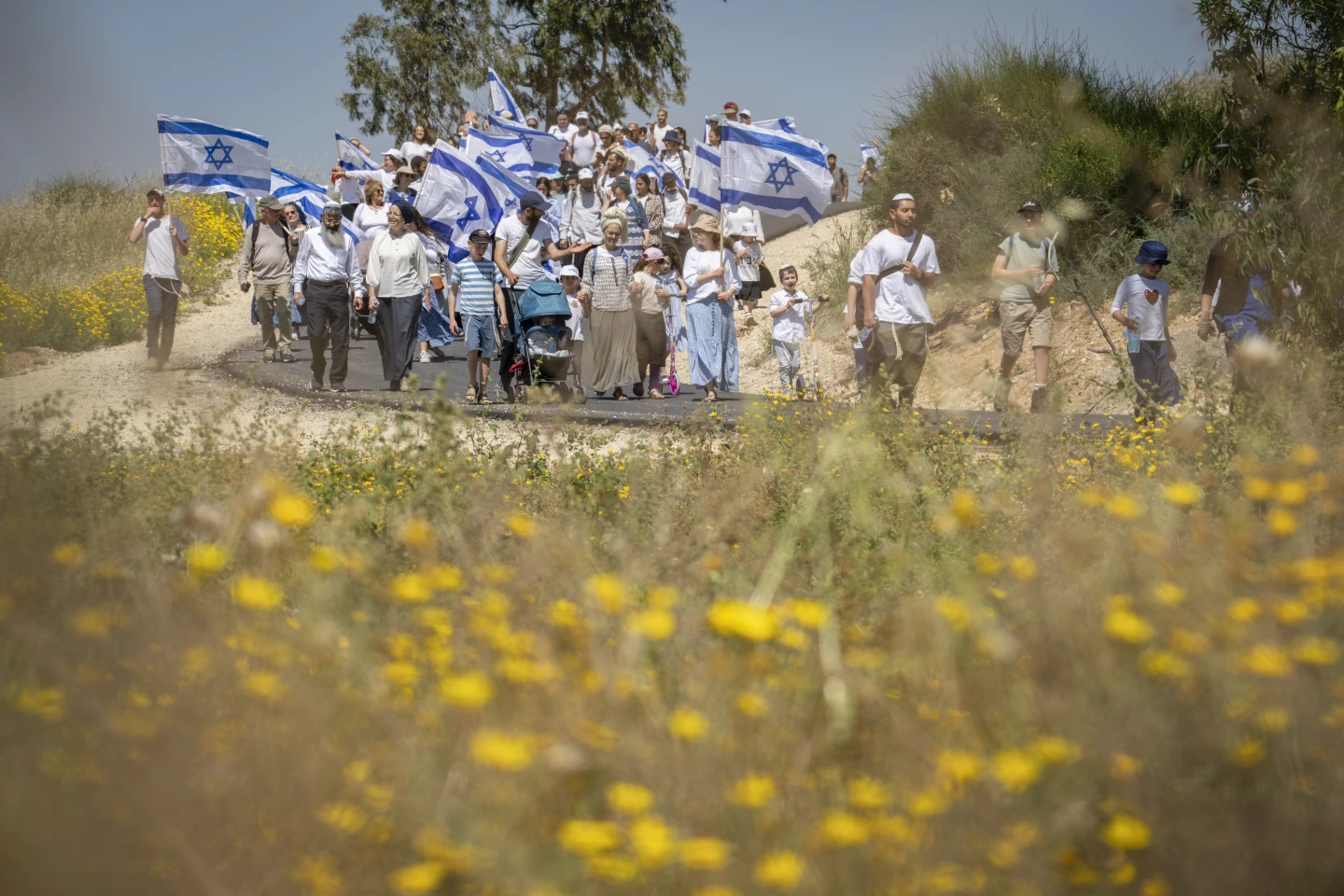
Jews march in support of residences in Judea and Samaria, April 22, 2026. Credit: Flash90.

On domestic crime, Democrats tend to emphasize social conditions, including poverty, education and economic inequality, while Republicans favor an “enforcement-centric approach,” Mangual said.

Focusing on gun control, for example, rather than “the core of the problem, which is how their policies interact with the criminal justice system and create the conditions for more gun violence than we ought to have,” also allows Democrats to avoid scrutiny of their own criminal justice policies, according to Mangual.

“It’s a politically effective way to deflect from issues that they’re less comfortable talking about,” he said.

That dynamic is inverted when it comes to Israel, he told JNS.

“They get social credit within their political bases in terms of talking about settler violence and taking up the side of the Palestinians on issues between them and Israel,” he said. “I think the dynamics are just inverted.”

At least a dozen Democratic members of Congress have publicly condemned what they describe as “settler violence” in Judea and Samaria in October alone.

Rep. Jamie Raskin (D-Md.), who co-sponsored legislation restricting arms sales to Israel, decried what he described as violence by “right-wing vigilantes” on Oct. 16.

“Are we going to tolerate accelerating vigilante violence against Palestinian civilians and foreign observers by right-wing vigilantes who operate with government protection?” the Jewish congressman stated.

Rep. Ro Khanna (D-Calif.), who has accused Israel of “genocide” and claimed that armed Israeli settlers detained him during a July visit to Judea and Samaria, stated on Oct. 16 that Israeli settlers “operate with impunity.”

“We need to cut off aid to Israel that is used to fund settler activity and stop the sales of these weapons,” he stated.

Rep. Joaquin Castro (D-Texas), who opposed a 2024 congressional resolution denouncing the United Nations for placing Israel on its list of countries accused of violating children’s rights, warned on Oct. 16 against what he called “violent land grabs” in Judea and Samaria.

“Attacks like this one pave the way for the violent land grabs taking place throughout the West Bank and push us further away from peace,” he stated.

Maurice Hirsch, a former senior military prosecutor for Judea and Samaria and longtime legal adviser on counterterrorism policy, told JNS that American politicians use the term “settler violence” unfairly, implicating hundreds of thousands of Israelis who have committed no crimes.

Those politicians “are besmirching an entire law-abiding population,” Hirsch told JNS.

Synagogue NYPD
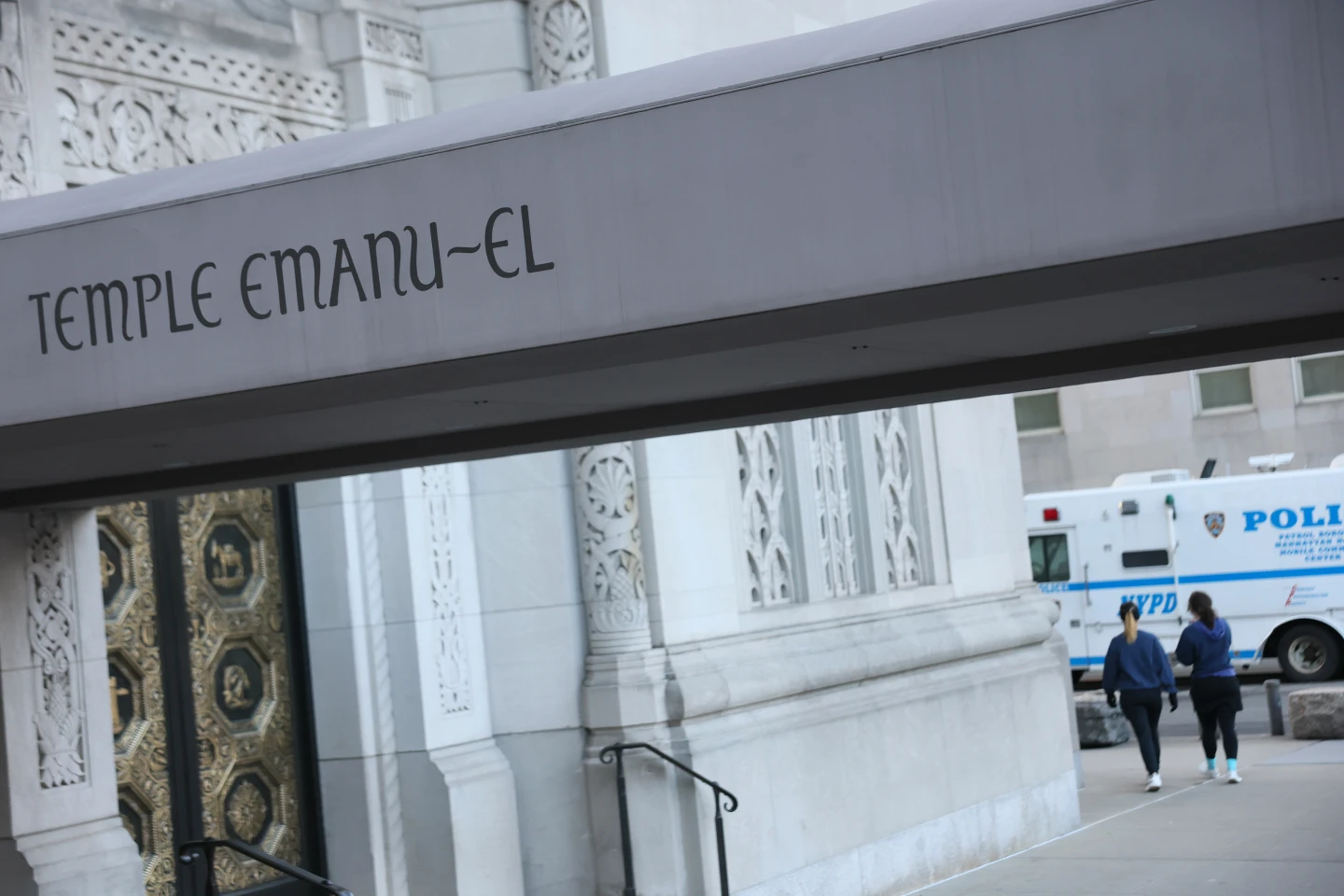
A New York City Police Department Mobile Command Center trucks are stationed near Congregation Emanu-El on March 13, 2026. Credit: Michael Santiago/Getty Images.

“There are 750,000 law-abiding settlers, and they’re talking about settler violence as if the settlers are violent.”

“If you had 10 black people in any one of their jurisdictions, would they be talking about black violence or Islamic violence?” Hirsch told JNS. “Absolutely not.”

Hirsch argued that the same terminology would be considered discriminatory if applied to other populations.

“When you say it’s ‘settler violence,’ what you’re really saying is it’s Jewish violence,” he told JNS. “The Jews are violent.”

Jews who commit violence against Arabs “don’t represent the settler movement. They don’t represent the State of Israel,” Hirsch said. “They’re doing tremendous damage to the State of Israel, and everybody would be happy if they were behind bars.”

Hirsch questioned whether U.S. politicians condemning the violence are interested in distinguishing between individual perpetrators and the broader Israeli population.

“Their goal is not to talk about the actual violence in any way, shape or form,” he told JNS. “Their goal is to undermine and delegitimize Israel.”

Naomi Linder Kahn, director of the international division of Regavim, an Israeli nonprofit that monitors land-use and enforcement policies in Judea and Samaria, told JNS that much of the international criticism of “settlers” rests on what she said is misleading United Nations data.

Regavim examined 8,333 incidents of “settler violence” that the United Nations Office for the Coordination of Humanitarian Affairs recorded over a decade.

“What we found was that 95% of the reports of settler violence that OCHA is reporting on either didn’t involve settlers, didn’t involve violence or didn’t happen in Judea and Samaria,” she said.

Of 59 Palestinian fatalities attributed to Israeli civilians in data from the U.N. agency, Regavim classified 26 as self-defense and 24 as deaths caused by Israeli security forces, not Israeli civilians. Of the remaining nine, four involved unidentified perpetrators, two remained before the courts, one was self-inflicted and another was reportedly missing from the dashboard.

That left “one verified incident of unprovoked violence that resulted in an Arab fatality,” Linder Kahn told JNS. “One.”

The U.N. definition of settler violence is so broad that it includes incidents with no physical confrontation, according to Linder Kahn.

“There’s an incident where a dog bit an Arab laborer. That’s ‘settler violence,’” she said. “There’s an incident where a cow was hit by a tractor. Settler violence.”

Asked if American politicians apply a different standard when discussing violence involving Jews, Kahn said, “Of course.”

“That’s obvious from the data,” she told JNS. “You have a willing audience.”

“Congressmen in Michigan, that’s a great example, whose last name is El-Sayed or Omar or Tlaib or whatever it is,” she said, of Michigan Senate Democratic nominee Dr. Abdul El-Sayed, Rep. Ilhan Omar (D-Minn.) and Rashida Tlaib (D-Mich.).

“They’re a willing audience,” she said. “They’re waiting for this false narrative so that they can have a weapon, and they have the weapon. The weapon has been prepared for them.”

If asked to identify the demographic groups responsible for the most crime in their own districts, those same politicians would likely say that doing so is racist, she said.

“‘We don’t profile,’” they might say, according to Linder Kahn.

“They only profile us,” she said. “They don’t profile anybody else. Very convenient.”

Mangual told JNS that avoiding discussion of demographic patterns in American crime statistics can ultimately hurt the communities most affected by violence.

“I think if we’re being completely honest, which we know we should be, we ought not obfuscate the reality that crime is very hyper-concentrated geographically and demographically, both in terms of victimization and perpetration,” he said.

“There’s more danger in trying to avoid the realities,” he told JNS.

Over the past two decades, politicians on the Left have pushed the idea of “disparate impact with respect to criminal enforcement,” according to Mangual.

But that notion “that we ought to expect equal outcomes across different culturally identifiable groups when it comes to criminal justice enforcement” is misguided, he said.

“Criminal victimization isn’t evenly distributed, nor is criminal perpetration,” he said.

Mangual pointed to New York City, where he said black and Hispanic people have accounted for at least 95% of shooting victims in nearly every year since 2008.

“Those two demographic groups do not constitute anywhere close to 95% of the population,” he said. “If we were to ignore that, that would mean deploying police resources in a way that doesn’t reflect that reality. That would mean systematically denying those very groups and neighborhoods the protection that the crime statistics suggest that they should have.”

“If what we want to do is produce equal outcomes with respect to enforcement, the only way that we can do that is to exacerbate the already unequal outcomes with respect to criminal victimization,” he told JNS. “I think that’s wrongheaded.”

FBI data breaks down its data on offenders of hate crimes in terms of “race” and “ethnicity.” Of the anti-Jewish hate crimes that the FBI has recorded this year, the bureau states that about 40% of offenders were white and 10% black. Hispanic or Latino offenders accounted for about 4%. The offender’s race was unknown in about 42% of cases.

Hirsch called the disparity “hypocrisy of the very first order.”

Democrats are “applying a Jew-specific standard,” he said.

“In every single one of the jurisdictions that these people are talking from, there are antisemitic crimes,” Hirsch said.

“Nowhere is there 100% law enforcement, but that’s what they’re demanding of Israel,” he said. “Why aren’t you doing more? Why aren’t you people doing more to stop antisemitism, Mamdani and the likes?”

Zohran Mamdani, mayor of New York City who has also denounced Israel regularly, has seen antisemitic hate crimes surge 182% in his first month in office. Jews, who are about 10% of New Yorkers, have been the targets of more than half of the city’s religion-based hate crimes since then.

“Not only are they not doing anything to fight antisemitism, they’re fueling the flames,” Hirsch told JNS. “It’s a complete double standard, where Israel is held to an invented standard that they themselves don’t apply, and then vilified when they don’t meet the invented standard.”

Democrats speaking out about Israel ought to condemn the “day-to-day terrorism of the Palestinians” as well, according to Hirsch.

“Not only are they not condemning it, in many cases they are justifying the terrorism,” he said. “It’s all part of that double standard.

https://www.jns.org/news/u-s-news/hypocrisy-of-very-first-order-experts-say-of-dems-decrying-settler-violence-in-israel-without-discussing-who-is-committing-crime-in-their-districts

Rikki Zagelbaum
Rikki Zagelbaum is reporter at JNS based in New York City and in Israel.