
https://www.timesofisrael.com/idf-dusts-off-decades-old-posts-along-jordan-border-to-battle-threats-from-beyond/
IDF dusts off decades-old posts along Jordan border to battle threats ‘from beyond’
Drawing lessons from October 7, military massively bolsters defenses along mostly calm eastern frontier, stepping up fight against gunrunning, drones and other threats orchestrated by Iran

GESHER ADAM, West Bank — On the evening of August 24, Israeli security forces received information indicating that the smuggling of weapons from Jordan into the West Bank was going to take place within hours.
Police officers and Israeli troops staked out covert positions near a defunct bridge north of Jericho known as Gesher Adam, or the Damiyah Bridge, which once crossed the Jordan River, and lay in wait to ambush the gunrunners. Meanwhile, other forces searched the area, with support from Israeli Air Force aircraft and other surveillance systems.
As dawn broke, soldiers of the mixed-gender light infantry 47th “Lions of the Valley” Battalion, who had been scanning the border area all night, spotted two suspects and gave chase.
The pair, two Palestinians from Jericho in their 20s, were captured and questioned by police officers who joined up with the troops. The alleged smugglers then led the forces to a bag they had planted in the area to be picked up later, with 10 handguns inside.
Weapons smuggling is a constant challenge for Israel along its long, porous eastern border with Jordan. Unlike Israel’s other frontiers — with Egypt, Lebanon, and Syria — the border with Jordan is largely open aside from chain-link fencing, and guarding is limited, making it an easy channel for large-scale smuggling.
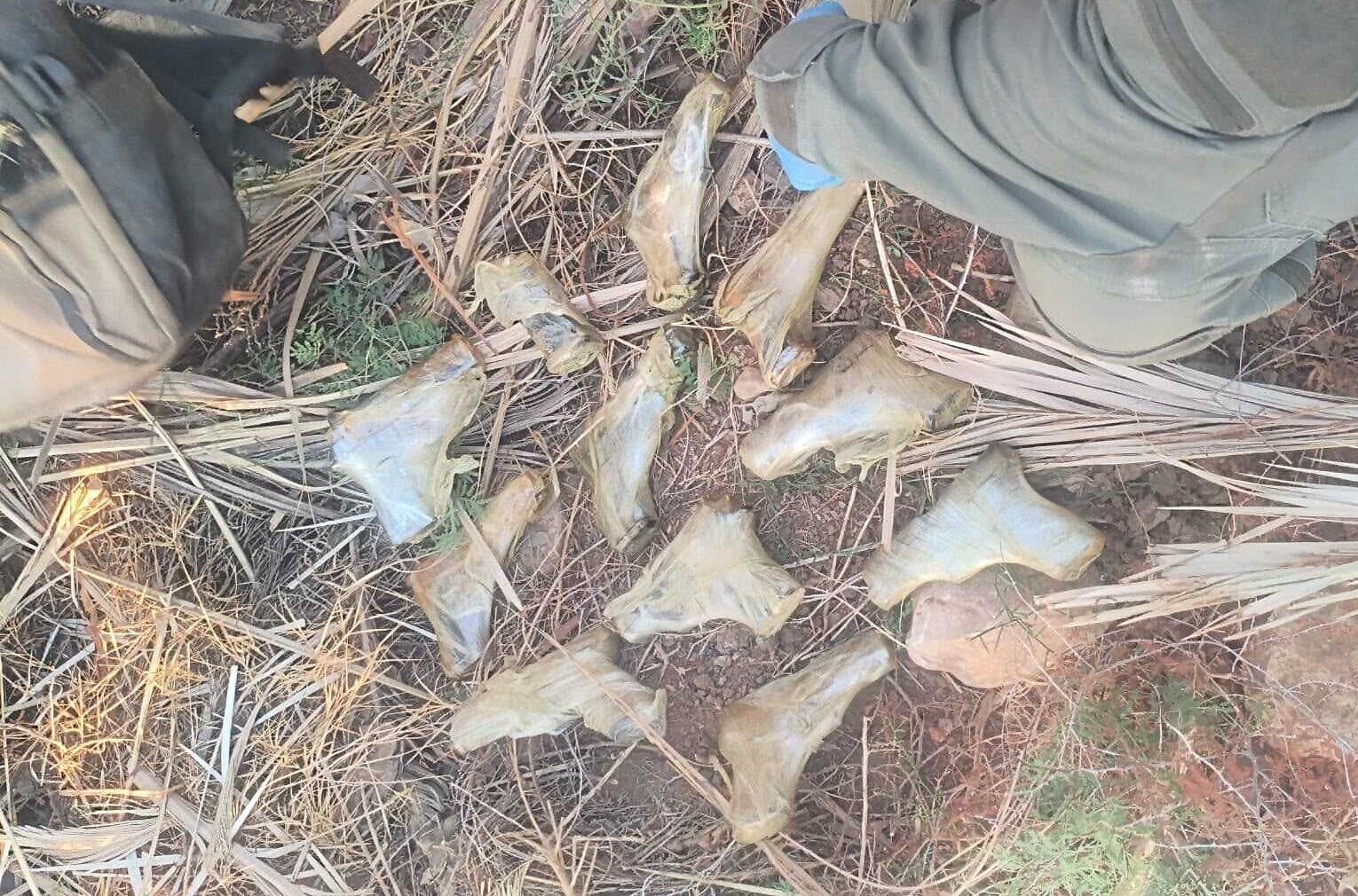
Much of the weapon smuggling into the West Bank and Israel from Jordan is orchestrated by Iran, according to IDF assessments. Officials told the New York Times in 2024 that Iran was trying to “broadly inundate” the territory with weapons in an effort to “foment unrest” against Israel.
Nearly four years ago, this reporter wrote about Israel’s efforts to thwart the gunrunning on the border. Returning to the border last month, The Times of Israel was told by an IDF officer that while the smuggling attempts have not significantly changed since then, the army has.
During the June 2025 war with Iran, the Israel Defense Forces’ new 96th Regional Division, which goes by the nickname Gilad, completed a rapid formation within a 48-hour period, after initially being set for deployment on August 1, 2025.
Previously, the northern Jordan Valley area, including areas in the West Bank, had been held by just a single brigade. The entry of the full division brought more troops, higher-ranking officers and more resources to the challenge of guarding the rugged border region.

Border fence between Jordan and Israel
Since deploying, the 96th Division has expanded its coverage area south to the Dead Sea and is eventually set to take responsibility for the entire frontier from the Israel-Jordan-Syria tri-border area to the far south, also encompassing the Yoav Regional Brigade, currently part of the 80th “Edom” Division.
The division’s chief of operations told The Times of Israel during last month’s visit to an army post next to Gesher Adam that there had been improvement in stopping weapon-smuggling attempts since the 96th was deployed.
“Part of the problem before was we weren’t necessarily seeing everything. With the establishment of the division and with the building [of capabilities] and the bringing of new tools, it has allowed us to see and stop the smuggling,” said the officer, who cannot be named in line with military protocol.

Damiyah Bridge between Jordan and Israel
“I think that there is definitely a change since the division has been here in the amount [of weapons captured] and the ability for us to stop the attempts,” he said.
Lessons from October 7
One of the first changes that division chief Brig. Gen. Oren Simcha implemented upon taking responsibility for the border was restoring 45 long-disused military posts along the Jordan River bank — the actual border line.
When Israel and Jordan signed a peace deal in 1994, the fortified border posts built decades earlier were abandoned in favor of larger bases slightly farther from the frontier, leaving only patrols along the border line.
When troops first explored the abandoned outposts in June 2025, they found them filled to “knee level” with “dirt, dust, and garbage,” the operations officer said. “No one had been there, and most people didn’t even know [of] their existence.”
The soldiers spent days shoveling away the dirt and cleaning and repainting the posts along the frontier, before they were kitted out with power, supplies and new surveillance systems.

Bunkers inside fortified outpost on border
One of the key tactical lessons the military learned from Hamas’s devastating terror onslaught on October 7, 2023, from the Gaza Strip, was that a border fence alone is not enough to defend a frontier. Troops are needed along it.
For example, the army’s Nahal Oz army base, just a few hundred meters from the border with Gaza, was not built like a fortified outpost. The base had little to no defensive infrastructure, and its guard posts facing the Strip were rarely manned, allowing Hamas terrorists to quickly overrun it.
Despite decades of calm along the border and good coordination between the Israeli and Jordanian militaries, the IDF has been preparing for the worst. The military assessed that in the event of a large-scale attack emanating from the east, the existing bases set back from the border would not cut it.
Still, the IDF is not permanently stationing troops in the newly restored outposts.
When the Times of Israel toured the bunkers, fighting positions, and trenches of the newly equipped outpost near Gesher Adam, the fortified position was empty of troops, aside from a single guard post.
Soldiers spend most of their time at an adjacent “modern” base. In the event of an emergency, they rush to the fortified site and defend the border, the operations officer said.
Alongside the 45 restored posts, Israel is also upgrading two 40-kilometer (25 miles) sections of its aging fence along the border with Jordan, which is several hundred meters from the actual border — the river.
One section is being built between the Hamat Gader hot springs at the southern edge of the Golan Heights and the community of Yardena. The other is being built between the Jordan Valley-West Bank checkpoint and the settlement of Yafit. During the Times of Israel’s visit, the second portion of the fence was nearing completion.

As we headed back from the frontier post, through the new border fence, the operations officer received a phone call from headquarters about a drone attack in the division’s area of operations.
According to the military, the two drones had not been launched from Jordan or by Jordanians. Instead, they had likely been sent by pro-Iran militias operating from Iraq, the army said.
Both were shot down over the Dead Sea area.
“The Jordan border is a peaceful border,” the officer said. “We are specifically looking at everything that’s coming from beyond.”
https://www.timesofisrael.com/idf-dusts-off-decades-old-posts-along-jordan-border-to-battle-threats-from-beyond/

No comments:
Post a Comment