

|
October 10, 2026, 8 PM ET
Despite its apparent antiquity and worldwide familiarity, the custom of placing written prayers into the crevices of the Western Wall is neither biblical nor talmudic in origin. Rather, it is a comparatively late development that emerged out of a confluence of evolving Jewish devotional habits, mystical sensibilities, and the unique religious status of the Wall itself. Tracing its origins, development, controversies, and the parallel institutionalization of the removal and burial of these notes offers a revealing window into the interaction between popular piety, halachic considerations, and modern administrative religious practice.
The earliest stratum of the practice must be understood against the longstanding sanctity attributed to the Western Wall. From at least the early medieval period, Jewish sources attest to the belief that the Shechinah (the “Divine Presence”) never departed from this remnant of the Temple complex, and pilgrimage to the Wall, especially after the destruction of the Second Temple in 70 CE, became a locus of mourning, prayer, and supplication. Medieval travelers regularly describe Jews pressing close to the stones, kissing them, and inserting fingers into crevices as symbolic acts of intimacy with the sacred, but these sources do not describe the insertion of written texts, as prayer remained primarily oral or spiritual, consistent with classical Jewish norms.
The widespread and emotionally resonant custom of placing written prayers into the crevices of the Western Wall presents a striking paradox from a halachic and historical standpoint: although it is practiced by millions and often perceived as ancient, explicit discussion of it by leading rabbinic authorities is relatively limited, indirect, and often inferential rather than formalized in classic responsa literature. Nevertheless, by carefully examining certain rabbinic figures, transmitted traditions, institutional rulings, and broader halachic tendencies, it is possible to reconstruct a meaningful map of rabbinic attitudes, ranging from endorsement and accommodation to reservation and critique.
The transition from oral to written supplication at the Wall appears to have emerged only in the early modern period, specifically in the eighteenth century. Any serious historical treatment of the custom must begin with the figure most consistently associated, rightly or wrongly, with its origin: Rav Chaim ibn Attar (d. 1743), universally known as the Or HaChaim. Yet, as will become clear, the evidentiary basis for attributing the practice to him is late, anecdotal, and mediated through later rabbinic literature rather than through contemporaneous documentation, a fact that is essential to keep firmly in mind when evaluating both the tradition and its subsequent reception.
Born in Salé, Morocco, into a distinguished rabbinic family, the Or HaChaim received a traditional education steeped in Talmud, halacha, and Kabbalah. He quickly emerged as a scholar of unusual breadth and his life unfolded across several centers of the Sephardic diaspora: Morocco, then Italy, and finally Eretz Yisrael. His most famous work, for which he is named, Or HaChaim, a multi-layered commentary on the Pentateuch published in 1742, secured his enduring reputation and it was widely studied not only among Sephardic scholars but also embraced enthusiastically by emerging Chassidic circles throughout eastern Europe. The sefer became one of the rare Sephardic works to enter the Ashkenazic mystical canon, and later Chassidic masters, including figures in the orbit of Israel ben Eliezer – aka the Baal Shem Tov – held him in exceptionally high esteem.
In 1742, the Or HaChaim made aliyah and settled in Jerusalem, where he established the yeshiva Knesset Yisrael and quickly became one of the leading rabbinic figures of the city. Although his presence there was brief (he died a year later), it was highly influential, and his grave on the Mount of Olives became, and remains today, a pilgrimage site.
It is within this aura of charismatic piety and kabbalistic authority that the tradition connecting him to the Western Wall note practice emerges. The core story in its most widely circulated form is that a distressed individual approached him seeking supernatural assistance in the form of an amulet or a written prayer and, rather than providing a conventional kabbalistic formula, he wrote (or instructed the petitioner to write) a note and directed that it be placed into the crevices of the Western Wall.
A more elaborate version of the story, preserved in later retellings, adds important details: the petitioner expected esoteric divine names but, instead, she received a note that contained only a plain supplication. When this note was temporarily lost and later recovered, its simplicity became the moral of the story: the power lay not in magical formulas, but in sincere prayer directed at a locus of divine presence.
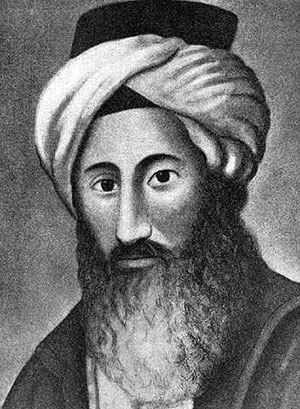
Another related tradition involves Rav Chaim Yosef David Azulai, universally known as the Chida, who was instructed by the Or HaChaim, his rebbe, to place a written prayer in the Wall upon arriving in Jerusalem. R. Azulai later attributed his success to that act. These narratives, though varying in detail, share several consistent features: (1) the use of a written note; (2) placement within the Wall; (3) a context of personal distress or petition; and (4) the authority of the Or HaChaim as the initiator.
Crucially, however, no surviving writings of the Or HaChaim himself mention such a practice, nor do eighteenth-century contemporaries record it. All known versions of these stories are late, with the earliest identifiable textual attribution appearing not in contemporary eighteenth-century sources but in twentieth-century compilations of minhagim, particularly those associated with Rav Chaim Elazar Spira, who is cited as transmitting the story in works such as Taamei HaMinhagim, a genre of literature that collects customs and their purported origins.
The strongest alternative to the Or HaChaim attribution relates to Rav Gedaliah of Semitzi, a Polish Jewish traveler whose work describing his journeys in Eretz Yisrael dates from the end of the seventeenth century. Modern discussions of the subject occasionally cite his 1699 visit to Jerusalem as evidence that Jews were already placing written petitions into the Wall before the lifetime of the Or HaChaim’s activity in Jerusalem, but caution is required here because the surviving references are secondhand and not all scholars agree that R. Gedaliah’s remarks clearly describe the physical insertion of written notes into the Wall (as opposed to the recitation or delivery of written prayers in a more general sense). For that reason, R. Gedaliah is perhaps better described as, at best, a possible early witness to the practice rather than a clearly identifiable founder of it.
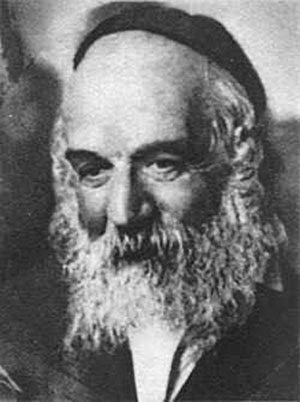
Another important figure is Rav Chaim Elazar Spira (1871-1937), the Munkatcher Rebbe and author of Minchas Elazar. He is not ordinarily presented as the originator of the custom, but he occupies a prominent place in the chain of transmission because he helped to preserve and publicize the now-famous story connecting the practice to the Or HaChaim. Historically speaking, R. Spira’s writings are among the principal vehicles through which this tradition became widely disseminated in the modern Jewish world and, while he is not credited with initiating the custom, he played a significant role in shaping the accepted narrative of its origins.
Some contemporary institutional accounts, including material published by the Western Wall Heritage Foundation, have subtly shifted the emphasis away from the Or HaChaim personally and toward his students or circle. In these versions, the practice is described as having been known “among the students of the Or HaChaim” roughly three centuries ago, a formulation that is historically important because it leaves open the possibility that the custom evolved collectively within the pietistic and kabbalistic environment surrounding the Or HaChaim rather than being formally instituted by him alone. Thus, while the Or HaChaim functions as a symbolic progenitor of the custom, the evidence suggests that his “position” is preserved not as a formal ruling but as a transmitted narrative reflecting later devotional developments. Indeed, the very act of its preservation by Rav Spira constitutes, in itself, a form of endorsement: by incorporating the story into a compendium of minhagim, he effectively legitimizes the practice within the framework of accepted Jewish custom.
To be clear: this does not mean the story is necessarily fictitious, but it does place it in the category of what historians might call “etiological legend,” a narrative constructed to explain an already existing custom by linking it to a revered authority. The fact that the story emerges in Eastern European Chassidic circles is also significant; by the late nineteenth and early twentieth centuries, the practice of writing these kvitlach (petitionary notes) to rebbes had become deeply entrenched in Chassidic culture, and projecting this practice backward onto a universally revered earlier figure like the Or HaChaim provided both legitimacy and a sense of continuity.
It is plausible that the Or HaChaim did, at least on one occasion, instruct someone to place a written petition at the Wall because such an act would be entirely consistent with his kabbalistic worldview, which emphasized both the sanctity of place and the potency of written language. At the same time, the evidence does not support the stronger claim that he “instituted” the practice in any formal or widespread sense; rather, he appears in the sources as a symbolic origin point, retrospectively identified once the custom had already begun to spread.

By the nineteenth century, the custom appears to have become more widespread, though still not universal, as travel accounts and communal descriptions from Eretz Yisrael under Ottoman rule increasingly mention pilgrims placing written materials or inserting small objects into the Wall’s crevices. At the same time, there is evidence of parallel, and sometimes competing, practices, such as scratching names or inscriptions directly onto the stones, a practice later discouraged and eventually eradicated. The emergence of paper notes as a preferred medium may partly reflect the growing availability of inexpensive paper, as well as evolving sensibilities about preserving the physical integrity of the sacred structure and its stones.
The nineteenth and early twentieth centuries also saw the beginning of halachic debate surrounding the practice. Some rabbinic authorities objected that inserting foreign materials into the Wall might constitute a form of disrespect or even desecration, particularly if the notes were later discarded improperly, while others questioned whether written prayers possessed any intrinsic advantage over spoken ones. Nonetheless, the custom continued to spread, aided by its emotional resonance and symbolic power so that, by the early twentieth century, it had become sufficiently established to be noted as a widespread folk practice among both local Jews and visiting pilgrims.
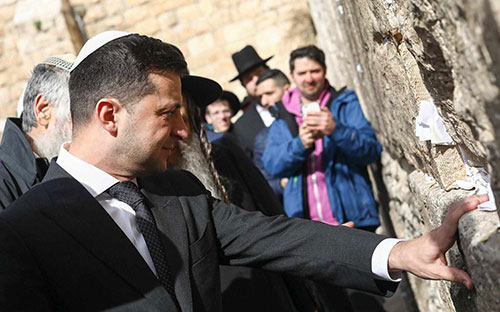
The transformation of the custom into a global phenomenon is largely a product of the twentieth century, especially after the reunification of Jerusalem in the wake of Israel’s victory in the 1967 war. Increased access to the Kotel, combined with mass tourism and media coverage, turned the act of placing a note into a nearly universal ritual for visitors, regardless of religious background, and political leaders, celebrities, and pilgrims from diverse faith traditions began to participate, reinforcing the perception of the Wall as a universal conduit for prayer. The act of writing a personal message and physically inserting it into an ancient sacred structure proved deeply compelling in a modern, globalized religious landscape.
Objections to the practice of placing notes in the Kotel generally fall into several categories. First, one leading concern is that inserting foreign objects into the Wall constitutes a form of bizui kadshim (“disrespect toward a sacred and holy site”); since the Wall itself is treated with a high degree of sanctity, filling its crevices with paper – particularly paper that may later decay, fall out, or be mishandled – is, at the very least, disrespectful.
A second line of criticism focuses on the theological implications. Some authorities worry that the practice encourages a quasi-magical or superstitious understanding of prayer, implying that physical proximity or mechanical insertion confers efficacy independent of sincere intention. This concern is closely related to broader rabbinic critiques of amulets and segulot when they are perceived as substitutes for normative prayer.
A third concern involves the status of the written notes themselves. Once a note contains a prayer addressed to G-d, often including divine names, it acquires a level of sanctity that requires genizah (ritual burial). The sheer volume of notes raises practical and halachic questions about proper disposal, leading to the now-standard practice of periodic removal and burial.
While the custom is extremely widespread, explicit formal teshuvot (“responsa”) on the practice are surprisingly sparse, and much of the discussion is indirect, scattered, or embedded in broader discussions as, for example, about the general sanctity of the Wall, genizah, or segulot. Although significant halachic reservations have been voiced, including some by prominent rabbinic authorities, there does not seem to be any significant effort to curtail the practice; to the contrary, the custom continued and expanded, suggesting that even a stringent view of the Wall’s sanctity did not translate into prohibition of note insertion. Even those authorities who expressed reservations often stopped short of banning the practice entirely, recognizing its deep emotional and spiritual resonance for the masses. In practice, the custom has been widely accommodated, with institutional frameworks, particularly under the auspices of the rabbi of the Western Wall, ensuring that it is conducted in a manner consistent with halachic requirements. This again reflects a broader pattern: theoretical concerns were acknowledged, but practical accommodation prevailed.

In the modern period, the most explicit and operationally significant rabbinic position is that of Rav Shmuel Rabinovitch, the contemporary rabbi of the Kotel. Unlike earlier figures, his stance is not preserved in anecdote but enacted through institutional authority and, under his supervision, the practice of inserting notes has been fully normalized and structured. Most significantly, R. Rabinovitch has ruled in practice that the notes attain the status of sacred writings requiring genizah, a position that while not framed as a formal responsum, carries clear halachic implications.
A practical and halachic challenge emerged parallel to the expansion of the practice: what to do with the ever-growing accumulation of paper particularly given that, by the late twentieth century, hundreds of thousands of notes were being placed annually into the Wall’s crevices. Without periodic removal, the physical space would become saturated, preventing new notes from being inserted and potentially leading to the degradation or disrespectful handling of existing ones.
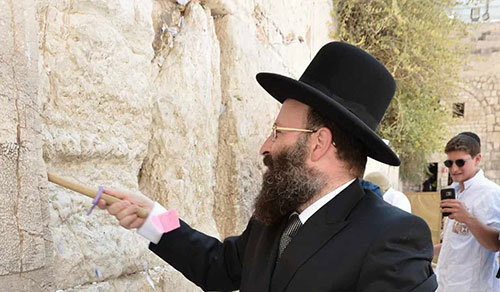

The systematic removal of notes appears to have developed gradually, but by the late twentieth century had become formalized under R. Rabinovitch’s authority and the administrative body now known as the Western Wall Heritage Foundation. The modern practice involves clearing the notes twice annually, typically before Passover and before the High Holy Days, a schedule that reflects both practical considerations, including making space for the influx of pilgrims during major festivals, and symbolic ones, as these periods are associated with renewal, repentance, and communal prayer.
The legal foundation of state authority over the Western Wall derives primarily from Israel’s capture of the Old City during the Six-Day War in June 1967. Following reunification of Jerusalem, Israel enacted the Protection of Holy Places Law of 1967, a statute that empowered the government to safeguard holy sites and preserve public order and religious observance within them. Additional regulations issued in 1981 concerning Jewish holy places specifically established rules governing behavior at sites under Jewish religious administration, including the Western Wall, and the office of the Rabbi of the Western Wall and Holy Places operates within this legal framework and is charged with implementing these regulations. Responsibilities include maintaining the site’s religious character, preventing conduct deemed inconsistent with the sanctity of the location, and supervising religious services and practices conducted there.
The Western Wall Heritage Foundation, which became the principal administrative arm of these activities, was established in October 1988 by Israel’s Ministry of Religious Affairs (later the Ministry of Religious Services) as a government-supported nonprofit organization. Its responsibilities initially focused heavily upon preservation and development projects, including maintenance of the Wall and the increasingly important archaeological and tourist complex known as the Western Wall Tunnels. Over time, however, its role expanded dramatically. A significant cabinet decision adopted on December 19, 2004, transferred broader responsibilities to the Foundation, including management of activities throughout the Western Wall Plaza and surrounding areas, maintenance and cleaning operations, educational programming, visitor services, infrastructure development, and supervision of numerous ceremonial functions held at the site.
Today, the Foundation functions as the principal administrative authority for daily operations at the Wall. Although it is formally a governmental body operating under state auspices, its leadership and religious orientation are overwhelmingly Orthodox, particularly Charedi, and it works closely with the office of the Rabbi of the Western Wall and has become the mechanism through which religious policy is implemented at the site. Its authority is therefore both governmental and religious: governmental because it operates pursuant to state decisions and funding, and religious because much of its practical authority derives from the recognized status of the Rabbi of the Western Wall and the Chief Rabbinate’s role in defining standards of religious observance at Jewish holy places.
The Foundation’s authority has not been without controversy. Beginning particularly in the late twentieth century, disputes emerged regarding the extent to which an Orthodox “interpretation” of Jewish practice should govern a site regarded by many Jews worldwide as a national rather than exclusively Orthodox religious shrine. Organizations such as Women of the Wall challenged restrictions involving women’s prayer practices, Torah reading, and the use of prayer shawls, disputes that frequently centered upon the authority exercised by R. Rabinovitch and the Foundation in maintaining what they describe as the traditional status quo at the Wall.
Supporters argue that the Wall has historically functioned as an Orthodox synagogue and should continue to operate according to traditional halachic norms, but critics argue that a national holy site should accommodate a broader range of Jewish religious expression. These debates have repeatedly reached Israeli courts and have become one of the most prominent religious controversies in modern Israel.
Rabbi Rabinovitch (b. 1970) was educated in Charedi institutions, including the prestigious Kol Torah yeshiva and, before assuming his current role, he served in rabbinic positions connected to Jewish law and community life, gradually building experience in both pastoral responsibilities and institutional religious leadership. He has authored several rabbinic works dealing with the laws and customs of the Western Wall, including Minhagei HaKotel and the responsa collection Shaarei Tzion. One section of the latter addresses the treatment of prayer notes deposited in the Wall and the proper manner of their disposal and, under his administration, the twice-yearly removal and burial of notes became a highly visible public ritual reported internationally by the press.
Following the death of his predecessor, Rabbi Yehuda Meir Getz, R. Rabinovich was selected – with the involvement of Prime Minister Yitzhak Rabin and Israel’s Chief Rabbis – to assume responsibility for the Western Wall. Sources differ somewhat in describing the exact chronology of the appointment process, but R. Rabinovitch emerged during the second half of the 1990s as the principal rabbinic authority at the site and has remained in that position ever since.
His appointment as the Kotel Rav placed him in one of the most visible and symbolically important religious offices in the Jewish world, with his responsibilities including overseeing daily religious service and maintaining the sanctity of the area in accordance with halacha while navigating the complex realities of a highly diverse and politically sensitive public space. He has generally taken a traditionalist stance, emphasizing continuity with established Orthodox practice and the preservation of what he views as the historical and halachic character of the site.


At the same time, he is also a public figure who frequently engages with visiting dignitaries, interfaith delegations, and international Jewish communities, in which capacity he often serves as a symbolic representative of Jerusalem’s religious heritage. His role requires balancing strict religious considerations with diplomatic sensitivity, especially when hosting high-profile political leaders or coordinating state ceremonies at the Western Wall plaza. Beyond his administrative and ceremonial duties, he is involved in broader efforts to maintain and develop the infrastructure of the Western Wall tunnels and surrounding archaeological and devotional areas and he has supported preservation projects aimed at strengthening access to historical layers of the site, while ensuring that religious norms remain central to its use.


His formal title is Rabbi of the Western Wall and the Holy Places of Israel, in which role he oversees religious services at the Wall and exercises supervisory authority over numerous Jewish holy sites recognized under Israeli regulations. Throughout his tenure, he has been regarded as a steady and institutionally minded leader within the framework of Jerusalem’s religious establishment and, while he is not a political figure in the conventional sense, his position inevitably places him within broader cultural and ideological debates in Israeli society about religion, state authority, and the public role of Orthodox Judaism. He also serves as chairman of the Western Wall Heritage Foundation, thereby combining religious leadership with administrative control, a dual role that is particularly important because it effectively unites the site’s religious authority and its institutional management within the same individual.


The removal process itself is carefully regulated to conform to halachic principles. Workers use gloves and non-metal tools, often wooden implements, to extract the notes without causing damage to the stones or disrespect to the contents. The avoidance of metal tools is sometimes linked symbolically to the biblical prohibition against using metal implements in constructing the mizbeach (“altar”), reflecting an effort to maintain ritual sensitivity even in a modern maintenance procedure. Equally significant is the treatment of the notes after removal. Because the notes frequently contain the names of G-d, scriptural phrases, or personal prayers addressed to the divine, they are accorded the status of sacred writings. As such, they are placed in a genizah (a repository for worn or unusable sacred texts) and eventually buried, typically on the Mount of Olives.


This practice aligns with longstanding Jewish law governing the disposal of holy writings, ensuring that even ephemeral slips of paper are treated with dignity and reverence that Jewish law affords them. The institutionalization of this process reflects a broader trend in modern Judaism: the formal management of popular religious practices within an organized framework. While the insertion of notes began as an informal, perhaps even marginal custom, its widespread adoption necessitated administrative oversight and R. Rabinovitch’s involvement underscores the extent to which the practice has been integrated into the religious life of the site.

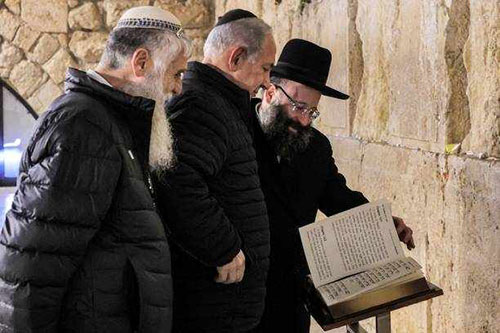
It is worth noting that the practice has occasionally generated controversy, particularly in cases where notes have been removed or publicized outside the established procedures. One widely reported incident involved a note placed by Barack Hussein Obama during his July 2008 visit to the Western Wall when, after he departed the site, the note was removed by a yeshiva student who had access to the area, who then passed the note to the Israeli newspaper Maariv, which published the contents of the note. The student reportedly received payment or compensation from the newspaper for providing it, but the exact amount was not consistently or reliably documented in public sources.


This removal, however, caused immediate controversy because Western Wall notes are traditionally considered private prayers and, as described above, are normally collected and buried without being read or publicized. Israeli religious authorities, including R. Rabinovitch, condemned the removal and publication in no uncertain terms, emphasizing that notes placed in the Wall are treated as sacred and confidential communications. The incident became widely discussed in the context of privacy, religious sanctity, and media ethics, particularly because Obama was then a presidential candidate and the episode received international attention. Such incidents have reinforced the importance of controlled, respectful handling of the notes and have likely contributed to the tightening of procedures surrounding their removal.
In recent decades, technological developments have introduced new dimensions to the practice, including the use of online services, which now allow individuals to submit prayers electronically, which are then printed and inserted into the Wall by designated representatives. While this innovation extends the reach of the tradition, it also raises important questions about authenticity and mediation because the physical act of placing a note, long central to the ritual’s emotional impact, is transformed into a delegated action, reflecting broader trends in digital religion.
Despite these developments, the core elements of the practice remain remarkably consistent: the belief in the special sanctity of the Wall, the use of written words as a vehicle of prayer, and the careful, respectful treatment of those writings after their placement. The endurance of the custom over approximately three centuries suggests that it fulfills a deep psychological and spiritual need, offering a tangible means of expressing hope, fear, and longing.
https://jewishpress.com/slips-of-paper-layers-of-tradition-between-the-stones-the-history-of-prayer-notes-in-the-western-wall/

No comments:
Post a Comment