Thursday, 31 October 2019

Recipes - Triple chocolate peanut butter brownies

Triple chocolate peanut butter brownies

Impress your sweetheart with these decadent treats that look like they came from a gourmet bakery.
  • Yield: 12-16 brownies
  • Prep time: 30 minutes
  • Cook time: 40 minutes
Looking for the perfect dessert to impress your sweetheart? These rich, fudgy heart-shaped brownies filled with peanut butter cream and topped with chocolate ganache and honey roasted peanuts may just knock your sweetie off her chair. Which is a good thing, because then you can step in to save her, and be a hero in more ways than one. And it all starts with a brownie mix… imagine that.

Ingredients

    Brownies

  • 1 18-ounce chocolate brownie mix
  • Oil, water and eggs per package directions
  • 1 cup mini dark chocolate chips
  • Peanut butter cream

  • 1/2 cup peanut butter
  • 1/2 cup Earth Balance or butter
  • 2 cups powdered sugar
  • 2 teaspoons coconut milk
  • Ganache and garnish

  • 9-12 ounce chocolate morsels
  • 1 cup coconut milk
  • 1/2 cup honey roasted peanuts

Directions

Preheat oven to 350°. Line a 9x13 pan with parchment paper so that it hangs over the sides slightly.
Prepare brownies according to package directions. (You can sub half of the oil with ripe, mashed banana for a small health boost) Add mini chocolate chips to batter, pour into prepared pan and bake per time noted on package.

When brownies have cooled, lift out of the pan using the parchment paper as your handles. Flatten parchment paper around brownies to create a neat working surface (you may have to fold it back to get extras out of the way, but don’t cut it – you’ll need the gripping area again later).
Mix peanut butter cream ingredients with a whisk or beaters until smooth. Spread over cooled brownies.

Heat coconut milk in a small pot, and then remove from flame before it comes to a boil. Stir in chocolate until smooth. Pour over brownies, and spread with a spatula for an even coat.
Sprinkle honey roasted peanuts over ganache before it hardens. Place brownies on parchment back into baking pan. Refrigerate or freeze for one hour.

Remove brownies from pan (again, using parchment to lift), and place on counter. Use a pizza wheel to cut off rough edges (chef’s bonus treat!). Cut into squares, triangles, strips, or use heart-shaped cutters to impress your sweetie. If using cookie cutters, press down until you hit the counter, cut away scraps, and then push brownies up and out from the bottom to get a neat shape.

Keep frozen or refrigerated in airtight container until ready to serve. 


This recipe takes a shortcut by using brownie mix, but you can make the brownies from scratch if you want. (Photo: Sarah F. Berkowitz)

๐ŸŒฝ๐Ÿ†๐Ÿ…๐Ÿ๐Ÿ ๐Ÿค๐Ÿ—๐Ÿง€๐Ÿ”๐ŸŸ๐Ÿ• ๐Ÿ๐ŸŽ๐Ÿ๐ŸŠPlease recommend this page & be sure to follow the Coconut Whisperer which continues the traditions of Cheese the top Food and Recipe channel on Disqus 2017-2019 ๐ŸŒฝ๐Ÿ†๐Ÿ…๐Ÿ๐Ÿ ๐Ÿค๐Ÿ—๐Ÿง€๐Ÿ”๐ŸŸ๐Ÿ•๐Ÿ๐ŸŽ๐Ÿ๐ŸŠ
https://disqus.com/home/forum/the-coconut-whisperer/


Escape from Eygpt - Missing Tortoise Found 7 Days Later, 5 Miles Away At Family’s Old House

By Shirin RajaeeOctober 23, 2019

I replaced the sites vid with this pic. CiC

ROSEVILLE (CBS13) — Lost for seven days, a missing tortoise has been reunited with her family in Roseville. She apparently traveled more than five miles away from her home, but it’s where she ended up that’s truly remarkable.

Sara Coggeshall thought she’d never see her Sweety again.

“You’re like, ‘this can’t be, this can’t be,’ then you say, ‘wow this really happened.’ My biggest fear she was run over, or attacked, or just gone for good,” said Coggeshall.

The Roseville mother has had a (s)hell of a time trying to find Sweety, who was passed down by Coggeshall’s father 20 years ago.

Taking to social media and posting up missing flyers, she desperately searched for anyone who’d “stick out their neck and help.”

Days later, and about five miles away, there was hope.

“I couldn’t believe it was hers. She lived all the way in Roseville,” said Angela Martin.

Martin spotted a tortoise on her drive home in Orangevale and took her in. Assuming it was someone’s pet, she immediately took to Facebook.

“She seemed shy, but as soon as Sara picked her up, she was excited, came out of her shell,” said Martin.

But it gets better. Russian tortoises are known to be escape artists and somehow Sweety traveled all the way back to where the family used to live years ago.

“As soon as I saw the street address, I started crying,” said Coggeshall. “The fact that my Sweety, my Russian tortoise walked from the house she lived in for 10 years and went back to the house she used to live in 10 years ago; it’s bizarre.”

It’s bizarre, yet pretty remarkable. One theory is that Sweety went back looking for her iguana friend.

“The iguana would be in one spot [and] she would chase her; the iguana would move she would chase her again. So maybe she misses her,” said Coggeshall.

Just how the tortoise managed to get across busy Greenback Lane remains a mystery.

“It’s incredible. I thought I was just helping someone find their pet, but to think this turtle traveled so far and I was able to reunite the family again, I feel really good,” said Martin.

“I hope she gets enough rest, so she can tell me the story cause I’m curious,” Coggeshall said with a laugh.

Sweety is doing fine. She only suffered minor scrapes to her shell and nose. She is going to a vet to get fully checked out.

Recommend this post and follow TCW

This has been an Escape from Egypt moment on the Coconut Whisperer 
๐Ÿช๐Ÿ—ป Please recommend this page & be sure to follow the Coconut Whisperer which continues the traditions of the Escape from Egypt channel, the weirdest, wackyiest & strangest channel on Disqus 2018-2019๐Ÿช๐Ÿ—ป

Foie Gras, Served in 1,000 Restaurants in New York City, Is Banned

Animal cruelty concerns led the City Council to approve the ban, which takes effect in 2022. One chef’s reaction: “What’s next? No more veal?”

By Jeffery C. Mays and Amelia Nierenberg, Published Oct. 30, 2019

Animal rights supporters cheered passage of the bill, whose sponsor, Councilwoman Carlina Rivera, said would end a violent and “inhumane process.”Credit...Desiree Rios for The New York Times

Lutรจce served it seared, with dark chocolate sauce and bitter orange marmalade. Le Cirque offered it in classic terrine form, but also served it with rabbit and bacon and made it the scene-stealer in a ravioli dish.

But Lutรจce closed in New York in 2004. Le Cirque shut its last Manhattan location in 2017. And foie gras, the calling card of fine French dining, is about to follow suit.

The New York City Council overwhelmingly passed legislation on Wednesday that will ban the sale of foie gras in the city, one of the country’s largest markets, beginning in 2022.

New York City will join California in prohibiting the sale of foie gras, the fattened liver of a duck or goose, over animal cruelty concerns.

“New York is the mecca of dining in the world. How is it possible that New York doesn’t have foie gras?” said Marco Moreira, executive chef and owner of Tocqueville, an acclaimed French restaurant near Union Square, which offers an appetizer of foie gras from the Hudson Valley. “What’s next? No more veal? No more mushrooms?”

Most foie gras is produced through a process known as gavage; ducks are force-fed a fatty corn-based mixture that engorges their livers. The process requires tubes to be inserted into a duck’s throat for a 20-day feeding regimen, swelling the liver to up to 10 times its normal size. The procedure can leave ducks too big to walk or even breathe before they are slaughtered, animal activists say.

Carlina Rivera, a Manhattan councilwoman who sponsored the foie gras legislation, said her bill “tackles the most inhumane process” in the commercial food industry. “This is one of the most violent practices and it’s done for a purely luxury product,” she said.

Foie gras farmers say that the forced feedings are not cruel, and that the claims of torture are exaggerated. They say there is a bias against foie gras because it is a luxury product.

Other countries, including India, Israel and Britain, have banned the sale or production of foie gras. Whole Foods stopped selling the product in 1997, citing cruelty, and Postmates stopped delivering it in 2018.

But New York was seen as a critical battleground, where an expense-account culture of extravagance has fed demand for foie gras for decades. That tradition, however, gave way to an increasingly progressive City Council.

The bill bars the sale of foie gras produced by “force-feeding birds,” with each violation punishable by a $2,000 fine. But not all foie gras comes from ducks or geese that have been force-fed, and determining whether foie gras was illegally produced may present an enforcement challenge.


An engorged duck liver that weighs 90 grams can sell for $125.Credit...Bebeto Matthews/Associated Press


Under the law, it will be assumed that all foie gras came from duck or geese that have been force-fed unless “documentary” evidence is provided to the contrary.

About 1,000 New York City restaurants have foie gras on their menu. But a greater impact may be felt on the farms north of New York City that produce foie gras.

Hudson Valley Foie Gras and La Belle Farm in Sullivan County say they employ about 400 people and that New York City makes up about 30 percent of their business. Hudson Valley, which slaughters 800 ducks a day, said they sold $15 million worth of foie gras last year.

A foie gras liver that weighs 90 grams can sell for $125; the bones and feathers from foie gras ducks are used in other products like dog food and coats, said Sergio Saravia, a founder of La Belle, and head of the Catskill Foie Gras Collective.

“California and New York were our biggest markets, so this is devastating,” said Mr. Saravia, adding that his farm has lost $50,000 a week in revenue from the loss of the California market. “It’s going to make it difficult to stay afloat.”

Ms. Rivera said that changes were made to the original bill’s language to help upstate farms.

The ban will not take effect until three years after its passage, giving the farms a chance to adjust their business models, she said. The maximum fine for violating the ban was increased to $2,000 per violation from $1,000, but a proposed criminal penalty of up to a year in jail was eliminated.

Ms. Rivera rejected the notion that the ban would put the upstate farms out of business.

“These farms produce dozens of other products and gavage is aggressively cruel,” Ms. Rivera said. “There is an exotic animal ban in New York City and people still go to the circus.”

More than half the City Council — 30 members — signed on to sponsor the foie gras legislation, which was part of a package of anti-animal cruelty legislation that advocates said was among the most significant to be passed in New York City in years. In the end 42 members voted in favor of the ban.

Other legislation passed in the package will prevent horse carriages from working on humid days (measured using the equine heat index, a measure of temperature and relative humidity), create a mayor’s office of animal welfare and prohibit the capture and transfer of wild birds like pigeons. New York City’s ubiquitous birds are sometimes trapped and transported out of state to be used as targets in game shooting.


Recommend this post and follow TCW

Crime in Mexico: 542 Homicides in One Week

Mexico Records 500 Cartel Murders in One Week

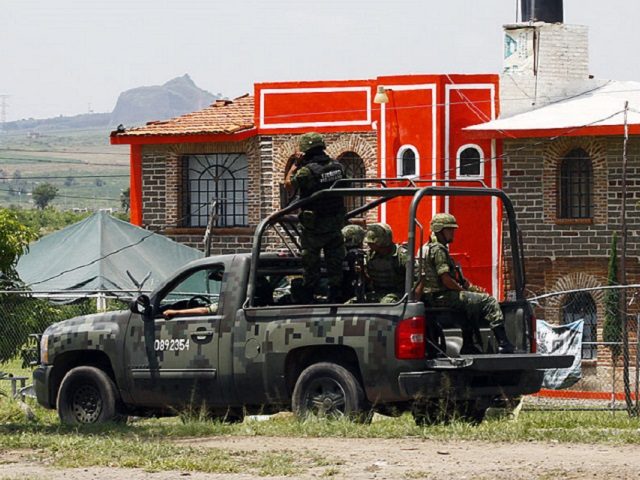
Members of the Army patrol the surroundings of the Puente Grande State prison in Zapotlanejo, Jalisco State, Mexico, on 9 August, 2013 where former top Mexican cartel boss Rafael Caro Quintero -- who masterminded the kidnap and murder of a US anti-drug agent in 1985 -- was informed early Friday …
File Photo: HECTOR GUERRERO/AFP/Getty Images
3:19

The record number of killings in Mexico in 2019 continues with 542 homicides registered nationwide during a recent one-week period. Organized crime and turf disputes generated the majority of the bloodshed, according to government sources.

During a one-week period from October 18 to 24, at least 542 homicides were recorded by the Secretarรญa de Seguridad y Participaciรณn Ciudadana. In September, 2,825 murders were registered.
State (Homicides During Period)
*Denotes Border State Abutting U.S.
Mรฉxico State (62)
Guanajuato (60)
Jalisco (45)
Guerrero (41)
Baja California (39)*
Sinaloa (35)
Michoacรกn (34)
Veracruz (32)
Chihuahua (29)*
Puebla (25)
Mรฉxico City (21)
Nuevo Leรณn (17)*
Oaxaca (12)
Tabasco (12)
Hidalgo (10)
Zacatecas (9)
Morelos (9)
Sonora (9)*
Quintana Roo (9)
Chiapas (7)
San Luis Potosรญ (6)
Tamaulipas (6)*
Coahuila (4)*
Durango (3)
Colima (2)
Tlaxcala (2)
Querรฉtaro (2)
The states of Nayarit, Campeche, Aguas Calientes, and Yucatan did not record any homicides during the one-week period.
During the first 10 months of Mexican President Andrรฉs Manuel Lรณpez Obrador’s administration which began in December 2018, a total of 29,629 homicides were tallied, according to local reports.
The five deadliest states per 100,000 inhabitants in 2019 are as follows:
Colima (63)
Baja California (55)
Chihuahua (43)
Morelos (34)
Guanajuato (33)
AMLO’s government recently came under attack over his handling of the capture and subsequent release of a high-ranking Sinaloa Cartel member in Culiacan. The son of imprisoned drug lord Joaquin “El Chapo” Guzman was released after authorities determined his capture was not worth the violent retribution occurring in the vicinity.
AMLO campaigned on and is delivering a strategy of promoting social justice and improving living conditions based on beliefs that such actions will help undercut cartel violence overall.

Zeroing in on food security as agricultural impacts of climate crisis become more apparent

OCTOBER 31, 2019, by Andi Sutton, Massachusetts Institute of Technology

If the world is to be free of hunger and malnutrition in accordance with the 2030 UN Sustainable Development Goals, actions to strengthen the resilience and adaptive capacity of food systems must be rapidly implemented in order to adapt to climate change. Research launched by J-WAFS seeks to map out the most strategic ways that research can be used to ensure a global transition toward food-system sustainability. Credit: Massachusetts Institute of Technology

Early this August, the U.N. Intergovernmental Panel on Climate Change issued yet another in a series of grave and disquieting reports outlining the extreme challenges placed on the Earth's systems by the climate crisis. Most IPCC reports and accompanying media coverage tend to emphasize greenhouse gas (GHG) emissions from energy and transportation sectors, along with the weather and sea-level impacts of climate change and their direct impact on vulnerable human populations. However, this particular report, the "Special Report on Climate Change and Land," presents a sobering set of data and analyses addressing the substantial contributions of agriculture to climate change and the ways the climate crisis is projected to jeopardize global food security if urgent action is not taken at the individual, institutional, industry, and governmental levels.

There is an ever-increasing public awareness about climate's effects on the frequency and intensity of extreme weather, threats to coastal cities, and the rapid decline in the biodiversity of the Earth's ecosystems. However, the impact of climate change on land and food production—and the impact of our food systems on climate change—is just beginning to enter the wider public discourse. Food systems are responsible for up to 30 percent of global GHG emissions, with agricultural activities accounting for up to 86 percent of total food-system emissions. And agriculture is a sector that is put at significant risk by the direct and indirect effects of the Earth's rising temperatures. In order to adapt to future climate uncertainty and to minimize agricultural greenhouse gas emissions, strategies addressing the sustainability and adaptive capacity of food systems must be developed and rapidly implemented.

With so much at stake, targeted research that reaches beyond disciplinary and institutional boundaries is needed. Since its 2014 launch at MIT, the Abdul Latif Jameel Water and Food Systems Lab (J-WAFS) has promoted research and innovation across diverse disciplines that will help ensure the resilience of the world's water and food systems even as they are increasingly pressured by the effects of climate change. Its newly released report, "C


Early this August, the U.N. Intergovernmental Panel on Climate Change issued yet another in a series of grave and disquieting reports outlining the extreme challenges placed on the Earth's systems by the climate crisis. Most IPCC reports and accompanying media coverage tend to emphasize greenhouse gas (GHG) emissions from energy and transportation sectors, along with the weather and sea-level impacts of climate change and their direct impact on vulnerable human populations. However, this particular report, the "Special Report on Climate Change and Land," presents a sobering set of data and analyses addressing the substantial contributions of agriculture to climate change and the ways the climate crisis is projected to jeopardize global food security if urgent action is not taken at the individual, institutional, industry, and governmental levels.


There is an ever-increasing public awareness about climate's effects on the frequency and intensity of extreme weather, threats to coastal cities, and the rapid decline in the biodiversity of the Earth's ecosystems. However, the impact of climate change on land and food production—and the impact of our food systems on climate change—is just beginning to enter the wider public discourse. Food systems are responsible for up to 30 percent of global GHG emissions, with agricultural activities accounting for up to 86 percent of total food-system emissions. And agriculture is a sector that is put at significant risk by the direct and indirect effects of the Earth's rising temperatures. In order to adapt to future climate uncertainty and to minimize agricultural greenhouse gas emissions, strategies addressing the sustainability and adaptive capacity of food systems must be developed and rapidly implemented.

With so much at stake, targeted research that reaches beyond disciplinary and institutional boundaries is needed. Since its 2014 launch at MIT, the Abdul Latif Jameel Water and Food Systems Lab (J-WAFS) has promoted research and innovation across diverse disciplines that will help ensure the resilience of the world's water and food systems even as they are increasingly pressured by the effects of climate change. Its newly released report, "Climate Change, Agriculture, Water, and Food Security: What We Know and Don't Know," is part of this effort. The report collects the central findings of an expert workshop conducted by J-WAFS in May 2018. The workshop gathered 46 experts in agriculture, climate, engineering, and the physical and natural sciences from around the world—several of whom were also involved in writing the August 2019 IPCC report—to discuss current understanding of the complex relationship between climate change and agriculture. This report, based on the workshop deliberations, initiates a longer study that will directly engage stakeholders to address how research can be best targeted to the needs of policymakers, funders, and other decision-makers and stakeholders.


Central to the conclusions of the 2018 workshop was widespread agreement among participants of the need for convergence research that addresses the climate crisis in food systems. Convergence research is built around deep integration across disciplines in order to address complex problems focusing on societal need. By deploying transdisciplinary teams with expertise in plant, soil, and climate science, agricultural technologies, agribusiness, economics, behavior change and communication, marketing, nutrition, and public policy, convergence research promotes innovative approaches to formulating and evaluating adaptation and mitigation strategies for future food security.

A study that J-WAFS is now launching will take this approach. As part of the new study, J-WAFS is partnering with three internationally renowned institutions with complementary expertise in agriculture and food systems. Titled "Climate Change and Global Food Systems: Supporting Adaptation and Mitigation Strategies with Research," the collaborative project will leverage the myriad disciplines and specialties of a cross-institutional group of researchers, along with stakeholders and decision-makers, in order to develop a prioritized, actionable, solutions-oriented research agenda. The project's goal is to determine which research questions must be answered, and which innovations must be prioritized, in order to ensure that global food security can be met even while the climate crisis wreaks havoc on global food systems. The project will help develop stronger connections and collaborative partnerships across diverse research communities (in particular, MIT and the partner universities) and with the stakeholders and decision-makers who fund research, develop policy, and implement programs to support agriculture and food security.

The three collaborating universities who are joining MIT in this effort are: Wageningen University in the Netherlands—an institution which is at forefront of agriculture and food systems research; Tufts University—an international leader in interdisciplinary food and nutrition research, especially through its Friedman School of Nutrition Science and Policy; and the University of California at Davis, whose College of Agricultural and Environmental Sciences ranks No. 1 in the United States for agriculture, plant sciences, animal science, forestry, and agricultural economics. Says Ermias Kebreab, associate dean for global engagement in the College of Agricultural and Environmental Sciences at UC Davis, "the project will address several grand challenges that align very well with the mission and goals of the UC Davis College of Agricultural and Environmental Sciences. Collaborating with MIT and other project partners presents exciting opportunities to extend the reach and impact of the UC Davis research."

With potential dire impacts of the climate crisis on our global food systems, opportunities for transformative change must be found. But there currently exist significant knowledge gaps on the best practices, technologies, policies, and development approaches for achieving food security with win-win solutions at the nexus of climate change and food systems. J-WAFS' workshop report emphasized that more research is required to better characterize specific challenges and to develop, evaluate, and implement effective strategies. Specific areas where research presents significant opportunities include understanding and improving soil quality and fertility; the development of technologies such as advanced biotechnology, carbon sequestration, and geospatial tools; fundamental research questions about crop response to environmental stresses, such as high temperatures and drought; improvements to crop and climate models; approaches to manage risk in the face of uncertain risk; and the development of strategies to effect behavioral change, particularly around food choices.

It may yet be possible to sustainably produce enough nutritious food to feed the world while at the same time reversing the current trends in its production that damage the environment. As stated by John H. Lienhard V, J-WAFS director and MIT professor, "the next green revolution will be delivered using new farming practices, emerging scientific discoveries, technological breakthroughs, and insights from the social sciences, all combined to provide effective policies, equitable social programs, and much-needed changes in consumer behavior."

limate Change, Agriculture, Water, and Food Security: What We Know and Don't Know," is part of this effort. The report collects the central findings of an expert workshop conducted by J-WAFS in May 2018. The workshop gathered 46 experts in agriculture, climate, engineering, and the physical and natural sciences from around the world—several of whom were also involved in writing the August 2019 IPCC report—to discuss current understanding of the complex relationship between climate change and agriculture. This report, based on the workshop deliberations, initiates a longer study that will directly engage stakeholders to address how research can be best targeted to the needs of policymakers, funders, and other decision-makers and stakeholders.

Central to the conclusions of the 2018 workshop was widespread agreement among participants of the need for convergence research that addresses the climate crisis in food systems. Convergence research is built around deep integration across disciplines in order to address complex problems focusing on societal need. By deploying transdisciplinary teams with expertise in plant, soil, and climate science, agricultural technologies, agribusiness, economics, behavior change and communication, marketing, nutrition, and public policy, convergence research promotes innovative approaches to formulating and evaluating adaptation and mitigation strategies for future food security.

A study that J-WAFS is now launching will take this approach. As part of the new study, J-WAFS is partnering with three internationally renowned institutions with complementary expertise in agriculture and food systems. Titled "Climate Change and Global Food Systems: Supporting Adaptation and Mitigation Strategies with Research," the collaborative project will leverage the myriad disciplines and specialties of a cross-institutional group of researchers, along with stakeholders and decision-makers, in order to develop a prioritized, actionable, solutions-oriented research agenda. The project's goal is to determine which research questions must be answered, and which innovations must be prioritized, in order to ensure that global food security can be met even while the climate crisis wreaks havoc on global food systems. The project will help develop stronger connections and collaborative partnerships across diverse research communities (in particular, MIT and the partner universities) and with the stakeholders and decision-makers who fund research, develop policy, and implement programs to support agriculture and food security.

The three collaborating universities who are joining MIT in this effort are: Wageningen University in the Netherlands—an institution which is at forefront of agriculture and food systems research; Tufts University—an international leader in interdisciplinary food and nutrition research, especially through its Friedman School of Nutrition Science and Policy; and the University of California at Davis, whose College of Agricultural and Environmental Sciences ranks No. 1 in the United States for agriculture, plant sciences, animal science, forestry, and agricultural economics. Says Ermias Kebreab, associate dean for global engagement in the College of Agricultural and Environmental Sciences at UC Davis, "the project will address several grand challenges that align very well with the mission and goals of the UC Davis College of Agricultural and Environmental Sciences. Collaborating with MIT and other project partners presents exciting opportunities to extend the reach and impact of the UC Davis research."

With potential dire impacts of the climate crisis on our global food systems, opportunities for transformative change must be found. But there currently exist significant knowledge gaps on the best practices, technologies, policies, and development approaches for achieving food security with win-win solutions at the nexus of climate change and food systems. J-WAFS' workshop report emphasized that more research is required to better characterize specific challenges and to develop, evaluate, and implement effective strategies. Specific areas where research presents significant opportunities include understanding and improving soil quality and fertility; the development of technologies such as advanced biotechnology, carbon sequestration, and geospatial tools; fundamental research questions about crop response to environmental stresses, such as high temperatures and drought; improvements to crop and climate models; approaches to manage risk in the face of uncertain risk; and the development of strategies to effect behavioral change, particularly around food choices.

It may yet be possible to sustainably produce enough nutritious food to feed the world while at the same time reversing the current trends in its production that damage the environment. As stated by John H. Lienhard V, J-WAFS director and MIT professor, "the next green revolution will be delivered using new farming practices, emerging scientific discoveries, technological breakthroughs, and insights from the social sciences, all combined to provide effective policies, equitable social programs, and much-needed changes in consumer behavior."


Recommend this post and follow TCW 

Escape from Egypt - Man’s sinus infection turns out to be 18-year-old smuggled drugs

Man’s sinus infection turns out to be 18-year-old smuggled drugs 


By Ben Cost, New York Post, October 30, 2019

 Marijuana, Getty Images 

This is not how you snort drugs.
A 48-year-old man stunned doctors after it was revealed that his persistent sinus infections were the result of marijuana he stuffed up his nose nearly two decades earlier. His peculiar case was documented in the journal BMJ Case Reports.
The unnamed patient from Sydney, Australia, concocted the half-baked trafficking scheme while incarcerated 18 years ago, Newsweek reports.
During a prison visit, his girlfriend passed him a rubber balloon, which he shoved up his right nostril, concealing the contraband cannabis from guards while returning to his cell.
Although the prisoner evaded detection, his unorthodox marijuana-muling was hardly a success. The pot parcel lodged so deep in his nasal cavity that he couldn’t retrieve it. Attempts to fish it out only drove the balloon deeper into his sinus passage.
Eventually, the frustrated jailbird convinced himself the baggie had fallen down his throat, and forgot about the whole ordeal, according to the case report.
BMJ Case Reports 2019
It wasn’t until years later that his dopey scheme came back to bite him, well, in the nose. When recurring headaches and perpetual nasal congestion prompted him to see a doctor, he was referred to the ear, nose and throat department at Westmead Hospital in Sydney. CT scans and a nasal endoscopy revealed a “firm gray mass” in his right nostril.
A subsequent surgery retrieved the ¾-inch “rubber capsule” containing a “degenerate plant/vegetable matter.”
The ex-con initially told doctors he accidentally swallowed the parcel, before finally copping to his ill-fated drug-smuggling escapade. BMJ reports that this was only the second time a rhinolith — a solid formation in the nasal passage — was diagnosed as the result of trafficking narcotics. (The first entailed codeine and opium swaddled in a nylon sheet.)
Fortunately, this former inmate’s hoosegow stowaway was removed without incident, and he recovered fully within three months.
By the way: Rhinoliths far more commonly entail beads and seeds that kids stuff up their nostrils, Science Alert reports.
This has been an Escape from Egypt moment on the Coconut Whisperer 

๐Ÿช๐Ÿ—ป Please recommend this page & be sure to follow the Coconut Whisperer which continues the traditions of the Escape from Egypt channel, the weirdest, wackyiest & strangest channel on Disqus 2018-2019๐Ÿช๐Ÿ—ป

How The Whistle Blower May Be Outed: Ties To Biden, Brennan, Schiff's Staff, etc.

https://www.freerepublic.com/focus/f-news/3790258/posts


For a town that leaks like a sieve, Washington has done an astonishingly effective job keeping from the American public the name of the anonymous “whistleblower" who triggered impeachment proceedings against President Trump — even though his identity is an open secret inside the Beltway.
Eric Ciaramella as a class of 2004 Connecticut prep student: He later moved on to Yale and the White House. Now he could be at the center of an impeachment storm. Chase Collegiate School, Waterbury, Conn./The Magpie More than two months after the official filed his complaint, pretty much all that’s known publicly about him is that he is a CIA analyst who at one point was detailed to the White House and is now back working at the CIA.
But the name of a government official fitting that description — Eric Ciaramella — has been raised privately in impeachment depositions, according to officials with direct knowledge of the proceedings, as well as in at least one open hearing held by a House committee not involved in the impeachment inquiry. Fearing their anonymous witness could be exposed, Democrats this week blocked Republicans from asking more questions about him and intend to redact his name from all deposition transcripts.
RealClearInvestigations is disclosing the name because of the public’s interest in learning details of an effort to remove a sitting president from office. Further, the official's status as a “whistleblower” is complicated by his being a hearsay reporter of accusations against the president, one who has “some indicia of an arguable political bias … in favor of a rival political candidate" -- as the Intelligence Community Inspector General phrased it circumspectly in originally fielding his complaint.
Federal documents reveal that the 33-year-old Ciaramella, a registered Democrat held over from the Obama White House, previously worked with former Vice President Joe Biden and former CIA Director John Brennan, a vocal critic of Trump who helped initiate the Russia “collusion” investigation of the Trump campaign during the 2016 election.
Joe Biden: Invited Ciaramella to state luncheon with Italian premier. Also invited: Brennan, Comey, Clapper. AP Photo/Matt Rourke Further, Ciaramella (pronounced char-a-MEL-ah) left his National Security Council posting in the White House’s West Wing in mid-2017 amid concerns about negative leaks to the media. He has since returned to CIA headquarters in Langley, Virginia.
“He was accused of working against Trump and leaking against Trump,” said a former NSC official, speaking on condition of anonymity to discuss intelligence matters.
Also, Ciaramella huddled for “guidance” with the staff of House Intelligence Committee Chairman Adam Schiff, including former colleagues also held over from the Obama era whom Schiff’s office had recently recruited from the NSC. (Schiff is the lead prosecutor in the impeachment inquiry.)
And Ciaramella worked with a Democratic National Committee operative who dug up dirt on the Trump campaign during the 2016 election, inviting her into the White House for meetings, former White House colleagues said. The operative, Alexandra Chalupa, a Ukrainian-American who supported Hillary Clinton, led an effort to link the Republican campaign to the Russian government. “He knows her. He had her in the White House,” said one former co-worker, who requested anonymity to discuss the sensitive matter.
Alexandra Chalupa: DNC oppo researcher was invited to the Obama White House by Ciaramella. Afric Vision NouvelleTV/YouTube Documents confirm the DNC opposition researcher attended at least one White House meeting with Ciaramella in November 2015. She visited the White House with a number of Ukrainian officials lobbying the Obama administration for aid for Ukraine.
With Ciaramella’s name long under wraps, interest in the intelligence analyst has become so high that a handful of former colleagues have compiled a roughly 40-page research dossier on him. A classified version of the document is circulating on Capitol Hill, and briefings have been conducted based on it. One briefed Republican has been planning to unmask the whistleblower in a speech on the House floor.
On the Internet, meanwhile, Ciaramella's name for weeks has been bandied about on Twitter feeds and intelligence blogs as the suspected person who blew the whistle on the president. The mainstream media are also aware of his name.
Fred Fleitz, Trump adviser: “Everyone knows who he is." fredfleitz.com/Wikimedia “Everyone knows who he is. CNN knows. The Washington Post knows. The New York Times knows. Congress knows. The White House knows. Even the president knows who he is,” said Fred Fleitz, a former CIA analyst and national security adviser to Trump, who has fielded dozens of calls from the media.
Yet a rare hush has swept across the Potomac. The usually gossipy nation’s capital remains uncharacteristically — and curiously — mum, especially considering the magnitude of this story, only the fourth presidential impeachment inquiry in U.S. history.
Trump supporters blame the conspiracy of silence on a “corrupt” and "biased” media trying to protect the whistleblower from due scrutiny about his political motives. They also complain Democrats have falsely claimed that exposing his identity would violate whistleblower protections, even though the relevant statute provides limited, not blanket, anonymity – and doesn’t cover press disclosures. His Democrat attorneys, meanwhile, have warned that outing him would put him and his family “at risk of harm," although government security personnel have been assigned to protect him.
“They’re hiding him,” Fleitz asserted. “They’re hiding him because of his political bias."
A CIA officer specializing in Russia and Ukraine, Ciaramella was detailed over to the National Security Council from the agency in the summer of 2015, working under Susan Rice, President Obama’s national security adviser. He also worked closely with the former vice president.
Susan Rice: Ciaramella worked under Obama's national security adviser. AP Photo/Carolyn Kaster, File Federal records show that Biden’s office invited Ciaramella to an October 2016 state luncheon the vice president hosted for Italian Prime Minister Matteo Renzi. Other guests included Brennan, as well as then-FBI Director James Comey and then-National Intelligence Director James Clapper.
Several U.S. officials told RealClearInvestigations that the invitation that was extended to Ciaramella, a relatively low-level GS-13 federal employee, was unusual and signaled he was politically connected inside the Obama White House.
Former White House officials said Ciaramella worked on Ukrainian policy issues for Biden in 2015 and 2016, when the vice president was President Obama's "point man" for Ukraine. A Yale graduate, Ciaramella is said to speak Russian and Ukrainian, as well as Arabic. He had been assigned to the NSC by Brennan.
He was held over into the Trump administration, and headed the Ukraine desk at the NSC, eventually transitioning into the West Wing, until June 2017.
“He was moved over to the front office” to temporarily fill a vacancy, said a former White House official, where he “saw everything, read everything.”
The official added that it soon became clear among NSC staff that Ciaramella opposed the new Republican president’s foreign policies. “My recollection of Eric is that he was very smart and very passionate, particularly about Ukraine and Russia. That was his thing – Ukraine,” he said. “He didn’t exactly hide his passion with respect to what he thought was the right thing to do with Ukraine and Russia, and his views were at odds with the president’s policies.”
“So I wouldn’t be surprised if he was the whistleblower,” the official said.
In May 2017, Ciaramella went “outside his chain of command,” according to a former NSC co-worker, to send an email alerting another agency that Trump happened to hold a meeting with Russian diplomats in the Oval Office the day after firing Comey, who led the Trump-Russia investigation. The email also noted that Russian President Vladimir Putin had phoned the president a week earlier.
Contents of the email appear to have ended up in the media, which reported Trump boasted to the Russian officials about firing Comey, whom he allegedly called “crazy, a real nut job.”
In effect, Ciaramella helped generate the “Putin fired Comey” narrative, according to the research dossier making the rounds in Congress, a copy of which was obtained by RealClearInvestigations.
Ciaramella allegedly argued that “President Putin suggested that President Trump fire Comey,” the report said. “In the days after Comey’s firing, this presidential action was used to further political and media calls for the standup [sic] of the special counsel to investigate ‘Russia collusion.’ “
In the end, Special Counsel Robert Mueller found no conspiracy between Trump and Putin. Ciaramella’s email was cited in a footnote in his report, which mentions only Ciaramella’s name, the date and the recipients “Kelly et al.” Former colleagues said the main recipient was then-Homeland Security Director John Kelly..
House Intelligence Committee Chairman Adam Schiff: "Whistleblower" complaint amounts to impeachable offense. AP Photo/J. Scott Applewhite Ciaramella left the Trump White House soon after Mueller was appointed. Attempts to reach Ciaramella were unsuccessful, although his father said in a phone interview from Hartford, where he is a bank executive, that he doubted his son was the whistleblower. “He didn’t have that kind of access to that kind of information,” Tony Ciaramella said. “He’s just a guy going to work every day.” The whistleblower's lawyers did not answer emails and phone calls seeking comment. CIA spokesman Luis Rossello declined comment, saying, “Anything on the whistleblower, we are referring to ODNI.” The Office of the Director of National Intelligence did not respond to requests for comment.
In his complaint, the whistleblower charged that the president used “the power of his office to solicit interference from a foreign country in the 2020 U.S. election.” Specifically, he cited a controversial July 25 phone call from the White House residence in which Trump asked Ukraine’s new president to help investigate the origins of the Russia “collusion” investigation the Obama administration initiated against his campaign, citing reports that “a lot of it started with Ukraine," where the former pro-Hillary Clinton regime in Kiev worked with Obama diplomats and Chalupa to try to “sabotage” Trump’s run for president.
Later in the conversation, Trump also requested information about Biden and his son, since “Biden went around bragging that he” had fired the chief Ukrainian prosecutor at the time a Ukrainian oligarch, who gave Biden’s son a lucrative seat on the board of his energy conglomerate, was under investigation for corruption.
House Speaker Nancy Pelosi and Intelligence Committee Chairman Schiff argued the whistleblower's complaint, though admittedly based on second-hand information, amounts to an impeachable offense, and they subsequently launched an impeachment inquiry that has largely been conducted in secret.
The whistleblower filed his “urgent” report against Trump with the I.C. inspector general on Aug. 12, but it was not publicly released until Sept. 26.
Prior to filing, he had met with Schiff’s Democratic staff for “guidance." At first, the California lawmaker denied the contacts, but later admitted that his office did, in fact, meet with the whistleblower early on.
Sean Misko: One of Ciaramella’s closest allies at the NSC, now on Schiff's staff. Center for a New American Security Earlier this year, Schiff recruited two of Ciaramella’s closest allies at the NSC — both whom were also Obama holdovers -- to join his committee staff. He hired one, Sean Misko, in August — the same month the whistleblower complaint was filed.
During closed-door depositions taken in the impeachment inquiry, Misko has been observed handing notes to the lead counsel for the impeachment inquiry, Daniel Goldman, as he asks questions of Trump administration witnesses, officials with direct knowledge of the proceedings told RealClearInvestigations.
Republicans participating in the restricted inquiry hearings have been asking witnesses about Ciaramella and repeatedly injecting his name into the deposition record, angering Schiff and Democrats, who sources say are planning to scrub the references to Ciaramella from any transcripts of the hearings they may agree to release.
“Their reaction tells you something,” said one official familiar with the inquiry.
For example, sources said Ciaramella’s name was invoked by GOP committee members during the closed-door testimony of former NSC official Fiona Hill on Oct. 14. Ciaramella worked with Hill, another Obama holdover, in the West Wing.
During Tuesday’s deposition of NSC official Alexander Vindman, Democrats shut down a line of inquiry by Republicans because they said it risked revealing the identity of the whistleblower. Republicans wanted to know with whom Vindman spoke within the administration about his concerns regarding Trump’s call to Ukraine. But Schiff instructed the witness not to answer the questions, which reportedly sparked a shouting match between Democrats and Republicans.
Determined to keep the whistleblower's identity secret, Schiff recently announced it may not be necessary for him to testify even in closed session. Republicans argue that by hiding his identity, the public cannot assess his motives for striking out against the president. And they worry his political bias could color inquiry testimony and findings unless it’s exposed.
Rep. Jim Jordan, the top Republican on the House Oversight Committee, asserted the American people have the right to know the person who is trying to bring down the president for whom 63 million voted.
“It’s tough to determine someone’s credibility if you can’t put them under oath and ask them questions,” he said.
Added Jordan: “The people want to know. I want to get to the truth."
Rep. Louis Gohmert: Ciaramella was “supposed to be a point person on Ukraine, during the time when Ukraine was its most corrupt, and he didn’t blow any whistles on their corruption." AP Photo/Jacquelyn Martin In an open House Natural Resources Committee hearing last week, Rep. Louie Gohmert (R-Texas) seemingly out of left field asked a witness about “Eric Ciaramella of the Obama National Security Council,” in what the Washington press corps took as a bid to out the whistleblower. He later told a Dallas radio station he knew the whistleblower’s name. “A lot of us in Washington know who it is,” Gohmert said, adding he’s a “very staunch Democrat” who was “supposed to be a point person on Ukraine, during the time when Ukraine was its most corrupt, and he didn’t blow any whistles on their corruption."
The Washington Post ran a news story over the weekend critical of Republicans for allegedly trying to “unmask” the whistleblower, for attempting to do the job journalists would normally do. Last week, the paper ran an op-ed by the whistleblower’s attorneys claiming he was no longer relevant to the inquiry and beseeching the public to let their client slip back into obscurity.
For its part, the New York Times ran a story last month reporting details about the whistleblower’s background, but stopped short of fully identifying him, suggesting it didn’t know his politics or even his name. “Little else is known about him,” the paper claimed.
On Thursday, Democrats plan a House vote on new impeachment-inquiry rules that would give Republicans for the first time the ability to call their own witnesses. Only, their requests must first be approved by the Democrats. So there is a good chance the whistleblower, perhaps the most important witness of all, will remain protected from critical examination.