Showing posts with label Australia. Show all posts

Friday, 18 February 2022

2022 Underwater Photographer of the Year Awards announced


Source: https://www.australianphotography.com/news/underwater-photographer-of-the-year-awards-2022-winners-announced

Spanish photographer Rafael Fernandez Caballero has been named the Overall Winner of the Underwater Photographer of the Year 2022 for his incredible image ‘Giants of the Night’...
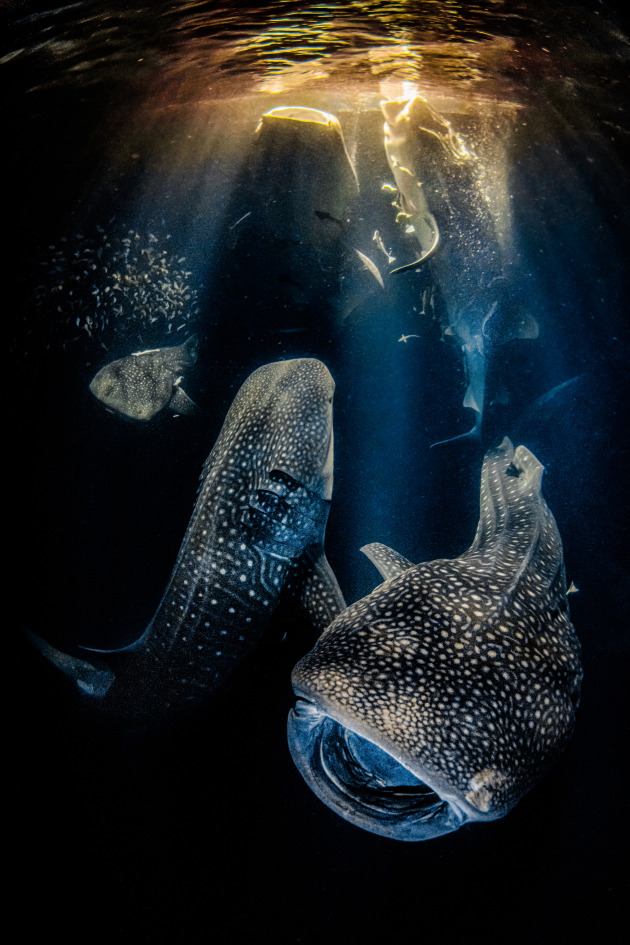
© Rafael Fernandez Caballero - Overall Winner of Underwater Photographer of the Year 2022
© Rafael Fernandez Caballero - Overall Winner of Underwater Photographer of the Year 2022 and First place in the Wide Angle category / UPY 2022

Cabellero beat out thousands of other entries taken by photographers from more than 70 different countries to the award.

Underwater Photographer of the Year is an international competition, based in the UK, which aims to showcase the best of underwater photography, celebrating images taken below the surface of the ocean, seas, lakes, rivers, ponds and pools

The competition is made up of thirteen categories, including Macro, Behaviour, Black & White, and Marine Conservation, as well as several categories focused specifically on images that are captured in British waters.

Captured in the night waters of the Maldives, Caballero’s winning image, ‘Giants of the Night’ depicts five whale sharks feeding together on nocturnal plankton, illuminated by the lights of a nearby boat.

Sharing the story behind the image, Caballero said, “It was already incredible when one whale shark came to our boat, but more and more kept arriving. I was diving with Gador Muntaner, a shark researcher, who couldn’t believe it as  their  numbers  grew. He  counted 11 sharks that night - a once in a lifetime encounter that nobody thought was possible.”

The judges remarked on Caballero’s mastery of light and composition in his image.

Competition judge Alex Mustards shared, “photography needs light and simply recording these giants in a dark ocean is a massive achievement. To do this with such beautiful light and careful composition of the five sharks is outstanding.” 

Australian-based photographer Matty Smith has won the title of British Underwater Photographer of the Year 2022 for his portrait of a great white shark titled Great White Split. 

© Matthew Smith / UPY 2022

The image was captured in the Neptune Islands of South Australia. Smith built a super-sized dome port for his camera, as well as a carbon pole and remote trigger to enable him to attain the perspective while shooting. 

Smith said, “I had wanted to shoot a charismatic over/under portrait for years. Some techniques I had previously tried failed  terribly,  so this time I designed and constructed my own equipment to get the camera exactly where I wanted.”

“Surprisingly, the sharks were instantly attracted to the camera, in fact it was a battle to stop them biting it!”

Smith was also named the runner-up in the Portrait category, received a highly commended award in the Behaviour category and a commended award in the Black & White category. 

Top placed Australian photographers

A number of Australian photographers have been named as winners and finalists in this year’s competition.

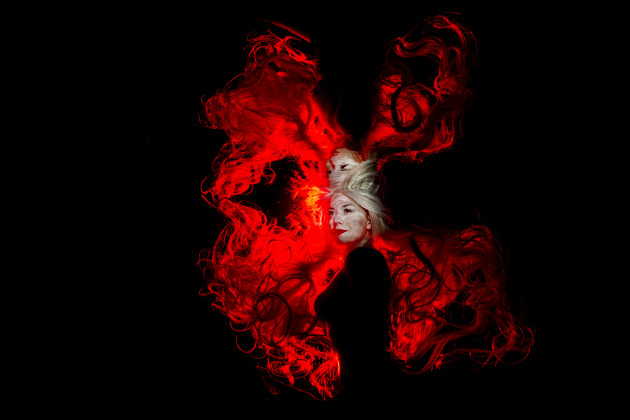
Described by judge Peter Rowlands as “haunting yet compelling,” the image Sarah’s Underwater World has won Australian photographer Kerrie Burow first place in the Black & White category of the competition. 
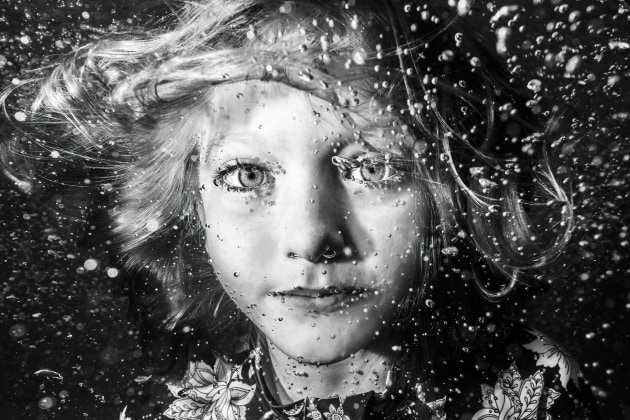
© Kerrie Burow - First place Black & White category / UPY 2022

Hannah Le Leu’s image Against All Odds also took home a top award. The image captured at Heron Island in Australia has won her third place in the Wide Angle category of this year’s competition. 

Speaking on Le Leu’s image of the sea turtle hatchling, judge Tobias Friedrich said, “One of my very favourite images of the competition. Very nice composition and excellent technique to capture this magnificent moment."

"For me, the story of this image, with the birds in the sky, really drags me into it and makes it better every time I see it. It's rare that underwater images tell a story this dramatic.”

© Hannah Le Leu - 3rd place in the Wide Angle category

You may recognise Le Leu’s photograph from the front cover of the February edition of Australian Photography as her image was named the Runner-up in the Animal & Nature category of our Photographer of the Year 2021 competition. 

Additionally, several other Australian photographers received highly commended and commended awards in various categories of the 2021 competition:

  • Jules Casey: highly commended in the Behaviour category 
  • Matty Smith: highly commended in the Behaviour category
  • Jake Wilton: commended in the Behaviour category 
  • Matty Smith: commended in the Black & White category 

Category Winners 

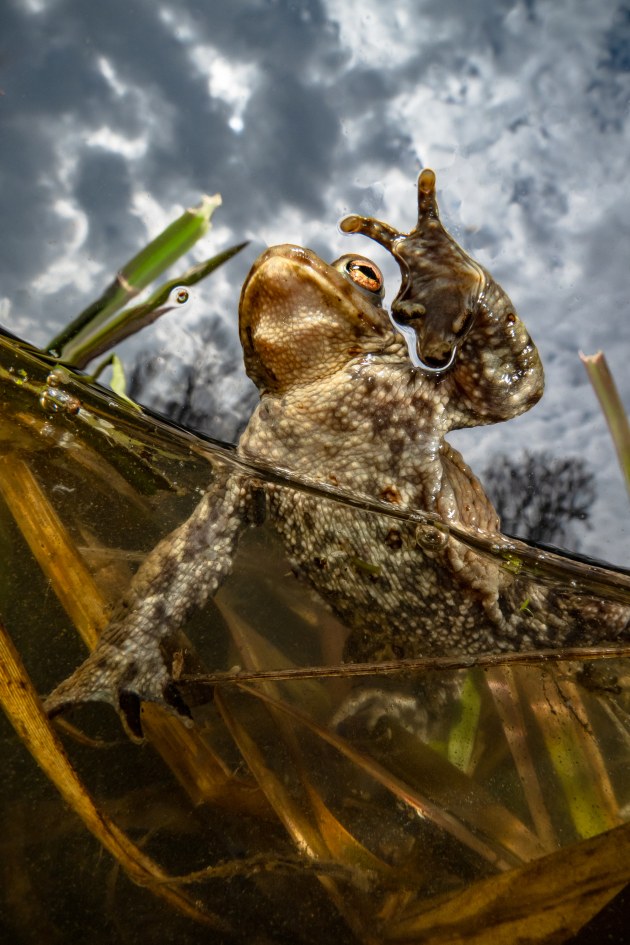
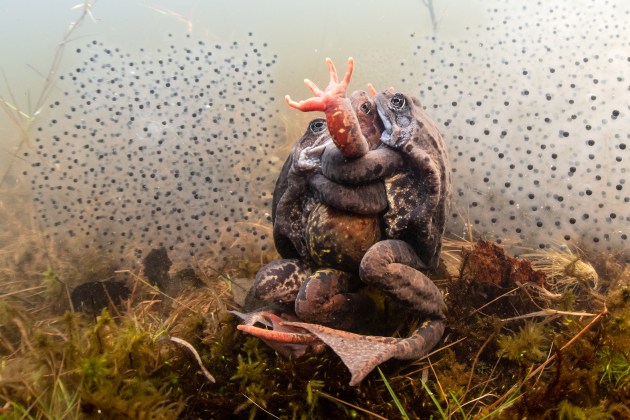
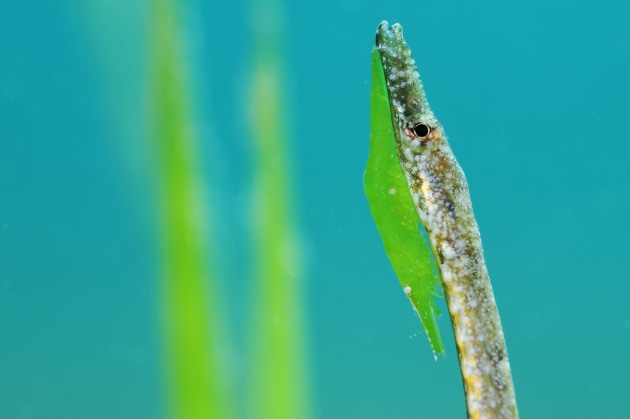
© Dan Bolt / UPY 2022
© Dan Bolt - First place Birish Waters Macro / UPY 2022
© Martin Stevens / UPY 2022
© Martin Stevens - First place British Water Compact category / UPY 2022
© Francisco Abadal Ramon / UPY 2022
© Francisco Abadal Ramon - First place Up & Coming category / UPY 2022
© Henley Spiers / UPY 2022
© Henley Spiers - First place in British Waters Wide Angle category / UPY 2022
© Lewis Jefferies / UPY 2022
© Lewis Michael Jefferies - First place British Waters Living Together / UPY 2022
© Enrico Somogyi / UPY 2022
© Enrico Somogyi - First place in the Compact category  / UPY 2022
© Thomas Heckmann / UPY 2022
© Thomas Heckmann - First place in the Portrait category / UPY 2022
© Pekka Tuuri / UPY 2022
© Pekka Tuuri - First place in the Behaviour category / UPY 2022
© Francisco Murcia Requena / UPY 2022
© Francisco Murcia Requena - First place in the Macro category / UPY 2022
© Kerrie Burow - First place Black & White category / UPY 2022
© Kerrie Burow - First place in the Black & White category / UPY 2022

Monday, 26 July 2021

‘Coon Island’ renamed by Australian councilors despite local opposition after name deemed ‘genuinely racist’


‘Coon Island’ renamed by Australian councilors despite local opposition after name deemed ‘genuinely racist’


Councilors in New South Wales have voted to change the name of an Australian island popular with tourists after it was deemed to carry racist connotations, though a survey found more than half of locals opposed the switch.

On Monday, councilors from Lake Macquarie, a city on Australia’s east coast, voted 8-5 in favor of scrapping the monikers ‘Coon Island’ and ‘Coon Island Point’ following a four-month consolation process.

Though the island has been known by the name for around 100 years, it was recently deemed problematic given the word ‘coon’ has racist connotations as a pejorative term for a black person.

The councilors will now submit proposals to the Geographical Names Board, which will see the island instead called ‘Pirrita Island’ and the adjacent headland renamed ‘Miners Point’, the local authority said in a tweet.

Lake Macquarie councilor Kevin Baker, who was a leading force in efforts to rename the nature reserve, thanked everyone involved in “righting this wrong”, and said he looked forward to “the process of healing within our community.”  

Speaking to the Australian Herald, Baker said the name ‘Coon Island’ was “genuinely racist and genuinely hurtful to a lot of people in our community.”

However, Baker’s proposal to rename the isle did not receive widespread support in the locale. According to local reports, a council-run survey of 2,120 local residents found that 44% supported the move while 56% opposed the name change. Of those supporting the proposal, 86% deemed the name ‘Coon Island’ offensive.

Baker said that public feedback had been considered when mulling the name-change, along with the opinions of key stakeholders, but that it was inevitable that some people would have been disappointed either way. 

The island, which sits at the head of the Swansea Channel, is currently a nature reserve and popular tourist site. Archeological evidence suggests there was a human presence on the island as long ago as 7,800 years ago and has significance to the Awabakal people, an Aboriginal tribe.

However, the island had been named after its one-time sole inhabitant, Herbert Greta Heaney, a miner nicknamed ‘coon’ because he often returned home with his face covered in black coal dust. The name for the island and the adjacent headland stuck.

The proposed name ‘Pirrita’ is an Awabakal word meaning oysters which grow from mangrove trees, while ‘Miners Point’ is a reference to Heaney’s profession. Baker said it was important to recognize both the indigenous and European contributions to the region.

Earlier this year, a popular Australian dairy product called ‘Coon Cheese’ was rebranded by its owners to ‘Cheer Cheese’ amid concerns that the racial connotations of the product’s name would cause offence. The new ‘Cheer Cheese’ hit Aussie shelves in June. 

https://www.rt.com/news/530273-australia-coon-island-renamed-racist/

Friday, 16 July 2021

Ban on Christian Lobby Group Carries Tinge of Hubris


Ban on Christian Lobby Group Carries Tinge of Hubris


A statue is seen silhouetted by the sun at St Mary's Cathedral in Sydney, Australia on October 23, 2020 (Lisa Maree Williams/Getty Images)

In a disturbing article published in The Epoch Times on July 14, it was revealed that the West Australian government had a policy where it could refuse to lease entertainment venues to groups with alternative views to the government.

Specifically, when the Australian Christian Lobby (ACL) applied to hold functions at the Albany Entertainment Centre and Perth Concert Hall, the manager of the venues, the Perth Theatre Trust (PTT), relied on this newly implemented policy to reject ACL’s request.

The policy, which came into effect a few days after the overwhelming election victory of Mark McGowan’s Labor government, states that the Trust will reject applications “where the content of the event does not represent the views of the West Australian government or the vast majority of Western Australians.”

It is difficult to imagine a more blatant violation of the rights to the free exercise of religion, the right to free speech, and the principle, according to which a person should not be discriminated against on the grounds of religion or political conviction.

The policy involves content-based discrimination because the PTT would have to examine the “content” of the applicant’s event. It is also a mystery as to how “the views of … the vast majority of Western Australians” could be ascertained with confidence.

This odious treatment of the ACL surely violates Section 62 of the Equal Opportunity Act 1984 (WA) which states that it is “unlawful for a person who … makes facilities available, to discriminate against another person on the ground of the other person’s religious or political conviction—(a) by refusing … to make those facilities available to the other person.”

Epoch Times Photo
Albany Entertainment Centre in Albany, Western Australia on April 25, 2011. (SeanMack / Wikimedia Commons)

The PTT’s reliance on this policy raises some troubling issues.

First, the rejection of ACL’s application indicates that a political party—re-elected with a colossal majority—may be inclined to disregard the basic legitimate expectations of civil decency, and may develop authoritarian tendencies that abrogate the rights of people, whose views are deemed to be incompatible with the government’s secular views.

Second, this disgraceful episode proves that human rights and equal opportunity legislation are meaningless legislative documents, if even the government can violate them with impunity.

Surely, if the article in The Epoch Times is a factual account of the incident, the PTT’s rejection of ACL’s application represents an egregious violation of the legislative rights of people to hold unrestricted religious or political views.

In such a case, these laws merely amount to meaningless rhetoric and vacuous expressions of prejudice and bias which, rather than prohibiting discrimination, instead condone and promote discrimination. Anti-discrimination and equal opportunity laws should be removed from the statute books if governments can violate them routinely with impunity.

Third, the actions of the PTT are a reminder that the free exercise of religion is not protected in Australia. Section 116 of the Australian Constitution, which states that the Commonwealth “shall not make any law … for prohibiting the free exercise of any religion” does not apply to the states.

Indeed, as a result, religion as such falls “under the residuary power of the States and not within a specific head of Commonwealth power. Hence, the effect of Section 116 is limited.”

Fourth, ACL’s treatment illustrates the need for a Religious Discrimination Act, which would be binding on our secular leaders and respected by all people. It has been widely reported that the current Attorney-General, Michaelia Cash, intends to re-introduce the Religious Discrimination Bill later this year.

Personally, I have never been a supporter of legislating for rights, including freedom of religion, because, if the government is empowered to grant freedom of religion, it can also easily take it away. Instead, freedom of religion should be seen as embedded in our judicial culture and political institutions as an inalienable natural right.

However, the many attacks on religion and Christianity, so richly documented in the press, may well necessitate the adoption of such a law, even if it were to serve as a short-term panacea. Indeed, the proposed legislation may be necessary to stem the vicious attacks on religion, which progressive activists often describe as “superstition” and “unscientific.”

Fifth, at present, I am reading a book on religious violence in Pakistan. It is a harrowing story, which cruelly illustrates that intolerance, prejudice, bias, and ignorance can easily destroy a nation. The book portents what might happen to Australia if governments were to institutionalise religious intolerance. Is Australia slowly destroying itself by abrogating the rights of many people to religious freedom and free speech?

I am collaborating on a new book with Prof. Augusto Zimmermann based in Perth, titled “The Rise of the Illiberal Elites: Critical Reflections on the Lucky Country.”

In it, we deplore the decline of religious culture in Australia and the “corresponding belief that reliance on ‘science’ will solve all peoples’ ills and societal problems.” We remark that this development is deplorable because “whenever science solves a problem, it points to the existence of other problems, challenges, and mysteries which it cannot solve itself.”

We argue that the “fundamental values of our liberal tradition were exemplified, formulated, and wrought into the texture of our society by Christianity … as a way of life.”

But, equally important, we also argue that it is certainly not safe to assume that our democratic system of limited government and fundamental rights “will persist while the faith and doctrine that gave birth to it are being deliberately attacked.”

Indeed, historical evidence suggests, and common sense confirms, that the present denigration of Christianity and the abrogation of civil rights, exemplified by the actions of the PTT, is foreboding the unravelling of fairness and decency in the “Lucky Country.”

Gabriël A. Moens is emeritus professor of law at the University of Queensland

https://www.theepochtimes.com/ban-on-christian-lobby-group-carries-tinge-of-hubris_3902709.html