Showing posts with label U.S. Legal News. Show all posts

Tuesday, 11 January 2022

Law allowing non-citizens to vote in US challenged in court


Law allowing non-citizens to vote in US challenged in court

Republicans will attempt to block the implementation of a controversial New York bill
Law allowing non-citizens to vote in US challenged in court

A law that will allow nearly 1 million non-citizen permanent residents of New York City to vote in city elections has been challenged by the state’s Republican Party, who are suing to declare the statute unconstitutional.

New York Republican Chairman Nick Langworthy and Staten Island Borough President Vito Fossella led the group of Republican city lawmakers seeking to block the new law enfranchising non-citizen New Yorkers who have lived in the city for over 30 days and have green cards or certain types of visas. They filed the lawsuit in state court on Staten Island on Monday, aiming to block the implementation of the law, which they insist is unconstitutional. 

“The law is clear and the ethics are even clearer: We shouldn’t be allowing citizens of other nations to vote in our elections, full stop,” Langworthy said, promising to “use every legal tool in our arsenal to block this unconstitutional and un-American law.” He accused incoming Mayor Eric Adams of “kowtowing to the radical City Council” by advancing their “ultimate goal of eradicating all the lines between citizens and non-citizens.”

Fossella also denounced the measure, claiming it “cheapens what it means to be a citizen and is an insult to every immigrant who has followed the law, taken citizenship classes, and swore an oath to our nation.” Several naturalized citizen immigrant New Yorkers are participating in the lawsuit, including City Councilwoman Inna Vernikov.

Over 800,000 non-citizen permanent residents will be permitted to vote in city elections under the controversial new law that Adams allowed to pass earlier this month. The new mayor stood aside to let the measure become law after the City Council approved it, opening the door to voting for ‘Dreamers’ and permanent residents with green cards and certain types of visas. However, the law does not allow voting for these groups in federal or state elections.

In addition to a permanent injunction blocking the law’s implementation, the suit seeks to have it declared unconstitutional and in violation of New York state law.

https://www.rt.com/news/545717-nyc-republicans-block-noncitizens-vote/

Tuesday, 14 December 2021


Assange case raises thorny questions

By Ivo Vegter

At face value, the UK court ruling that Assange may be extradited to the US on espionage-related charges, seems like a threat to press freedom. The case is more complicated than that, though.

Julian Assange’s near decade-long fight against extradition to the United States has suffered a major setback. An appeals court in the United Kingdom ruled that the US request for extradition, to stand trial on 18 charges of obtaining or disclosing national defence information, conspiracy of same, and conspiracy of committing computer intrusions, is valid.

Assange still has options left. He can appeal to the Supreme Court in the UK, and appeal again to the European Court of Human Rights. But he is coming ever closer to a reckoning with the Americans he enraged more than a decade ago.

Taken at face value, this is a blow to press freedom. Assange, an Australian journalist who founded WikiLeaks in 2006, is widely viewed as a pioneer of transparency, as a result of his efforts to publish leaks from whistle-blowers.

WikiLeaks rose to fame – or infamy – in 2010, when it published, in quick succession, a series of major internal US government leaks. These leaks, which included the so-called Afghan War Diaries, the Iraq War Logs, and a vast trove of diplomatic cables, prompted a criminal investigation into WikiLeaks and its founder, Assange.

While large parts of the leaks disclosed nothing illegal, buried within them were the germs of many momentous news stories, including evidence of serious war crimes by US-led Coalition forces and official lies about civilian casualties.

Some of the Afghan war documents were withheld at the request of the unnamed source, and the diplomatic cables were initially published in redacted form, before being leaked from WikiLeaks unredacted.

These leaks, collectively, represent the most significant trove of leaked documents since the Pentagon Papers were published by the New York Times and the Washington Post back in 1971.

In hiding

Another pioneer of journalism based on government leaks, Glenn Greenwald, worked with whistle-blower Edward Snowden to publish secret details of illegal US surveillance programmes. He wrote an excellent overview and history of the UK appeal court ruling from the Assange-did-nothing-wrong camp. It is essential reading, makes a great press freedom argument, and gives background that I need not rehash in much detail here.

It covers the lengthy time that Assange spent either hiding in the Ecuadorian embassy in London, having asked for and received asylum, or in Belmarsh Prison, after his asylum and Ecuadorian citizenship were revoked at the behest of the Trump administration.

Although one might have expected more leniency from the Biden administration, Assange had also infuriated the Democratic Party by leaking confidential emails showing that the party had rigged the 2016 presidential primaries against the socialist Bernie Sanders, and in favour of the eventual nominee, the corporatist Hillary Clinton.

So, while the original leaks disclosed the sins of the Bush administration, the Biden administration has tawdry reasons of its own to seek revenge against Assange.

Initially, the UK courts had resisted efforts by the US to extradite Assange, on the grounds that the treatment of national security prisoners in the US is inhumane, which would compromise Assange’s already fragile mental health and could lead to his suicide.

The judges have since accepted assurances by the US that they’d be nice, which seems surprisingly gullible, given that the US had plotted to illegally kidnap and even assassinate Assange.

The UK-based NGO, Article 19, named after the clause in the Universal Declaration of Human Rights that guarantees freedom of information, also considers the court ruling a blow to press freedom worldwide.

Said its executive director Quinn McKew: ‘The decision to extradite Mr Assange to the US to face espionage charges directly threatens media freedom. The US prosecution does no more and no less than criminalise those who gather news and expose serious human rights violations and crimes. The UK government should not support this. This judgment means that all those who pursue and reveal human rights abuses by the US and other powerful entities are now at serious risk of extradition and prosecution.’

Legitimate secrecy

However, there is another side to this argument, and that is that governments – and private entities, for that matter – do have legitimate reasons for keeping certain information secret. The need for secrecy in prosecuting wars is indisputable, and the need for confidentiality in diplomatic business is also uncontroversial. Secrecy literally saves lives.

There is, therefore, a legitimate case to be made that people who have security clearance but violate that trust, ought to be prosecuted.

On the other hand, holding governments (and companies, and people) accountable means that whistle-blowers who reveal evidence of wrongdoing ought to be protected from both prosecution and vengeance.

It is harder to make the argument that journalists who publish once-secret information ought to be prosecuted. After all, they never agreed to keep it secret, and they didn’t violate the secrecy.

If one journalist doesn’t publish, the next will, as happened with the Pentagon Papers. Once a document has been leaked, it is hard to supress it. And, as Justice Black opined in the Pentagon Papers case, ‘Only a free and unrestrained press can effectively expose deception in government.’

On this basis, we could conclude that Assange indeed did nothing that ought to be criminal, unlike his sources (whom he, of course, has every right to protect).

Hating WikiLeaks

When the embassy cables were first published on WikiLeaks in 2010, I wrote that one day, we’d all hate WikiLeaks. I don’t think that prediction came true, since most people still seem to love WikiLeaks, but my qualms remain:

‘The “leaks” for which WikiLeaks has become infamous are not of the specific, whistle-blowing kind. They are wholesale disclosures, including many confidential and secret documents. While the organisation claims to exercise some editorial control over the releases, redacting names of people whose lives might be endangered, and omitting in this case documents classified as “top secret”, there’s not much that is sacred.

‘Anyway, all it will take to shed the remaining fig leaves is a competitor with fewer qualms than those to which Julian Assange professes.

‘It is the end of secrecy, of confidentiality and of privacy.’

I sought to distinguish between real evidence of malfeasance, fraud, or corruption, the disclosure of which should always be protected, and other information that its owners have a legitimate right to keep secret.

We have seen, after all, that lying governments are not the only victims of leaks. The vast majority of the Panama Papers of 2016 and the Pandora Papers of 2021 consists of private information that exposes no wrongdoing at all.

Like the war logs or the embassy cables, these disclosures ought to have been edited to contain only information that implicated people, companies or governments in criminal misconduct. That is what whistle-blowing is.

Revealing secret or confidential information that does not implicate anyone in wrongdoing is not whistle-blowing. That is simply a violation of privacy or legitimate confidentiality.

Exemplary

Although Greenwald has come out in support of Assange, his own work with Snowden was a lot more circumspect. It disclosed only what was necessary to expose illegal surveillance, and little more. I think that approach was exemplary on the part of Greenwald, and ought to be considered mitigating, or even exculpatory, in any future espionage prosecution of Snowden.

If I, as a journalist, obtain your personal financial information, someone at your bank violated your privacy. Once I do obtain it, however, do I have the right to publish it?

Perhaps, if it contains evidence of criminal activity. But if it doesn’t implicate you, it strikes me as deeply unethical – and likely illegal – to disclose your private information.

So, the Assange question is not as simple as saying ‘it’s a blow to press freedom’. To the extent that he published evidence of illegal activity, he should absolutely be protected, as should his whistle-blowing sources.

Collateral damage

The question is what else he disclosed when he dumped millions of unscrutinised documents online. Did that constitute a justifiable violation of secrecy or privacy, or was it just ‘collateral damage’?

If we are to hold governments accountable for the collateral damage in war, can we just ignore the collateral damage of wholesale leaks of the kind that Assange champions?

If we can’t, the question becomes who ought to be held accountable for that collateral damage. To my mind, the person who agreed to keep the information secret and violated that undertaking ought be held civilly and/or criminally liable for any disclosures that do not constitute incriminating evidence and therefore fall under the whistle-blowing exception.

Once the information had been leaked, however, should it be merely unethical, or should it be criminal, to publish such leaks wholesale instead of publishing only incriminating evidence?

Hesitantly, I’d go with unethical, rather than criminal, although journalists ought to be aware of and accountable for the physical, financial, reputational and psychological damage that such disclosures can do.

So, although Assange is a hero to many, he is not blameless.

However, I do think he has suffered enough. It would be a great boon to worldwide press freedom if the UK and the US would set an example to more repressive governments by extending leniency, and even a pardon, to Assange.


Ivo Vegter is a freelance journalist, columnist and speaker who loves debunking myths and misconceptions, and addresses topics from the perspective of individual liberty and free markets. 

https://dailyfriend.co.za/2021/12/14/assange-case-raises-thorny-questions/

Thursday, 7 October 2021

Convicted George Floyd killer, ex-cop Derek Chauvin denied public defender as court says he failed to prove he’s poor


Convicted George Floyd killer, ex-cop Derek Chauvin denied public defender as court says he failed to prove he’s poor

Convicted George Floyd killer, ex-cop Derek Chauvin denied public defender as court says he failed to prove he’s poorFormer Minneapolis police officer Derek Chauvin during a sentencing hearing in Minneapolis, Minnesota, U.S. June 25, 2021 © REUTERS/File Photo
Former police officer Derek Chauvin, who is gearing up to appeal his lengthy prison sentence for the murder of George Floyd, was denied a request for a public defender to represent him, despite insisting he can’t afford a lawyer.

The Minnesota Supreme Court ruled on Wednesday that Chauvin did not qualify for a public defender. Upholding an earlier decision by Hennepin County District Judge Peter Cahill to the same effect, Chief Justice Lorie Gildea rejected the application after reviewing information Chauvin provided regarding his debts and assets.

In the filing, Chauvin argued that his debts currently exceed his limited assets and prevent him from retaining private counsel. During his high-profile trial, Chauvin’s legal fees were covered by the Minnesota Police and Peace Officers Association (MPPOA). The group said at the time that Chauvin, along with every member of the association, was entitled to legal representation, and that it could not “pick and choose” who to defend. However, with his trial ending in a guilty verdict, the MPPOA won’t be picking up the tab for his appeal, the Star Tribune reported.

Wednesday’s ruling does not prevent Chauvin from another attempt to secure a public defender. “This denial is without prejudice to a future application for representation by appointed counsel,” the ruling states, noting that the burden of proof that he is in need of a public defender rests with Chauvin.

The judge did not elaborate on her reasons for rejecting the application. While the amount of Chauvin’s assets is unclear, they reportedly have been depleted not only by the ongoing criminal litigation, but by a divorce settlement that he and his ex-wife Kellie reached in February.

The settlement – which was heavily redacted due to financial fraud allegations the Chauvins were jointly facing, as well as the nature of Derek Chauvin’s murder case – reportedly envisaged Kelly receiving two-thirds of the couple’s marital and non-martial assets, including properties in Florida and Minnesota. The timing of the divorce – Chauvin’s wife filed for it mere days after he was charged – and the secretive nature of the settlement prompted speculation that the whole affair was an elaborate ploy to shield the family’s assets.

Chauvin was sentenced to 22.5 years in prison in June, minus time served, after a jury found him guilty of second-degree murder, third-degree murder, and second-degree manslaughter – all stemming from his role in the death of Floyd in May of last year. Footage showing Chauvin kneeling on Floyd’s neck for over nine minutes prior to the latter’s death sparked months of nationwide protests against police brutality and calls for racial justice. Although initially peaceful, the protests were later marred by violence, with numerous instances of looting, riots, and vandalism.

https://www.rt.com/usa/536800-chauvin-public-defender-request/

Friday, 17 September 2021

Minnesota Supreme Court rules Minneapolis voters may decide on abolishing police department


Minnesota Supreme Court rules Minneapolis voters may decide on abolishing police department

The ruling comes more than a year after George Floyd's death in Minneapolis while in police custody


The Minnesota Supreme Court ruled that voters in Minneapolis may decide on whether or not to abolish the police department in the upcoming municipal elections. 

"We're incredibly thrilled that the people of Minneapolis have their democracy honored," JaNaé Bates, a spokeswoman for Yes 4 Minneapolis, which wrote the proposal, told the Star Tribune. "The Supreme Court recognized that we were on the right side of the law, we were on the right side of democracy, and we're going to be [on] the right side of history as we move forward."

If passed, the measure would do away with the Minneapolis charter requirement to have a police department with a minimum level of staffing. Minneapolis would instead replace the police department with a public safety department "that employs a comprehensive public health approach."

"A case with this many motions, and this many ups and downs usually takes 12 months. There's little time in the course of this to feel exhilaration when we won or disappointment when we lost, because there was always more to do," said Terrance W. Moore, an attorney for Yes 4 Minneapolis. "We felt it was important to be resilient and follow the course of the law and the course of the process and, ugly as it was, the process worked."

The state’s Supreme Court overturned a lower court’s ruling that rejected ballot language for not sufficiently describing the measure's effects. 

The language "is unreasonable and misleading," Hennepin County District Judge Jamie Anderson wrote in the order last week. 

"The court finds that the current ballot language is vague, ambiguous and incapable of implementation, and is insufficient to identify the amendment clearly," she continued.

The Supreme Court’s ruling came just before the start of early voting for Minneapolis municipal elections at 8 a.m. Friday. Election day for the city will be held on Nov. 2. 

Former council member Don Samuels is among the opponents of the amendment and said that the language of the ballot question leaves important questions unexplained, including how the new department would be implemented and led. 

A lawyer for Samuels, Joseph Anthony, said his clients never objected to letting voters decide whether or not to abolish the police, but that Yes 4 Minneapolis "could never get the language right because everything came back to defunding the police." 

The ballot measure comes after the death of George Floyd in Minneapolis while in police custody on Memorial Day of 2020, which sparked a nationwide "defund the police" movement.

A handful of liberal cities that supported the defund movement in the last year, however, have since become vocal in their support for more police officers, including in Seattle where the mayor said the police department needs to be beefed up amid an increase in crime. 

"As a city, we cannot continue on this current trajectory of losing police officers," Mayor Jenny Durkan said during a press conference in July. "Over the past 17 months, the Seattle Police Department has lost 250 police officers, which is the equivalent of over 300,000 service hours. We’re on path to losing 300 police officers."

https://www.foxnews.com/us/minnesota-supreme-court-minneapolis-voters-abolish-police


Monday, 30 August 2021

Illinois Mom Stripped of Parental Rights Over Vaccination Status


Illinois Mom Stripped of Parental Rights Over Vaccination Status

Mother Stripped of Parenting Rights Because Unvaccinated
Fox 32
2:16

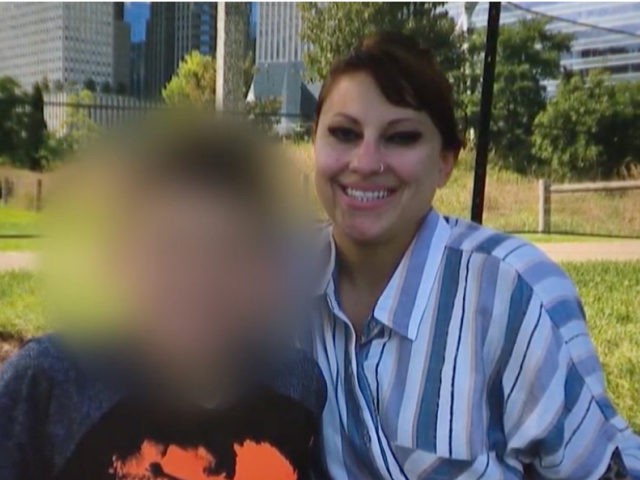
A mother in Illinois has been stripped of her parental rights over her refusal to get the coronavirus vaccine.

According to FOX 32, Cook County Judge James Shapiro removed Rebecca Firlit’s visitation rights with her 11-year-old son after learning that she had not yet received the vaccine. Firlit said she would not take the vaccine after having had adverse reactions to them in the past.

“I miss my son more than anything. It’s been very difficult. I haven’t seen him since August 10th,” Firlit told FOX 32.

“I think that it’s wrong. I think that it’s dividing families. And I think it’s not in my son’s best interest to be away from his mother,” she added.

Firlit has been divorced from her husband for seven years; they share custody and parenting time with their son. From FOX 32:

She says out of the blue, Cook County Judge James Shapiro asked her whether she had been vaccinated. Firlit told Shapiro she had not because she has had bad reactions to vaccines in the past.

Shapiro then ordered that Firlit be stripped of all parenting time with her son until she gets vaccinated.

Over the past two weeks, Firlit has been able to talk to her son on the phone and through video calls, but has not seen him in person.

Firlit will be appealing the order, arguing that the judge has no grounds to take her visitation rights. Her attorney, Annette Fernholz, said the decision exceeds the judge’s jurisdiction.

“In this case you have a judge, without any matter before him regarding the parenting time with the child deciding ‘Oh, you’re not vaccinated. You don’t get to see your child until you are vaccinated.’ That kind of exceeds his jurisdiction,” Fernholz said.

“You have to understand the father did not even bring this issue before the court. So it’s the judge on his own and making this decision that you can’t see your child until you’re vaccinated,” Fernholz added.

The father’s attorney, Jeffrey Leving, said they agreed with the decision on the basis of protecting the child from an unvaccinated mother.

“There are children who have died because of COVID. I think every child should be safe. And I agree that the mother should be vaccinated,” Leving said.


https://www.breitbart.com/pre-viral/2021/08/28/illinois-mom-stripped-of-parental-rights-over-vaccination-status/

Wednesday, 25 August 2021

Supreme Court reinstates Trump's 'Remain in Mexico' policy


Supreme Court reinstates Trump's 'Remain in Mexico' policy

The court's three liberal justices opposed the move


The U.S. Supreme Court refused to block a court order requiring the Biden administration to reinstate a Trump-era immigration move known as the "Remain in Mexico" policy.

The policy, implemented by former President Donald Trump, requires asylum seekers at the southern border to stay in Mexico while they await hearings in U.S. courtrooms to determine their eligibility and status. 

Three of the court’s more liberal justices – Justices Kagan, Sotomayor, and Breyer – would have accepted the application for a stay. 

The Department of Homeland Security released a statement disagreeing with the ruling.

"The Department of Homeland Security respectfully disagrees with the district court’s decision and regrets that the Supreme Court declined to issue a stay," the statement said. "DHS has appealed the district court’s order and will continue to vigorously challenge it.  As the appeal process continues, however, DHS will comply with the order in good faith.  Alongside interagency partners, DHS has begun to engage with the Government of Mexico in diplomatic discussions surrounding the Migrant Protection Protocols (MPP)."

The statement continued: "DHS remains committed to building a safe, orderly, and humane immigration system that upholds our laws and values.  DHS continues to process individuals in accordance with U.S. law and our mission.  Pursuant to the CDC’s Title 42 public health order, DHS continues to expel single adults and families encountered at the Southwest Border."

A federal judge in Texas had previously ordered that the program be reinstated last week. Both he and the 5th U.S. Circuit Court of Appeals refused the administration’s request to put the order on hold.

REMAIN-IN-MEXICO COURT RULING A WIN FOR TEXAS, MISSOURI OVER BIDEN ADMIN

Justice Samuel Alito ordered a brief delay to allow the full court time to consider the administration’s appeal.

The Trump administration put the "Remain in Mexico" policy in place in 2019. It involved sending migrants back to Mexico, rather than releasing them into the U.S., as their asylum proceedings were heard.

The policy, in cooperation with Mexico, resulted in court tents being set up along the border in places like Laredo, Texas, where migrants could briefly enter for their hearings before going back to Mexico.

The Trump administration argued that the policy ended "catch-and-release," which it saw as a major pull factor drawing migrants north. 

Critics said the Remain in Mexico policy was cruel and led to migrants being put in danger in camps across the border.

The Biden administration promised to end the policy and began processing migrants enrolled in the Migrant Protection Protocols (MPP) into the U.S. shortly after entering office. In June, it formally ended the program.

Missouri and Texas sued the administration, claiming that ending the policy was both illegal in the way that it was done, and that it harmed both border states and states deeper in the interior by encouraging migrants and therefore fueling the crisis at the southern border.

"We are hopeful for a favorable ruling because it is clear that the Biden administration didn’t consider anything relevant to how it was working or notice and comment, and obviously we have a crisis at the border now," Missouri AG Eric Schmitt told Fox News in an interview last month. "Anyone who is paying attention knows we have a 21-year high in border crossings, drug traffickers, and human traffickers have been emboldened, and that affects not just Texas but states like Missouri."

The lawsuit claimed some of the migrants released would commit crimes in their states, that it would lead to an increase in human trafficking, and that it would lead to higher costs for the states in areas like education and health care.

https://www.foxnews.com/politics/supreme-court-reinstates-trumps-remain-in-mexico-policy

Wednesday, 28 July 2021

US Justice Dept wont defend Republican lawmaker in Capitol riot lawsuit


U.S. Justice Department declines defending Republican congressman in Capitol lawsuit


WASHINGTON, July 27 (Reuters) - The U.S. Justice Department in a court filing on Tuesday declined to defend Republican congressman Mo Brooks in a lawsuit that alleges he conspired to instigate the Jan. 6 riot at the U.S. Capitol.


Brooks had asked the Justice Department consider him covered by the Westfall Act, which protects federal employees from being sued for actions taken as part of their jobs, concerning the lawsuit brought by Democratic congressman Eric Swalwell.

The Justice Department’s filing could indicate it may not defend former President Donald Trump, who has also been sued by Swalwell for allegedly conspiring to incite the attack.

The department said in the court filing that it had determined that Brooks’ appearance at the Jan. 6 rally – in which Trump exhorted his supporters to stop the certification of Joe Biden’s electoral victory – was a campaign activity and not part of his job as a congressman.

“Members of Congress are subject to a host of restrictions that carefully distinguish between their official functions, on the one hand, and campaign functions, on the other,” the department said in the filing.

“Inciting or conspiring to foment a violent attack on the United States Congress is not within the scope of employment of a Representative – or any federal employee – and thus is not the sort of conduct for which the United States is properly substituted as a defendant under the Westfall Act,” it said.

Trump supporters stormed the Capitol after the rally, breaking down barriers, clashing with police and forcing members of Congress to flee to safety.

“Today’s actions strongly suggest that the Department of Justice will refuse to defend Trump’s action on January 6, as well,” said Anne Tindall, counsel for advocacy group Protect Democracy, which is representing two Capitol Hill police officers in separate litigation against Trump.

The Justice Department last month urged a court to substitute the U.S. government as the defendant in a lawsuit brought by E. Jean Carroll, a writer who accuses Trump of raping her a quarter century ago and defaming her by denying it while he was president.

Legal experts said the department’s actions in that case aimed to protect the presidency rather than the personal interests of the man holding it. (Reporting by Eric Beech and Sarah N. Lynch; Editing by Mohammad Zargham, Sandra Maler and Himani Sarkar)

https://www.dailymaverick.co.za/article/2021-07-28-u-s-justice-dept-wont-defend-republican-lawmaker-in-capitol-riot-lawsuit/

Monday, 19 July 2021

X gender on my passport instead of male or female is just the start: I want to identify as a dolphin


X gender on my passport instead of male or female is just the start: I want to identify as a dolphin

Charlie Stone
Charlie Stone

Charlie Stone is an author and journalist who has worked for the BBC, several national newspapers in the UK and international media.


X gender on my passport instead of male or female is just the start: I want to identify as a dolphin
The UK Supreme Court is hearing a case arguing that male and female-only categories on passports are 'degrading' and 'illogical', and X would hit the spot better. I don’t think it goes nearly far enough. I identify as a DOLPHIN.

Imagine if ALL your problems, all the worries that have ever niggled you in your whole life could just be washed away by replacing a single word with an ‘X’, just the one mind you: get rid of male/female, for example, and the world is a perfect place. 

This seems to be the view of one of the parties in an ongoing legal battle over marking one’s gender on one’s passport with an X instead of male or female, which has bafflingly gone all the way to the Supreme Court of the United Kingdom. Dunno who’s paying their legal bills, but the lawyers must be loving this fight, all this energy being applied to the most pointless legal battle anyone could possibly dream up.

Lawyers representing ‘non-gendered campaigner’ Christie Elan-Cane argue that male and female-only categories on passports are “degrading” and “illogical” and people should be allowed to just be X instead. Christie, you see, has to lie on his/her form at the moment and that’s dishonest. 

Never mind the fact that, if Christie is ever suspected of smuggling drugs through passport control, there could soon be a rubber glove wearing Customs officer checking precisely which orifi he/she possesses. A vagina, ask any drug courier who has worked the airline route from the Caribbean to the UK, is a great place to hide condoms stuffed with cocaine. They much prefer women to men, for basic biological reasons. They have more space. 

Maybe the customs bloke will have to sign a form, saying they promise not to look? Interesting. That’s a legal fight for the future. 

Anyway isn’t the entire point of a passport to show you are who you say you are and not an illegal alien, and doesn’t male/female denote a very simple fact? That this person possesses a penis or a vagina. I thought you were supposed to put it on your passport form if you have any scars or deformities or tattoos? 

It’s not just gender, a whole new world of courtroom dramas featuring fascinating identity-based legal cases is opening up. Here’s one: a Dutch bloke doesn’t quite like his true age – ie: the days that have passed since the day he was born – because it makes him seem a bit old. Emile Ratelband was 69 when he petitioned the court to say he felt 20 years younger and his doctors said he was sprightly for his age. He wanted to be 49. And why not? 

"When I'm 69, I am limited. If I'm 49, then I can buy a new house, drive a different car," he said. "I can take up more work. When I'm on Tinder and it says I'm 69, I don't get an answer. When I'm 49, with the face I have, I will be in a luxurious position. 

"Because nowadays, in Europe and in the United States, we are free people. We can make our own decisions if we want to change our name, or if we want to change our gender. So I want to change my age. My feeling about my body and about my mind is that I'm about 40 or 45." 

That’s not nearly far enough though. Nope. No way. Kat (of course) Lyons from Colorado in the US likes to dress up as a cat, she climbs things and also drinks from a bowl. Ms Lyons has ‘identified’ as a kitten since she was at high school. She says it’s her ‘true self’, and her boyfriend loves her for it. 

And what about Jareth Nebula (of course it’s a made-up name), this being wasn’t content with just being transgender. Oh no. Now this thing wants to live as a sexless alien and has had its nipples removed.... Err? Maybe aliens have nipples, oh no Nebula! You might have to have them sewn back on again. I wasn’t being rude calling Jareth Nebula ‘thing’, by the way: that’s what ‘it’ wants to be called – ‘thing’ or ‘it’.  

"After coming out as transgender and believing I had finally found myself, I realised I was wrong – I wasn’t male or female, or even human. I don’t think or feel like humans. I can’t really explain it to others – I’m simply otherworldly. I didn’t feel comfortable as either gender or even anything in between. I know I’m stuck in a human form and that’s how I’m perceived by others – but to me, I’m an alien with no gender.” 

Imagine the poor passport office bureaucrat, when they process this alien life form’s form? You’re not going anywhere, Jareth Nebula. You won’t get through passport control – not on this planet anyway. Stay home and watch Star Trek instead. 

Then there’s Kimberel Eventide, who identifies as an elf… On and on and on it boldly goes.  

Awesome! My passport is up for renewal soon. Well, dear reader, I have a confession to make. Just like Gerald off South Park, I identify as a dolphin. I have always felt like an aquatic mammal, as if I had some kind of a ‘special porpoise’ … but I thought it was just me doing a really bad Bronx accent. 

From now on I want to be called ‘Flipper Stone’ and to be rewarded for water based tricks with fish. I also want to stay at a nice young age, let’s say 23 or so, forever; just like a cartoon character. 

Anyone know a good lawyer?

https://www.rt.com/op-ed/529027-gender-passports-uk-supreme-court/