Thursday, 7 May 2020

Hong Kong customs seize 38,500 endangered shark fins

MAY 7, 2020
https://phys.org/news/2020-05-hong-kong-seizes-fins-endangered.html

A record 26 tonnes of shark fin were seized by customs officers in Hong Kong

Hong Kong has seized 26 tonnes of smuggled shark fins, sliced from some 38,500 endangered animals, in the largest bust of its kind in the southern Chinese city.

The record haul was discovered in two containers from Ecuador, and highlights the continued demand for shark fin, which is served at wedding banquets in many Chinese communities.

The city's customs department unveiled the haul on Wednesday and said it smashed previous records.

"Each consignment consisting of 13 tonnes broke the previous record seizure of 3.8 tonnes of controlled shark fins made in 2019," customs official Danny Cheung told reporters.

Most of the fins came from thresher and silky sharks, both endangered species. A 57-year-old man was arrested but has been released on bail pending further enquiries.

Some of the ocean's most vital apex predators, shark populations have been decimated over the last few decades with finning and industrial long line fishing the main culprits.

Fishing fleets often cut the fin from the shark and then and throw the fatally maimed animal back in the sea to maximise profit.

The dried fins sell for considerable sums and are usually served in a glutinous soup at banquets.

The sale and consumption of shark fin is not illegal in Hong Kong, but must be licensed.

Years of campaigning by environmentalists and celebrities like Chinese basketball star Yao Ming have led to the dish becoming less fashionable among younger consumers in China, Macau, Hong Kong and Taiwan.

But it remains stubbornly popular among older generations and many prominent hotels and restaurants still offer it.

A 2018 survey by the World Wildlife Fund (WWF) found seven out of 10 Hong Kongers had eaten shark fin that year.

"There is still strong cultural value placed on consuming shark fin, particularly at weddings, business events and family gatherings like the upcoming Mother's Day," senior conservation officer Gloria Lai Pui-yin told AFP.

Some restaurants and hotels had signed WWF's "no shark fin" pledge but many continued to offer the dish, she added.

Wild Aid estimates some 73 million sharks are killed every year for the trade.

Their research says consumption has dropped significantly on the Chinese mainland but there is growing appetite for the dish in Thailand, Vietnam and Indonesia.

With its busy port and international connections, Hong Kong has long been a major trafficking route for wildlife and drug smugglers.

Importing endangered species without a licence is illegal and carries a maximum penalty of 10 years in jail and a HK$10 million ($1.3 million) fine.


Recommend this post and follow TCW

The coronavirus is costing us more than just our health and economy

MAY 6, 2020, by Pearl Eliadis, The Conversation
https://phys.org/news/2020-05-coronavirus-health-economy.html


Credit: CC0 Public Domain


Civil liberties are among the oldest, most recognized human rights. Their contemporary expression as legal claims based on civil and political rights is more recent, dating from the tumultuous per … the Second World War.

Today, we face a very different kind of emergency. And it's been astonishing how quickly the values we once fought for have been set aside.

In pandemics, rights violations look different. There have been no mass detentions or arrests. No internments of enemy aliens.

But vulnerable seniors have been isolated and … kened or killed them.

Collective agreements have been partially suspended for Québec teachers and for some Ontario health-care workers.

A mandatory Sunday closing order for Québec businesses ignores established case law that permits religious minorities t … se their day of rest based on freedom of religion.

Rights slipping away

Civil liberties are not designed only for times of peace and stability. They assume special, even critical, importance during public emergencies. That is precisely because many of the checks and balances that we take for granted have been pushed aside. New orders emerge daily and the rule of law is taking time to catch up.

Legislative oversight is often the first casualty. In countries like Canada, democratically enacted laws confer the power to issue emergency orders without legislative scrutiny. Sure, citizens can vote out governments that overstep, but democracy should not evaporate between elections. At the time of writing, the legislature of every province in Canada was adjourned, although a few are tentatively aiming to re-opening soon.

There is a risk of overreach when we collectively agree to allow governments to do what is necessary to keep us safe. According to a recent Ipsos poll, Canadians overwhelmingly suppo … es to fight COVID-19. But that in turn creates a real risk that courts will show more deference to governments during times of crisis.

The province of Québec in particular offers a striking example of how quickly it can all unravel.

Since the March 13 declaration of a public health emergency, the province's minister of health and social services has ruled by decree under Québec's Public Health Act. My analysis of the eight orders-in-council and 28 ministerial orders shows that two-thirds of these orders limit civil liberties.

Yet, the public supports such measures: politicians are enjoying heightened popularity across the country. This support may be explained by the fact that we are only gradually waking up to the impact of COVID-19, especially on people who are vulnerable or unable to speak out.

On April 20, lawyer Jean-Félix Racicot launched a challenge to Québec's emergency measures before the province's Superior Court. Four days later, Justice Louis-Paul Cullen ruled from the bench that social distancing orders are not a form of illegal detention. An appeal of his decision, and … easures, are pending.

Signposts for public emergencies
Canada's Charter of Rights and Freedoms and the courts provide indications of what measures will be upheld and which ones may fall.

The Supreme Court of Canada has ruled that democratic societies founded o … strictions on rights.

Social distancing is essential, as a recent study in The Lancet has demonstrated. But the validity of bans on assemblies must be "prescribed by law." Reports from Québec and Ontario indicate that police may be overstepping their bounds.

Québec's March 20 order-in-council, for example, mandates that people must stay two metres apart. Police have nonetheless fined people who have maintained those social distances, sometimes without prior warning. Neither scenario is prescribed by law. And yet, a Montréal police spokesperson is on record as suggesting that people are not allowed to "congregate" even if they keep their distance.

It's no wonder the Canadian Civil Liberties Association has launched a national campaign to monitor who has been detained and fined, and why.

"Reasonable limits'

The courts have also said that "reasonable limits" on rights must be proportionate responses, with rational connections between measures taken and the problem they aim to solve.

In Québec, the life, liberty and security of seniors have actually worsened. Shuttering seniors in residences, prohibiting them from leaving and then barring entry to family caregivers and loved ones has had devastating albeit unintended consequences.

The son of a woman who died of COVID-19 in Québec's government-run seniors' residence in Ste-Dorothée has filed a class-action lawsuit, alleging residents were improperly isolated and infected employees were required to work. A similar lawsuit has been launched in Ontario.

Public service collective agreements have been suspended. Employees claim they are forced to work in dangerous circumstances, with no training or adequate personal protective equipment. These are major limits on freedom of association.

We need to care more, not less, about civil liberties and all human rights during emergencies. Canadian governments are working to keep us safe, but history has shown that in a clash with a public emergency, rights rarely emerge intact unless we double down on remembering why we needed them in the first place.


Recommend this post and follow TCW

San Francisco gives drugs, alcohol to homeless addicts in hotels during coronavirus, sparking debate

https://www.foxnews.com/us/san-francisco-homeless-addicts-in-hotels-coronavirus-debate


Controversy is ensuing in San Francisco after the city decided to give alcohol, marijuana, and methadone to homeless addicts in hotels during the coronavirus pandemic, according to a report.
Last Friday a man who describes himself on Twitter as “Formerly homeless addict in #recovery advocating for the #truth about homelessness and drug addiction. Faith, Hope and Love. SF Native. Tweets are my own.” tweeted to the city.
He wrote: “I just found out that homeless placed in hotels in SF are being delivered Alcohol, Weed and Methadone because they identified as an addict/alcoholic for FREE. You're supposed to be offering treatment. This is enabling and is wrong on many levels. @SF_DPH @sfbos @LondonBreed"
The city's department of public health confirmed the report on Twitter this week.
“These harm reduction based practices, which are not unique to San Francisco, and are not paid for with taxpayer money, help guests successfully complete isolation and quarantine and have significant individual and public health benefits in the COVID-19 pandemic.”

San Francisco fell far short of securing the more than 8,000 hotel rooms that city supervisors hoped to lease to house homeless and other at-risks populations needing to quarantine or socially distance themselves during the coronavirus pandemic.
The city had set a deadline to lease 8,250 hotel rooms for the homeless, frontline workers and those living in densely populated apartment buildings.
While there was no formal punishment for failing to lease the 8,250 hotel rooms, the lack of rooms is a blow for a city that even before the outbreak of COVID-19 was struggling to handle a growing crisis in homelessness.
California acquired more than 15,000 hotel rooms to shelter homeless people during the coronavirus pandemic, Gov. Gavin Newsom said last month.
Newsom said then that a new agreement with the Motel 6 hotel chain would provide an additional 5,025 hotel rooms at 47 locations in 19 counties.
“Today marks an important milestone for our efforts to protect very vulnerable homeless individuals from COVID-19, and to protect our hospitals more broadly from surges that challenge our capacity and stress our system,” the governor said.

Newsom made the announcement outside a Motel 6 in San Jose, where he touted his "Project Roomkey" initiative.
The federal government has agreed to pay 75 percent of costs associated with housing some people experiencing homelessness. The project covers people who test positive or may have been exposed to COVID-19, older homeless people and those with underlying health conditions.

Coronavirus stimulus checks sent to dead people need to be returned, IRS says

https://www.wzzm13.com/article/news/health/coronavirus/treasury-says-to-mail-back-checks-sent-to-dead-people/69-a0df92d9-f0d9-401d-8dd1-de534f06f561


There have been reports around the country of stimulus payments showing up for deceased people. The IRS has just announced what people need to do.
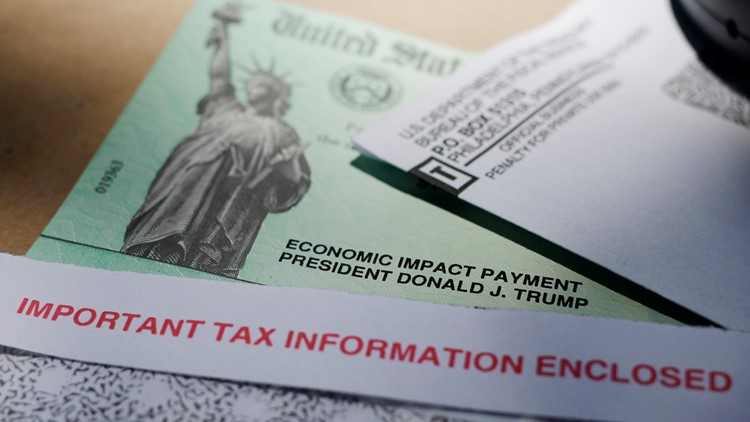
The Treasury Department announced Wednesday that those who got money on behalf of a person who has died should return the funds to the IRS. 
As the $1,200 economic stimulus payments tied to the CARES Act were deposited and mailed out, there were many people left confused after they got checks meant for deceased relatives. 
While the Internal Revenue Service previously said it was aware of the situation, the federal agency hadn't offered any official guidance on what to do until Wednesday. 
The IRS website's frequently asked questions section now has instructions on what to do if you got money meant for a deceased relative. It states that, “a payment made to someone who died before receipt of the payment should be returned.”
However, if the money went to a married couple who filed their taxes jointly, only the portion for the spouse who has passed away would need to be returned, the department said.

The IRS website also states that people who are incarcerated in the legal system do not qualify for the money, and that payments made to them should also be returned.

The government has distributed about 130 million economic impact payments to taxpayers in less than 30 days. The IRS anticipates sending more than 150 million payments as part of the massive coronavirus rescue package. 
So, how exactly are you supposed to return a stimulus payment? Here's what the IRS says you should do. 

How do you return a stimulus check? 

If the payment was a paper check:
  1. Write "Void" in the endorsement section on the back of the check.
  2. Mail the voided Treasury check immediately to the appropriate IRS location listed below.
  3. Don't staple, bend, or paper clip the check.
  4. Include a note stating the reason for returning the check. 
If the payment was a paper check and you have cashed it, or if the payment was a direct deposit:
  1. Submit a personal check, money order, etc., immediately to the appropriate IRS location listed below.
  2. Write on the check/money order made payable to “U.S. Treasury” and write 2020EIP, and the taxpayer identification number (social security number,  or individual taxpayer identification number) of the recipient of the check.
  3. Include a brief explanation of the reason for returning the EIP.
For your paper check, here are the IRS mailing addresses to use based on the state:
Maine, Maryland, Massachusetts, New Hampshire, Vermont: 
Andover Refund Inquiry Unit
1310 Lowell St Mail
Stop 666A
Andover, MA 01810
Georgia, Iowa, Kansas, Kentucky, Virginia
Atlanta Refund Inquiry Unit
4800 Buford Hwy
Mail Stop 112
Chamblee, GA 30341
Florida, Louisiana, Mississippi, Oklahoma, Texas
Austin Refund Inquiry Unit
3651 S Interregional Hwy 35
Mail Stop 6542
Austin, TX 78741
New York
Brookhaven Refund Inquiry Unit
5000 Corporate Ct.
Mail Stop 547
Holtsville, NY 11742
Alaska, Arizona, California, Colorado, Hawaii, Nevada, New Mexico, Oregon, Utah, Washington, Wisconsin, Wyoming
Fresno Refund Inquiry Unit
5045 E Butler Avenue
Mail Stop B2007
Fresno, CA 93888
Arkansas, Connecticut, Delaware, Indiana, Michigan, Minnesota, Missouri, Montana, Nebraska, New Jersey, Ohio, West Virginia
Kansas City Refund Inquiry Unit
333 W Pershing Rd
Mail Stop 6800, N-2
Kansas City, MO 64108
Alabama, North Carolina, North Dakota, South Carolina, South Dakota, Tennessee
Memphis Refund Inquiry Unit
5333 Getwell Rd Mail
Stop 8422  
Memphis, TN 38118
District of Columbia, Idaho, Illinois, Pennsylvania, Rhode Island
Philadelphia Refund Inquiry Unit
2970 Market St
DP 3-L08-151
Philadelphia, PA 19104
A foreign country, U.S. possession or territory*, or use an APO or FPO address, or file Form 2555 or 4563, or are a dual-status alien.
Austin Refund Inquiry Unit
3651 S Interregional Hwy 35
Mail Stop 6542 AUSC
Austin, TX 78741
Coronavirus stimulus checks 2020 AP

Supreme Court denies Pennsylvania businesses' request to halt governor's order keeping them closed

https://www.foxnews.com/us/supreme-court-denies-pennsylvania-businesses-request-to-halt-governors-order-keeping-them-closed


The Supreme Court on Wednesday denied an application filed on behalf of a group of Pennsylvania businesses and a Republican state House candidate to halt an executive order issued by Gov. Tom Wolf that limits which industries can operate amid the coronavirus pandemic.
The court denied the petition to stay the order without further comment.
"The application for stay presented to Justice Alito and by him referred to the Court is denied," the ruling states.
The Pennsylvania Supreme Court refused a similar request last month, finding the group had "not established any basis for relief based upon their constitutional challenges.”
The petitioners include a real estate agent, the owner of a golf course and Danny DeVito, a GOP state representative candidate.

Wolf signed an executive order on March 19 that compelled businesses not classified as "life-sustaining" to close in order to contain the spread of the infectious disease. Two businesses listed on the petition -- the Caledonia Land Company and B&J Laundry -- reopened after Wolf moved their industries to the list of life-sustaining businesses, Marc Scaringi, a Harrisburg-based attorney representing the petitioners, previously told Fox News.
Earlier this week, the Pennsylvania attorney general’s office submitted a 43-page brief to the high court on Wolf's behalf defending his sweeping order.
“Much of what they argue amounts to public policy disagreements as to how the governor used his authority," the brief said. "The Pennsylvania Supreme Court applied well-established principles to conclude that the governor had that authority.
"Applicants do not challenge the principles themselves; they merely disagree with that court’s conclusions,” it continued. ”More fundamentally, such public policy prescriptions, as ill-founded as they are, are not legal grounds for challenging the governor’s order. The application should be denied.”
Like similar orders across the country, business closures have devastated local economies and have resulted in mass layoffs and worker furloughs.
"What he's [Wolf] doing to the average person is ... he is at this point making people completely homeless," Kathy Gregory, a real estate agent in eastern Pennsylvania and one of the petitioners, told Fox News.
While her business hasn't been devastated, her long-term earnings look bleak since she hasn't had opportunities to meet with clients, show homes and other realtor duties.
DeVito, who has moved his campaign operations online after he was forced to close his office, said he will continue to fight Wolf's order via political solutions. He also criticized Wolf's order, which he previously characterized as overly broad.
"You have multi-national corporations operating in Pennsylvania while small businesses are totally shut down," he told Fox News.
Since March 15, more than 1.7 million Pennsylvanians have filed for unemployment, according to the state's Office of Unemployment Compensation. State governments have come under intense scrutiny in recent weeks as the call for the rollback of social distancing measures and the reopening of businesses grows louder.
On Wednesday Wolf announced plans to create a body to support efforts to increase COVID-19 testing and contact tracing while also providing public health sector jobs.

“Our highest priority remains protecting public health and safety, but we must also look ahead to see how we can address future needs. To reopen our economy to its maximum potential, we will need to boost our ability to contain this highly transmissible virus,” Wolf said of the Commonwealth Civilian Coronavirus Corps.
Statewide, Pennsylvania recorded 51,845 coronavirus cases, including 3,345 deaths. The high court must still decide whether to hear an appeal to the state Supreme Court's ruling.

Wednesday, 6 May 2020

Health Care Workers: Escape from New York :)

Cuomo to Tax Health Care Workers Who Came to Help New York


3

(Illustration courtesy of Bosch Fawstin)
The only things certain in this world are death and taxes. That and Andy Cuomo is pretty sure he won't be picked for Biden's VP.
What else could explain a step this tone deaf, infuriating and outright insane.
Is Cuomo jealous of all the hate that Bill de Blasio has earned that he wants a piece of the hate pie?
Health care workers that came to New York to help fight the coronavirus pandemic at its epicenter will have to pay state taxes, according to the governor.
New York is notorious for its aggressive attempts to chase down anyone who ever set foot in the state for taxes. (Though New Jersey's tax authority was the one that used Nazis in an ad meant to intimidate taxpayers. Probably a unique approach outside the Third Reich.) And yes, legally they might be liable for it, if they hadn't come to save people's lives while risking their own.
Did New York try charging rescue workers who came to help at Ground Zero?
There are thousands of emergency workers here who've responded to requests by Cuomo and Mayor Bill De Blasio for help. Many of them are collecting paychecks from companies back in their home states, which allowed them to come to New York to volunteer.
Now Cuomo would like to seize their paychecks because transgender poetry workshops for inmates don't pay for themselves.
This should come up every damn time Cuomo is promoted by the media. Let them try and defend this.
"We're not in a position to provide any subsidies right now because we have a $13 billion deficit," Gov. Andrew Cuomo said. "So there's a lot of good things I'd like to do, and if we get federal funding, we can do, but it would be irresponsible for me to sit here looking at a $13 billion deficit and say I'm gonna spend more money, when I can't even pay the essential services."
Is this a bizarre attempt to blackmail more money out of the federal government?
Give us more or we'll start imposing liens on the homes of health care workers from Alabama?
Even though the state government asked thousands of people to come to New York from out of state to help fight coronavirus, they will have to pay New York state taxes, even on income they might make from their home states that they're paid while in New York.
Sorry guys. New York is run by progressive mobsters. Watch your wallets or they'll mug you for your pocket change.
And don't come next time. 
I know you meant well, but these are the sorts of people who run things here. 
Cuomo said he needs help from Washington in order to cover budget deficits from COVID-19, let alone subsidize state income tax for essential workers that flocked to New York's aid.
These are not "subsidies".
You can call it a subsidy when you give a corporation repped by a lobbyist who's a pal of yours a tax break. Not stealing income from a paramedic who came down here to save lives is not a subsidy. 
Calling it a subsidy is an organized crime euphemism.
"If we don't get more money from Washington, we can't fund schools, right, so at the rate we want to fund them. We are in dire financial need," he said.
The schools are closed and worthless. Taxpayers shouldn't have to 'subsidize' them.
The issue first came up when the temporary hospital in Central Park was being erected by Samaritan's Purse.
"Our financial comptroller called me," said Ken Isaacs, a vice president of the organization, "and he said, 'Do you know that all of you are going to be liable for New York state income tax?'
"I said, 'What?'" Isaacs continued. "[The comptroller] said, 'Yeah, there's a law. If you work in New York State for more than 14 days, you have to pay state income tax.'"
"I didn't know that," Isaacs told PIX11 News.
"What we're even more concerned about than the money," Isaacs continued, "is the bureaucracy, and the paperwork, and I think that once that's unleashed...once you start filing that, you have to do that for like a whole year or something."
Sorry guys, you meant well. But trying to help out in Sodom doesn't work out well.

Veterans battle homelessness long after discharge from the military

MAY 5, 2020, by Elsevier
https://medicalxpress.com/news/2020-05-veterans-homelessness-discharge-military.html

Credit: CC0 Public Domain

According to a new study in the American Journal of Preventive Medicine, homelessness among US military veterans rarely occurs immediately after military discharge, but instead takes years to manifest with risk increasing over subsquent years. The study shows that this sleeper effect delay is evident among veterans who served before the Persian Gulf War era, as well as more recent groups from the post-9/11 conflicts in Afghanistan and Iraq.

"The study points to the long-life cycle leading to homelessness among veterans. It often takes years for problems stemming from military service to build up before a veteran becomes homeless," explained Jack Tsai, who holds a doctorate in clinical psychology and is a clinical psychologist and health services researcher. "The team and I found that the risk increases exponentially over time in the period 5-15 years post-military discharge."

Dr. Tsai is research director for the US Department of Veterans Affairs, National Center on Homelessness Among Veterans, Tampa, Florida, USA. He is also affiliated with the School of Public Health, University of Texas Health Science Center at Houston, San Antonio, TX, and the Department of Psychiatry, Yale University School of Medicine, New Haven, CT.

Data from two nationally representative samples were analyzed, including the records of 275,775 homeless veterans who used Department of Veterans Affairs (VA) services from 2000-2019, as well as a 2018 population-based community survey of 115 veterans with a history of homelessness. The average time between discharge and homelessness was found to be 5.5 years in the VA sample and 9.9 years in the survey sample.

Significant factors associated with longer discharge-to-homelessness periods include service in the Vietnam War, younger age at military discharge, income, and chronic medical and psychiatric conditions (e.g., depression and alcohol abuse). The findings suggest that some medical and psychiatric conditions take time to develop and do not quickly lead to homelessness but follow a more chronic course that, if untreated, can eventually lead to homelessness.

Deployments to the post-9/11 conflicts in Iraq and Afghanistan were significantly associated with shorter duration between discharge and homelessness, a phenomenon that is accelerating. Among homeless VA service users discharged from 2000 to 2008, it took 10 years or more for 10 percent of them to become homeless; among those discharged from 2009 to 2014, more than 10 percent were homeless seven years after discharge. This finding confirms previous research that veterans returning from Iraq and Afghanistan experience considerable difficulties with social adjustment.

"Understanding what happens to people after they leave the military and at what point they become homeless is important for policymakers, service providers, veterans, and their family members in order to prevent new generations of veterans from becoming homelessness. Those who end up homeless have very low quality of life, and developing strategic early interventions at various stages after military discharge can mitigate that risk," noted Dr. Tsai.

Primary and secondary prevention focused on chronic health conditions and social adjustment are crucial to prevent homelessness among these veterans. Further research is needed on how best to deploy resources to develop innovative interventions to prevent homelessness among veterans. The study also points to the effect of intersectional macro socioeconomic issues, such as the lack of affordable housing, unemployment, and barriers against subgroups (women veterans with children and veterans with cognitive impairments).


Recommend this post and follow TCW