Wednesday, 23 September 2020

South Africa: Orange Farm residents out for revenge after child killings


South Africa: Orange Farm residents out for revenge after child killings

Community claim police are unable to protect their children

Orange Farm residents gather as wetland vegetation is burned to try flush out an alleged kidnapper on Tuesday.


Orange Farm residents gather as wetland vegetation is burned to try flush out an alleged kidnapper on Tuesday.
Image: Thapelo Morebudi

A Gauteng community is tearing itself apart as neighbours turn on neighbours and police flee from airborne stones.

Residents are on edge after the bodies of two children, aged six and eight, were discovered at the weekend. This follows the murder of two children in April and June. Residents said they will march on the local police station today to demand action.

Orange Farm is one of the youngest townships in SA and is rapidly expanding.

You travel to the area by taking the Golden Highway from the Johannesburg CBD past Soweto, Devland, Ennerdale and Vlakfontein before the road reveals an expansive open area leading into the Free State.

Orange Farm is Johannesburg's southernmost township with the feel of a small community — fenced properties sporting fine lawns, topiary bushes and flowers.

From the outside it appears to be a wonderful place to raise children, with several schools in the area and space to play.

But most children will spend their time indoors after the recent murders.

Mpho Makondo, 8, and her neighbour Simphiwe Mncina, 6, were found murdered early on Saturday after they had been reported missing the night before.

Police said the motive for their murders will be determined by postmortems. Family members said they have been visited by the police Occult Unit.

Both families were at a pathology laboratory on Tuesday to identify the bodies when TimesLIVE visited the area. Family members in the Mncina household asked us to return when family elders were present to speak.

The Makondos, four generations of a close-knit family, shared what they knew about the day the two children disappeared.

Mpho Makondo, 8, was the light of her family's life. She and neighbour Simphiwe Mncina, 6, were playing together when they were kidnapped and murdered.
Image: Thapelo Morebudi

Family spokesperson Eric Peete, uncle of Makondo's father, Moeketsi Malajtie, said the children were best of friends and spent most days playing together.

On Friday at around 6.30pm, Makondo's aunt, Malehlohonolo Malatjie, went to a salon on the corner of their road in Extension 4.

Only 150m away from home, the children often went with Malatjie when she had her hair done there.

A few minutes into her treatment, the electricity went off, so Malajtie thought it best to walk the children back home as it was too dark to play outside.

Peete said: “She was three houses away from the family home when she stopped and watched the children enter the property. Once they were inside she went back to the salon.

“We think what happened then was that Mpho wanted to take Simphiwe home and they left the premises again.”

When Malajtie arrived home, Makondo's grandfather, Thabisang Malatjie, head of the household, asked where the children were.

“That's when we realised they were missing,” Peete said.

“The family went to Simphiwe's house in a panic, but they were not there ether. The community came out in numbers and searched everywhere near the home.

“At 2.30am on Saturday the children were reported missing at the police station. The police acted immediately and began searching. At 4am they said they could not continue searching with us as the area we were starting to enter had suffered a complete blackout and was too dark to work in.”

The family went back home to regroup.

Phindile Peete, Moeketsi Malajtie's aunt, said on Saturday morning at around 5.45am a community member screamed into the family room “come quickly”.

“I tried to run fast because the little children were in front of me and I didn't want them to see what the community had found,” Phindile said.

The destination was a popular tavern in Extension 4. The same tavern where the body of Mzwandile Zitho, 5, was discovered on April 15.

“The street was full of people. I saw a child's body [Mncina was found first] covered by the community on the grass opposite the tavern.”

Phindile grew emotional when she recalled how Makondo's body was discovered 100m away.

“I can still see it in my head. It's so painful.

“There was screaming and crying, 'they have killed her'. She was lying hidden after they dumped her under a big rock. She had no clothes on.”

Mpho Makondo’s body was found in the shadow of this rock about 12 hours after she went missing in Orange Farm south of Johannesburg.
Image: Thapelo Morebudi

Peete said there was a note found on Mncina's body. It is unknown as yet what was written on it.

The family believe both children and the boy killed in April were murdered for muthi purposes.

While the family spoke to TimesLIVE, Makondo's father sat silent; it seemed there were no words to describe how he felt.

His great grandmother, Esta Mosesane, took over for him.

“We just want justice. It's painful and we are hurting. We want these guys to be arrested and to serve long terms in prison.

“Mpho was in Grade 3 at Madume Primary School. She was very clever and talkative. She liked to play teacher-teacher, and I believe she wanted to teach when she grew up.

“We just don't trust anyone these days,” she said as her thoughts went to the other children who died in Orange Farm.

Mzwandile Zitho's body was discovered on April 15 at 10pm, hours after he was reported missing by his grandmother.

According to police spokesperson Capt Kay Makhubele, he was found naked in an upright position next to a fridge in a tavern on the same road on which the bodies of Makondo and Mncina were found.

According to his grandmother, a bottle of muthi was found on the scene.  

A tavern owner and his wife were arrested for the crime but the charges were withdrawn on August 28.

Ansia Kheha, 3, was found stuffed in a plastic bin after she went missing on June 18. Her death differs slightly but is no less horrific for her family and the community.

An informal waste picker found her body in a field with a stab wound in her upper body.

These crimes are yet to be solved.

Moeketsi Malajtie mourns the death of his daughter, Mpho Makondo, who was found murdered in Orange Farm with friend Simphiwe Mncina.
Image: Thapelo Morebudi

Heightened tensions lead to false accusations 

During our interview with the family, a three-year-old boy was reported missing after being seen at Makondo's school, Madume Primary, at 12pm.

When the reporter arrived at the school, a large gathering had formed. The information from the community was that a man had last been seen with the boy.

Then shouts rang out. Hundreds of people flowed between buildings and into a wetland area created from storm water drainage and sewage overflows in a dip the township.

The man, it was alleged, had been chased into the wetland and was hiding among tall  reeds.

Men carrying machetes and axes entered the reeds and the crowd cheered when a machete was thrown into the vegetation.

But a Grey Herron and not a crouching man was discovered. The bird was kicked into the air and a cricket bat was brought down, breaking its back. A man tossed the broken body into a pool of mud and another ended its suffering with an axe. A gruesome reminder of what would happen to anyone caught in the reeds that day.

A single shot was fired from the opposite side of the area, causing women with children to leave for their safety. Then a fire was started to smoke out the suspect.

The sentiment in the crowd was that police should have been there to help the community catch the alleged kidnapper.

Community member Bongani Thlubi said he had alerted police about the man in the reeds, but was “belittled” by them.

He said the community was sure the man in the reeds was the perpetrator because someone had chased him there.

Resident Ntombo Faku said: “Why aren't police here helping us? We are always doing the work. We cannot go on like this. The community is grieving. We will toyi-toyi for the police station to close.”

Police on the scene where community members hunted for a man suspected of kidnapping a three-year-old from Madume Primary. In the back of the vehicle are the boy and his mother. Police said he was not taken and had been playing.
Image: Thapelo Morebudi

While the reeds burned, a police vehicle entered the scene.

An officer, who did not want to be named, was driving past on his way to deliver a mother and her three-year-old child back home.

When told the community was trying to flush out a man in the reeds, he responded: “The mother and her child are here with me. The child was never taken. His mother panicked when she couldn't find him. He was playing. Now an innocent man will die for nothing.”

The vehicle left the scene as stones rained down. Police were no longer welcome.

The man in the reeds was never found.

• The funerals of Mpho Makondo and Simphiwe Mncina will be held  at the Multipurpose Centre in Extension 4 at 7.30am.


South Africa: Newborn baby dumped in Vanderbijlpark


South Africa: Newborn baby dumped in Vanderbijlpark

The body of a newborn baby boy was found in a rubbish bin outside a home in Vanderbijlpark on Wednesday. 


Photo: Wikimedia, Tony Webster

 The details of the newborn’s death remain sketcy.

“On closer inspection, medics found the body of a newborn baby boy wrapped in two plastic bags and a sack, lying in the refuse bin,” ER24 spokesperson Russel Meiring confirmed.  

“Unfortunately, the baby had been dead for some time. Nothing more could be done by paramedics.” 

Meiring added local authorities were on the scene for further investigations. 

https://www.jacarandafm.com/news/news/newborn-baby-dumped-vanderbijlpark/

South Africa: AfriForum reprimands Cele over prioritisation of farm murders – Intensifies campaign


South Africa: AfriForum reprimands Cele over prioritisation of farm murders – Intensifies campaign

https://southafricatoday.net/south-africa-news/afriforum-reprimands-cele-over-prioritisation-of-farm-murders-intensifies-campaign/


AfriForum reacted sharply on 22 September 2020, to the statement by Bheki Cele, Minister of Police, that farm murders should not be priority crimes. The civil rights organisation describes the Minister’s statement as irrational and discriminatory. This follows Cele’s statement that farm murders cannot be declared priority crimes because these simply refer to cases of homicide, rape, assault and robbery with the aggravating circumstances that occur on farms.

AfriForum in the meantime launched an online campaign for the prioritisation of farm murders. Every time someone clicks on the petition’s “Send” button an email is sent directly to Cele’s Office.

Ernst Roets, Head of Policy and Action at AfriForum, says that the Minister’s explicit statement, that farm murders are not a priority – confirms what has for many years been the reality in South Africa. “The claim that this crime phenomenon cannot be prioritised simply because it is a manifestation of other crimes is irrational because all priority crimes are manifestations of other crimes. Rhino poaching is a manifestation of poaching; transit robberies are manifestations of vehicle hijacking and other crimes; copper cable theft is a manifestation of theft; gang violence is a manifestation of murder, assault and other crimes; violence against women is a manifestation of a number of crimes. The list goes on.

“Cele’s statement is nothing but discrimination against farmers, because it seemingly does not fit the ruling party’s political project to concern itself with the safety of food producers,” Roets adds. “Fact is: Farm murders are unique phenomena that pose unique consequences for society as a whole. This in itself is reason enough to prioritise it.”

We encourage the public to support the petition here

South Africa Today – South Africa News


South Africa: Former farmer and sportsman Sias Willemse (74) murdered in his home, Potchefstroom


South Africa: Former farmer and sportsman Sias Willemse (74) murdered in his home, Potchefstroom


A former farmer, Mr Sias Willemse (74), has been found murdered in his home in Albertus street, Bailliepark, Potchefstroom on Tuesday afternoon 22 September, 2020. He was found with two bullet wounds in his neck and several ties around his neck.

Tobianna, his wife, was not at home at the time of the incident. Mr Willemse was well known in rugby and cricket circles having participated in these sports and also active in administration thereof.A spokesperson for the Police confirmed Mr Willemse’s safe was broken into. He could not confirm yet if any firearms are missing. A child of one of Mr Willemse’s siblings found him after being sent to look for him after family could not reach him.

The bodies are stacking up. White elderly people are being killed off like flies now but it remains a non issue in the country because for some or other reason it is being ignored by the liberal mainstream media.

South Africa Today – South Africa News

https://southafricatoday.net/south-africa-news/north-west/former-farmer-and-sportsman-sias-willemse-74-murdered-in-his-home-potchefstroom/

Russia ‘so confident’ in coronavirus vaccine it will shoulder legal liability

By Polina Ivanova and Anthony Boadle Reuters,  September 22, 2020
https://globalnews.ca/news/7350153/coronavirus-vaccine-russia-legal-liability/


Russia is so confident in its COVID-19 vaccine that it will shoulder some of the legal liability should anything go wrong, rather than requiring buyers to take on the full risk, the head of the state fund bankrolling the project told Reuters.

The decision leaves the vaccine’s state-backed developers open to potentially costly compensation claims should there be any unexpected side-effects. It is something many vaccine-makers have sought to avoid, by asking for full indemnity – complete protection from liability claims – from nations they sell to.

The approach is different from many places in the world. In the United States, for example, liability for COVID-19 vaccines has been shifted fully to the U.S. government. This shields the developers because widespread inoculation against the disease is considered a benefit to society.

With the global vaccine race hotting up, and dozens of candidates being tested on humans, backers of Russia’s ‘Sputnik-V’ shot see liability as a key battleground as they aim to capture market share.

“Russia is so confident in its vaccine that it has not asked for full indemnity and this is a major differentiating factor versus any Western vaccine,” said Kirill Dmitriev, head of the Russian Direct Investment Fund (RDIF), the state sovereign wealth fund that is backing the vaccine.

“All of them are asking for full indemnity of legal risks.”

Dmitriev did not say whether buyers of the Russian vaccine would be asked to take on partial liability, and did not give details about indemnity clauses. His representatives said he had nothing more to add.

However, the health secretary of the Brazilian state of Bahia, which plans to buy 50 million doses of Russia’s vaccine, told Reuters the legal risks would be carried by Russian entities.

Vaccine developers around the world are compressing years of development into months, raising the possibility of unexpected consequences and making the issue of compensation claims a key point in supply deal negotiations.

For example, British drugmaker AstraZeneca, which has developed a vaccine with Oxford University, has been granted full protection from any future liability claims by many countries with which it has signed supply deals, a senior executive told Reuters in July.

Dmitriev’s comments came after some scientists expressed concerns about the safety and efficacy of Sputnik-V, which the Russian government approved for use before completing large-scale human trials.

BRAZILIAN BUYERS

Sputnik-V was developed by Moscow’s Gamaleya Institute, a state research body. The RDIF, which is marketing the vaccine abroad, will shoulder some of the legal risks in supply contracts along with pharmaceutical firms in the fund’s portfolio which are producing the shot.

“We are confident in the long-term consequences,” Dmitriev said. “We are putting our money where our mouth is by not asking for full indemnity in partnerships we create in different countries.”

Thus far, RDIF has announced deals to supply just over 200 million doses, half to Latin America and half to India. The fund says it has orders for as much as 1 billion doses.

Fábio Vilas-Boas, health secretary of Brazil’s Bahia state, which is placing the 50-million-dose order, told Reuters the legal risks would be carried by the Russian pharmaceutical firms producing and supplying the vaccine.

“In the case of any adverse event, nothing will stop people who feel they have been harmed from filing a class action against any of the pharmaceutical companies,” said Fábio Vilas-Boas, who negotiated the testing and letter of intent with RDIF.

Neither Bahia nor Paraná, a Brazilian state which plans to conduct trials of Sputnik-V on 10,000 volunteers, have actually signed contracts for supply of the vaccine, according to Bahia’s Vilas-Boas and the Paraná state governor’s chief of staff, Guto Silva, who also negotiated with the Russian side.

Thus far, deals have been formalized only in memorandums of understanding, as contracts are awaiting the vaccine’s approval by Brazil’s health regulators.
INSURANCE FOR VOLUNTEERS

Russia has staked its scientific reputation on the results after approving the vaccine for domestic use before mass testing had even begun, becoming the first country to license a COVID-19 vaccine.

Late-stage trials, known as Phase III, are currently ongoing in Russia, with at least 40,000 volunteers taking part. Initial results are expected in October or November.

Volunteers in its Phase III trial are unpaid, but their insurance is covered, including a payout of 2 million roubles ($26,430) in case of death, one volunteer told Reuters.

RDIF also expects to run trials of the vaccine abroad, with plans already in place with Indian pharmaceutical firm Dr Reddy’s and with Brazil’s Paraná state, both pending regulatory approval.

Many people involved in the Sputnik-V’s development, including Dmitriev, have tried the jab on themselves in a bid to convince the world of the safety of a Russian-made vaccine.

Dmitriev said he was not concerned about the risk of compensation claims against RDIF.

“We know it will not happen. Because the vaccine has been studied for decades,” he said.

“We know we will not have … billions and billions of liabilities because we have a proven platform and they don’t,” he said. “Simple.”


Recommend this post and follow TCW
https://disqus.com/home/forum/the-coconut-whisperer/


As Rome boosts micro-mobility, some complain of E-scooters gone wild

September 21, 2020 

By

www.reuters.com

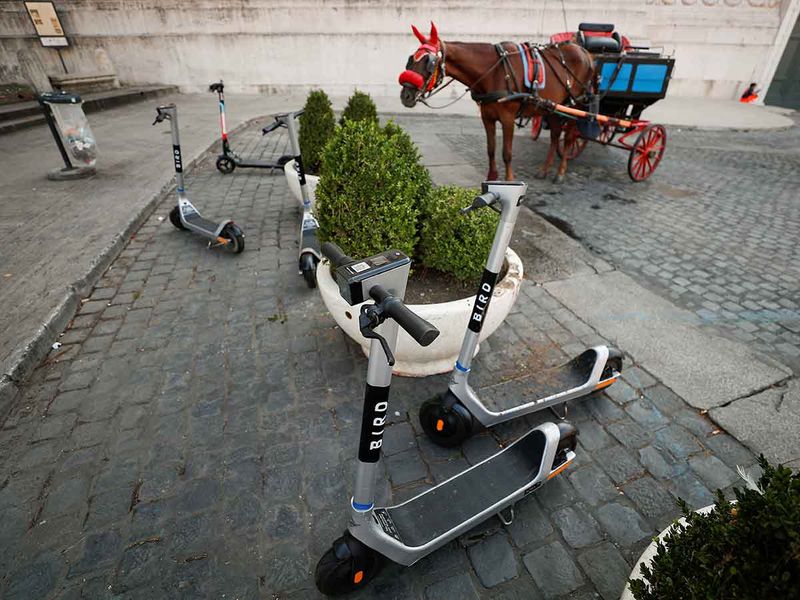
ROME (Reuters) - They’re a far cry from the ancient Roman chariots immortalized in the 1959 classic movie “Ben-Hur”, but critics say they can be just as dangerous in the wrong hands.

As Rome boosts micro-mobility, some complain of E-scooters gone wild - SWI  swissinfo.ch 

Thousands of electric scooters are filling the cobblestoned streets of central Rome as people seek alternatives to crowded public transport amid the COVID-19 pandemic.

To encourage environmentally friendly “micro-mobility,” authorities have licensed eight companies, including Lime and Bird, to operate about 6,000 E-scooters. Thousands more are on the way, a prospect that has some local residents worried.

Mayor Virginia Raggi has encouraged electric mobility in the Italian capital, where buses occasionally catch fire due to poor maintenance and metro stations have been shut for months because of broken escalators.

Many Romans have begun using the scooters to get to work and tourists enjoy darting from the Colosseum to the Vatican and on to the bridges over the Tiber River.

 As Rome boosts micro-mobility, some complain of E-scooters gone wild

The battery-operated vehicles have also caught on because Rome’s hills are too steep for most cyclists.

The law says they cannot be used on sidewalks, cannot go faster than 25 kph on streets or more than six kph in large pedestrian islands. They are banned from bicycle paths within the city limits. The minimum age for their use is 14 but riders under 18 must wear a helmet.

But there have been complaints of dangerous driving and several injuries involving the vehicles. Some have even been seen travelling on the city’s fast and treacherous ring road.

“They violate every basic road and traffic rule,” said resident Carmen Golia. “A regular driving license should be required.”

Complaints about E-scooters gone wild rise as Rome boosts micro-mobility -  it s viral - Hindustan Times

Police said that in the month of July they issued fines of up to 400 euros ($473.88) each to more than 150 users. Critics say this is too little.

An app on a user’s smartphone locates the nearest scooter and the customer is billed automatically, usually according to the distance driven.

Many are left near ancient monuments or blocking sidewalks, leaving some upset residents to take matters into their own hands.

In early September, a woman knocked down like dominoes about a dozen scooters parked on a sidewalk in front of one of Rome’s most famous theatres before police stopped her.

The number of scooters is expected to grow to about 16,000 in the coming months.

Bird, which operates around 2,500 scooters in Rome, has staff to reposition badly parked vehicles and the company allows users to report misconduct and abuses.

“If someone violates the rules we send an alert. If this happens more than once we can impose fines or block the account,” said Cristina Donofrio, general manager of Bird for Italy.

 Photos: As Rome boosts micro-mobility, some complain of electric scooters  gone wild | Business-photos – Gulf News

Reporting by Angelo Amante, editing by Philip Pullella and Mike Collett-White


Tuesday, 22 September 2020

Beneath the din of the COVID-19 crisis, there are rumblings of a new Europe.

Beneath the din of the COVID-19 crisis, there are rumblings of a new Europe.

https://www.atlanticcouncil.org/

  It sounds like a cliché to say that it takes a crisis for Europe to act, but in the case of COVID-19 there’s truth to it. In a new essay for the Atlantic Council, Clément Beaune, France's minister for European affairs, offers one of the most detailed visions yet from a top European official about what a post-COVID Europe could look like.


The European Union’s adoption this summer of an economic-recovery package, including an agreement to share debt, represents “the most important boost to European integration since the euro,” Beaune argues, as well as “the return of a golden triangle” in “the French-German partnership and an ambitious European Commission.”


The case for a ‘power agenda’


But while the pandemic has shown the EU to be “responsive in the economic sphere,” Beaune notes, it has also exposed the bloc as “largely powerless” to coordinate border restrictions and “practically nonexistent” on health matters such as common quarantine measures and vaccine research.
 
The EU, he maintains, must develop a new “power agenda” to navigate “the stark world that the Europeans are rediscovering,” shaped not just by the coronavirus crisis but also by “tremors from the China-US clash.” 

Even as he places the Franco-German engine at the core of this new European project, Beaune does not paper over the disagreements between the two countries on Eurozone reform and the Nord Stream II pipeline. Noting French President Emmanuel Macron’s conviction that “Europe is not the dilution of, but the condition for, French sovereignty in today's world,” Beaune explicitly links France's attachment to its power, identity, and independence to European global power. 

"This strengthening of France through Europe has taken on a worldwide dimension,” he writes. “How can strategic industrial sectors, from the electric battery to essential medicines, be developed through national self-sufficiency rather than European autonomy? How can the trade agreements governing globalization be achieved in a single country?"

The bottom line: Pursuing this agenda will present significant challenges, Beaune acknowledges. Europe will need to reconcile “the language of power” with “the grammar of cooperation." It will need to reassess its passion for enlargement, instead setting clear borders and strengthening standards for accession. And it will need to reckon with its complex network of leadership. Invoking Henry Kissinger, Beaune notes that “Europe nowadays has several telephone numbers, but no direct line.”

- Benjamin Haddad and Eileen Kannengeiser, Future Europe Initiative