Friday, 3 September 2021

SA refuses to take Afghan refugees


South Africa refuses to take Afghan refugees


The South African government has said it will not accommodate any refugees from Afghanistan, even if they are eventually to be sent to a third country.

Clayson Monyela, a spokesperson for the Department for International Relations and Co-operation (DIRCO), said that the government was not in a position to accommodate the refugees. He said that South Africa also had a significant number of refugees and was ‘seized’ with addressing their needs.

Monyela said that the refugees were best served by staying in the first country they had arrived in – in this case Pakistan – while they were waiting for asylum elsewhere.

According to Geoffrey York, the Johannesburg-based Africa correspondent for a Canadian newspaper, the Globe & Mail, South Africa had only been asked to accommodate 126 refugees and funding for them had been guaranteed for at least six months.

https://dailyfriend.co.za/2021/09/03/sa-refuses-to-take-afghan-refugees/

When Surveillance Turns to Termination: New Zealand Attack Has Chilling Echoes of Incident in London


When Surveillance Turns to Termination: New Zealand Attack Has Chilling Echoes of Incident in London


In February 2020 Sudesh Amman was shot dead by police officers after he stabbed two people in a south London street. In September 2021 a man was shot dead by police in New Zealand after stabbing six people in a supermarket. Both had been under surveillance.

The Countdown supermarket in Auckland may be 11,000 miles from Streatham High Road in south London but the similarities between Friday’s incident and the one which led to police officers gunning down Sudesh Amman on 2 February 2020 are obvious.

New Zealand Police Commissioner Andrew Coster said a police surveillance team and a specialist tactics group followed the suspect, a Sri Lankan national, from his home to the supermarket at around 2.40pm on Friday afternoon.

Mr Coster said while they had “ongoing concerns” about the man - who is believed to have been radicalised online - they believed he was simply shopping for groceries.
But he went on: "He entered the store, as he had done before. He obtained a knife from within the store. Surveillance teams were as close as they possibly could be to monitor his activity.''

​The man then shouted "Allahu Akbar (God is Great)" and began stabbing random shoppers with the knife he had just picked up.

He said two of the police officers tailing the man confronted him and when he charged at them with the knife they shot and killed him.

Sudesh Amman, armed with a knife, is seen running along Streatham High Road shortly before being shot by police
© PHOTO : METROPOLITAN POLICE
Sudesh Amman, armed with a knife, is seen running along Streatham High Road shortly before being shot by police

Sudesh Amman, 20, was under 24-hour surveillance by armed officers when he grabbed a 20cm kitchen knife from a shop before running out and stabbing two people in Streatham High Road, south London on 2 February 2020.

While there are differences with the Streatham attack - the Auckland attacker is not believed to have been a convicted terrorist - the similarities are shocking.

In both cases an individual who was known to pose a threat to society walked into a shop, picked up a knife and began attacking ordinary members of the public going about their everyday business.

In both cases they were eliminated within seconds.

Sudesh Amman was shot dead 62 seconds after he picked up a knife and police in New Zealand say their target was also taken out “within 60 seconds”.

​Amman was also of Sri Lankan origin, although he had never lived there.

Questions will be asked in New Zealand, like they were at the Sudesh Amman inquest, about whether the police should have taken action to remove the threat.

Rajiv Menon QC, counsel for the Amman family, asked questions at the Sudesh Amman inquest about why he had not been arrested when he bought items for his fake suicide belt two days earlier.

Surveillance officers prepare to shoot knife-wielding terrorist Sudesh Amman in Streatham in February 2020
© PHOTO : METROPOLITAN POLICE
Surveillance officers prepare to shoot knife-wielding terrorist Sudesh Amman in Streatham in February 2020

Giving evidence from behind a screen, a senior police officer referred to only as HA6, admitted arresting Amman for “preparing terrorist acts” was “an option.”

But he said they decided it was a better decision not to arrest him but to look at “long-term ways of disrupting him.”

Mr Menon suggested he made the “wrong call”, which HA6 denied and said they felt it was the best way to “manage the risk”.

Mr Menon said: "He stabbed two members of the public. That wasn’t managing the risk….What we know certain is that those two people wouldn’t have been stabbed if he had been arrested for preparing terrorist acts."

HA6 said in his experience if he had been arrested Amman would have been released back into the community, having convinced the authorities his purchases at Poundland were “innocuous” and then the police would have “lost their advantage” because Amman would have been more aware he was under surveillance.

New Zealand police may have made a similar call.

​The Auckland suspect was clearly a terrorist threat because of the surveillance he was under, but the authorities probably decided it was better to follow him and see if they could build a case strong enough to get him convicted of more serious offences and taken off the streets for longer.

It is always a calculated risk and one the general public are rarely made aware of.

Last month the inquest jury ruled Amman had been lawfully killed by police and they also decided Her Majesty’s Prison and Probation Service missed “an opportunity which may have prevented the attack” in not deciding to recall him to prison after being notified on 31 January 2020 of the purchases he had made.

Prime Minister Jacinda Ardern said the Auckland attacker was “inspired” by Daesh and was well known to the police and New Zealand Security Intelligence Service (NZSIS), who had been monitoring him since 2016.

Ardern said she had been personally briefed on this individual in the past but there had been no legal grounds for detaining him.

”Had he done something that would have allowed us to put him into prison, he would have been in prison,'' Ardern said.


 https://sputniknews.com/world/202109031083787016-when-surveillance-turns-to-termination-new-zealand-attack-has-chilling-echoes-of-incident-in-london/

Analysis of Afghanistan Fiasco by Colonel Richard Kemp


15:06

In an exclusive interview with Breitbart News on Thursday, former commander of British forces in Afghanistan Colonel Richard Kemp blasted President Biden’s exit from Afghanistan, claiming it was worse than 9/11 and calling it “the greatest victory for jihadists” and “a blow for American prestige” which won’t recover for decades.

Kemp also warned of new threats in the wake of unfolding events there, including another refugee crisis and emboldened adversaries such as Iran, Russia, and China.

The former commander who led British forces in Afghanistan in 2003 and later joined the committee supervising the country’s intelligence services, began by describing the unfolding events in Afghanistan as “the greatest foreign affairs and military catastrophe since the Second World War, without a doubt.”
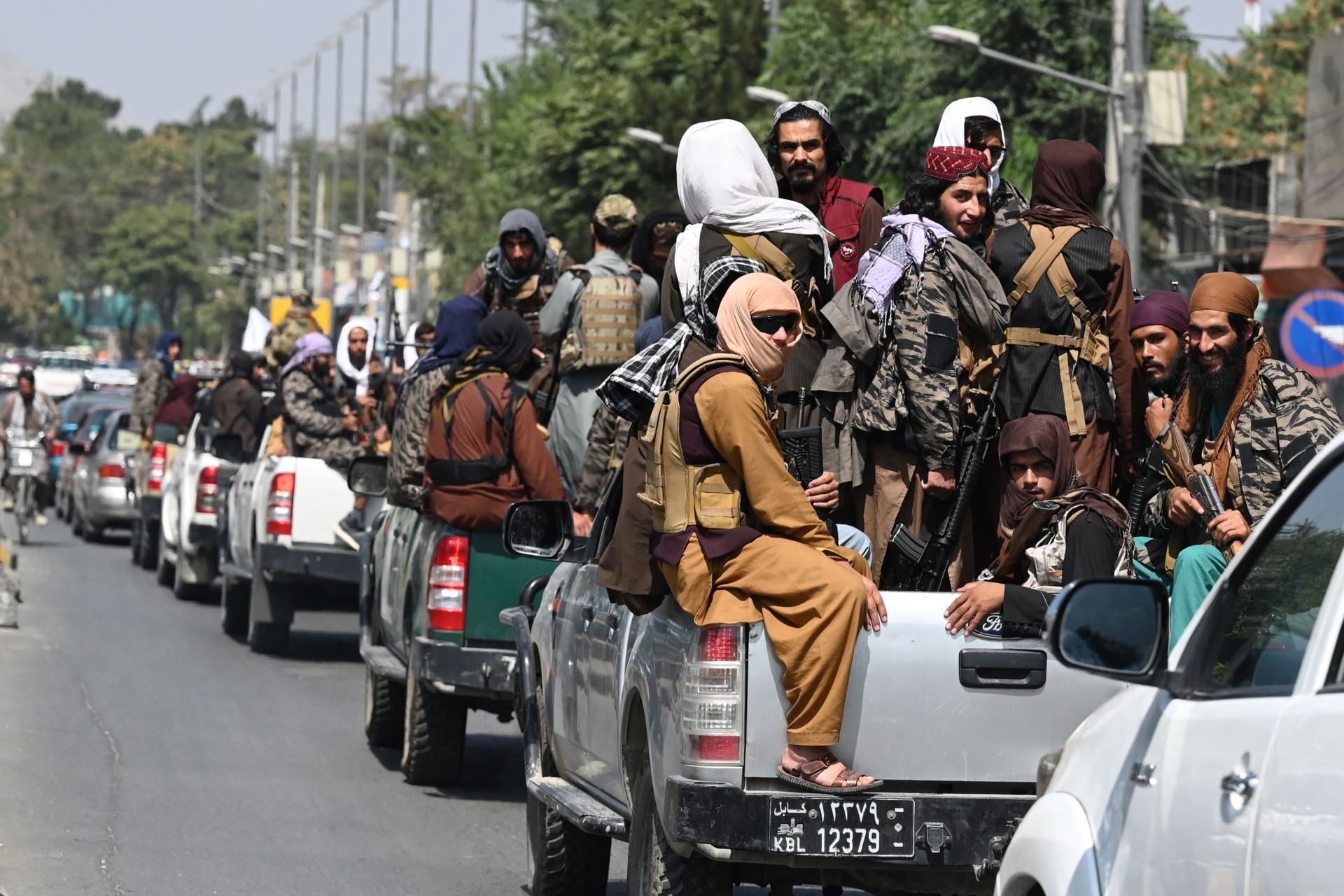
A convoy of Taliban fighters patrol along a street in Kabul on September 2, 2021. (Photo by Aamir QURESHI / AFP) (Photo by AAMIR QURESHI/AFP via Getty Images)

A convoy of Taliban fighters patrol along a street in Kabul on September 2, 2021. (AAMIR QURESHI/AFP via Getty Images).

“If you combine the Vietnam fiasco and Suez [Crisis] for the British, it’s worse than the two of those combined in its magnitude and its implications,” he stated.

He also described recent events there in light of the Biden administration’s chaotic exit as worse than the 2001 September 11 attacks — the deadliest terrorist attacks on U.S. soil.

“It’s certainly worse than 9/11 which was maybe the result of intelligence failure and possibly could have been prevented,” he said, adding that they were “surprise” attacks, “whereas this is a self-inflicted wound.”
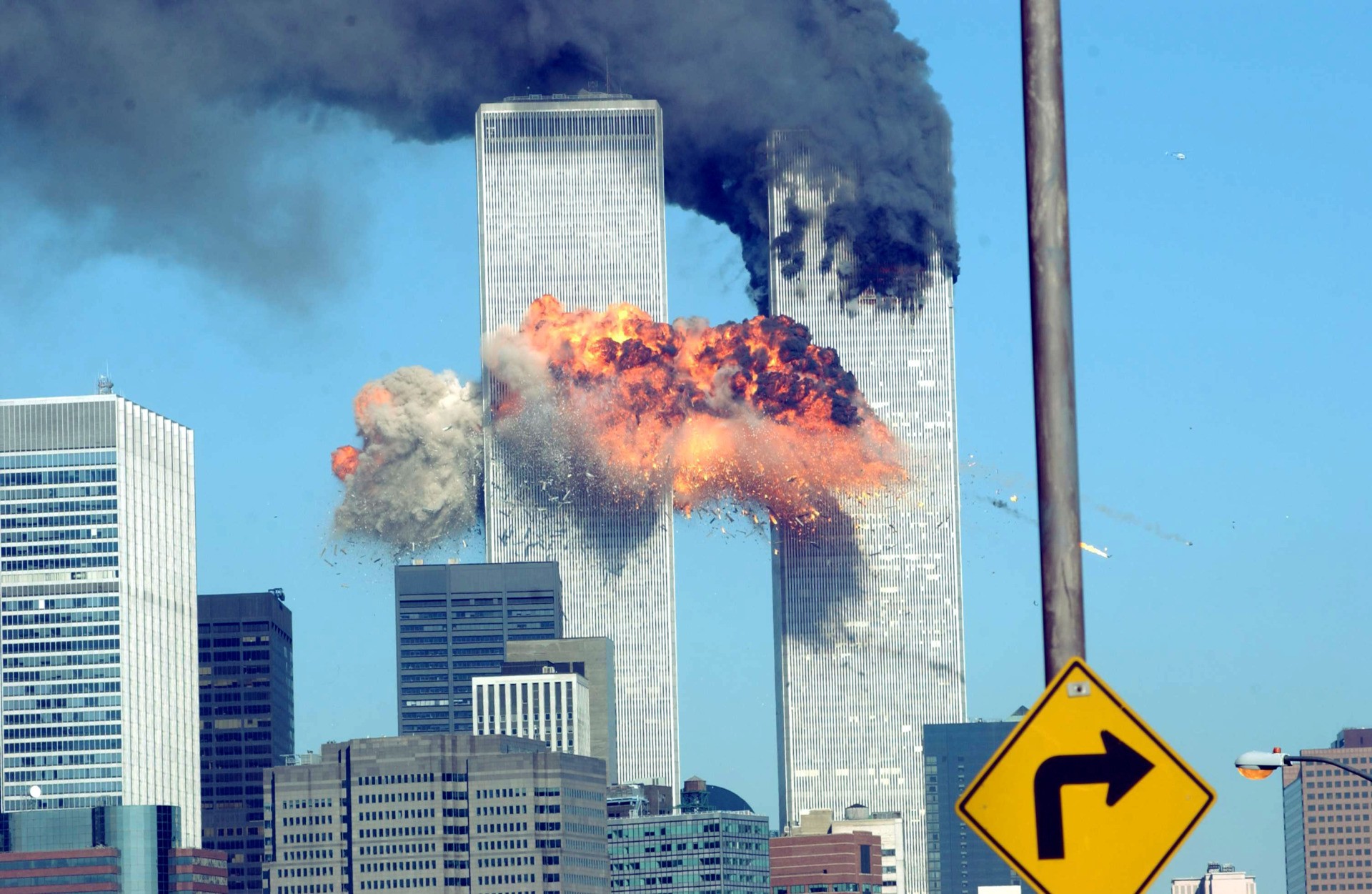
394261 14: A fiery blasts rocks the World Trade Center after being hit by two planes September 11, 2001 in New York City. (Photo by Spencer Platt/Getty Images)

A fiery blasts rocks the World Trade Center after being hit by two planes September 11, 2001 in New York City. (Spencer Platt/Getty Images).
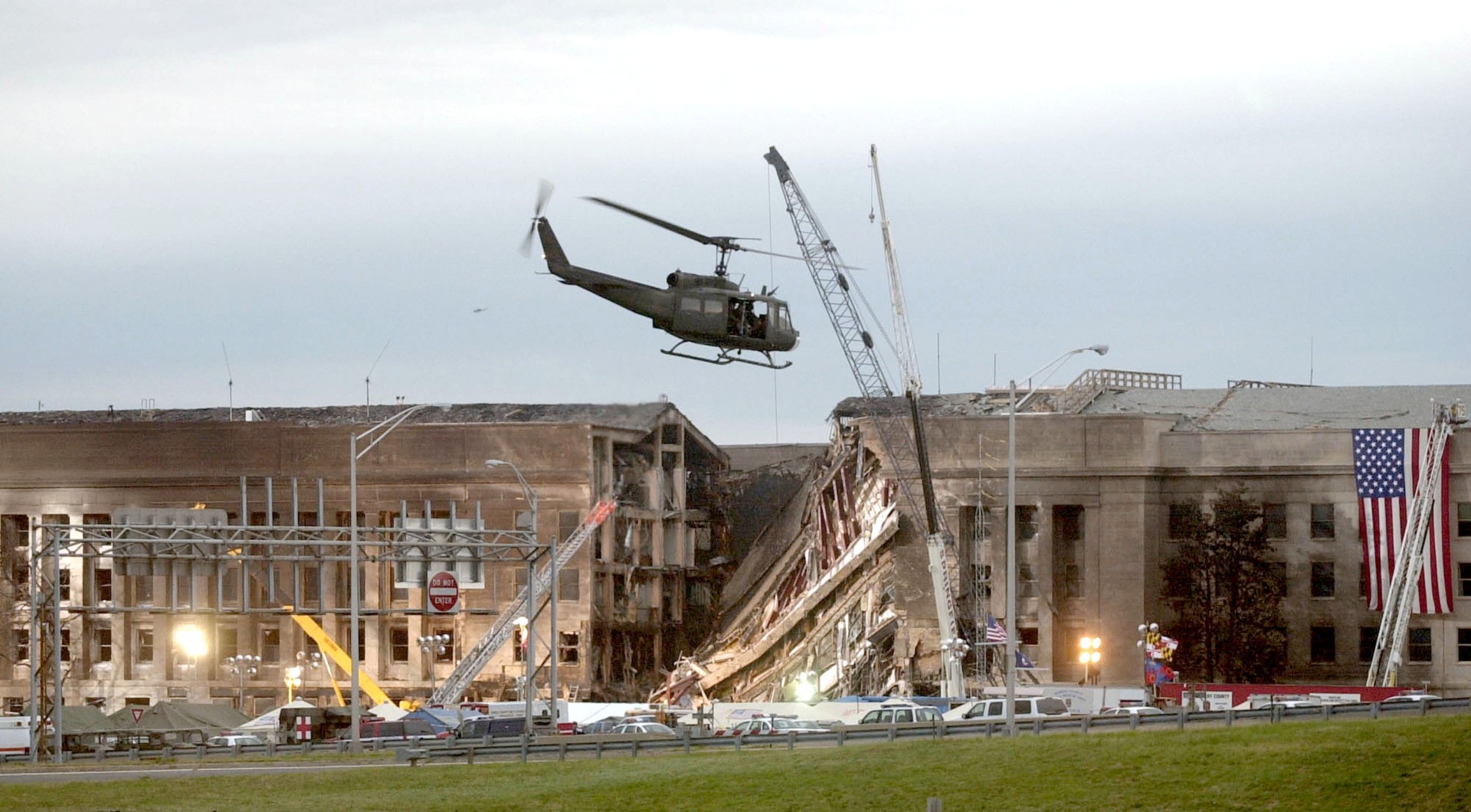
ARLINGTON, VA - SEPTEMBER 14, 2001: (SEPTEMBER 11 RETROSPECTIVE) A military helicopter flies in front of the Pentagon September 14, 2001 in Arlington, Virginia at the impact site where a hijacked airliner crashed into the building. (Photo by Stephen J. Boitano/Getty Images)

A military helicopter flies in front of the Pentagon September 14, 2001 in Arlington, Virginia at the impact site where a hijacked airliner crashed into the building. (Stephen J. Boitano/Getty Images).

Calling it a “result of a deliberate policy decision” by the U.S. president “against the advice of his generals,” Kemp described the “complete disaster” of a withdrawal as “completely avoidable.” 

“It basically ceded a huge amount of authority and power and influence in the world from the West to the authoritarian states of Iran and North Korea, but particularly China and Russia,” he said.

He also accused the Biden administration of having “undermined the efforts that have been recently discussed in Britain, America and the G7, and elsewhere about trying to work to persuade or entice those countries… considering coming into the sphere of influence of China and Russia.” 

“It’s basically prevented that from happening really because these countries that we wanted to encourage to join our sphere of influence are going to be asking why they would do that when the U.S., and the West more widely, is a fair-weather ally,” he said. 

“When it gets difficult, they get out,” he added, “and Russia and China will be more reliable friends.”

He also claimed that the recent U.S. actions “will certainly inspire Russia and China to push harder against us, knowing that they will not be met with much resistance.” 
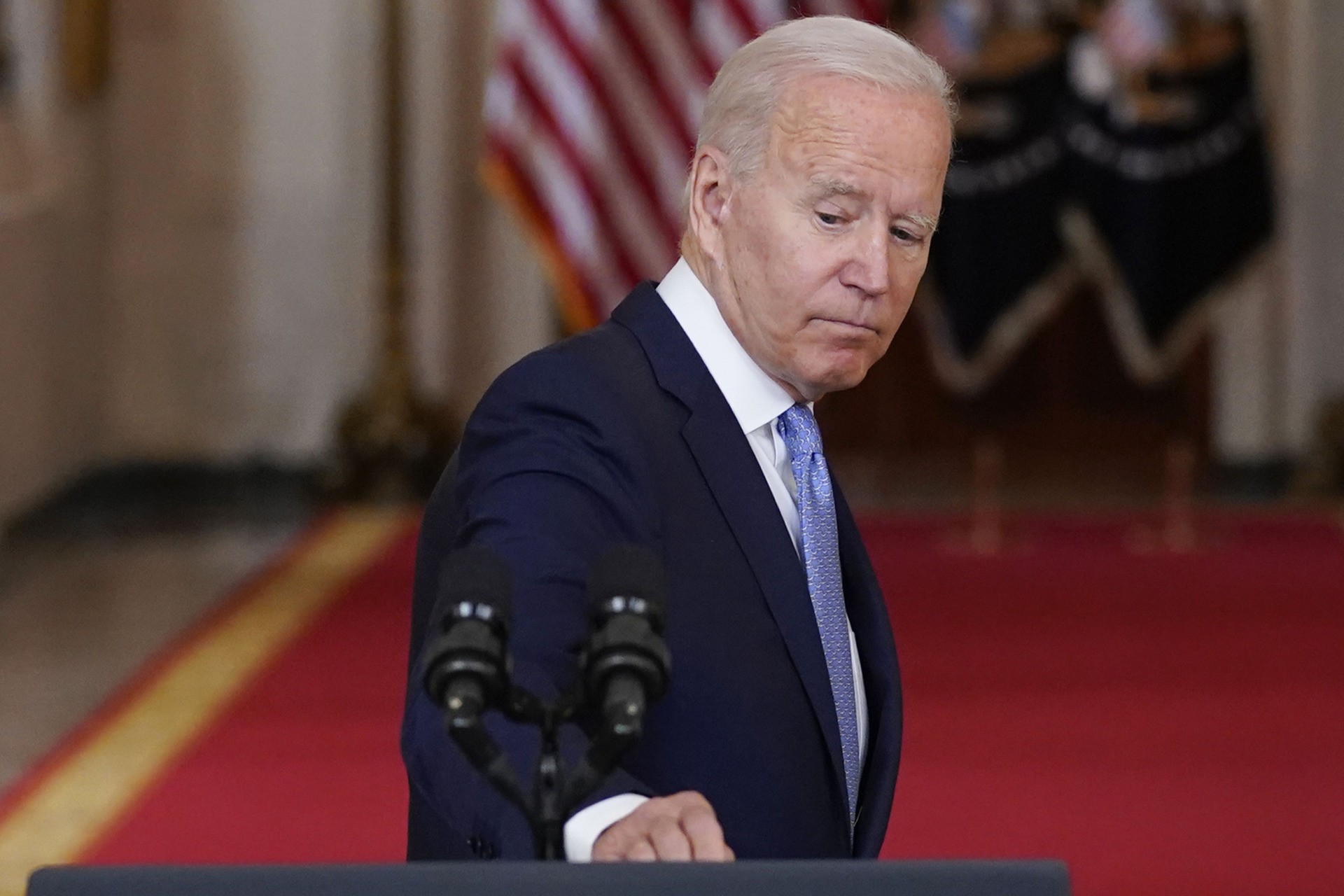
President Joe Biden turns to leave the podium after speaking about the end of the war in Afghanistan from the State Dining Room of the White House, Tuesday, Aug. 31, 2021, in Washington. (AP Photo/Evan Vucci)

President Joe Biden turns to leave the podium after speaking about the end of the war in Afghanistan from the State Dining Room of the White House. (AP Photo/Evan Vucci).

“They already thought the West was weak, and now they think it’s weaker than originally thought,” he said.

“Basically it’s a real blow for American prestige which will not be recovered from probably for decades,” he added.

Impact on foreign relations

When asked about the impact of recent events on the historic special relationship between the U.S. and the U.K., Kemp described recent talk of a less-than-dependable America.

“I’ve heard talk among some politicians here and political leaders and military people that they need to be looking at being less reliant on the U.S. and on the relationship between the U.K. and the U.S.,” he said, calling it a “terrible situation” to be in.

Claiming to have “never heard this sort of talk before,” Kemp explained the importance of maintaining such relationships.

“I do believe that the U.S.-U.K. relationship is vital for both of our countries, particularly for the U.K., but also very important for the world, because together the U.K. and the U.S. — the U.S. particularly, but the U.K. as a trustee, a trusted ally willing to stand beside the U.S. in pretty much every circumstance — are effectively the leaders of the Western world,” he said. 

“So we cannot afford to have that relationship undermined, particularly in the face of increased challenge from Russia and China,” he added.

He also expressed similar considerations with regard to the North Atlantic Treaty Organization [NATO] as a whole. 

“NATO has been shown to be effectively a paper tiger as a result of [the U.S. withdrawal] and it’s illustrated by the fact that our defense secretary [Ben Wallace] claims to have attempted to form a British-led coalition without the Americans to remain in Afghanistan,” he said, “and he didn’t get one country to agree to that.” 

Kemp claimed that such incidents prove that “NATO without America is nothing.” 

“NATO really is America and the rest of it is not much more than window dressing,” he said. 

“I think that needs to be very quickly repaired,” he continued. “Not only the image of an impotent NATO but also the reality of an impotent NATO.” 

“Each of the NATO members, including the USA, will suffer from the fragmentation of NATO if that’s what happens, so it must be avoided at all costs,” he added. 

Terrorism and the Taliban

When asked about a potential rise in worldwide terror threat levels in response to the recent U.S. pullout from Afghanistan, Kemp claimed they had already risen.

“It’s certainly gone up,” he said. “It’s probably at the highest level since before 9/11.”

Calling it “bizarre” to hear political and military leaders in the U.S. and U.K. saying the Taliban “promised” to stop terror organizations operating from Afghanistan, Kemp — who served for nearly 30 years in the British Army — called out such figures for misrepresenting the terror group.
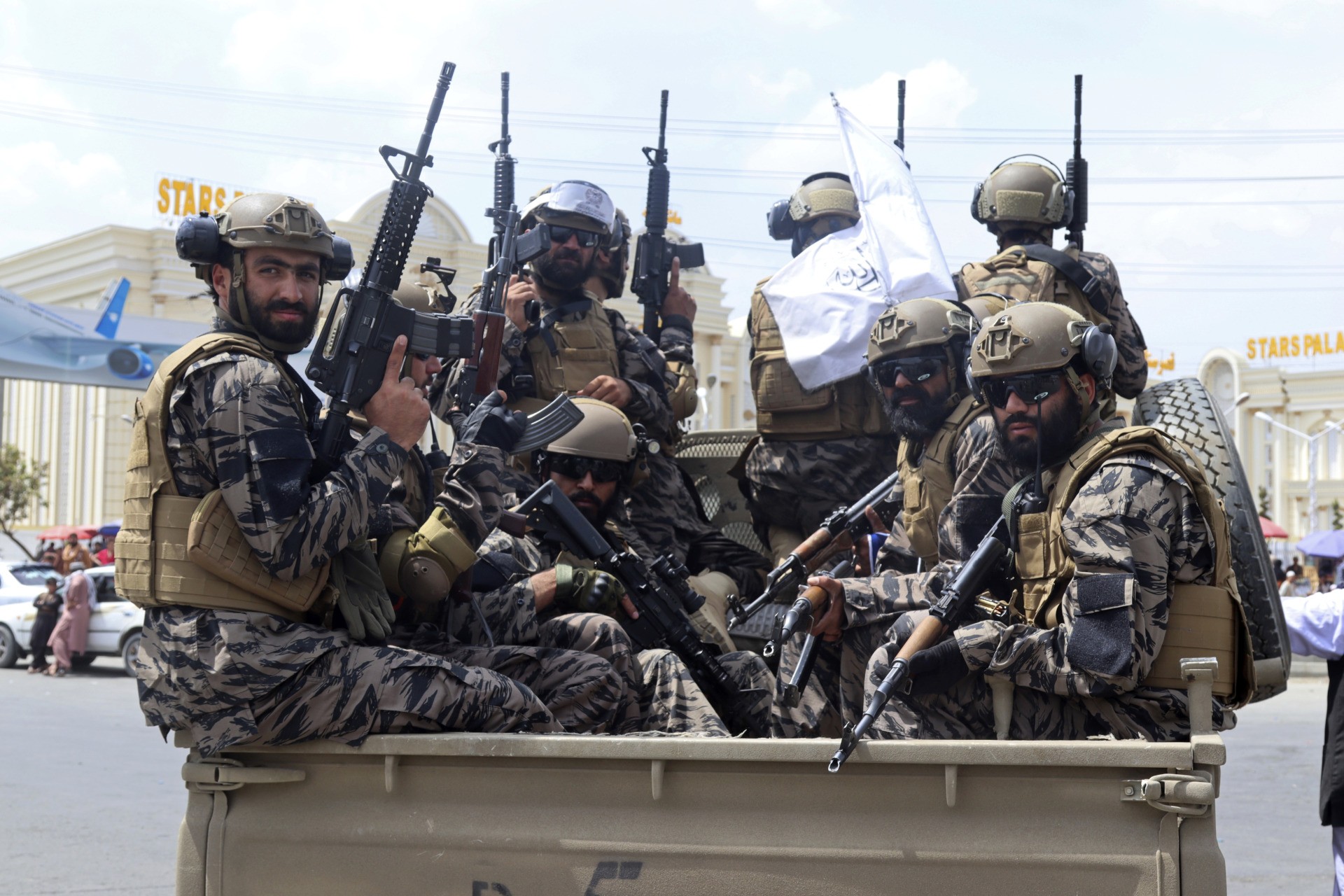
Taliban special force fighters arrive to the Hamid Karzai International Airport after the U.S. military's withdrawal, in Kabul, Afghanistan, Tuesday, Aug. 31, 2021. The Taliban were in full control of Kabul's airport on Tuesday, after the last U.S. plane left its runway, marking the end of America's longest war. (AP Photo/Khwaja Tawfiq Sediqi)

Taliban special force fighters arrive to the Hamid Karzai International Airport after the U.S. military’s withdrawal, in Kabul, Afghanistan, Tuesday, Aug. 31, 2021. (AP Photo/Khwaja Tawfiq Sediqi).

“The Taliban itself is a terrorist organization,” he said, “so they’re talking as if it isn’t.”

Describing a “new narrative” beginning over the Taliban, the retired British colonel lamented that some “have been talking as though we’re now the friends of the Taliban … and there’s discussion of opening diplomatic relations” with the Islamic terrorist group.

“The reason for this narrative — and it’s kind of a narrative that says that we and the Taliban are on the same side against the Islamic State, which is not true — is to deflect the blame for what’s happened and make it less catastrophic in people’s eyes,” he said. 

“[They want us to believe] we haven’t been replaced in Afghanistan by a terror group, that we’ve been replaced by a responsible government — which isn’t the truth,” he added. 

He also described President Biden’s claim that the Islamic State and Taliban are “sworn enemies” of one another as false.

“They’re not sworn enemies,” he said, “they have the same agenda.”
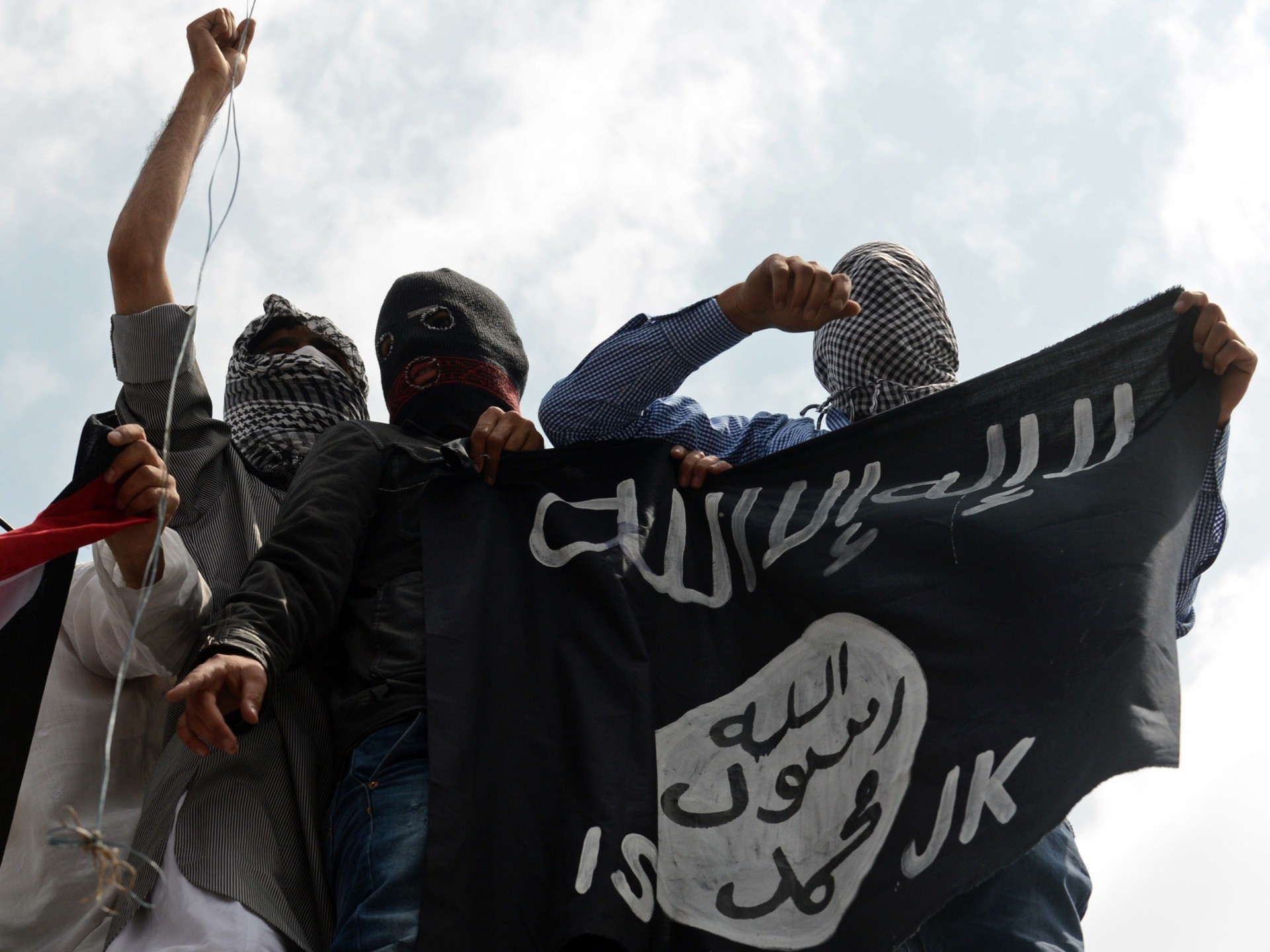
Kashmiri demonstrators hold up a flag of the Islamic State of Iraq and the Levant (ISIL) during a demonstration against Israeli military operations in Gaza, in downtown Srinagar on July 18, 2014. The death toll in Gaza hit 265 as Israel pressed a ground offensive on the 11th day of an assault aimed at stamping out rocket fire, medics said. AFP PHOTO/Tauseef MUSTAFA (Photo credit should read TAUSEEF MUSTAFA/AFP via Getty Images)

Kashmiri demonstrators hold up a flag of the Islamic State of Iraq and the Levant (ISIL) during a demonstration against Israeli military operations in Gaza. (TAUSEEF MUSTAFA/AFP via Getty Images).

“They have the same ideology and use the same methods, they just wear a different cap badge and the same is true of al-Qaeda,” he added.

Admitting that at times the two groups may “hate and kill each other,” Kemp noted that at other times “they cooperate.” 

“That doesn’t mean to say that we are on the side of the Taliban against them — the opposite [is true],” he said. 

Kemp also warned that the Taliban is now more dangerous and capable than ever.

“Before 9/11, before 2001, the Taliban was focused on Afghanistan [and] didn’t have external ambitions,” he said, “today that’s changed.” 

“There are many young new people who’ve joined the Taliban who are focused externally,” he said. 

Noting that the Taliban now presents a new threat having fought the West for 20 years with some having been incarcerated in the notorious Guantanamo Bay, Kemp warned that the group is now “more focused on international jihad rather than just on Afghanistan.” 

He also stated that the Taliban and al-Qaeda have been fighting together in recent years and that “we will see them building up their presence in Afghanistan along with the Islamic State.” 

Kemp then warned that jihadis would now “flock from around the world into Afghanistan to train, to plan, to prepare, and to carry out attacks against the West.”

“This is the greatest victory for jihadists,” he said, “certainly since the Islamic revolution in Iran in 1979 where that was the last time an Islamic terrorist state was created, this being the second time.”

Claiming the Taliban victory has likely “been celebrated around the world by jihadists,” Kemp expressed concern that it would “strengthen jihadists everywhere.” 

“It will bring them in more funding and more recruits and will re-energize their efforts,” he said.

“In collective terms, the threat directly from Afghanistan — the threat from inspiration of jihadist groups from Afghanistan and their victory — has significantly increased the terrorist threat,” he added.

Noting that resistance to the Taliban forming in the Panjshir Valley under the Northern Alliance “doesn’t get talked about enough,” Kemp called to support the weakening of the Taliban through such groups.

“I think we should be doing all we can in the West to undermine the Taliban,” he said, “and that includes giving support to the Northern Alliance in the Panjshir Valley” which is building up a force. 

“I don’t know whether they have any prospect of hitting at the Taliban in any effective way but if they do then we should be behind them in some way that may be covert support rather than overt support,” he continued. 

“We should certainly be supporting them because they are, I think, the best hope for bringing down the Taliban and I believe the Taliban does need to be brought down,” he added.

Kemp also warned that, “We cannot afford to treat the Taliban as the legitimate government of Afghanistan” for it would be like “treating the Islamic State as the legitimate government representing [the] Syrian people.”  

Nuclear threats

When asked about the potential threat of nuclear weapons falling into the hands of terrorists, especially with the Taliban and other terror groups operating near neighboring nuclear Pakistan, Kemp described it as “one of the greatest concerns of coalition leaders throughout the campaign in Afghanistan.” 

“A victory for the Taliban in Afghanistan could inspire and encourage the insurgency that’s going on already in Pakistan and could well lead to nuclear weapons or nuclear material falling into the hands of jihadists,” he warned, adding that it is “the worst possible scenario after 9/11, and was the reason for the invasion of Iraq — not nuclear, but WMD [weapons of mass destruction].”

Recalling the “many years” spent working in government and intelligence in both the U.S. and U.K., Kemp reiterated that “the greatest concern was always the possibility of nuclear materials falling into the hands of jihadis.” 

“The Taliban success and presence in Afghanistan now could possibly lead to greater instability in the region so that is probably the single greatest danger that we now face,” he added. 

Iran

When asked about the effects of the U.S. pullout from Afghanistan on the Islamic Republic of Iran, Kemp claimed that “what’s happened in Afghanistan has certainly empowered Iran and will inspire Iran as well to greater aggression in the region that it’s had up to now, which is very significant anyway.”

An Iranian soldier sitting atop a T-72 tank as it rolls past a portrait of Iran’s supreme leader, Ali Khamenei. (BEHROUZ MEHRI/AFP via Getty Images).

“[Iran] will see the U.S. defeat in Afghanistan — when I say the U.S. I include Britain, etc. but particularly the U.S. because of the U.S. position — as being effectively a green light to do as it likes,” he said.

“It will see the weakness of America and believe that America is not going to intervene again in any significant way, and it will encourage Iran to be even more aggressive,” he added. “It will certainly encourage Iran to push ahead with its nuclear program which it intends to do anyway.”

Kemp also warned of the increased threat to Israel and other Middle East U.S. allies by an emboldened Iran.

“Israel and also other Sunni regional powers — the threat to them is far greater now, and they’ll be afraid of the threat from Iran without American support for them, without guaranteed American support for them, even more than they were before,” he said. 

“They were already worried about that because we’ve seen Iran, we’ve seen America favor Iran, we’ve seen them trying to grant hegemony to Iran, to enable a nuclear project under the JCPOA [Iran deal] which paves the way for a nuclear weapon,” he continued. 

“We’ve seen them abandon Saudi Arabia and in effect refuse to support Saudi Arabia’s proxy war in Yemen against Iran,” he added.

The current situation in Afghanistan will also give “added impetus to a nuclear arms race in the Middle East,” according to Kemp, but “will probably also give added impetus to the Abraham Accords [Peace Agreement] because the other Arab countries in the Middle East will now be looking increasingly to Israel as their protector believing they can’t rely on the U.S. anymore.” 

“This was already underway but I think this has accelerated that process,” he continued, adding that Israel will “have to deal with a potential Iranian nuclear weapon” on its own.

Refugees

When asked about the threat of another potential refugee crisis in Europe as a result of the failed state in Afghanistan, Kemp claimed such a crisis was already at hand.

“We already have a refugee crisis now from Afghanistan,” he said.
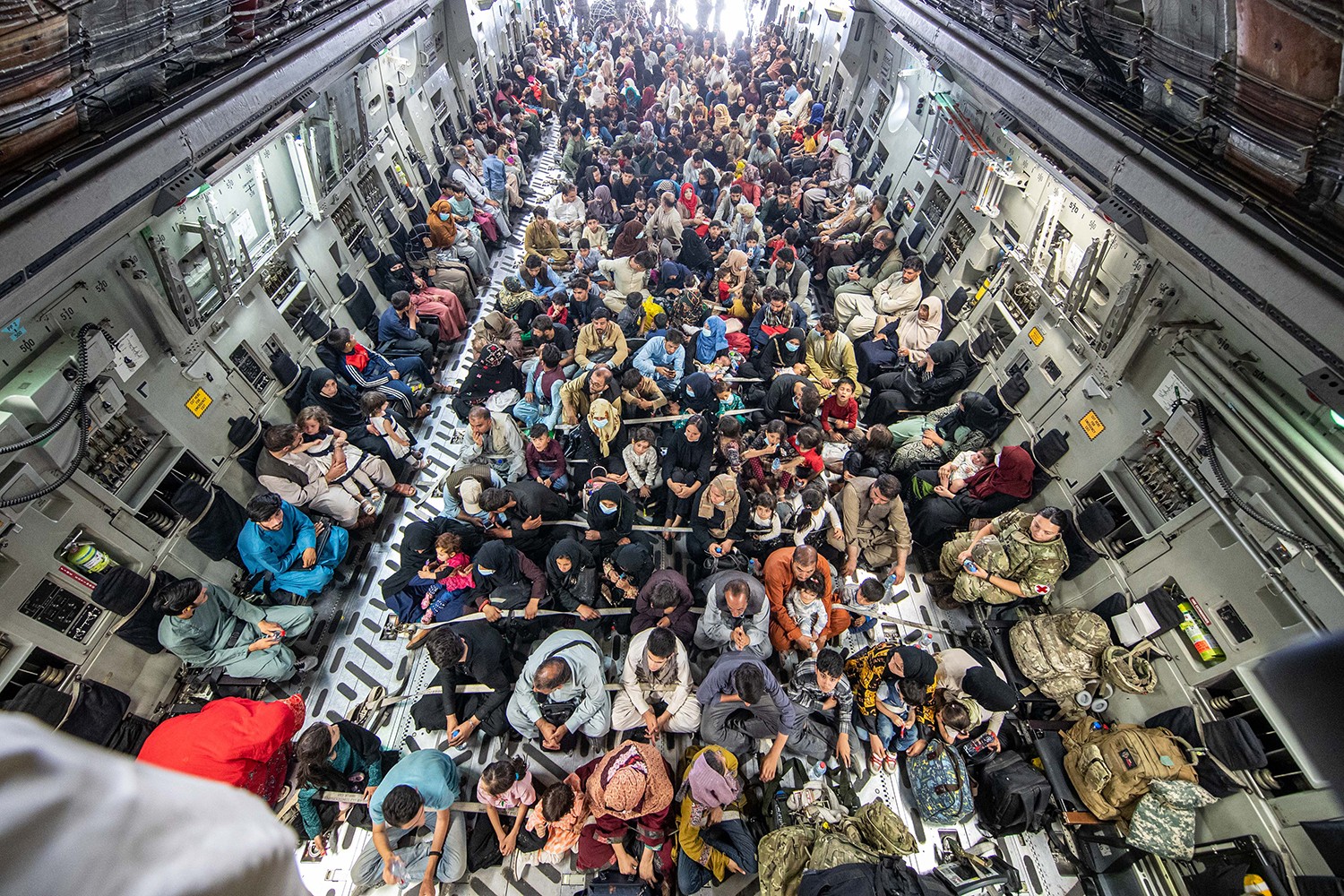
In this handout image provided by the Ministry of Defence, a full flight of 265 people are evacuated out of Kabul by the UK Armed Forces on August 21, 2021 in Kabul, Afghanistan. The British armed forces are evacuating UK citizens and eligible personnel out of the Afghan capital after the Taliban took control of the country last week. (Ben Shread/MoD Crown Copyright via Getty Images).

“Many, many have been leaving since the fall of the government became pretty obvious,” he added. “It goes back really to the last administration’s decision to pull out of Afghanistan.” 

Warning of an increased refugee crisis in the region, Kemp claimed Europe is “already struggling with an overwhelming number of refugees and immigrants coming into Europe from Africa and the Middle East.”

“This will very much overburden Europe and create enormous pressures and friction and potential threats as well,” he said, “because among the refugees will be some jihadists.” 

The Biden administration

When asked about the Biden administration depicting the chaotic withdrawal from Afghanistan as an “extraordinary success,” Kemp claimed that such was part of Biden’s strategy.

“Biden’s calculation all along has been that this withdrawal from Afghanistan will be an electoral advantage for him in midterms and again in the presidential elections,” he said. “That was always his calculation.” 
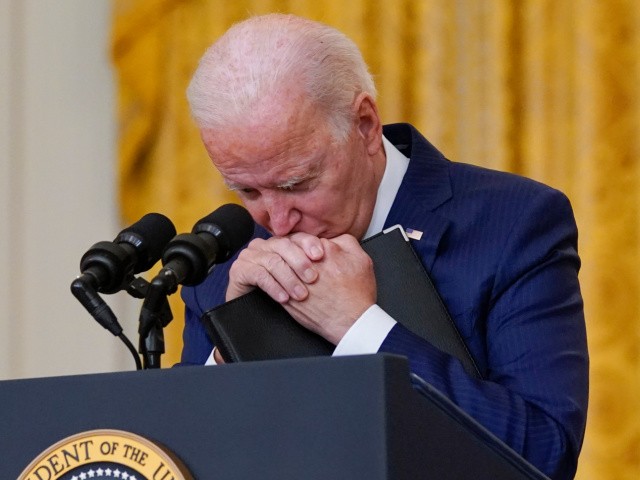
President Joe Biden pauses as he speaks about the bombings at the Kabul airport that killed at least 12 U.S. service members, from the East Room of the White House, Thursday, Aug. 26, 2021, in Washington. (AP Photo/Evan Vucci)

“Because he didn’t anticipate what happened, he didn’t expect it to be as bad as this, but I think his hope is that the American people — particularly if they’re told enough times that this was a success — will forget the humiliation and forget the disaster it’s been and simply be grateful to him for ending what he calls the ‘forever war,’” he continued.

Claiming the president’s “driving motivation” is the midterm and next presidential election, Kemp accused Biden of an inability to accept reality.

“Whatever the reality is, he can’t possibly accept it,” he said, “and it was in one of the papers today I think that [one of] the last conversation he had with the president of Afghanistan before he fled the country was that the optics have got to be altered to fit [President Biden’s] agenda.” 

“That’s all he’s interested in and I think it’s deeply, deeply cynical,” he added.

Arguing that he does not believe the U.S. “has ever had a worse President than President Biden as a direct result of this action,” Kemp slammed the president for having “tried to blame everyone else” for recent events. 

“He’s tried to particularly put the blame on [former President Donald] Trump,” he said. “Trump is not to blame for this.”

“Trump left office several months ago and this decision is solely on Biden’s shoulders,” he continued. “He’s tried to blame the Afghan national security forces and called them cowards.” 

“Despite the fact he says ‘the buck stops with me,’ he clearly doesn’t think that because he’s blaming everyone that he can see,” he added. “So I think it’s a great humiliation for the U.S.” 

Thursday, 2 September 2021

Hunt for racism and you’ll find it… or something


Hunt for racism and you’ll find it… or something


You’ll find racism if you want to. And not just the genuine racism. You’ll find ghost racism. You’ll turn it up in silly rules, odd decisions, and unexpected gusts of wind. This is dangerous. It diminishes the gravity of genuine racism.

I spotted a striking case of phantom racism in an EWN piece around the Olympic Games. Almost every claim made by author Haji Mohamed Dawjee in “The obscene and overt racism of the Olympics” is a baseless cry of racism, apparently the result of desperately wanting to find it.

Mean-spirited rule

First, she reports that “the Olympics has officially banned the swim-cap brand Soul Caps – a swimming cap designed specifically to cater to the needs of black swimmers.” As the company’s marketing niftily puts it, these larger caps are “Haircare for the volume-blessed”. Indeed, it seems Fina, the sport’s governing body, rejected a request to approve these caps for Olympic use, arguing that they failed to follow the “natural form of the head”.

Dawjee argues this means “any athlete who is not white, or who [has] African hair styled in braids, weaves, extensions or just naturally is cited as a deformity.” That is to read in a great deal from somewhere else. White people can also have hairstyles that would benefit from these larger swimming caps.

In fairness, the ruling does feel mean spirited. It seems a silly rule. Without proof of some unfair advantage the caps confer, I’d call this stale bureaucracy before declaring racism.

Of course, it could be racism. If it is, it is veiled. Certainly not overt, as Dawjee claims. But we don’t know.

Dawjee unearths more “racism” in a ruling by World Athletics that disqualified the Nigerian relay team. As she says, that body “has yet to release a statement on the exact reasons for the disqualification and has simply based their decision on what they believe are technical errors.”

As a universal rule, when you are punished you deserve an explanation. If this ban was handed down without reasoning, that is unacceptable.

It has since emerged that the ban was based on doping violations. Again, athletes of all races face those. It might have been racist. Or something else.

No obvious motivation

World Athletics is also an organisation with no obvious motivation to be racist towards Africans. African and black athletes from around the globe are some of their finest performers. Certainly, in track events, these athletes are dominant and celebrated.

American athlete Gwen Berry attracted both applause and condemnation for turning away from her country’s flag during the medal ceremony at the US track and field Olympic trials. She had won bronze in the hammer throw and qualified for the Games.

Dawjee likens Berry’s situation to that of NFL player Colin Kaepernick kneeling during the national anthem before matches. Injecting sexism too, she says Berry is “one of many who in recent years have become the targeted black body of coercive patriotism whereby national leaders and organisations indignantly demand that athletes show reverence for their country or suffer career-ending consequences.”

The inference is that a white athlete who turned away during the anthem would not be condemned. That seems unlikely. But it is possible.

Then Dawjee turns to the ban of American sprinter Sha-Carri Richardson. She was disqualified from Olympic participation for a positive marijuana test. Dawjee’s response: “here we are, offering up another black woman as a devastating example of discrimination and demonisation”. Again, without evidence.

Doping

Marijuana is on the World Anti-Doping Agency’s list of banned substances. It does seem a silly rule. Sports scientist Ross Tucker recently addressed the issue in his podcast, confirming the lay assumption that weed is not a performance enhancer. He suggests the reason may be that it is unfair in that it helps athletes relax outside of competition. That seems a petty reason. Dawjee somehow finds racism in application of a rule.

White athletes have also been banned for marijuana. In 2009 Michael Phelps, one of the greatest swimmers of all time, was banned from competition and lost major sponsorship deals after photos emerged of him smoking marijuana leaked online.

In her hammer blow, Dawjee declares: “Black athletes, especially black women athletes, have long been the subject of rumours. They constantly move with a target on their backs, their lives are policed, they are tested for steroids more than athletes of other races to discredit their talents and their excellence.”

No evidence is provided.

This unearthing of “racism” without justification is not just incorrect. It is damaging. It fuels racism. Worse, it diminishes the seriousness of real racism.

Look again to America. Democrat politicians now habitually call the several recent Republican state voting bills “Jim Crow laws”. Joe Biden has called Georgia’s recent elections bill “Jim Crow in the 21st century” and “an atrocity”.

Jim Crow laws were the real deal, bare-faced and brutal racism. Separate park benches, segregated restrooms, and inferior education for black youngsters. America’s apartheid, if you like. The sort of thing that Rosa Parks fought.

The voting bills so hated by Democrats are nothing of the sort. The challenges are to rules that do things like control mail-in ballots and require voter ID.

Finding racism in these demonstrates a desperate need to find it.

Racism must be challenged when we come across it and universally condemned but it is not helpful to find ghost racism around every corner and diminishes real and damaging racism when it does occur.

https://dailyfriend.co.za/2021/09/02/hunt-for-racism-and-youll-find-it-or-something/

Letting people self-identify gender in a census is another step towards erasing women completely


Letting people self-identify gender in a census is another step towards erasing women completely


Letting people self-identify gender in a census is another step towards erasing women completely
In a move designed to appease the trans lobby, Scotland’s census will allow people to record what gender they identify as. Not only does this defy biology and make the census pointless, it’s a major blow for women’s rights.

Since 1801, the UK has carried out a census of its population once every decade. To most people, it’s just another task to complete: a few questions to answer, some boxes to tick, job done. Almost every country on Earth holds a census – the compiling and counting has become integral to our understanding of what makes a nation and who is a citizen. 

In the UK, the census provides us with an important historical record, while also serving a vital administrative and economic function in the present. Knowing how many people live where steers the allocation of resources, and being aware of their age and sex helps fine-tune this process. After all, there is little point in building a new primary school in a town with a rapidly ageing population.

Counting people is not complicated. But this time around, the census has become mired in controversy. First, there was Covid. While people in England and Wales were deemed able to complete an online form during a pandemic – and did so back in March this year – the Scottish government took a different view. There, the census has been postponed until 2022. 

But the census compilers have faced a problem even trickier than Covid: the sex question. How do you tell whether someone is a man or a woman? Oddly, back in 1801, our ancestors needed little help with this. There were no footnotes, no lengthy definitions to grapple with, no protests, and no legal battles. In 200 years of census-taking, the issue of which box to tick if you were non-binary, pan-gender, or a gender-queer demiboy simply never arose. Imagine that! 

In 2021, things are very different. England and Wales were first to tackle this thorny problem. The Office for National Statistics (ONS) initially proposed that sex was an ‘umbrella term’ that referred to ‘self-identity’. They advised those still confused not to check between their legs, but to look at an official document like a birth certificate or passport and see what was recorded there. Only, there’s a problem: passports are not a legal record of a person’s sex at all. The gender recorded on a person’s passport can be changed with just a doctor’s note. Thankfully, the campaign group Fair Play for Women brought a judicial review of the matter – which the ONS promptly lost – and in England and Wales the census returned to a purely legal and biological definition of sex. 

Now it is Scotland’s turn. National Records of Scotland (NRS), the organisation responsible for organising the census, has clearly learnt nothing from England’s experience. This week it has issued guidance telling people that when it comes to the question on sex, they should answer according to how they self-identify, regardless of the details on their birth certificate or whether or not they have a gender recognition certificate.

NRS specifies, “If you are transgender the answer you give can be different from what is on your birth certificate. You do not need a gender recognition certificate.” In other words, Scottish citizens completing the census are free to ignore biology and legal records and state their gender according to how they happen to feel at the moment they complete the survey. In fact, flying in the face of the English court judgement, NRS advises, “If you are non-binary or you are not sure how to answer, you could use the sex registered on your official documents, such as your passport.” But – just as in England – sex on a passport can be altered without a formal legal process.  

As things stand, the Scottish census disregards sex and instead records gender identity. But – as the NRS fully understands – these are two very different things. In the name of appeasing a tiny minority of transgender people seeking validation of their identity through an official survey, the entire category of sex is effectively abolished. This means that the data gathered cannot lay claim to any objective accuracy – it is merely a snapshot of how people feel at a certain point in time. It becomes impossible to draw historical or geographical comparisons. The census itself becomes meaningless: it no longer tells us how many people, of what age and sex, live where.

This matters. As much as transgender activists may wish it were otherwise, some services are very much sex-based. The census helps governments allocate resources. Knowing how many women live in an area helps make the case for money to be put into providing cervical smear tests at a local doctor’s surgery, building a fertility clinic, or refurbishing a maternity unit. Similarly, campaigners are battling hard to keep domestic violence refuges, hospital wards, public toilets, and prisons as single-sex spaces. Altering the definition of sex – and therefore of ‘woman’ – on a document as important as the census makes their job all the more difficult. 

A country that cannot clearly define sex in relation to biology cannot claim to be able to accurately gather data. A country that cannot define sex cannot count the number of women in its population and cannot defend women’s sex-based rights. A century ago, suffragettes fought for women’s right to vote and, in the decades since, generations of feminists have continued the fight. Unless we act quickly, their struggles may have been in vain. Women may find they have simply been defined out of existence.

https://www.rt.com/op-ed/533658-scotland-census-self-identify-gender/