Towing the Party Line

https://www.foxnews.com/politics/cartoons-slideshow

THECOCONUTWHISPERER. General News from a Pro-Israel and Conservative viewpoint

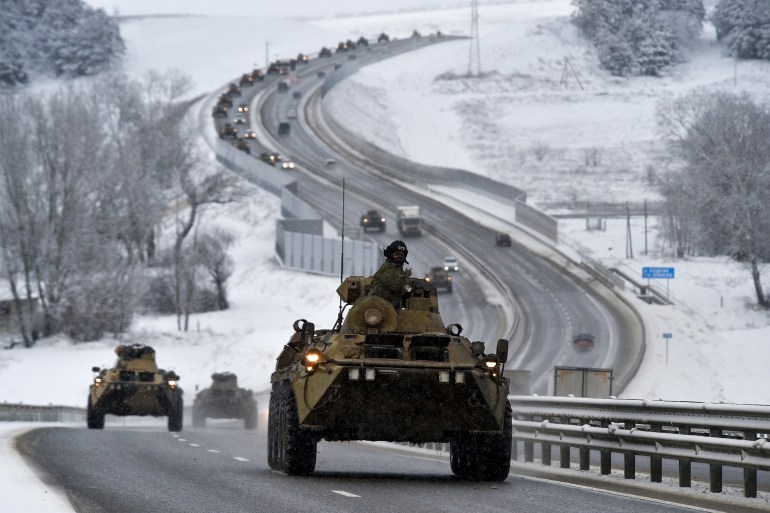
A large-scale military operation does not fit into Moscow’s cost-benefit calculus.


Valentine's Day is a time to celebrate romance and love and kissy-face fealty. But the origins of this festival of candy and cupids are actually dark, bloody — and a bit muddled.
Though no one has pinpointed the exact origin of the holiday, one good place to start is ancient Rome, where men hit on women by, well, hitting them.
Those Wild And Crazy Romans
The Roman romantics "were drunk. They were naked," says Noel Lenski, a historian at the University of Colorado at Boulder. Young women would actually line up for the men to hit them, Lenski says. They believed this would make them fertile.From Feb. 13 to 15, the Romans celebrated the feast of Lupercalia. The men sacrificed a goat and a dog, then whipped women with the hides of the animals they had just slain.
The brutal fete included a matchmaking lottery, in which young men drew the names of women from a jar. The couple would then be, um, coupled up for the duration of the festival — or longer, if the match was right.
The ancient Romans may also be responsible for the name of our modern day of love. Emperor Claudius II executed two men — both named Valentine — on Feb. 14 of different years in the 3rd century A.D. Their martyrdom was honored by the Catholic Church with the celebration of St. Valentine's Day.
Around the same time, the Normans celebrated Galatin's Day. Galatin meant "lover of women." That was likely confused with St. Valentine's Day at some point, in part because they sound alike.Later, Pope Gelasius I muddled things in the 5th century by combining St. Valentine's Day with Lupercalia to expel the pagan rituals. But the festival was more of a theatrical interpretation of what it had once been. Lenski adds, "It was a little more of a drunken revel, but the Christians put clothes back on it. That didn't stop it from being a day of fertility and love."
Shakespeare In Love
As the years went on, the holiday grew sweeter. Chaucer and Shakespeare romanticized it in their work, and it gained popularity throughout Britain and the rest of Europe. Handmade paper cards became the tokens-du-jour in the Middle Ages.
Today, the holiday is big business: According to market research firm IBIS World, Valentine's Day sales reached $17.6 billion last year; this year's sales are expected to total $18.6 billion.Eventually, the tradition made its way to the New World. The industrial revolution ushered in factory-made cards in the 19th century. And in 1913, Hallmark Cards of Kansas City, Mo., began mass producing valentines. February has not been the same since.
But that commercialization has spoiled the day for many. Helen Fisher, a sociologist at Rutgers University, says we have only ourselves to blame.
"This isn't a command performance," she says. "If people didn't want to buy Hallmark cards, they would not be bought, and Hallmark would go out of business."
And so the celebration of Valentine's Day goes on, in varied ways. Many will break the bank buying jewelry and flowers for their beloveds. Others will celebrate in a SAD (that's Single Awareness Day) way, dining alone and binging on self-gifted chocolates. A few may even be spending this day the same way the early Romans did. But let's not go there.
https://www.npr.org/2011/02/14/133693152/the-dark-origins-of-valentines-day

The National Institutes of Health (NIH) is facing a congressional probe after reports emerged alleging the National Institute on Drug Abuse (NIDA) spent millions of taxpayer dollars on a cruel experiment, injecting beagle puppies with cocaine.
The non-profit watchdog organization White Coat Waste Project (WCW) reported on another cruel experiment allegedly funded by taxpayers. According to WCW’s findings, via a Freedom of Information Act [FOIA] request, “seven 6-month-old beagle puppies were trained to wear a jacket” which “served a cruel purpose: to inject the animal wearing it with drugs.” Puppies were then dosed with cocaine repeatedly “for months” with what WCW described as an “‘experimental compound,’ to see how the two drugs interacted”:
The experiment, which ran from September 2020 to September 2021 (with a report due May 2022), was filmed, so experimenters could see if the puppies had any “adverse reactions” to the drugs. Prior to being drugged, the dogs were also forced to undergo surgery, where they were implanted with a “telemetry unit” to monitor their vital signs throughout the experiment.
That was not the only experiment, either:
A second experiment, which ran from March 2020 until March 2021, also used special jackets to inject beagles with cocaine. Six puppies were used in these experiments.
Why do the same experiment twice? Why even do it once? We don’t know — but what we do know is that you’re footing the bill. These two experiments cost taxpayers over $2.3 million dollars.
According to WCW, researchers either killed the “coke hounds” after the experiment or shipped them away to be used for other experiments:
A bipartisan group of lawmakers is now leading the investigation into these allegations, sending a letter to Nora D. Volkow, director of NIDA, informing her of their concerns.
“The documents state that the supposed purpose of these cocaine experiments on puppies was to generate a report that ‘may be submitted by NIDA to the FDA [U.S. Food and Drug Administration].’ However, the FDA itself has recently indicated that it ‘does not mandate that human drugs be studied in dogs,'” they wrote, citing the reporting from WCW as well as the revelations made by the FOIA requests.
“Nevertheless, despite the FDA’s assertion, these NIDA documents state that, ‘this study is required by a relevant government regulatory agency,'” the lawmakers, led by Reps. Nancy Mace (R-SC) and Brendan Boyle (D-PA), continued.
“We are concerned that NIDA is spending tax dollars on dog testing that is cruel, costly, outdated and that the FDA has claimed is unnecessary,” they wrote, requesting her answers to the following questions by February 16, 2022:
- How much taxpayer money has been spent on dog testing under contract number HHSN271201800019I to date?
- Has all dog testing being conducted under contract HHSN271201800019I been completed? If so, on what date? If not, what dog tests are still ongoing or scheduled?
- Since the FDA has stated that it does not require dog testing for new drugs, why did NIDA commission testing on puppies specifically?
- What, if anything, did NIDA do to work with the FDA to explore non-animal alternatives to meet data requirements? Please describe in detail.
This is far from the first time the NIH has come under scrutiny for cruel puppy experiments. In October, reports surfaced accusing Dr. Anthony Fauci’s division of the NIH, the National Institute of Allergy and Infectious Diseases (NIAID), of partially funding an experiment allowing hungry, diseased sandflies to eat beagle puppies alive. However, the Washington Post later stated that researchers “mistakenly listed NIAID as a funder when they published a paper in a scientific journal in late July,” prompting the journal to issue a correction October 26. WCW spokesman Justin Goodman, however, referred to the explanation as all “too convenient.”
WCW also obtained FOIA documents which found the NIAID funding an experiment “which involved injecting puppies with a mutant bacteria and allowing hundreds of ticks to feast upon them,” as Breitbart News detailed.

According to U.S. Air Force Gen. Jeffrey Harrigian, the commander of U.S. Air Forces in Europe and Air Forces Africa, the service has found “opportunities to go train, largely with our partners across Europe,” on close air support. He confidently asserted that he was “very comfortable that we…[can] operate with their joint terminal air controllers, their entities on the ground, from the Baltics down into the Med and even into Romania,” pointing out the “continued interaction with them that has allowed us to keep our close air support capabilities at the right level and continue to improve our readiness.”
But such confidence is misplaced.
In the event of a conflict with Russia, U.S. and NATO air forces will confront a contested air littoral — that is, the airspace between ground forces and high-end fighters and bombers. Russia’s integration of small tactical drones, low-flying missiles, electronic warfare systems, and loitering munitions will vie for control of the air from below the altitudes of conventional air superiority.
With a contested boundary standing between the air and ground, NATO ground forces cannot count on fighting under a protective aerial umbrella or effective close air support.
Russian Chief of the General Staff Gen. Valery Gerasimov noted in 2018 that modern combat is “… unthinkable without drones – they are used by gunners, scouts, pilots – everyone.” Large numbers of Russian combat drones and radar-guided anti-aircraft artillery, as well as short-range surface-to-air missile (SAM) and man-portable air defense systems (MANPADS) like the SA-24 Igla-S and SA-25 Verba series will make the air littoral both more dangerous and more deadly. In eastern Ukraine, since 2014, Russia and its proxies have used multiple small drones, flying at different altitudes, to acquire targets and spot artillery strikes. Russian artillery fires were deadly accurate as a result. In the future, Russia plans to use swarms of loitering munitions — also known as “kamikaze drones”—to create a kind of “aerial minefield.”
With Russia disputing control of the air littoral, NATO will struggle to deliver effective close air support. High-end aircraft are simply too expensive and few in number to put at risk in a contested air littoral. With these aircraft pushed further back from the ground fight, they will be less effective in a close-air-support role. Although the F-35 can deliver ground fires from safer altitudes, the standoff distance required by advanced SAMs will lengthen the window for Russian ground units to shoot and scoot; by the time the munition arrives there may be no target.
A critical challenge for NATO is that this close-air-support mission shortfall cannot be offset by land-based fire systems, given NATO’s deficit in heavy artillery. Whereas Russia relies on artillery for 65 percent of its firepower, NATO depends on airpower for approximately 80 percent of its total fires. The end of the Cold War, and three decades of counterinsurgency and counterterrorism operations, which favored precision airstrikes often from high altitudes, have left U.S. and European armies with critical shortages in heavy artillery.
At the start of military conflict with Russia, NATO ground troops would be seriously outgunned and at risk of defeat in detail.
Although NATO militaries awakened to this danger after the Nagorno-Karabakh conflict, they remain unprepared to fend off swarms of drones and short-range missiles. Such systems, operating at a range of frequencies and close to the ground, will be resistant to jamming and offer an unfavorable economic exchange rate.
Adding to the challenge, these small and low-flying platforms are also harder to detect and engage than traditional air combatants.
The Pentagon has invested billions of dollars in counter-drone systems in recent years, but it still fails to detect 60% of drones in tests, according to reports.
Effective air defense is inherently difficult.
Most dangerous of all, it might give the Russians the idea that they could win a quick victory at a relatively low cost, leading to deterrence failure.
What practical steps can NATO take to meet this new threat? The alliance must first close the capabilities gap. NATO militaries could upgrade or acquire more heavy artillery and ground-based air defense systems, but correcting this shortfall would take considerable time and investments. The better option is to effectively contest the air littoral from above and below. Allied forces should acquire and integrate large numbers of small, cheap aerial drones with other high-end air assets and ground-based fires into NATO’s scheme of maneuver to gain localized air superiority and added firepower delivery, as well as blunt Russian advantages.
It might just be enough to help turn the Russian advance into a tough and costly slog, buying time for NATO reinforcements to arrive in theater.
But technological solutions alone will be insufficient. NATO must also close the conceptual gap. NATO’s Joint Air Power Strategy, published in 2018, fails to address emerging threats to lower-altitude airspace. Addressing these threats requires a reconceptualization of air control, which NATO currently defines as “the required degree of freedom in the air domain necessary for the exploitation of the air.” As control of the air littoral rapidly decouples from that above, NATO’s doctrinal concepts must adapt accordingly, with air control understood in three dimensions, as a function of time, distance, and altitude.
Above all, NATO must prepare to control the air littoral, even if it may not be the easiest—or most appealing — mission to U.S. and NATO air forces. The glory days of fighter planes and swirling dog fights may or may not have passed, but they are no longer the only or most important fights in the sky.
Maximilian K. Bremer is a United States Air Force colonel and the Director of the Special Programs Division at Air Mobility Command. The opinions expressed here are his own and do not reflect the views of the Department of Defense and/or the United States Air Force.
Kelly A. Grieco (@ka_grieco) is a resident Senior Fellow with the New American Engagement Initiative at the Atlantic Council’s Scowcroft Center for Strategy and Security and formerly taught at the Air Command and Staff College.
 |
| The easiest way to open a Coconut is to whisper it a joke & it will crack up with laughter |