Showing posts with label Russia. Show all posts

Saturday, 28 May 2022

Egor Kholmogorov: The intertwined roots of history explain why Russia can't let go of Ukrai


Egor Kholmogorov: The intertwined roots of history explain why Russia can't let go of Ukraine
https://www.rt.com/russia/556073-russians-never-let-go-ukraine/

Centuries of shared history mean that the fate of Kiev will always remain Moscow's core interest
Egor Kholmogorov: The intertwined roots of history explain why Russia can't let go of Ukraine

In August 1948, the US National Security Council issued memorandum (NSC 20/1 1948), requested by then Defense Secretary James Forrestal. The document described American objectives with respect to the Soviet Union.

A significant part of the memorandum focused on Ukraine. American analysts were convinced that the territory was an integral part of greater Russia, and it was highly unlikely that Ukrainians could exist as an independent nation. Most importantly, it noted, any support given to separatists would be met with a strong negative reaction by Russians. 

“The economy of the Ukraine is inextricably intertwined with that of Russia as a whole … To attempt to carve it out of the Russian economy and to set it up as something separate would be as artificial and as destructive as an attempt to separate the Corn Belt, including the Great Lakes industrial area, from the economy of the United States…

Finally, we cannot be indifferent to the feelings of the Great Russians themselves … They will continue to be the strongest national element in that general area, under any status … The Ukrainian territory is as much a part of their national heritage as the Middle West is of ours, and they are conscious of that fact. A solution which attempts to separate the Ukraine entirely from the rest of Russia is bound to incur their resentment and opposition, and can be maintained, in the last analysis, only by force,” read the report.


It seems like today’s American establishment and media have forgotten something that was obvious to US analysts and politicians at a time when America was the only superpower with nuclear weapons. It would appear that the White House and EU now believe they can make Russians think of Ukraine as a different country through force and sanctions threats.

If the West is successful in its attempts to “deter” Russia, it will get its reward – long-lasting resentment from Russians, who will view the US-led West as a force that prevents them from managing a big chunk of their historic land. 

Why do Russians think of Ukraine as part of Russia?

The first important factor is personal ties.

Many Russian citizens were born in Ukraine, but they don’t think of themselves as Ukrainians – especially not in the sense understood by the Kiev government today. Even more Russians have relatives in Ukraine. It would be almost impossible to find a Russian citizen without any family ties to Ukraine.

Russians see it as the land of their forefathers – quite literally, as they can show you the graves of their ancestors and the land where their houses stood. 

When the administrative boundaries between the republics of the USSR turned into real borders in 1991, eight million ethnic Russians became ‘Ukrainians’ on paper. Kharkov in Ukraine and Belgorod in Russia, for example, are essentially twin cities that were founded by Russian tsars as frontier fortresses against the Crimean Tatars in the mid-17th century. After the Soviet Union’s collapse, they ended up on the opposite sides of the border. Country houses belonging to residents of the Russian city were now in Ukraine and vice versa. People from Kharkov would now have to travel to a different country to get to their dacha.    

Today, Russians in Russia are puzzled – why does the regime in Kiev think it has the right to make decisions about their land?

As a result, many support the so-called separatists in what was the east of Ukraine. The term is a tricky one though, as a Russian may consider the regime in Kiev to be separatists, while activists in Crimea or in the Donbass have actually separated themselves from the separatists and, by that logic, could be considered unionists. Activism in Crimea, the movement in the Donbass, and the protests in Odessa that were brutally repressed, back in 2014, are part of unionism in the context of one greater Russia, not separatism. 

Many Russians not only lived but also worked in Ukraine, which was a key industrial area in Russia. Its industrial development can’t be attributed to Ukrainian national character – it was the tsars and then the Soviet authorities that focused on this region’s growth. The industrial density of eastern Ukraine could only compare to that of Germany’s Ruhr.

There are a significant number of Russians who worked for Ukrainian plants and factories at one point or another – manufacturing aircraft carriers, helicopters, spacecraft components, etc. These were elements of the complex economic system of the huge Soviet superpower. Independent Ukraine didn’t need any of that.  

The political and economic elites of independent Ukraine treated the industrial ‘dowry’ they inherited not as a complex system in need of maintenance, but as wild walnut trees that they should harvest while the nuts still hung on the branches.

The Ukrainian leaders’ attitude towards the powerful gas transportation system that had been left to them by the USSR was characteristic – they perceived it as a tool for blackmail. Unable to create or improve the system, they threatened to block or destroy it if they did not receive more money for the right to pump gas through ‘their’ territory.

Hence the hysterical reaction of the Ukrainian elites to the construction of the Nord Stream 2 gas pipeline, linking Russia directly to Germany. The fact that the Western powers have supported this view has led to the largest gas crisis in European history.

Russians living in Russia, as well as those living in Ukraine, cannot understand why Ukrainian land should be used by NATO. In Russia, Ukraine’s possible accession to the US-led military bloc is not construed as a free choice made by the country in its own security interests, but as a means for the West to build advance bases for launching a direct attack on Moscow.

Do the Russians have historical grounds for considering this land their own, and for seeing the Kiev regime and NATO as the actual occupiers of this land? Definitely, in my view. 

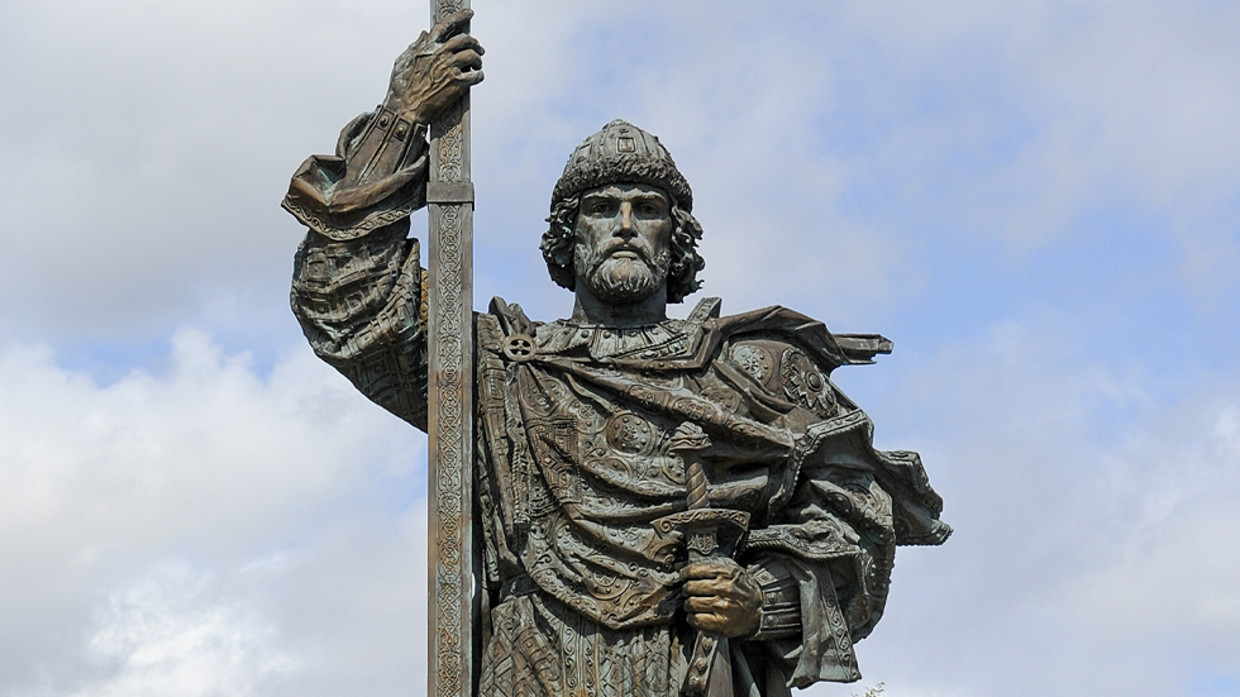
Kiev in modern Ukraine, Polatsk in contemporary Belarus, and Novgorod, Smolensk, and Rostov in today's Russia were one state in ancient times – Rus.

Though Kiev, the ‘Mother of Russian cities,’ was the capital of this state, Novgorod, which is now part of Russia, played no lesser a role. Amazingly, anthropologists in northern Russia’s Arkhangelsk Region have recorded epic ballads about Prince Vladimir and his warriors, who baptized Rus, which are similar in many ways to legends about King Arthur and the knights of the round table. It is therefore obvious that the local population retained a direct cultural connection with the population of ancient Kiev and Russia. At the same time, no similar ballads have been preserved in modern Ukraine.

Kiev was almost destroyed as the result of the Mongol invasion by Genghis Khan’s grandson, Batu Khan, in 1240, and the fate of the inhabitants in different parts of Rus was divided after that. The eastern regions became vassals of the Mongols (Tatars) but continued to be ruled by direct male descendants of Prince Vladimir. The city of Moscow, with princes from this house, gradually gained hegemony and created a state that managed to gain independence.

A different fate awaited the inhabitants of Western Russia. The cities there lost the power of Prince Vladimir’s descendants, as well as their historical connection to ancient Kiev. They were conquered by Lithuania, which soon merged with Poland to form a single state – the Polish-Lithuanian Commonwealth. Since these lands were cut in half by the practically impassable Polesie Marshes, two different groups of Russian origin emerged there during the Middle Ages: Belarusians to the north of the marshes, and ‘Little Russians’ to the south.

The Muscovite princes, who became tsars in 1549, always proclaimed their right to these lands and demanded their return from Poland, leading a slow kind of ‘Reconquista’. Poland lost the support of its Little Russian and Belarusian subjects in this struggle after it announced the religious Union of Brest in 1596 and began persecuting the Orthodox Church and its adherents. An Orthodox resistance movement emerged in the territories of Little Russia shortly thereafter.

The resistance’s strike force was the Cossacks – a community of free warriors that assembled in the steppe for battles with the Tatars and Turks. A Cossack could be a native of any country who professed Orthodox Christianity and was ready to fight for it. As Poland progressively persecuted the Orthodox religion, the Cossacks increasingly raised their sabers against it. One of the episodes in this struggle was described in a historical novella entitled ‘Taras Bulba’ by Nikolai Gogol. Although he was born in Poltava, which is now in modern Ukraine, the great author always wrote in Russian and criticized acquaintances who tried to create a separate ‘Ukrainian’ language.

In 1648, the leader (hetman) of the Cossacks, Bogdan Khmelnitsky, sparked a great uprising against Poland in defense of oppressed Orthodoxy. After winning a number of victories, he triumphantly entered Kiev and was met by church leaders. He then created a state – the Zaporozhian Host – which in many ways resembled the rebellious republics of the Donbass now recognized by Russia.

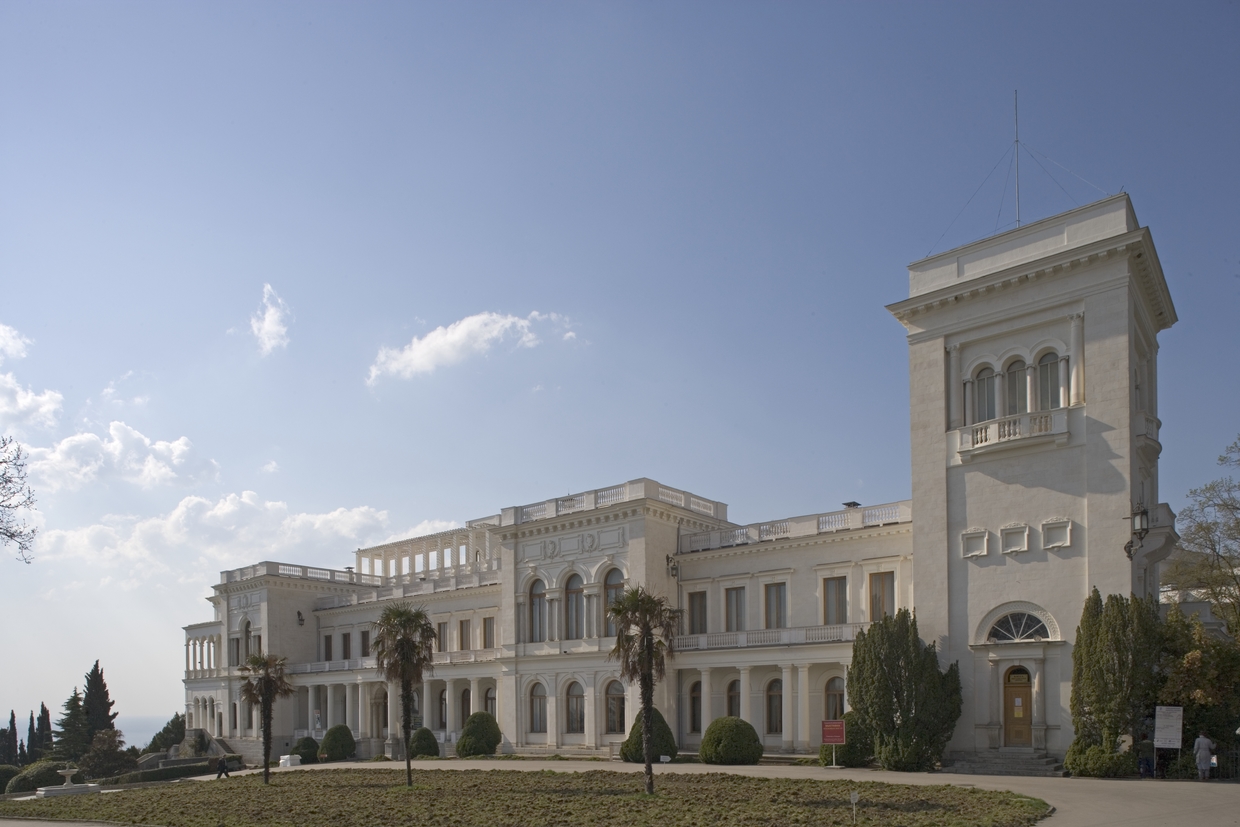
In 1654, after the resolutions of a Zemsky Sobor (a kind of parliament representing feudal classes) in Moscow and a Rada (a kind of people’s assembly) in Pereyaslavl near Kiev, Khmelnitsky’s state became part of Russia.
RT

Tsar Aleksey Mikhaylovich was declared ‘Tsar of All Great, Little, and White Russia’ and began a grueling 13-year war with Poland, which ended with a partial victory – the lands on the left bank of the Dnieper were ceded to Russia, and the Russian Tsardom bought Kiev, the ancient capital of Rus on the right, for 146,000 silver rubles and seven tons of silver, which the richest Polish families divided among themselves.

Subsequently, many Little Russians from the territory of modern Ukraine moved north and settled throughout the vast reaches of Russia, making careers both in the church and at court. The word ‘Ukraine’ was not used as a place name at all during this period – in both Russian and Polish it meant ‘borderland’ or ‘frontier’. Its use as a name referring to the territories around Kiev only began in the 18th century, when these lands really did become a borderland during the constant wars between Russia and Turkey.

The integration of Little Russians into Russia was not even disrupted by the adventure of Hetman Mazepa, who betrayed Peter the Great out of personal interests and sided with the Russian leader’s enemy King Charles XII of Sweden. Mazepa was abandoned by everyone except his personal guards, and a fierce guerrilla war began against the Swedish troops that entered the territory of modern Ukraine. The first attempt to exploit the concept of ‘Ukrainian separatism’ ended in disaster for the party that tried to employ it.

By the middle of the 18th century, the integration of Little Russians and Russia was extremely tight. Singer and musician Alexey Razumovsky, born near Chernigov, became the secret husband of Peter’s daughter, Empress Elizabeth Petrovna. Moreover, the brother of this ‘Night Emperor’, Kirill, was simultaneously the hetman of the Zaporozhian Host and president of the St. Petersburg Academy of Sciences. Later, his numerous legitimate and illegitimate descendants formed an influential clan in the aristocracy of the Russian Empire.

The new empress, Catherine II, abolished the Zaporozhian Host and relocated the remnants of the Cossacks to the Kuban, in the North Caucasus. She also decisively conquered the steppes of southern Russia from the Tatars and Turks and, along with her secret husband, Prince Potemkin, founded a new part of Russia there – Novorossiya. The population of this area was extremely diverse. First of all, there were peasant and ‘Great Russian’ parts of the country, but there were also Greeks, Serbs, and a lot of Germans invited by the Empress, who were born in a small German principality. In fact, Novorossiya bore little resemblance to old Little Russia.

Novorossiya was the Russian equivalent of the New World, except that it wasn’t separated by an ocean. In the 19th century, industry was actively developed in the city now called Donetsk, commerce blossomed in Odessa, which was founded by a Spanish nobleman in the Russian civil service named De Ribas, and resort areas began to sprout up in Sevastopol and Crimea, bizarrely mixed with naval bases.

During the three partitions of Poland, which Russia participated in along with Prussia and the Austrian Empire, Catherine II finally finished the work begun by Aleksey Mikhaylovich. Russia reunited almost all the lands belonging to ancient Rus, along with their peasant populations, which had preserved the Russian language and maintained Orthodox Christian traditions.

The inhabitants of these territories began to return to their Russian identity. The fate of the family of the great Russian writer Dostoevsky can be taken as an example. The writer’s grandfather was a ‘Uniate’ priest at a Catholic Church near Vinnytsia, which is located in modern Ukraine, but returned to Orthodoxy after Russia annexed the territory. The writer’s father went to Moscow and made a brilliant career as a military surgeon. And Dostoevsky himself became a great writer who once penned: “The master of the Russian land is solely Russian (Great Russian, Little Russian, Belarusian – it’s all the same).”

In the partition of Poland, Russia did not go beyond the borders of ancient Rus and even ceded the Old Russian city of Lvov to Austria. However, all the members of the privileged classes on these lands considered themselves Poles, and the land to be Polish, so they waged a stubborn struggle against the Russian government, both openly and clandestinely. As part of this battle, they began to spread the idea that the peasant population of western Russia was not Russian, but ‘Ukrainian’, a separate people that was closer to the Poles. Therefore, Russia had no right to these territories, the propaganda claimed.

Some young Russian intellectuals embraced this idea during the ‘Springtime of the Peoples’, a series of revolutions that shook Europe in the mid-19th century, when original nationalities were discovered, and even sometimes invented. Ukrainophiles like the acclaimed genius of Ukrainian literature, Taras Shevchenko, collected Little Russian songs and wrote poems in a similar style.

Ukrainophile propaganda was met with hostility by both Russia’s imperial government and Russian society, which hadn’t felt any difference at all between the lands of Little Russia and the rest of Russia for a long time. The life of Little Russians did not seem to be anything extraordinary in light of the much more colorful lives of the Don, Kuban, and Terek Cossacks. And most importantly, the majority of those pushing this propaganda ended up disappointed in it themselves – when they realized that this idea primarily served the interests of the Poles, the enthusiasm for Ukrainophilism cooled considerably.

However, the Ukrainian idea survived thanks to Austria, which provided an academy dedicated to Ukrainian studies in the city of Lvov, as well as a generous subsidy to Ukrainophile historian Mikhail Grushevsky. Torn apart by ethnic conflicts, the Austrian Empire had two primary objectives. Firstly, to prove that those living in Galicia and its capital, Lvov, which belonged to it at the time, were not Russian, but Ukrainians, who were an entirely different people, because this would mean that Russia had no right to claim this land. Secondly, to prove to the Poles living in Lvov that they had no right to this city either. Grushevsky began to construct a Ukrainian historical myth revolving around Galicia. He also published a Ukrainian language newspaper, inventing several new ‘Ukrainian’ words for each issue.

The moment of truth came during the First World War, when Austria committed real acts of genocide against those in Galicia who displayed a political or cultural orientation towards Russia. More than 30,000 Galician ‘Muscovites’ and representatives of small ethnic groups who spoke their own Russian dialects – Rusyns and Lemkos – were thrown into the Thalerhof and Terezin concentration camps, the predecessors of Auschwitz. Thousands of people there were tortured by Austrian guards and died of hunger or disease.

The inhabitants of southern Russia captured by the Austrians during the war were placed in special camps where Grushevsky’s followers tried to inspire them with the belief that they were Ukrainians. This attempt ultimately failed, however. In a letter to his friend Inessa Armand, Vladimir Lenin, who himself maintained close contacts with Austrian and German special services, described an escaped prisoner’s account of this “experiment,” in which 27,000 people forcibly participated, as follows: “Ukrainians were sent clever lecturers from Galicia. Results? Only 2,000 were for ‘independence’ ... after a month’s efforts by the propagandists!! Others flew into a rage at the thought of separating from Russia and going over to the Germans or Austrians. A significant fact! It’s undeniable that ... the conditions for Galician propaganda are most opportune. And yet the proximity to the Great Russians prevailed!”

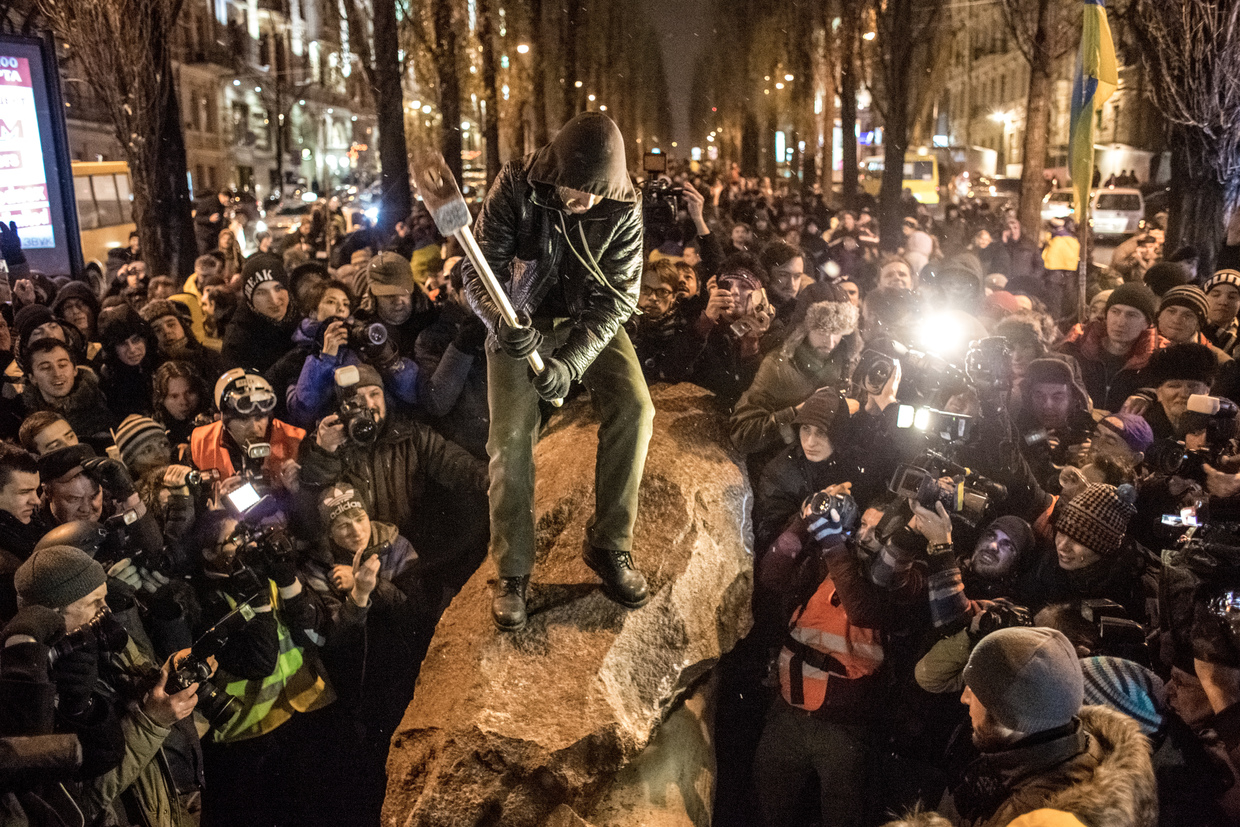
Nevertheless, after seizing power in Russia, Lenin recognized the self-proclaimed Ukrainian People’s Republic headed by Grushevsky in Kiev. Then, during the civil war against the White defenders of ‘a united and indivisible Russia’, he demanded that his comrades in arms emphasize – or at least pretend – that an “independent communist Ukraine” existed. 
RT

Perfectly aware of how unacceptable Ukrainian propaganda was to the masses, Lenin, nevertheless, insisted on creating a ‘Ukraine’ in order to weaken “the Great Russian oppressor,” as he called the Russian Empire’s leading ethnic group. It was to protect Ukraine from ultimately dissolving into Russia that Lenin rejected Stalin’s plan to turn peripheral areas into autonomous regions within Soviet Russia. Instead, he insisted on creating a Union of Soviet Socialist Republics, which is described in its statutory documents as a rather loose confederation with a right to exit. Current Ukraine dates back to the ‘Ukrainian Soviet Socialist Republic’ (Ukrainian SSR) that was created within the framework of this Leninist project.

The problem was, there were practically no Ukrainians in Soviet Ukraine, so the Soviet government took an unheard-of step – it invited its ideological enemy, Grushevsky, the former president of the Ukrainian People’s Republic, to the Ukrainian SSR and entrusted him with carrying out the ‘Ukrainization’ of public education. For a decade and a half, schoolchildren there could only receive a school education in Ukrainian, using Grushevsky’s textbooks.

The campaign in government ministries and departments was no less tough. Officials, including those with no ideological bent – who dealt with agriculture, for example – were required to study the Ukrainian language and use it at work. Moreover, they were dismissed from the service for displaying an ignorance of the language or an unwillingness to learn it. Interestingly, the number of those sacked was quite large, which demonstrates that many people were still resisting Ukrainization at the time.

But, of course, not everyone resisted. There were many ‘chameleon’ officials in the Communist Party. For example, the future leader of the USSR, Leonid Brezhnev, who led the nation during the Cold War, listed his ethnic origin as ‘Ukrainian’ in some forms, and ‘Russian’ in others. This goes to show that, in fact, there was no clear way to distinguish a ‘real Ukrainian’ from a ‘real Russian’. 

Convinced that Ukrainization made it impossible for schools to produce literate people who were well-versed in technology (most of the USSR’s literature on science and technology always remained in Russian), Stalin began to limit the process. Subsequently, learning Russian became mandatory, and enthusiastic advocates of Ukrainism began to be persecuted as ‘bourgeois nationalists’.

However, even after this about face, the official Soviet regime diligently pretended that Ukraine was a ‘fraternal’ state, independent and separate from Russia. Ukraine was granted its own seat in the UN, separate from the USSR’s (the Russian Federation was not). The mosaics created in the Moscow Metro’s Kievskaya station presented a kind of iconography of the ‘history of Ukraine’.

However, Soviet Ukraine faced a new problem. In 1939, Stalin annexed the regions of Western Ukraine that had been captured by Poland after the collapse of the Russian Empire and assigned them to the Ukrainian SSR. And with them came Lvov and Galicia, which had never been part of Russia. As a result of Poland’s strict national policy, a radical political movement emerged in this area led by Stepan Bandera dubbed the ‘Ukrainian Insurgent Army’. This group’s political structure greatly resembled that of Pol Pot’s Khmer Rouge, only under a nationalist rather than communist banner. The Poles were the first object of Bandera’s hatred – in 1942, with support from Hitler, his group organized the terrifying Volhynia Massacre of the Polish population.

As German collaborators, Bandera and his comrades in arms committed many crimes against Jews, Poles, and Russians during the Second World War. While the Red Army advanced against the Germans, Bandera’s people increasingly turned their weapons against it and shifted the hatred they harbored against the Poles and Jews to Russians and Communists. The Banderists waged a fierce guerrilla-terrorist war in the western part of the Ukrainian SSR for many years after the Second World War ended. When the partisans were finally defeated, they went underground, but passed their radical ideology on to the younger generation of Ukrainian nationalists.

When the Soviet Union weakened and collapsed in 1991, three factors came together in Ukraine. Firstly, the official communist government in Kiev was given the opportunity to take advantage of the constitutional opportunities left by Lenin to create its own state. Secondly, amidst the complete ideological vacuum in this post-communist Ukraine, it was the heirs of Bandera, with their rabid racism directed at Russians, who took up the new country’s ideological banner.

At the same time, the majority of Ukraine’s population fell victim to this process, both those officially listed as ‘Ukrainians’ and ‘Russians’. Most had seen the USSR as a Greater Russia, and the Ukrainian SSR where they lived as one of the corners within it. They did not know and did not want to learn any language other than Russian. If their grandmothers had taught them to speak the rural Ukrainian dialect in childhood, they saw it as a way of making a joke. And suddenly, through schools, propaganda, and political speeches, these people were hit by powerful pressure to become ‘Ukrainian’ from what had recently been a totalitarian communist state.

The Russian Federation had been experiencing a long crisis with respect to national identity and сconsciousness, and it was Ukraine that pulled it out of this muddle. As predicted in 1948 by US National Security Council analysts, the Russians became enraged on learning that propaganda was being used to make some Russians see themselves as ‘non-Russian’. 

The first wound to Russian pride was inflicted back in Soviet times, when Malenkov and Khrushchev transferred Crimea from the RSFSR (Russia) to the Ukrainian SSR (Ukraine) in 1954. Russians considered this peninsula to be their own land, steeped in the blood of two heroic defenses of Sevastopol (1854-55 and 1941-42). Though the outward manifestation of this transfer was limited to changing the color of Crimea on maps from pink to green, it was perceived as an ethnic insult by Russians in the USSR. Sevastopol was the ‘city of Russian sailors’ (as was sung in a famous song) and no one dared argue with this. Russian indignation reached a boiling point after the peninsula became part of an independent Ukraine in 1991, and the government began to ban the Russian language there. The phrase “You will still answer for Sevastopol” from the popular movie ‘Brat 2’ became a nationwide meme.

Several waves of forced Ukrainization in the 20th century have convinced Russians that Ukrainian identity is not something stemming from ancient history and culture, but something that is instilled by propaganda. Like it or not, Russians in Russia see modern Ukraine’s hostility towards the Russian part of its population not as a free choice of ethnic identity, but as a disease that has arisen under the influence of propaganda that must be cured. The more assertively some Ukrainians declare that they are not brothers to Russians, but enemies, that they want to be with NATO, and not Russia, the greater the desire on the other side is to save and cure them, whatever that means.

The trick of the West – to appeal to the population of modern Ukraine’s sense of unique identity – is even more dangerous in terms of provoking conflict. The reaction of Russians to these appeals is similar to that of the parents of a kidnapped child who has been turned against them. It’s better not to get in their way.

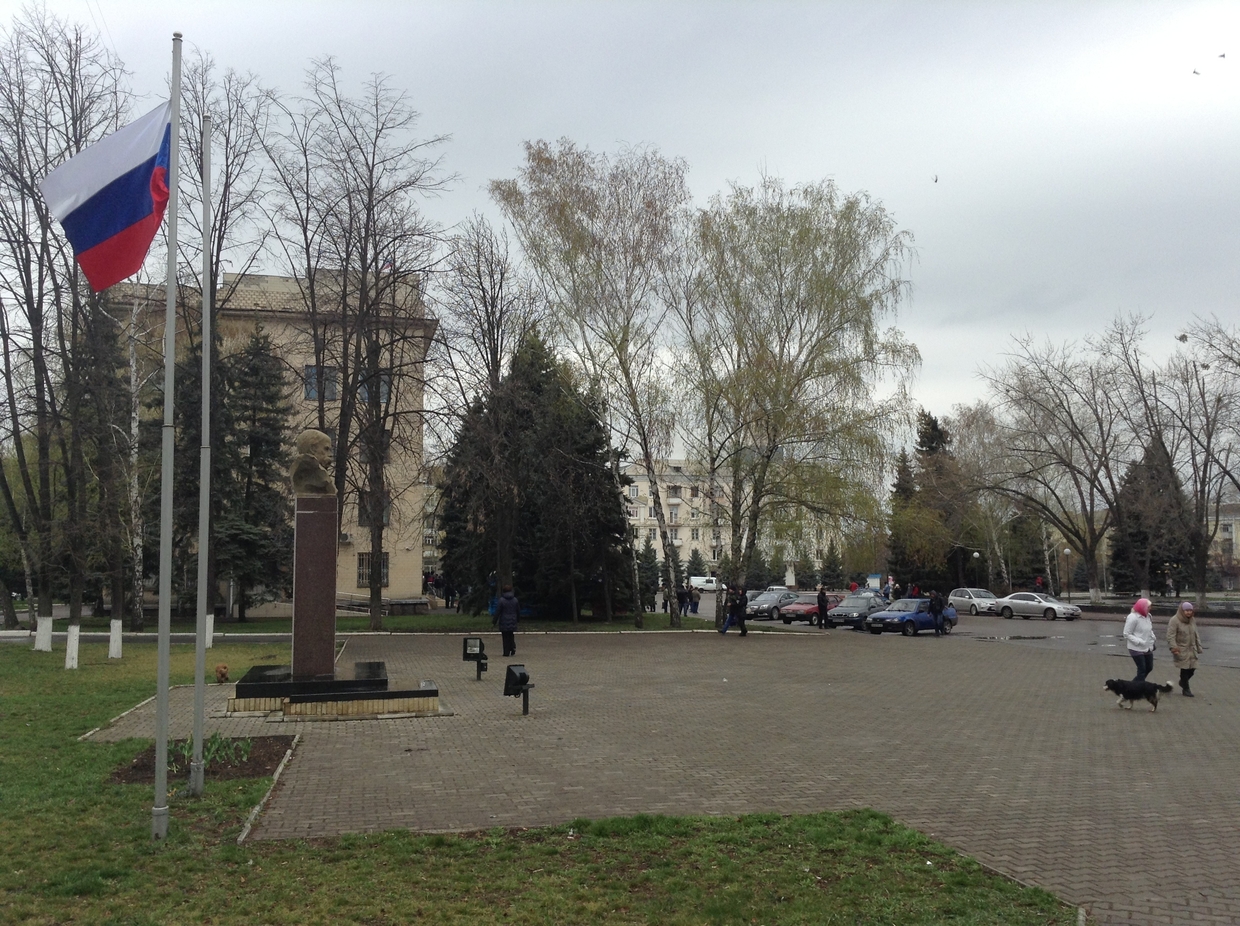
To sum up: Russians have many vital and historical reasons to consider Ukraine their land, and to see Ukrainians, even those most hostile to Russia, as their own people, who are in need of protection (including from brainwashing). The West’s claims that it has a right to exercise hegemony over Ukraine because ‘Ukraine is not Russia’ is seen by Russians in Russia as false and predatory.
RT

Moreover, they consider this attitude a land grab directed at territory Russians consider their own. One of the decisive factors in Russians’ ethnic awakening during the Putin era has been the resistance to this attempt to tear Ukraine away. The president himself was not the initiator of this process but reflects the national mood. 

There is no way to get Russians to accept that Ukraine is somehow separate, except by brutal force. Russians will always see any world order that involves the separation of Ukraine from Russia as hostile. By supporting an ‘independent Ukraine’, the West will always have a tireless and relentless enemy in Russia and the Russians.

The question is why does it need this, and who benefits?

Monday, 14 March 2022

Ukraine's anti-corruption minister thanks Russian military for being so corrupt


Ukraine's anti-corruption minister thanks Russian military for being so corrupt


A fragment of a destroyed Russian tank is seen on the roadside on the outskirts of Kharkiv on February 26, 2022

The head of Ukraine's anti-corruption agency has expressed his "sincere gratitude" to Moscow's top defence official over alleged corruption in the Russian military, claiming it has forced soldiers to abandon their equipment and give up the fight.

In a March 9 letter addressed to Russian Defence Minister Sergei Shoigu, the head of Ukraine's National Agency on Corruption Prevention, Oleksandr Novikov, said that embezzlement of public funds has made an "invaluable contribution" to the defence of his country.

"Russian means and support resources for the attack on Ukraine were stolen even before they were accumulated on the border of the two states," Novikov wrote.

The February invasion of Ukraine ordered by Russian President Vladimir Putin has killed more than a thousand civilians, according to the United Nations, with Moscow's forces having carried out a number of potential war crimes, including the bombing on Wednesday of a maternity hospital in the port city of Mariupol. But Russia's war effort has been hampered by shoddy supply lines and troops seemingly unprepared for the resistance they have faced, with US officials believing that up to 6,000 may have already been killed.

Some of that is due to hubris — a belief that Kyiv would quickly fall and that resistance would collapse. But there is some evidence, too, of either corruption or ineptitude.

As The New York Times reported, citing US and other Western officials, some Russian troops invaded Ukraine with ready-to-eat meals, or MREs, "that expired in 2002."

Novikov cited the allegedly expired meals in his letter, writing that, "Due to the lack of food, the Russian occupation troops abandon military equipment and surrender to the local residents of Ukrainian villages in order to eat."

Corruption is "endemic" in Russia, according to Transparency International, which ranked it 136th in the world when it comes to tackling the misuse of public funds (Ukraine is ranked 122nd).

Other examples of alleged corruption provided by Novikov are less clear. Attached to his correspondence are a series of photos that purport to show inadequate military equipment, including one alleging that captured tanks were found to have used "cardboard egg trays" as protection.

In truth, the "egg trays" are likely components of the tanks' explosive-reactive armor — albeit ones that are not typically made of cardboard.

More than anything, perhaps, the letter points to the Ukrainian government's efforts to beat Russia at its own propaganda game.

As CIA Director Bill Burns testified before Congress on Thursday, that was a game Russia used to handily win, aided by a network of state-backed media outlets that targeted foreigners across the political spectrum.

"In all my years I spent as a career diplomat, I saw too many instances where we lost information wars with the Russians," he said. Now, however, "This is one information war that I think Putin is losing."

https://www.businessinsider.co.za/ukraine-anti-corruption-minister-thanks-russian-military-for-being-corrupt-2022-3

Wednesday, 9 March 2022

Here's Your 'Red Pill' Moment About the Russia-Ukraine War


Here's Your 'Red Pill' Moment About the Russia-Ukraine War

The 'story' just doesn't add up.

  
Share to TwitterShare toto Print

It's time for your red pill. Something smells rotten in Ukraine. The story is rotten, rancid, hinky; the story just doesn't add up.

President Joe Biden and the media desperately want you to believe Russia is the bad guy and Ukraine is a little angel. They want you to fall in love with underdog Ukraine. They want you to support America getting involved on behalf of Ukraine.

To get your support, they need the media to sell you a bill of goods. But it just doesn't add up. First, Biden is the one who funded Russia's invasion. Biden killed our pipelines, killed coal and banned drilling, which made us dependent on Russian oil — which made Russia filthy rich and arrogant. Biden paid for this war.

Second, if Russian President Vladimir Putin is the "bad guy," if Russia is evil, why is Biden continuing to buy billions of dollars of oil from Russia every day? Does this make sense?

Unless it's pure "commie theatre."

Connect the dots. Biden is a feeble, feckless old puppet with dementia. George Soros pulls Biden's strings. Soros is on the side of Ukraine. Soros recently said the whole world must support Ukraine. It's been reported Soros funded Volodymyr Zelenskyy and then installed him as president of Ukraine — one of the most corrupt nations on the earth.

Keep in mind, evil billionaire Soros is obsessed with hatred for America. He desperately wants to destroy our country. Soros has funded the invasion of our borders. He helps pay for illegal aliens (many of them criminals, MS-13 gang members and murderers) to enter America.

Soros also funded and elected all the horrible, communist district attorneys across America. Soros' DAs are hellbent on destroying America. They have turned our big cities into killing zones where murderers run free without even posting bail while law-abiding citizens are stripped of guns and persecuted for defending themselves.

Soros has paid for the destruction of America. Soros is one of the most evil enemies in our history. If Soros funded the leaders of Ukraine and put them in power, this has to be a trap. Ukraine must be a "bad guy."

Now we come to the mainstream fake news media.

Has the media ever told the truth in the seven years since former President Donald Trump came down that escalator? It's been nonstop lies, fraud and propaganda. The media tells you any lie that advances the cause of Democrats, Soros and the destruction of America.

Now after seven years of lies and propaganda, suddenly you trust the media? You believe this one time they're telling the truth? This one time they have America's best interests at heart? Even though (pure coincidence) Soros is on the same side as the media. They're all one big happy family on the side of Ukraine.

I'll tell what I think.

No. 1: I think this war is a WMD: a weapon of mass distraction to get your mind off the disasters Biden has created at home, including open borders, massive inflation, vaccine mandates crippling the economy, the worst crime wave in history, the worst retreat in U.S. military history from Afghanistan and $6-per-gallon gas.

No. 2: This is pure "wag-the-dog" theater to save Biden from the worst polls in modern history. Instead of hating Biden, they want you to hate Putin.

No. 3: This is all part of Soros and Klaus Schwab's "Great Reset." They want to make us all obedient serfs and slaves. They need World War III as a distraction while they destroy America and capitalism and take your freedoms away.

Here's my conclusion. I'm not "for" Russia. I'll never be a fan of Putin. He's out for only himself and a new dominant Russian empire. I'm not telling you to take Russia's side. They are "bad guys."

But I know if Soros is behind Ukraine, then Ukraine is also a "bad guy." If Soros wants us involved, I know this war is not in America's best interest. I know the media is feeding us a load of lies and propaganda — under Soros' direction.

Like Trump, I have only one dog in this hunt. I'm ONLY for "America First." This war is nonsense. It doesn't involve us. We should not be sending billions of dollars in aid or sending billions in military weapons to Ukraine. I don't want this to turn into WWIII. I don't want my kids or your kids dying over Ukraine. We need to stay a million miles away from this conflict.

This isn't war, it's commie theater. It's a WMD: weapon of mass distraction. Don't believe a thing you read or see coming from the fake news media.

Take your red pill and just say "NO" to this wag-the-dog moment.

https://www.frontpagemag.com/fpm/2022/03/heres-your-red-pill-moment-about-russia-ukraine-wayne-allyn-root/

Saturday, 5 March 2022

The invasion of Ukraine — Putin’s final battle with reality


The invasion of Ukraine — Putin’s final battle with reality


By Maxim Trudolyubov

How did a war with Ukraine become possible at all? The answer is in the alternative political ‘reality’ constructed by Russia in the last few years with the aid of lies, manipulations and the creation of fakes. It was so poorly executed that it seems unbelievable that anyone amongst the decision-makers (including those who created it) actually believes in it. As it turns out, someone evidently does. His name is Vladimir Putin.

In its many years under Vladimir Putin, the Russian establishment has led a ruthless, militant battle against social reality. Political administrators (yes, these are administrators and not politicians, because no one elected them) have persecuted all forms of independence and pushed out activists, politicians and journalists from the public space if they have shown themselves to hold independent views.

Their positions were passed on to figureheads whose task was to feign action and create smokescreens. Officials in the presidential administration busied themselves with identifying, infiltrating and converting any organised parties, groups, and structures that showed any sign of opposition into manageable “cells.”

How the destruction of society leads to war

Everything contemporary was declared alien, foreign, hostile, extremist and even “terrorist”. Let’s remember the civic movement created by Alexei Navalny, which aimed for non-violent political struggle against the regime and was declared therefore, in essence, to be “criminal”.

As far as destruction goes, the successes of officialdom were impressive. Let’s not forget that such “successes” were achieved by direct assassinations, force, and the expulsion of people beyond our borders. Faceless officials, at different times working under the leadership of Kremlin political bosses — Vladislav Surkov, Vyacheslav Volodin, Sergey Kiriyenko — led the charge in close cooperation with intelligence services. The results of these activities are truly horrifying.

Let’s remember the imprisoned activists. Let’s remember those forced abroad and those who gave up public activity, having soberly assessed the risks associated with it. We shan’t forget the assassinated politicians, journalists and public figures, whoever might be behind their deaths.

Putin’s officials tried not only to control civic society, but sports results as well. The logic of fair play was blasted to smithereens: the leader, clearly, did not believe in it. Russian sportspeople had to be better than all others, at any cost. Thus, competitions were replaced by doping programmes, designed to paint the leader a picture of astonishing success. The Winter Olympics in 2014 became a project meant to guarantee victories. The orchestration of the Games was in the end exposed by a defector, the former head of the Moscow Anti-doping Laboratory, Grigory Rodchenkov. Thanks to him we have a detailed picture of this sordid affair.

Creation, even by criminal means, is harder than destruction, which is why Putin’s theatrical construction of fictional alternatives to organic society is an abject failure. Those who transformed us into “others” (or “aliens,” or “undesirables”) have never created anything of their own, on their own initiative, by their creative inspirations or through the callings of their hearts. They could not create their own social space for discussions, could not create space for robust politics, trustworthy analysis, reliable sociology, political science or a healthy opposition and press.

This alternative reality is a warped reflection of our current social discourse: we have clowns in the place of politicians, artificial creations in the place of civic organisations, propagandists in the place of journalists and analysts.

It was easy enough to live with it: one does not have to vote for clowns, read the words of fake analysts or listen to figureheads who are devoid of any independent thought. They are merely bad actors, reading someone else’s texts, tools of crude political gamesmanship. Everything was so transparent that the conviction arose that they would burst at their seams as soon as the coercive grip of the state weakened. The trigger for such weakening, I used to think, might be some fairly organic process — an economic crisis, a drop in a leader’s popularity, or a change of generations in power.

A crisis would wipe out artificial constructs: “politicians” and “journalists” (that’s right, in inverted commas) would simply disappear from the airwaves, since they, like automatons, work only when plugged into the state charger. Russian citizens would suddenly have freed themselves of all illusions and would have seen how the decorations fall apart. Let’s remember the ending of Alice’s Adventures in Wonderland: the King, the Queen, the knights and judges ended up being merely a deck of cards. Or the end of Vladimir Nabokov’s novel Invitation to a Beheading, “The propeller airstream picked up and spun dust, rags, painted sawdust, broken bits of gilded plaster, cardboard bricks…”

Except that today, missiles, explosives and bombs are bringing upon Ukrainians a very real death. The airstream from the propeller blowing over Ukrainian land is perfectly real, and the broken bits and bricks are real. Our lackadaisical attitude towards Putin’s alternative reality was a ubiquitous and tragic error, one of which I am also guilty. The sense of a virtual reality was deceptive. The decorations did not turn out to be gilded plaster, the stones did not turn out to be made of cardboard. Quite the opposite: the crude theatrical curtain, painted over by painters paid enough to buy food, has been drawn back, revealing death and suffering.

I recognise my own profound meagreness in my efforts to demolish the ornamentation when that was possible, before the war. I was convinced the fictions would fall under their own weight.

How your worldview can kill the world

To believe that life, honour, talent and recognition can be bought and sold is a mistake — a harmful view deserving of contempt. It is no innocent error. A man who convinced himself that everything could be bought and sold, that a society could be the subject of a military occupation in order to create in its place his own paid-for reality, has brought not only the country, but the whole world, to a catastrophe.

Not only did he fall for his fictional reality, but he has also made it the foundation for his actions in the real world. It is now clear that his plans for a brief military operation in a friendly country got bogged down in his own constructed fiction. He was evidently expecting that the use of force by a “genuine” — that is, “his” — country could bring about the immediate demise of the “not genuine” Ukrainian statehood.

He thought he was dealing with a piece of decor ordered by forces hostile to him — perhaps created by America or Europe, a fiction with its origin in methods like his own. He really seems to have believed that his manufactured “popularity” would turn out to be real support for his actions by Russian society. He thought they would believe in the threat of Ukrainian “fascists” and in his mission as a liberator. He must have surmised, likely having listened to his own toadies, that Russia is ready for war and for sanctions.

Putin had convinced himself that Ukrainian society is the same kind of theatre into which he — using murder and intimidation — has transformed Russia. He thought that Ukrainians — from privates in the frontlines to the top leadership so loathed by him — would crumble into a deck of cards and recognise his authority. The president of Ukraine is a former comedy actor, the mayor of Kyiv, a former boxer; who do they think they are? It seems he seriously believed he has psychological and moral superiority over today’s Ukraine and over the global democratic community. His flawed worldview prevented him from realising that his “superiority” was fabricated by his court jesters. His television and radio had only one producer and real viewer — himself. He poisoned himself with his own lies.

He enjoys no moral superiority over anyone. His only superiority was in his military might. But in order to make that superiority real, you require a clear mission, focus, and the justness of your cause. Only Ukraine and the Ukrainians now have such a mission, focus and justness. It is possible that right now Putin is facing a choice whether or not to launch the nuclear weapons at his disposal. This will bring more deaths and suffering. And change nothing of substance.

His war against reality should have been a personal matter. If you want to live in resentment and anger against the whole world — go for it. But he imposed himself on the Russian people using force, manipulation and lies. For many years, he assured his “popularity” by using fair means and foul. By force and intimidation he imposed himself on to Russian society and debased the identity of his own people who once fought side by side with the Ukrainians in a mutual, just war.

He poisoned not only himself but also Russia. He predetermined the contempt with which the whole world will see not only him but every one of us from Russia. For many years ahead we will not manage to convince the world that “we are not like that”, that “this is not us”. For many years — after Putin — it will be up to us to rebuild in Russia a civic system free of any political decor or fiction.

Russia has lost this war morally, simply by starting it. Irrespective of events on the battlefield, Russia has lost this war as a political, economic and social unit, as a member of the commonwealth of nations. There was once a time when the word “war” — without any qualifiers — commonly referred to the Great Patriotic one. Now, this word has a different meaning. This is the war he initiated, the one that made me and all Russians liable for the catastrophe created by him. DM

A number of independent media outlets in Russia have been closed by Russian authorities in recent days, particularly those critical of the Russian invasion of Ukraine. Meduza.io has announced that it is placing all its reportage relating to coverage of the Ukraine invasion into the public domain under a Creative Commons licence and making it available for republication. This is a translated version of an article that appeared on 1 March. Russian legislation permits certain organisations and persons to be declared “foreign agents”. The provisions of that legislation require every article published by such “foreign agents” to be prefaced by the following notification:

“This message (material) was created and (or) published by a foreign media performing the functions of a foreign agent and (or) a Russian juristic person performing the functions of a foreign agent.”

This article was translated by Sebastian Chatov, the founder and chief executive of Appanagium Capital. Chatov finished his primary and secondary schooling in Russia and is fluent in Russian. He is an independent observer of Russian affairs. The original article appeared on Meduza.io.


https://www.dailymaverick.co.za/opinionista/2022-03-04-the-invasion-of-ukraine-putins-final-battle-with-reality/

Tuesday, 1 March 2022

Putin has gravely miscalculated


Putin has gravely miscalculated


The invasion of Ukraine appears to have been a grave miscalculation on the part of Russian president Vladimir Putin. It would be surprising if his regime survives this.

I used to think – like Russia’s president Vladimir Putin – that the West was weak and spineless, divided by culture wars, and distracted by petty political correctness. 

I used to think that if Putin wanted to invade Georgia, or Ukraine, or any other non-NATO state on his borders, there would be little to stop him.

Putin views the fall of the Soviet Union as a great tragedy and humiliation. He views himself as a sort of irredentist Peter the Great, who can return Mother Russia to her former glory and restore it to what he believes is its rightful place as a world power.

The thing is, Russia is not a world power. If it didn’t have nuclear weapons and natural gas, it would be just another stagnating economy run by a tinpot dictator. Compared to the United States, the EU and China, Russia’s GDP is an accounting error. 


Since the fall of the Soviet Union, even sub-Saharan Africa has outperformed it. If I weren’t loath to use words like ‘shithole’, I’d use it for Russia. And all of this happened on Putin’s watch, or, briefly, that of his puppet Dmitry Medvedev. 

(This explains why South Africa is sucking up to Russia, though: Putin is our buddy at the wrong end of every conflict and at the bottom end of every economic chart.)

So you can see why Vlad Putin has a terrible inferiority complex. This explains his need to be seen macho and shirtless on a horse, or hunting with a very big gun, and why he is suspiciously homophobic.

Putin’s Afghanistan

When Putin’s invasion of Ukraine proper began on 24 February 2022, it seemed that Russia would fairly easily win, and that neither NATO nor any other Western force would put boots on the ground (or even planes in the sky) in support of Ukraine.

The balance of forces was clear. Ukraine had a military budget of $5.4 billion. Russia’s budget for war was $61.7 billion. Ukraine had 255 000 active personnel, while Russia had 1 154 000. Ukraine had 2 105 tanks versus Russia’s 12 270, 326 total aircraft to 5 552, 63 naval vessels versus 664, 6 990 armoured fighting vehicles to 26 831, 3 721 total artillery to 18 497, and zero deployed nuclear warheads to 1 600.

It should have been a doddle, and I’m sure that’s exactly what Putin expected. But it wasn’t. 

Ukraine’s president, Volodymyr Zelenskyy, turned out to be more than just a comedic actor, ballroom dancer and populist. He could have fled to Lviv, or even to Poland, but he stayed in Kyiv, rallying the Ukrainian armed forces and the Ukrainian people to resist Russia with everything they had. 

And they did. On day four of the invasion, Russia has hardly advanced at all from its  opening day positions, and hasn’t taken any major cities.

Russia’s invasion into Ukraine, as at 27 February 2022


Propaganda

It would be a mistake to trust media reports on casualties, since Russia is keeping very quiet, Ukraine is pumping out propaganda, and armies of social media junkies are milking the war for clicks, likes and advertising revenue. 

Yet it seems clear that the Russians have taken heavy casualties, have failed to win air superiority, have overstretched supply lines, and that their army is demoralised, directionless, and even hungry.

Russia isn’t the first and won’t be the last military power to discover, painfully, that people who are fighting to defend their families, their children, and their homeland are ten times the soldiers that underpaid, unmotivated conscripts are. 

Russia’s silence alone should speak volumes, too. It isn’t bragging about glorious victories, because there aren’t any. 

‘We captured an abandoned nuclear power station the glorious Soviet Union managed to blow up 36 years ago,’ isn’t exactly awe-inspiring.

Excuses

Putin has tried to justify the war by blaming it on Ukraine’s proposed accession to the North-Atlantic Treaty Organisation (NATO).

He claims that NATO’s eastward expansion constitutes ‘aggression’, even though there is literally zero chance that any NATO country, incumbent or new, would ever attack Russia unprovoked.

On the contrary, by invading Ukraine, Putin has proven that the non-NATO countries on his western flank really do need NATO protection. He threatened a military response should Sweden and Finland choose to join NATO. Instead of scaring them off, that might be just the motivation they need to apply for membership.

Germany has turned volt-face on two fronts. It dropped its historic objection to sending arms to conflict zones, and will supply military weapons to Ukraine. In addition, it announced a major, permanent boost to its defence spending. 

Having Germany take a more robust posture in NATO has been an objective of its alliance partners for decades, but Germany has always been timid, having been on the losing side in World War II. Putin’s invasion appears to have achieved what US and European persuasion could not.

In NATO countries everywhere, bitter political foes stopped their domestic squabbles to unite in condemnation of the invasion of Ukraine. 

So, by lashing out at Ukraine over the supposedly ‘aggressive’ eastwards expansion of NATO, Putin has revitalised NATO and given it new purpose. His actions have made it clear that Ukraine does belong both in NATO and in the European Union, whereas Russia does not. If Ukraine survives, I expect it will be on a fast track to EU and NATO membership.

Toppling a tyrant

Putin described the ousting of Ukraine’s pro-Russian president Viktor Yanukovych in 2014 as a ‘putsch’, without mentioning that the Ukrainian Parliament voted him out of office after he fled the country in the wake of widespread popular protests against his authoritarian and deeply corrupt rule. This is the guy that in the midst of poverty and economic crisis built an outrageously opulent palace using money that belonged to the Ukrainian people.

Even if Yanukovych had been a modern Trajan, however, his ouster was a purely internal matter, offering no grounds for war, then or now.

Putin has also slandered the Ukrainians as ‘neo-Nazis’. This is not entirely far-fetched, though it is a gross over-generalisation. Ukraine does have a neo-Nazi militia problem. These militias have successfully fought against Russian-supported separatists in the breakaway Donbas region, which must have annoyed Putin. Most Ukrainians, however, were grateful to the militia forces for defending their country when the formal military wasn’t up to the task.

Again, though, the existence of right-wing militias in a country does not constitute a valid casus belli. If neo-nationalism, nativism, and xenophobia are so offensive to Putin, why did he have a cordial meeting with Hungary’s right-wing prime minister Victor Orbán mere weeks ago?

Putin has also accused Ukraine of genocide, over its response in containing Russian-backed separatist forces in Donetsk and Luhansk. Nobody else considers that response genocidal, or anything other than defensive. The only genocide in the Ukraine was the Holodomor, perpetrated by the very Soviet Union that Putin mourns.

Putin apologists have brought up Western military interventions, like those in the former Yugoslavia, in Iraq and in Afghanistan. How those are relevant, however, is anyone’s guess. You can’t justify an invasion by arguing that other countries, at other times, and in other circumstances, have also invaded countries. 

Each war has to be judged on its own merits. Even if one accepts that historical military interventions by Western countries were not justified, that would not justify an invasion of Ukraine, which posed no threat to Russia and took no aggressive action towards it, or anyone else.

The new Russia

Although other countries had no obligation to – and could not risk – getting militarily involved in the defence of Ukraine, Putin’s invasion has galvanised anti-Russian sentiment around the world (except in South Africa, of course, and except for Donald Trump, who thinks Putin is just brilliant).

The sanctions piled onto Russia are extensive and severe. Russia has been entirely cut off from the financial systems of much of the world, and the US has frozen its central bank assets. Air and sea links with Russia have been severed. Trade between Russia and the West is on ice. Sports tournaments scheduled to be held in Russia have been moved, and sponsorships have been cancelled. Europe is determined to wean itself off Russian natural gas. Russians have been blocked from social media and gaming platforms, including from services such as Twitch, YouTube and OnlyFans which for many struggling Russians were their only chance of earning an income.

Even Switzerland, the infamous protector of Nazi gold, broke its centuries-old policy of neutrality to freeze Russian assets, including those of Putin himself. 

At all levels of society and the economy, Russia has become a pariah state. Conversely, Ukraine has been receiving aid, in arms, money and even cryptocurrency, from far and wide. Ukrainians are earning the world’s admiration for their brave resistance to Russia’s violent onslaught.

The rouble, Russia’s currency, lost a quarter of its value after the invasion, the central bank more than doubled the interest rate, and long queues were seen at ATMs as a run on banks began. The sanctions will continue to bite for months, and years, to come, and will flush Russia’s weak economy down the toilet.

Miscalculated

Putin has gravely miscalculated. He has started a new Cold War, with his own weak country as the primary antagonist against a reinvigorated NATO alliance. His army is ripe for mutiny. Even with the best will in the world, Russia looks like getting bogged down for a long and costly occupation of a hostile land, like the Soviet Union did in Afghanistan during the 1980s.

Russia’s people, both the aristocrats and the peasants, will pay a heavy price for Putin’s rash invasion, which will fuel widespread discontent, including among the generals and politicians who surround Putin.

Even if the takeover of Ukraine eventually succeeds, Putin has set his country back 30 years. The new Russia will be an outcast on the world stage. It will get to trade only with China, North Korea, South Africa, Zimbabwe and Venezuela. It will be isolated and alone. 

Ukraine was once Russia’s ‘bridge to Europe’. Putin is burning it with gay abandon.

The only questions now are whether Putin can survive this politically, and whether, in desperation, he’ll reach for the proverbial big red nuclear launch button.


https://dailyfriend.co.za/2022/03/01/putin-has-gravely-miscalculated/