Tuesday, 29 September 2020

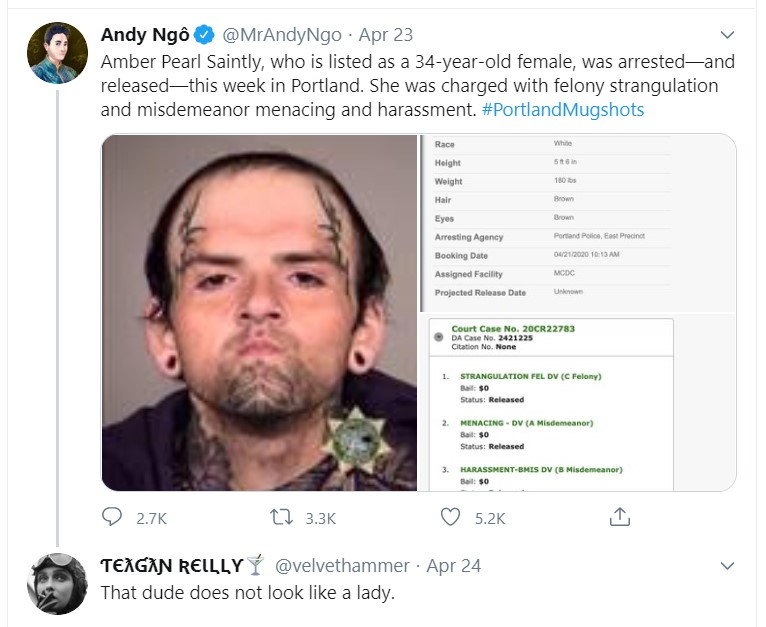
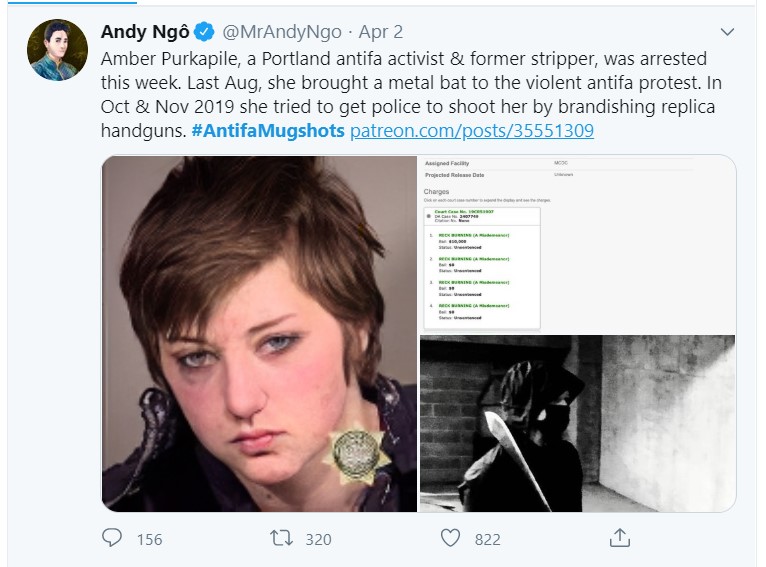
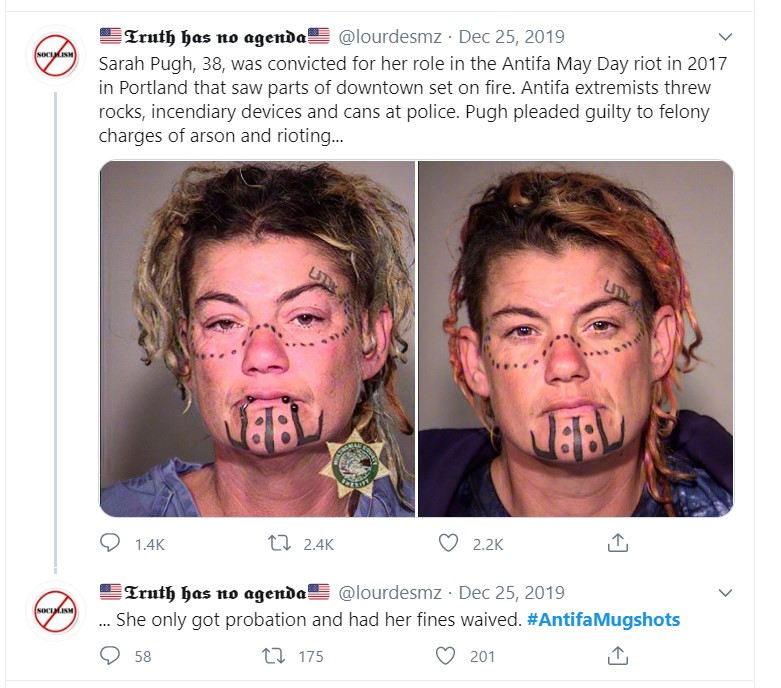
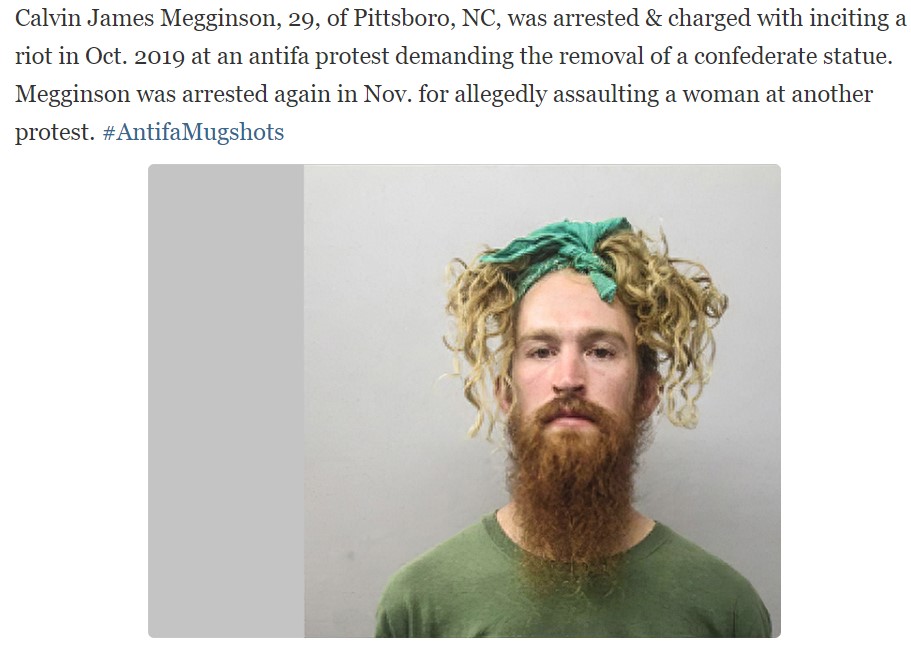
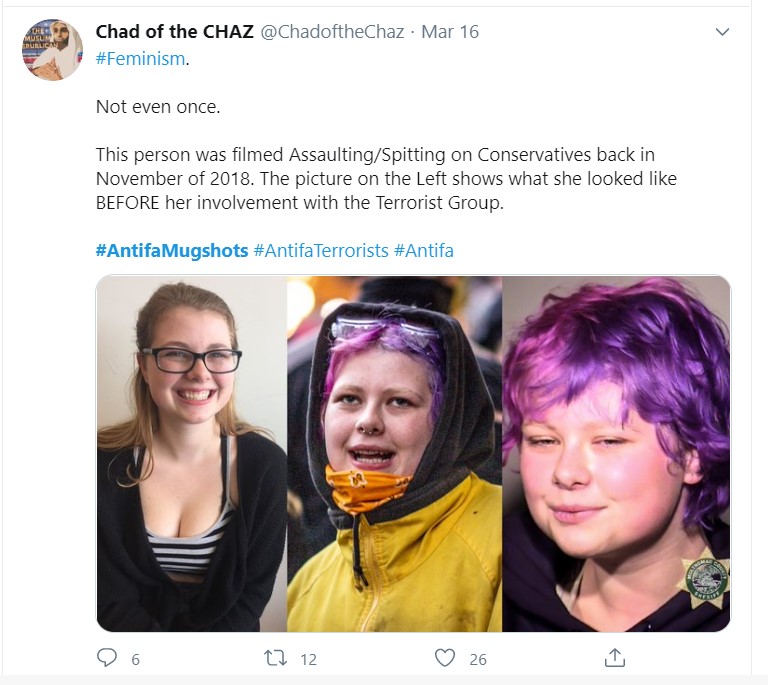
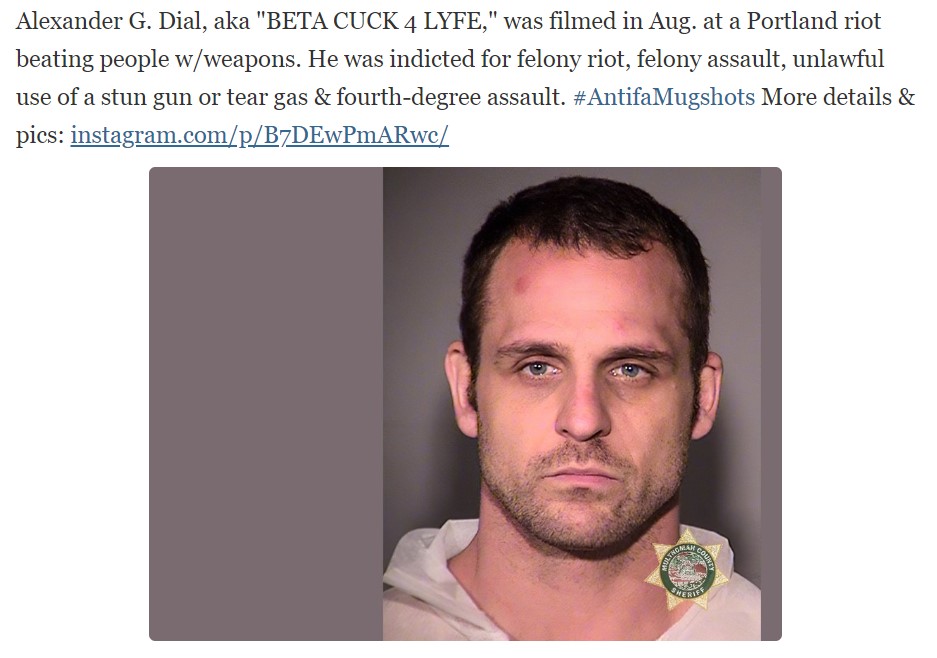
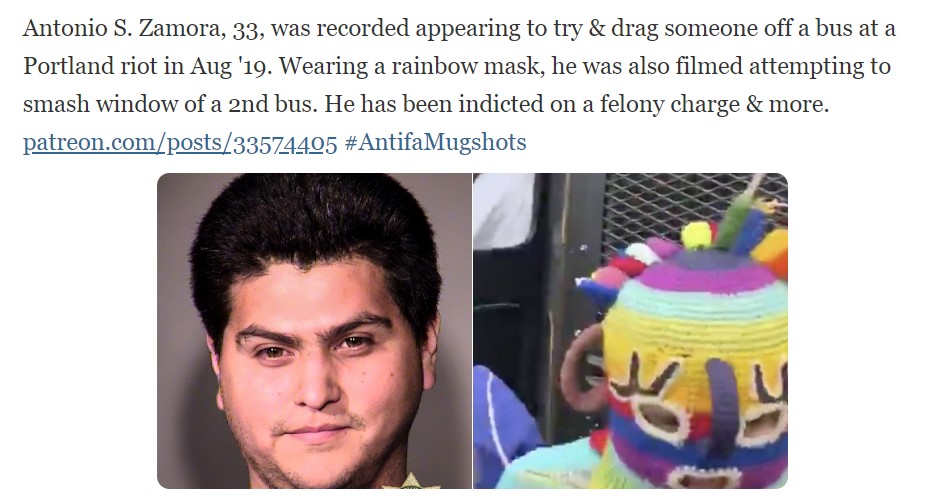
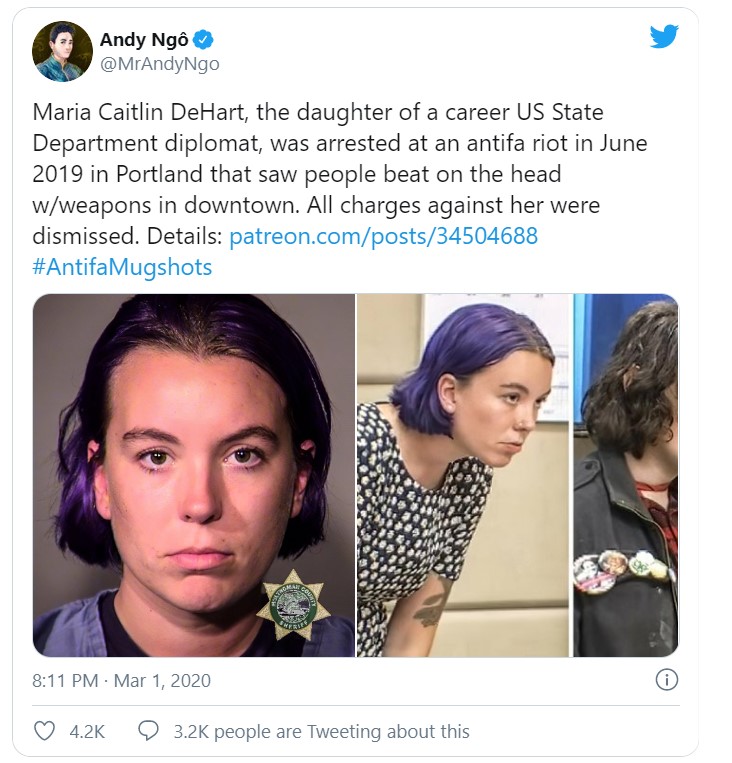
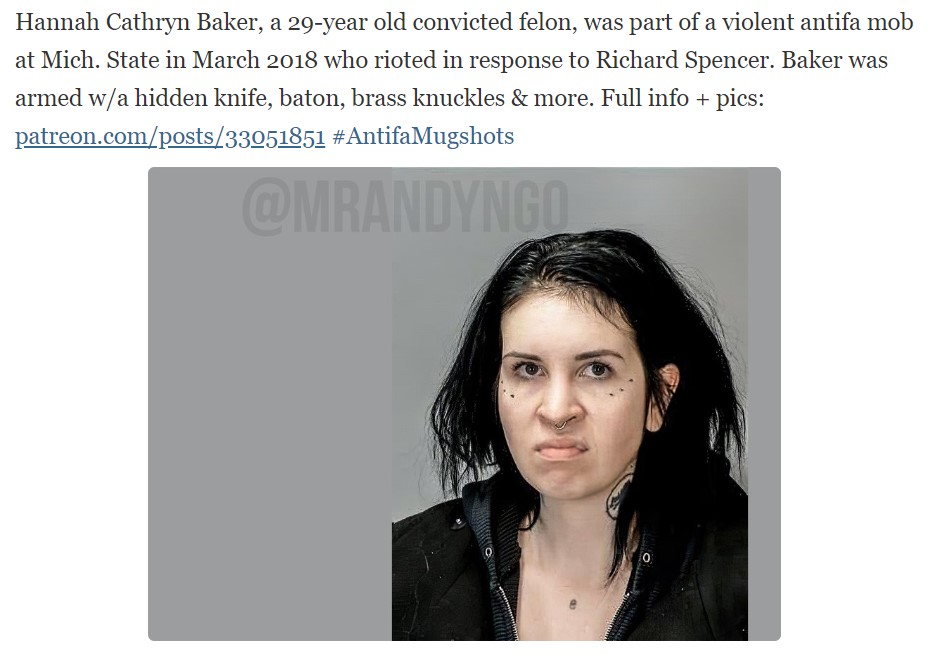
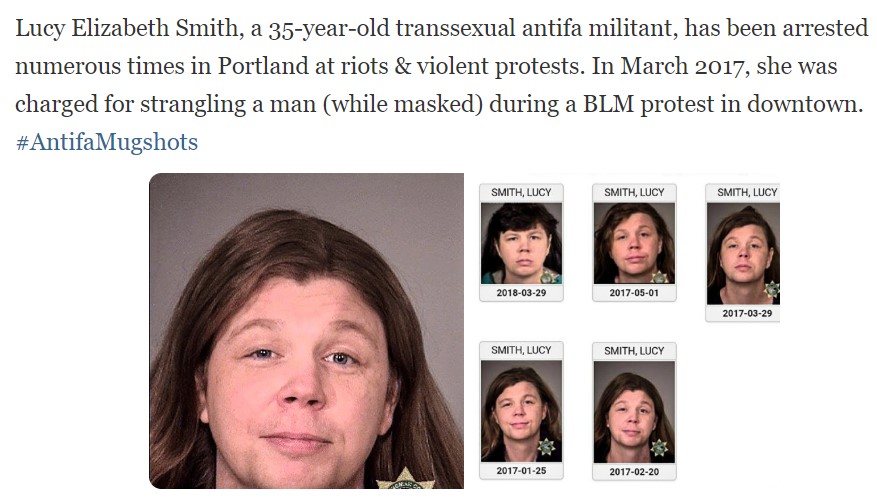
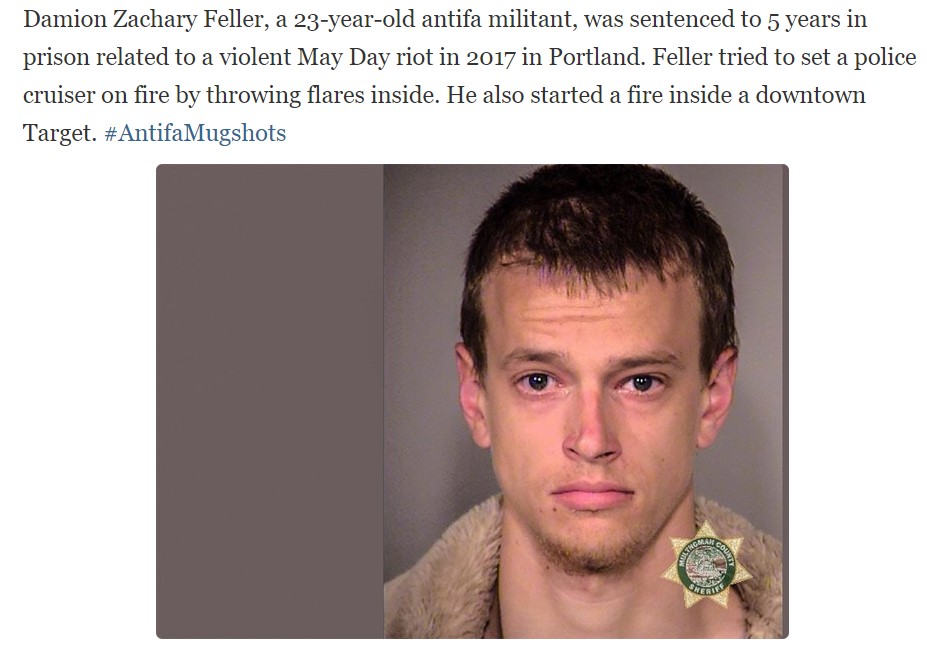
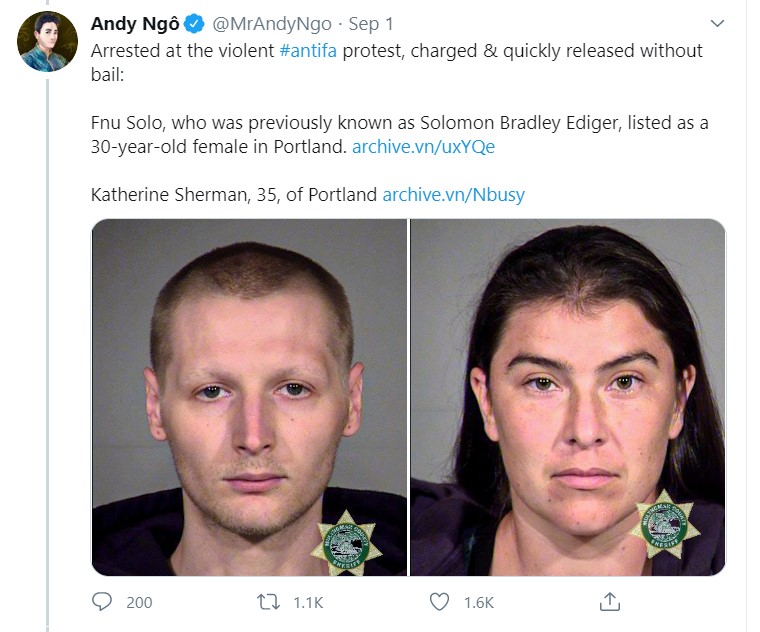
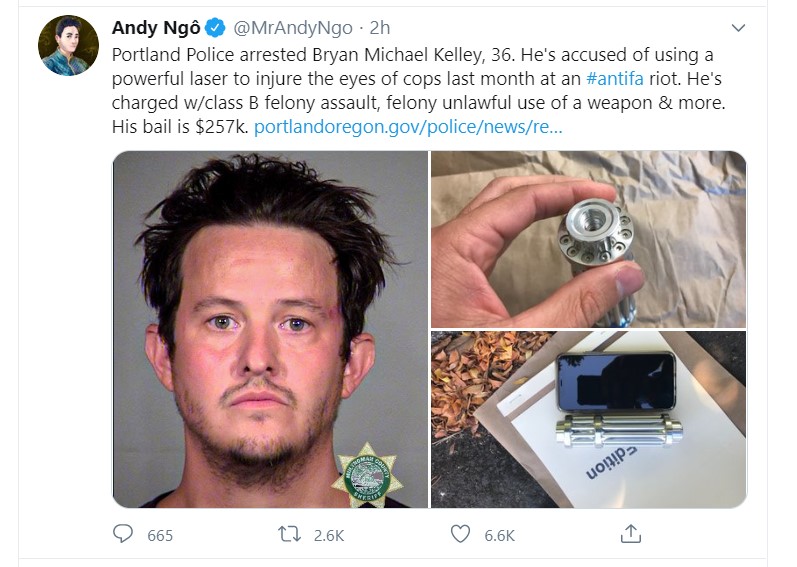
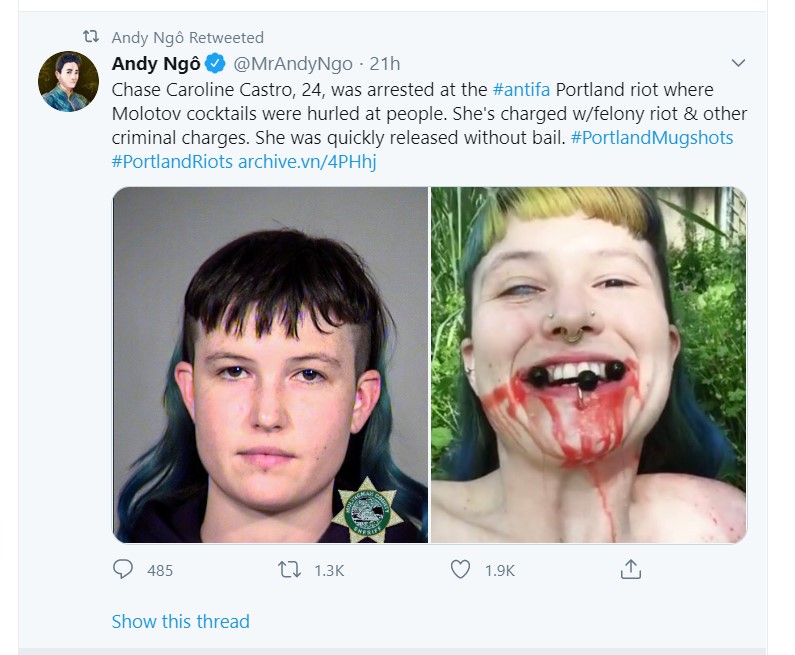
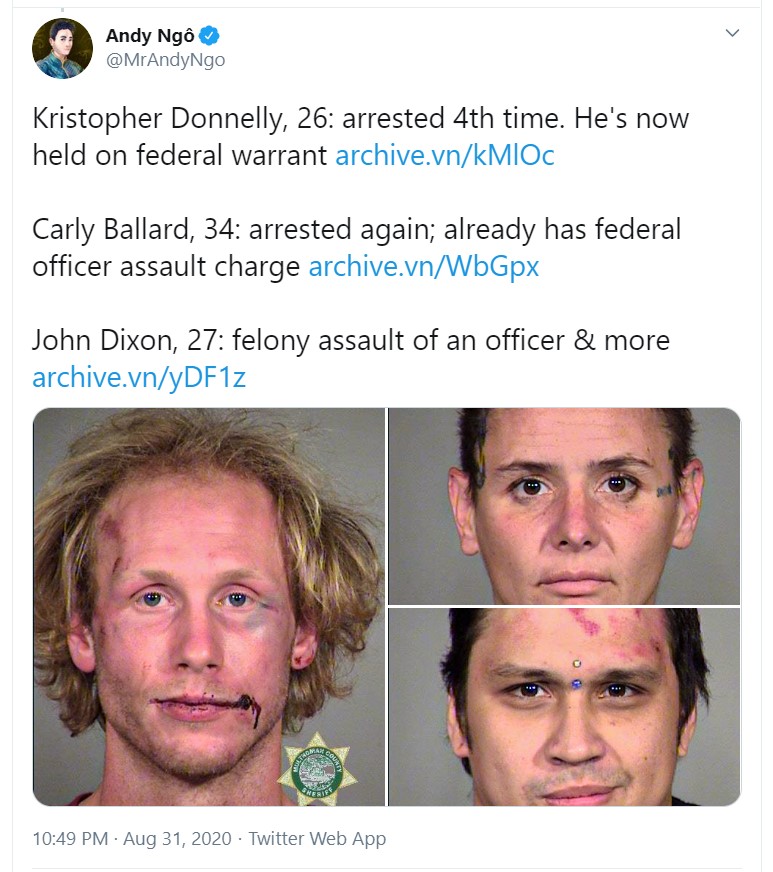
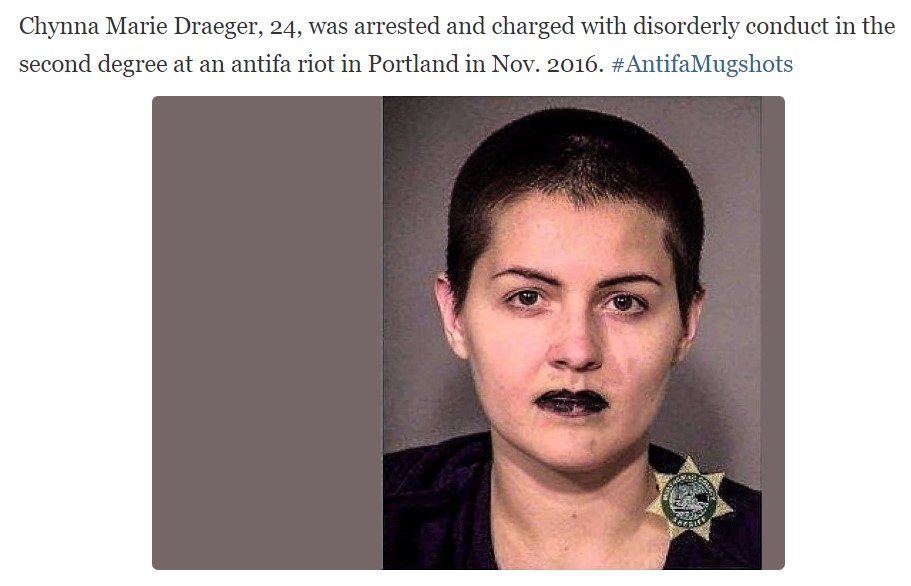
Antifa Mugshots 2


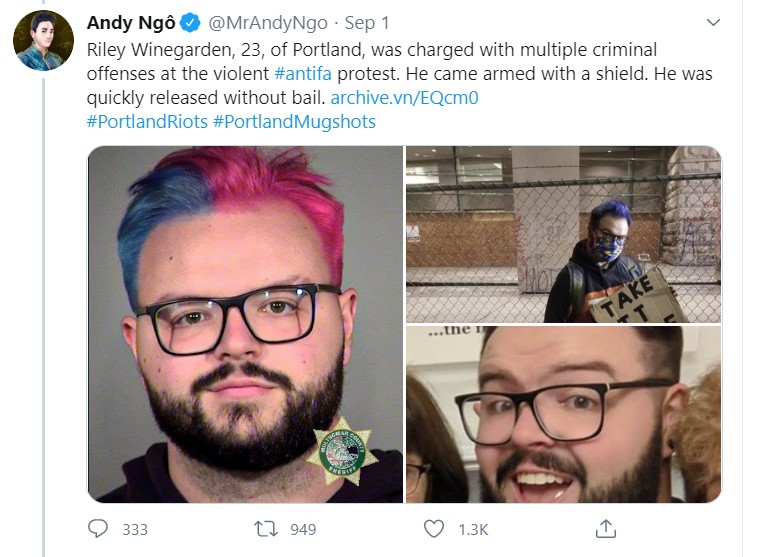
34-year-old Nicholas James Armstrong, aka Nikki Jameson

Meet 34-year-old Nicholas James Armstrong, aka Nikki Jameson, a Seattle guy

NICHOLAS JAMES ARMSTRONG/NIKKI JAMESON IS A SEATTLE-AREA TRANSSEXUAL ANTIFA MILITANT WHO WAS ARRESTED YESTERDAY & CHARGED WITH RECKLESS ENDANGERMENT. SHE ALSO HAS A CRIMINAL RECORD IN IDAHO, WHERE THIS BOOKING PHOTO IS FROM. MORE DETAILS: HTTPS://T.CO/7M1JJSZY2M #ANTIFAMUGSHOTS PIC.TWITTER.COM/VGS4BFPELE

— ANDY NGO (@MRANDYNGO) JANUARY 6, 2020


Does US military training incubate coups in Africa? The jury is still out


Does US military training incubate coups in Africa? The jury is still out

Lee J. M. Seymour

Associate Professor of Political Science, Université de Montréal

Theodore McLauchlin

Associate Professor of Political Science, Université de Montréa 


Military officers overthrew Mali’s government in a coup d’état on August 18, 2020. Among the more worrying aspects of the coup is the fact that a number of the officers involved had received foreign training, most notably from the United States.

In fact, this was the second time in eight years that US-trained officers in Mali had launched a coup. To paraphrase Oscar Wilde, to lose one civilian government to a coup launched by foreign-trained officers may be regarded as a misfortune; to lose two looks like carelessness.

For many commentators with a strong sense of déjà vu, events in Mali reinforce suspicions of a link between US training and coups d'état.

But does US foreign military training provoke coups d’état? The short answer is we don’t know. Until we know more, we should be sceptical of the blanket claim that it does.

Initial evidence, much cited by journalists, suggests a link.

Researchers Jesse Dillon Savage and Jonathan Caverley find that US foreign military training roughly doubles coup risk in recipient states. They argue, plausibly, that foreign training grants recipients credibility and power within the officer corps, which they can then use to rally officers against shaky civilian governments.

What commentators seldom note, however, is that this analysis is confined to just two US training programmes. Yet the US has some 34 different foreign military training programmes involving partners in almost every country in the world.

Our research finds no relationship between US military training and coups, even when looking at “most similar” programmes to America’s International Military Education and Training programme. Researchers at the RAND Corporation, a US think tank, also analysed the link between US training and military coups in Africa. They too cast doubt on the link between the two.

And in a recent dissertation, post-doctoral fellow Renanah Miles Joyce finds that, on average, US training in Africa reduced military involvement in politics and human rights violations.

Training and coups

There are other reasons to be sceptical of the foreign-training-causes-coups hypothesis. First, it should come as no surprise that Mali’s coup plotters received US training. Between 1999 and 2016, US programmes involved 2.4 million trainees in programmes that cost over $20 billion.

Officers in many countries embark on the security equivalent of global training pilgrimages through a transnational circuit of academies, exercises and manoeuvres. This training is often the key to building a successful career.

Consider the curriculum vitae of Mali’s coup plotters. Early reports suggest that Assimi Goïta, who heads Mali’s junta, spent years training alongside US special forces, regularly participated in US Africa Command’s multinational Flintlock exercises, attended an 18-day seminar in Florida, and studied at the American-German Marshall Centre.

His colleagues, Colonel Malick Diaw and Colonel Sadio Camara, the coup’s purported architects, were allegedly training at the Higher Military College in Moscow before returning to Bamako in the days before the coup.

For their part, German officials admitted that several coup plotters had been trained in France and Germany.

This might, at first glance, suggest a connection between foreign training and coups. But, in our view, it simply points to the ubiquity of foreign training in many modern militaries. In addition, because training seeks to strengthen civil-military relations, it tends to occur in coup-prone countries like Mali. History suggests that coups tend to beget coups.

Foreign training may not have much of an effect at all. At one end of the spectrum, large-scale foreign training in Somalia, Iraq, or Afghanistan has met with failure and frustration. Jahara Matisek, an assistant professor in the Department of Military and Strategic Studies at the US Air Force Academy, has likened these foreign-trained forces to Fabergé eggs, “expensive and easily broken”.

At the other end, many activities are limited to a handful of soldiers and last all of a few days. This makes it hard to conclude that foreign training alone triggers major changes in civil-military relations in recipient countries.

Political considerations

If we cannot make a general claim about the training-coup link, perhaps a link can be found in certain situations. For example, the kinds of training that are undertaken, and how training intersects with local political conditions.

Some argue that training focuses too much on technical and tactical expertise to the detriment of democratic norms and military professionalism.

Yet, precisely because improving civilian control of the military is a key objective, these democratic norms feature prominently in curricula. The trouble seems to be that it is difficult to transplant norms, as the US and European Union are learning to their detriment, after years of effort and tens of millions of dollars trying to reform Mali’s security sector.

It’s also the case that norms of military professionalism are ambiguous and open to abuse. As Professor Risa Brooks argues, norms of professionalism in the US are not stopping American military personnel from involvement in politics. And Professor Sharan Grewal provides evidence that US officers’ increasing politicisation rubs off on their foreign trainees.

In the search for more effective security partners, the US and its allies have increasingly focused on elite units, including the special forces unit commanded by Mali’s Colonel Goïta. While this intensive, long-term training can transmit skills, it’s also at risk of encouraging the formation of praetorian guards that threaten democratically elected civilian governments.

Such training may indeed create a dangerous nucleus of discipline, competence and power at the centre of an otherwise dysfunctional state. In other cases, as in Mali’s neighbour Chad, foreign training of the authoritarian regime’s elite forces may help to help defend the regime against coups.

We have heard a lot about foreign trainees in coups. We need to know a lot more about training in the coups that do not happen.

https://theconversation.com/does-us-military-training-incubate-coups-in-africa-the-jury-is-still-out-146800


Monday, 28 September 2020

Racism at Princeton: now you see it, now you don’t


Racism at Princeton: now you see it, now you don’t

https://www.politicsweb.co.za/opinion/racism-at-princeton-now-you-see-it-now-you-dont
John Kane-Berman writes on how best to respond to self-flagellating virtue signalling

Dear oh dear, what a pretty kettle of fish! In October last year Princeton put out a press statement announcing that the university was “extremely proud” to have received a national award for “excellence in diversity and inclusion”.

In July this year, however, several hundred Princeton professors and other academics signed a letter to the university’s president, Chris Eisgruber, in which they stated that “anti-black racism” played a powerful role at Princeton despite its “declared values of diversity and inclusion”. This prompted an admission of guilt from Mr Eisgruber, who wrote in an open letter earlier this month that racism persisted at Princeton and remained “embedded” in its structures.

Have race relations at Princeton deteriorated so badly in the eleven months since it won that diversity award? Or did it accept the award under false pretences? More seriously, has the university been misrepresenting its “non-discrimination and equal opportunity” policies and achievements for several years now?

One person who would like to know is Robert King, assistant secretary in the office of post-secondary education in the United States Department of Education. Two weeks ago he addressed a letter to Mr Eisgruber referring to the latter’s admissions about racism at Princeton.

Since Mr Eisgruber had become president of the university in 2013, Mr King wrote, the institution had received well over $75 million in federal funding. This was in return for repeated assurances that Princeton complied with the Civil Rights Act of 1964, which prohibited anyone who received federal assistance from discriminating on racial grounds.

Princeton, said Mr King, had made many material “non-discrimination” representations to students, parents, and consumers in the market for education certificates. Mr Eisgruber’s admission raised concerns that these representations may have been “false, misleading, and actionable”. He was accordingly asked to provide records, as well as personnel for interviews under oath, and was warned that the secretary for education might consider “an action to recover funds”.

Among the records to be produced are all those relating to the “embedded” and “systemic” racism referred to in Mr Eisgruber’s open letter; representations to the public and various federal agencies about Princeton’s non-discrimination policy; and spreadsheets identifying all persons subjected by Princeton to discrimination.

Mr Eisgruber is asked also to state how many individuals have been subjected to discrimination by any federally-funded programme on the grounds of race, colour, or national origin since January 2015. He must then state whether or not this number is “evidence of systemic or embedded racism”.

How ironic. Here we have a leading university proudly accepting a diversity award, but then shortly afterwards accusing itself of racism, while the federal government says, “Very well, give us chapter and verse, prove your guilt, and, if you do, you’ll have to pay back the money you obtained from us under false pretences”.

Mr King must have chuckled quite a bit as he composed his letter to the university after its “shocking admissions”. He no doubt chuckled even more as he sent copies to the civil rights division of the US Department of Justice “for any additional action they deem appropriate”.  

What of the hundreds who signed the letter demanding that Princeton publicly acknowledge that racism “thrives” on the campus? The letter is signed by professors ranging across dozens of different disciplines – including humanities, languages, social sciences, classics, arts, physical sciences, law, medicine, history, aerospace, energy, oceanic studies, security, economics, and gender and sexuality studies. A dozen or more of the signatories are professors of African American studies.

That so wide a range of academics have joined together to launch so damning an accusation suggests that the entire institution is shot through with racism, including “micro-aggression”, “outright racist incidents”, racism in the “campus make-up and hiring practices”, and “systemic racism”. Presumably they will have no difficulty in providing Mr King and the federal Department of Education with all the necessary spreadsheets and other evidence required.

But questions abound. Why is Princeton only now owning up to this shocking state of affairs? Has Princeton suddenly become a thoroughly racist institution? Or has this been a gradual process? Has Mr Eisgruber been asleep on the job? Has “systemic racism” been there all along, or is it a new discovery? Has Princeton perhaps decided to self-identify as racist?

Have all those hundreds of Princeton profs been totally powerless as racism has embedded itself on the campus, or have some of them been party to this process? Have some of them been happy to take federal dollars for their programmes while keeping shtumm about racism on campus?

Does the university knowingly accept diversity awards it doesn’t deserve, or out of ignorance of what a rotten racist institution it really is? When Princeton tells parents and students and the federal government that it does not discriminate, is this a deliberate lie?

To borrow a phrase from Private Eye, “I think we should be told.”

* John Kane-Berman is a policy fellow at the IRR, a think-tank that promotes political and economic freedom.

South Africa, Face up to the ANC failure


South Africa, Face up to the ANC failure

https://www.politicsweb.co.za/opinion/face-up-to-anc-failure
RW Johnson says at a time of national crisis too many intellectuals are peddling racial diversions

Readers of Business Day were treated this week to an article by Adekeye Adebajo attacking Rhodes University because it “still stubbornly bears the name of its benefactor”. Adebajo, who rather coyly conceals the fact that he benefited from Rhodes' benefaction as a Rhodes Scholar (as did I), then gives a hardly recognizable picture of Rhodes University. It is, apparently, a racist and backward institution where even the “Nigerians, Kenyan, Zimbabwean and Basotho academics (who) were teaching at Rhodes by the 2000s...appeared to continue the Eurocentric traditions of the past, which equated academic “standards” with whiteness.”

It is hard to know why the word “standards” requires inverted commas – every decent university in the world is preoccupied with standards – and this is certainly nothing to do with “whiteness” (whatever that is). Chinese universities are probably the most obsessed by standards and the basic assumption of the system is that the highest academic achievers must rule the country. Clearly, this ruthless meritocracy works. The Chinese mean exactly the same thing by “standards” as do Oxford or Harvard. And look at the world university rankings: the rising stars are almost all from the Chinese diaspora – China, Taiwan, Singapore and Hong Kong. No hang-ups about “whiteness” there. Countries which question what standards are never make it into the rankings at all.

What is entirely missing from Adebajo's account is the simple fact that Rhodes University was something of a miracle: a distinguished and rigorous academy in the middle of the rural Eastern Cape. Segregation was imposed by law but Rhodes, in common with all the English-speaking universities, protested against it and both its students and faculty were always predominantly on the anti-apartheid side. It was no mean achievement to build a university of such calibre in that environment. The fact that Rhodes still bears the name of its benefactor is of purely superficial significance. What matters is just that Rhodes, along with half a dozen other South African universities, were all in the top ten in Africa in 1994. They were a not inconsiderable part of the ANC's inheritance.As is the case with almost everything else, that inheritance has not been maintained. Stellenbosch is probably the only university in South Africa whose standards have not fallen since 1994. And this is really the point. Visitors to St Paul's Cathedral in London, the surpassing achievement of Sir Christopher Wren, will find his epitaph directly under the dome: “Si monumentum requiris circumspice”, which is to say, “If you would seek my monument, look around you”. In the same way, if you want to gauge South Africa in 2020, don't bother about “whiteness” or “Eurocentrism” or “systemic racism” or “toxic masculinity”. These are all mere abstractions. Look around you.

If you do look around you see a country in its thirteenth year of power cuts. How could that happen? Year after year we were assured the problem was in hand, that there was this or that new CEO, a new board, that it was all coming right. This turned out to be all lies. Many of the wonderful new CEOs and board members turned out to be incompetents or crooks. Or both. It turns out that in fact there was continual political interference, instructions to keep the lights on at all costs and to hell with maintenance – as childish as that.

Huge amounts of money were stolen, overpriced BEE coal contracts bled the company dry, many skilled engineers and managers were replaced by people without skills, lots of surplus workers were put on the payroll and there was “no consequence” management, meaning that you could get away with anything. It was a festival of corruption and incompetence and it was allowed to go on year after year. It has been a huge South African carnival and it says a good deal about the state of the country.

Eskom had been one of the best run utilities in the world, producing the cheapest electricity and with large surplus capacity. That was the inheritance and the ANC trashed it. But the same was done with the civil service. It was also done with the water industry with the result that there are now water-shortages country wide and Port Elizabeth – one of the country's great metropoles – is now on the verge of dying of thirst. Equally fundamental, the railways have all but collapsed. Rolling stock, cables and rails are being looted so badly that pretty soon we may not have a railway at all.

Ramaphosa chanced one ride on a train and was so shaken by the experience that he has not ventured there again. The railways were a great nineteenth century achievement and they have been trashed. But so have the airlines – SAA and SA Express – a great twentieth century achievement.

The list goes on. At least two thirds of the country's municipalities are effectively bust. Many small towns are dying as a result. The Land Bank has gone bust – again. The Post Office can't pay salaries or pension fund contributions. The same is true of Denel. The SABC is on its knees and probably bankrupt. The police have been trashed and so has the judiciary. Sanral reports that there is a great big hole where the money from e-tolls should have been and that the result may well be a failure to maintain the national highways.

The Eastern Cape, heartland of the ANC, is dying: its hospitals and schools don't work, there is not enough water or electricity, corruption rules everywhere. No wonder huge numbers of the province's residents are fleeing to the Western Cape where they are often the driving force behind land invasions. If you want to talk about Rhodes University the real story is the death of Grahamstown (Makhanda). It was a beautiful little town but it is close to ruin. Again, look around you. The only thing that keeps the country going is the private sector.

What is the significance of all this? Think of Julius Nyerere, at Zimbabwe's independence, telling Mugabe that “You have a jewel here. Don't spoil it.” The fact is that the liberation movements of Africa's developed South, of Zimbabwe and South Africa, have brought a tide of ruin upon their countries. Other Africans could only envy them their inheritance. There is less to envy now.

This actually has a world historical significance. As it sinks in – in black America, in black Britain, in Africa, to black people everywhere – that the whole Mandela experiment has failed, that the liberation movements have comprehensively failed to sustain developed economies, that such governments have been an utter disaster for their black populations – there will be a huge anger, disappointment and depression. So much was riding on the success of these countries and their failure will let down black people everywhere. No amount of excuses about “the apartheid inheritance” will do. The really big, sad truth is that the ANC has let the whole black world down.

As future generations look at this disaster, one question they will ask is “But what were African intellectuals saying while all this ruin went on? Did they not speak up? Did they not see what was happening?” They will be incredulous when they are told that actually many black intellectuals were more concerned about such trivia as whether Rhodes University had changed its name, with attacking statues of Rhodes, or with getting angry about the wording of shampoo advertisements (however badly put). You can imagine the incredulity: statues? shampoo? re-naming? advertisements? While the country burned? What on earth was wrong with them?

This last is a good question. Part of the problem, of course, is that already many black people find it almost unbearably painful to face up to what a disaster majority rule under the ANC has turned out to be. It takes considerable intellectual courage for a black person to look at that full in the face – and there is great political pressure on him or her not to do this, to look away or to scour the landscape for other scapegoats (e.g. “whiteness”). But in the end, of course, the sheer weight of reality will break through. Already, in focus groups we did before the last election, we found Africans spontaneously suggesting that it would be good to have white rule again, at least for a while.

The sad thing is that the wrong conclusions will then be drawn: that “Africans can't govern”, the phrase that so haunted Mbeki. That there is something intrinsically wrong, that democracy in Africa is hopeless. Already there is no shortage of whites drawing entirely racist conclusions of this kind. Yet look next door at Botswana, at Mauritius, at Rwanda or even at Ethiopia. All these countries have recently achieved enormous progress. One can't help feeling that one reason why the ANC won't want Ethiopian Airways to take over SAA is precisely the symbolism of South Africa falling behind what was a backward country not long ago.

One can't help but feel that there is also a cultural problem. The long period of struggle against white rule left a culture in which Africans were always perceived as righteous, as suffering and as victims - not as masters of their fate. This led not only to a huge sense of entitlement but to a sort of victim psychosis, to a refusal to take responsibility and always a frantic search to blame others for anything that went wrong.


This in turn led to a culture of boycotts and sit-ins, of protest and defiance, of always claiming victimhood even when staging aggressive strikes or occupations. It was always, as in Laurel and Hardy, “look what you've made me do now”.

This whole posture is quite antithetical to any notion of calmly sitting down and asking “Why, then, did the ANC fail so badly? Why have poverty and inequality increased so much under ANC rule? How come the ANC campaigned for “Jobs, jobs, jobs” but then saw unemployment quadruple? Why was Bantu Education then better than township education now? Why were black hospitals better then?” And so on. But these are the real questions.

One problem is that this culture of evasion and victimhood, of rhetorical assertion, of entitlement and blaming – is wonderfully attractive. It has often seen people with few resources win their point and even attract the halo of martyrdom and heroism. But, rather like Gandhi's passive resistance, it depends utterly on there being an audience with liberal instincts and qualms. It would get nowhere in China where tanks roll over dissidents, where trade unions are illegal and where attempts to strike are heavily punished.

An interesting part of South African life is the ease with which foreigners adapt to these norms. A good example was recently seen in Cape Town with the prolonged refugee protest in Greenmarket Square and their occupation of the Central Methodist Church which the Rev. Alan Storey most unwisely offered to them as a sanctuary. The classic liberal audience was in attendance, not only in the shape of well-meaning churchmen and the usual crazy NGOs but in a city council which initially offered to re-settle them.

But all such offers were furiously rejected: the refugees (many of whom actually had homes in Cape Town and were not, as they claimed, homeless) insisted that they were the victims of South African xenophobia, that they did not want to stay in South Africa nor return to their home country (in most cases they came from the DRC): what they wanted was to be flown to a third country. Air tickets to Canada, in other words.

This long-running drama ended in great damage and loss to the Methodist church, an assault on Archbishop Thabo Makgoba and other religious leaders, considerable economic damage to the stallholders of Greenmarket Square, violent conflict within the refugee group (which split into two) and, ultimately, the arrest of both the refugee leaders. One was accused of making death threats to a Human Rights Commissioner while the other was accused of a variety of misdemeanours including assault and robbery. In short, a good time was had by all.

What was fascinating, however, was the wholesale adoption of South African struggle tactics. Aggressively occupy other people's property – while insisting that you are victims – and make sky-high demands, then hang in hard, using violence to “defend” oneself while simultaneously accepting charity from NGOs mad enough to give it.

The extraordinary thing is that back home in the DRC none of these “refugees” (mainly just illegal immigrants without official refugee status) would have dreamt of using any of these tactics. Anyone who behaved like that in Kinshasa – even now that Mobutu has gone – would very quickly find themselves beaten up, jailed or facing something indescribably worse, for there is no liberal audience there, no crazy NGOs and not even many soft-touch divines.

That is, these self-described refugees, having studied the South African situation and seen what worked here, had adopted classic struggle tactics. They got it pretty much right though the air-tickets to Canada was a naive touch. The locals would have opted for something more realistic like a bag of cash and a humble apology from the divines and the Cape Town city council, with the settlement celebrated by a special forgiveness service in St George's Cathedral.

Something rather similar has clearly happened to Adekeye Adebajo, for his article on Rhodes University follows the classic South African pattern of hunting for racism, always looking back to apartheid and obsession with pure symbolism. Yet Professor Adebajo is a Nigerian and this is not Nigerian behaviour at all. On my visits to Lagos or Abuja I have always found Nigerians refreshingly direct, down to earth and concerned very much with practicalities, not with symbolism.

The Nigerian intellectuals I met laughed at the notion that anyone could blame British colonialism for Nigeria's ills today and often expressed some admiration for the way Britain had governed Nigeria. Many Nigerians seemed to regard black South Africans as almost mad in their obsession with race, which is not a subject that bothers most Nigerians.

In other words, the influence is the wrong way round. Instead of learning our bad habits we need people like Professor Adebajo to be more Nigerian. The wonderful thing about discussions with Nigerians, I found, was that they were already so completely decolonised in their minds that they never imagined there was any further need for decolonisation. They knew who they were and were wholly unbothered by “whiteness”. South Africans, on the other hand, are still not at all decolonised. They are still completely gripped by the symbols of colonialism, still battling away against the memory of a man who died in 1902, still concerned that things are named after him. Most Nigerians I know would simply laugh at this.

RW Johnson

South Africa: Farm attack, horrific scenes of violence as couple brutally tortured, Bronkhorstspruit


South Africa: Farm attack, horrific scenes of violence as couple brutally tortured, Bronkhorstspruit

Oorgrens veiligheid

0
Farm attack, horrific scenes of violence as couple brutally tortured, Bronkhorstspruit

A farm attack took place on 27 September 2020, between 17:00 and 18:00, in Spitskop, Bronkhorstspruit, in the Gauteng province of South Africa. Six attackers overpowered a 64 year old man in his workshop, after walking up to the building as the property is not fenced in.

His wife (53) heard a Commotion and went to investigate. She was also overpowered and assaulted and tied up. The couple were then horrifically tortured by the attackers.

The man’s one leg was cut with an angle grinder. The woman’s nose was pinched in a vice grip and twisted as they requested a large sum of money they thought the couple had. The couple sustained terrible injuries, the man’s are life threatening, he also sustained skull and facial fractures and will be operated on, he was taken with a helicopter to a Johannesburg hospital, and the woman via ambulance to Witbank, where she is currently undergoing a brain scan.

Jewelry and two firearms were taken from the safe and at least two flat screen TVs as well as other valuables and the couples cell phones were loaded on the man’s Hilux bakkie.

The attackers then fled in the vehicle in the direction of the R104. The couples son had arrived home which probably alerted the attackers. His mother had managed to untie herself and ran to her son to get help. The SAPS, ambulance service and community was called and responded quickly.

There is a lookout for the robbed vehicle, a white2014 D4D Hilux bakkie, single cab, Reg YSH728GP.

The police are investigating the attack but there have been no arrests.

Information supplied by Oorgrens veiligheid

South Africa Today – South Africa News


Sunday, 27 September 2020

WE Charity controversy prompts examination of group’s overseas footprint

By Jacob Serebrin, The Canadian Press — Sep 27 2020
https://www.nationalnewswatch.com/2020/09/27/we-charity-controversy-prompts-examination-of-groups-overseas-footprint/#.X3B_ZsJKiUl


The controversy around WE Charity in Canada is opening the door to a public discussion about whether WE — and groups like it — actually help the African communities where they operate.

Firoze Manji, the former Africa program director for Amnesty International, said one of the big problems with groups such as WE is that they aren't accountable to the people they claim to serve.

"They are accountable to self-appointed boards," said Manji, who is originally from Kenya and is now a professor at Carleton University's Institute of African Studies. "The mythology is that they are going to fight poverty. The problem with that proposition, although it sounds very good, is that they don't deal with the causes of impoverishment."

On Sept. 9, WE Charity said it would wind down its Canadian operations, but its for-profit affiliate, ME to WE, will remain active, as will WE Charity in the United States and the United Kingdom.

The charity's programs in countries such as Kenya, Tanzania and Ecuador will continue "as long as possible" the organization has said.

The precise extent and impact of those overseas programs is not easy to discern. It is clear from financial statements released by the organization and tax filings that WE's soon-to-be-shuttered Canadian programs are by far the charity's largest. In 2019, WE Charity Canada had total revenue of $65.9 million and expenses of just under $68.2 million.

In some years, its U.S. arm has sent more money to Canada than it sent to any country in Asia, Africa or Latin America or spent on domestic programming.

In the 2019 financial year, for example, U.S. tax filings show WE Charity U.S. spent US$7.6 million on domestic programs and US$18.8 million on "grants and other assistance to foreign organizations" — of which US$10.8 million went to WE Charity Canada.

In 2018, WE Charity U.S. spent US$5.8 million on domestic programing with another US$6 million going to Canada. That year US$8.5 million went to Asia, Africa and Latin America.

WE Charity said the money was sent to the Canadian office to reimburse it for work done on programs that were delivered in the United States. Staff in the organization's Global Learning Centre in Toronto "create learning curricula, organize and deliver digital programming, carry out program development, and conduct measurement and evaluation work for operations in both Canada and the U.S.," WE said in an emailed response to The Canadian Press.

Outside of North America, Kenya was the biggest recipient of money from WE Charity U.S.

WE did not make a representative available for an interview, but in an emailed response it included a quote attributed to the governor of Kenya's Narok County. "I can confidently say that no NGO has done more to benefit Kenya than WE Charity," Samuel K. Tunai is quoted as saying.

Other Kenyans have a different impression.

Karuti Kanyinga, the director of the Institute for Development Studies at the University of Nairobi said he isn't familiar with WE Charity or Free the Children, the organization's former name.

With more than 10,000 NGOs operating in Kenya, he said it's "difficult to keep track of what any of them is doing, except if it is involved in huge advocacy work or is one of the big ones with a lot of resources to impact change at the national level."

WE Charity doesn't appear on a list of the 50 NGOs that spend the most on programs in Kenya, released in the 2018-19 annual report of Kenya's Non-Governmental Organizations Co-ordination Board. All NGOs operating in Kenya are required to submit reports to the board.

WE said allocations from its international program "are deployed in several ways, often directly from Canada, such that the spending may not show up as coming from the charity in Kenya itself." The organization said it also purchases medical supplies in Canada and the U.S. to send to Kenya.

U.S. tax filings for 2019 don't show the purchase of medical supplies by the charity's U.S. arm, while filings for 2018, 2017 and 2016 show the purchase of medical supplies for Haiti, but not any other country. That sort of information for WE Charity Canada is not publicly available.

Those same tax filings show WE having just one employee, contractor or agent in six of the seven countries outside North America where it has operations. In the seventh, Ecuador, none is listed. Canada was listed as having more than 200 employees at the time.

WE said it appoints a senior employee in each country to lead and oversee local operations, but it said the tax filings don't tell the whole story.

"To be clear, the team is not just a 'single employee' in each country, but rather one formal representative is assigned per country to be responsible for oversight and working with local staff," it said.

Other Kenyans say WE — and its for-profit affiliate ME to WE — are better known for bringing North American and European Celebrities to the country than for development work.

Grace Kerongo an editor at The Star, a national newspaper based in Nairobi said she only heard about WE — then known as Free the Children — because of the celebrities it brings to Kenya.

"The impact of charitable activities is not that felt or known, besides what's on their website," she said in an email.

One of WE's focuses has been so-called voluntourism, a practice where people from countries like Canada — usually youth — pay to volunteer overseas. ME to WE, WE Charity's for-profit affiliate, is an operator of voluntourism trips.

There have been calls in several African countries to ban the practice, which Rosebell Kagumire, a Ugandan writer and activist, said is based on racist stereotypes. Unskilled young people who come to African countries thinking they can solve local problems are "high on white supremacy," Kagumire said.

WE didn't answer specific questions about claims that voluntourism is racist, but it defended the practice.

"Like any aspect of international development, offering trips to developing communities can be done poorly, or provide a great benefit to both communities and travellers alike," the organization said. "When done properly and in partnership with communities, trips can be beneficial by providing organizational transparency, allowing for cultural immersion and by creating local jobs through tourism and hosting of travellers."

Kagumire maintains that voluntourism doesn't help to address the larger systematic problems that have led to widespread poverty in Africa: "It's not like people can't build their own schools, but even if you build it, what is the system that's prevailing?"

Similar concerns to Kagumire's have been raised in Canada.

In her 2017 master's thesis, which analyzed the way ME to WE markets to Canadian youth, then University of Ottawa student Kelsey Buchmayer found that the organization reinforced negative stereotypes about the people in the countries where it organizes trips.

"ME to WE's brand of voluntourism positions ways of 'saving' and 'helping' people at the expense of more sophisticated development approaches that foster partnership, sustainability, long-term support, and capacity building," she wrote.

Without strong government policies around education and community mobilization, she added, "the very nature of the 'development work' completed by ME to WE is problematic and unlinked to development outcomes."

This report by The Canadian Press was first published Sept. 27, 2020.


Recommend this post and follow TCW
https://disqus.com/home/forum/the-coconut-whisperer/


Thursday, 24 September 2020

Finland deploys coronavirus-sniffing dogs at main airport

SEPTEMBER 23, 2020, by Jari Tanner
https://medicalxpress.com/news/2020-09-finland-deploys-coronavirus-sniffing-dogs-main.html

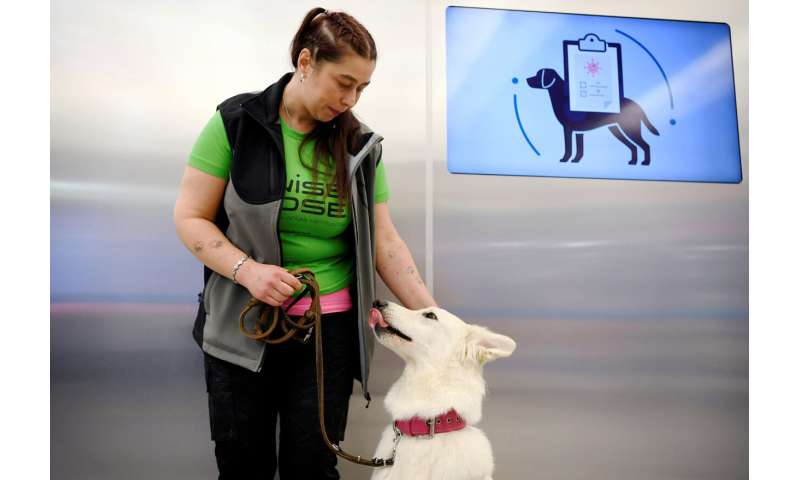
Sniffer dogs named K'ssi, left and Miina react with trainer Susanna Paavilainen at the Helsinki airport in Vantaa, Finland, Tuesday, Sept. 22, 2020. Four corona sniffer dogs are trained to detect the Covid-19 virus from the arriving passengers samples at the airport. 
(Antti Aimo-Koivisto/Lehtikuva via AP)

Finland has deployed coronavirus-sniffing dogs at the Nordic country's main international airport in a four-month trial of an alternative testing method that could become a cost-friendly and quick way to identify infected travelers.

Four dogs of different breeds trained by Finland's Smell Detection Association started working Wednesday at the Helsinki Airport as part of the government-financed trial.

"It's a very promising method. Dogs are very good at sniffing," Anna Hielm-Bjorkman, a University of Helsinki professor of equine and small animal medicine, said.

"If it works, it will be a good (coronavirus) screening method at any other places," she said, listing hospitals, ports, elderly people's homes, sports venues and cultural events among the possible locations where trained dogs could put their snouts to work.

While researchers in several countries, including Australia, France, Germany the United States, are also studying canines as coronavirus detectors, the Finnish trial is among the largest so far.

Hielm-Bjorkman told The Associated Press that Finland is the second country after the United Arab Emirates—and the first in Europe—to assign dogs to sniff out the coronavirus. A similar program started at Dubai International Airport over the summer.

Sniffer dog E.T. with trainer Anette Kare at the Helsinki airport in Vantaa, Finland, Wednesday Sept. 22, 2020. Finland has deployed coronavirus-sniffing dogs at the Nordic country's main international airport in a four-month trial of an alternative testing method that could become a cost-friendly way to identify infected travelers.
 (Antti Aimo-Koivisto/Lehtikuva via AP)

Passengers who agree to take a free test under the voluntary program in Helsinki do not have direct physical contact with a dog.

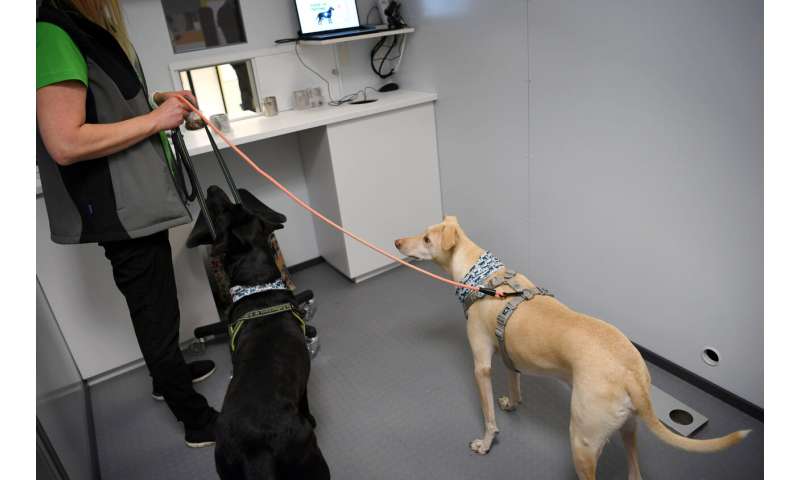
They are asked to swipe their skin with a wipe which is then put into a jar and given to a dog waiting in a separate booth. The participating animals—ET, Kossi, Miina and Valo—previously underwent training to detect cancer, diabetes or other diseases.

It takes the dog a mere 10 seconds to sniff the virus samples before it gives the test result by scratching a paw, laying down, barking or otherwise making its conclusion known. The process should be completed within one minute, according to Hielm-Bjorkman.

Sniffer dogs Miina, left, and K'ssi at the Helsinki airport in Vantaa, Finland, Wednesday Sept. 22, 2020. Finland has deployed coronavirus-sniffing dogs at the Nordic country's main international airport in a four-month trial of an alternative testing method that could become a cost-friendly way to identify infected travelers. 
(Antti Aimo-Koivisto/Lehtikuva via AP)

If the result is positive, the passenger is urged to take a standard polymerase chain reaction, or PCR, coronavirus test, to check the dog's accuracy.

Timo Aronkyto,, the deputy mayor of Vantaa, the capital region city where the airport is located, said the program is costing 300,000 euros ($350,000) - an amount he called "remarkably lower" than for other methods of mass testing arriving passengers.

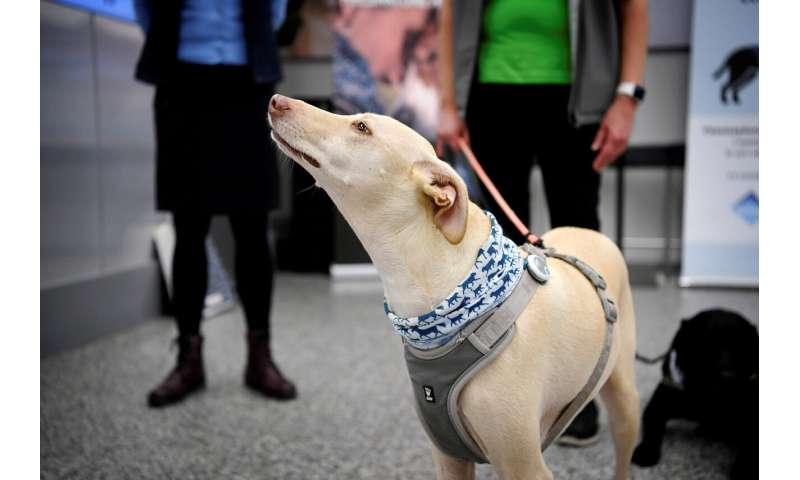
Sniffer dog K'ssi at the Helsinki airport in Vantaa, Finland, Wednesday Sept. 22, 2020. Finland has deployed coronavirus-sniffing dogs at the Nordic country's main international airport in a four-month trial of an alternative testing method that could become a cost-friendly way to identify infected travelers. 
(Antti Aimo-Koivisto/Lehtikuva via AP)

The four sniffer dogs are set to work at the airport in shifts, with two on duty at a time while the other two get a break.

"Dogs need to rest from time to time. If the scent is easy, it doesn't wear out the dog too much. But if there are lots of new scents around, dogs do get tired easier," Anette Kare of Finland's Smell Detection Association—also known as Wise Nose—said as she gently patted ET, her white shepherd.


Recommend this post and follow TCW
https://disqus.com/home/forum/the-coconut-whisperer/