Showing posts with label Business. Show all posts

Thursday, 28 October 2021

Germans should change course on energy policy to avoid having to heat homes with firewood, as Putin once joked – Knorr-Bremse boss


Germans should change course on energy policy to avoid having to heat homes with firewood, as Putin once joked – Knorr-Bremse boss


Germans should change course on energy policy to avoid having to heat homes with firewood, as Putin once joked – Knorr-Bremse boss
Berlin should be very careful when it comes to energy policy, warns Klaus Mangold, chairman of the Supervisory Board of German manufacturer Knorr-Bremse. He says Germany should think about returning to nuclear power.

“We cannot jump out of nuclear and stop being active in coal, and then wonder why energy prices are going up,” Mangold told RT on the sidelines of the 14th Eurasian Economic Forum in Verona, Italy. “I believe that nuclear will be important for the future in Europe."

While there is a need to intensify renewables and save energy, oil and gas must remain part of Germany’s energy mix going forward, he affirmed. This is where Russia will play an important role, as Europe’s reliable energy supplier.

“Sometimes we have a paranoia against Russia, which is really stupid. Russia has always been a reliable partner for us,” Mangold said. Blaming Moscow for the current energy crisis is baseless, as Gazprom has already supplied 40% more gas than last year. 

Europe needs Russia. Germany needs Russia.

He argued that Germany had followed the wrong energy strategy, abandoning nuclear power in favor of solar and wind. Though outgoing Chancellor Angela Merkel originally opposed the plan to shutter nuclear power plants, the 2011 meltdown in Fukushima, Japan changed her mind. Eight atomic plants have already been shut down, and the remaining nine are scheduled for closure in 2022.

If the strategy is changed, investments in energy could lead to lower prices and better supply in about five years’ time. Until then, however, domestic users will need to consider reducing their consumption, Mangold argued, so as to avoid being forced to heat their homes with firewood, as Russian President Vladimir Putin once joked.


https://www.rt.com/business/538732-germany-nuclear-russia-gas/

Thursday, 7 October 2021

Dwindling Zuckerberg


Dwindling Zuckerberg

Dwindling Zuckerberg - Sputnik International, 1920, 06.10.2021

Tuesday, 24 August 2021

McDonald's has run out of milkshakes in the UK


McDonald's has run out of milkshakes in the UK

London (CNN Business)McDonald's has been forced to stop selling milkshakes and bottled drinks at nearly 1,300 restaurants in the United Kingdom as Brexit-related staff shortages and supply chain delays caused by the pandemic continue to slam companies.

"Like most retailers, we are currently experiencing some supply chain issues, impacting the availability of a small number of products. Bottled drinks and milkshakes are temporarily unavailable in restaurants across England, Scotland and Wales," a spokesperson for the fast food giant said in a statement on Tuesday, confirming news first reported by the Independent.
"We apologize for any inconvenience, and thank our customers for their continued patience. We are working hard to return these items to the menu as soon as possible," the spokesperson added.
    McDonald's (MCD) is the latest in a series of UK companies to see its supply chain strained because of the pandemic and Brexit, which has contributed to a shortage of workers and introduced new trade barriers with the European Union. Last week, Nando's closed 45 of its UK restaurants due to a shortage of the chain's signature peri peri chicken.
      The coronavirus pandemic has heaped pressure on food producers and restaurants who have struggled to find enough workers. In recent months, staff shortages were exacerbated by UK rules that require people to isolate if they come into contact with someone who has been infected with the coronavirus.
      New rules came into effect last week, meaning that fully vaccinated people in England are no longer legally required to isolate if they come into close contact with a positive COVID-19 case.
      But other factors mean the problem hasn't gone away.
      A shortage of truck drivers has contributed to supply disruption in Britain. The Road Haulage Association says the United Kingdom is short around 100,000 truck drivers, 20,000 of whom are EU nationals that left the country after Brexit. There's also a shortage of workers in other parts of the food supply chain.
      James Hook, who runs farms that supply one third of the chickens sold in the United Kingdom, told CNN Business in June that his company had double the usual number of vacancies. Last week, the British Poultry Council blamed Brexit for staff shortages that could mean a shortage of Christmas turkeys.
      Ranjit Singh Boparan, founder of 2 Sisters Food Group, said last month that his company has experienced a 15% labor shortage across its workforce of 16,000 due to a "perfect storm" of Brexit, the pandemic and government inaction in the face of a crisis.
      "The operating environment has deteriorated so profoundly I can see no other outcome than major food shortages in the UK. Supply of chicken and turkey is under threat," Boparan said in a statement.
      Dairy producers have also been under pressure. Arla, which supplies milk to UK supermarkets, told the BBC in July that the company has been experiencing driver shortages since early April.
      "Our assessment is that we're in a driver shortage crisis and therefore we're asking for the industry and government to work together to recognize we're in a crisis and actually address the issue," managing director Ash Amirahmadi told the BBC.
      Supply chain blockages are harming the broader UK economy.
        UK companies experienced a sharp slowdown in output growth in August, according to data published Monday by IHS Markit. Companies reported widespread constraints on business activity due to staff shortages and supply chain issues, with damage being done in both the manufacturing and services sectors.
        "Analysis of comments provided by survey respondents suggested that incidences of reduced output due to shortages of staff or materials were fourteen times higher than usual and the largest since the survey began in January 1998," IHS Markit said.
        https://edition.cnn.com/2021/08/24/business/mcdonalds-milkshake-shortage-uk/index.html

        Thursday, 12 August 2021

        Progressives’ 'Green Energy' Boondoggle Based on Fantasy and Greed


        Progressives’ 'Green Energy' Boondoggle Based on Fantasy and Greed

        The unholy alliance of Big Business and Big Government.


        Bruce Thornton 

        Last Thursday Joe Biden posed for a photo op with representatives from automobile manufacturers. They gathered there to mark the Biden administration’s plan to raise the miles-per-gallon standard that gasoline powered vehicles must achieve––52 MPG by 2026. The compensation for automakers will comprise more regulatory credits for carmakers and subsidies for electric vehicle (EV) consumers, which will lead to higher prices for trucks and SUVs to offset their losses on EVs. This means consumers of those popular vehicles will be subsidizing EV drivers. And more taxpayer money will go to increasing available electricity, providing more and faster charging stations, and improving battery capacity.

        As the Wall Street Journal editorialized, “Behold Big Business colluding with Big Government to grab subsidies and raise consumer prices,” a form of “corporate socialism, or state capitalism.” This unholy alliance calls to mind the “military-industrial complex” Dwight Eisenhower warned about in 1961, a warning still pertinent today.

        At least during the Cold War a nuclear-armed Soviet Union posed an existential threat that justified cooperation between politics and the armaments industries. Today, the purveyors of anthropogenic, catastrophic global warming (ACGW) ––the more accurate label masked by the euphemism “climate change”–– are using a dubious theory riddled with uncertainty to justify such crony capitalist policies. The challenges to ACGW in the last few decades have exposed those uncertainties and the dubious “science” proponents claim to be “settled,” and so can justify spending trillions  of taxpayer dollars,

        For example, MIT professor of atmospheric science Richard Lindzen, and Princeton emeritus professor of physics William Happer have written, “We are both scientists who can attest that the research literature does not support the claim of a climate emergency. Nor will there be one. None of the lurid predictions — dangerously accelerating sea-level rise, increasingly extreme weather, more deadly forest fires, unprecedented warming, etc. — are any more accurate than the fire-and-brimstone sermons used to stoke fanaticism in medieval crusaders.” So too physicist Steven E. Koonin, who writes in his new book Unsettled. What Climate Science Tells Us, What it Doesn’t, and Why It Matters, “The science is insufficient to make useful projections about how the climate will change over the coming decades, much less what effect our actions will have on it.”

        On top of the contested rationale for pouring billions of tax-payer dollars into one industry, the logistics of enlarging electricity production for “green” technology like wind turbines, solar panels, and half-ton batteries for EVs, not to mention expanding exponentially the electrical grid, are formidable, as Mark Mills has reported:

        Building one wind turbine requires 900 tons of steel, 2,500 tons of concrete and 45 tons of nonrecyclable plastic. Solar power requires even more cement, steel and glass—not to mention other metals. Global silver and indium mining will jump 250% and 1,200% respectively over the next couple of decades to provide the materials necessary to build the number of solar panels, the International Energy Agency forecasts. World demand for rare-earth elements—which aren’t rare but are rarely mined in America—will rise 300% to 1,000% by 2050 to meet the Paris green goals. If electric vehicles replace conventional cars, demand for cobalt and lithium, will rise more than 20-fold. That doesn’t count batteries to back up wind and solar grids.

        The “green energy” promoters also ignore other costs. Building solar and wind farms requires much more land than does fossil fuel production, with a greater destructive impact on the environment. Mining the rare-earth minerals like cobalt and lithium necessary for EV batteries leaves behind toxic waste, pollution, damage to wildlife habitats, and lunar landscapes. Reductions in carbon emissions that come from EVs are greatly offset by the fossil-fuel powered big machinery and coal- or natural gas-powered electricity used in mining these minerals.

        And there are the human costs. The bulk of these mines and processing facilities are in countries like China, which controls 90% of cobalt refining, and the Republic of Congo, which produces 70% of raw cobalt, that do not have labor protections like those in the West. About 40,000 children, some as young as four years old, are working long hours in Congolese cobalt mines. Imagine how many more children or political prisoners will be slaving away to meet the increased demands for the batteries necessary for Biden’s EV “green” dreams to be realized.

        Similar fossil-fuel use attend wind turbines. As Mills points out, “Building enough wind turbines to supply half the world’s electricity would require nearly two billion tons of coal to produce the concrete and steel, along with two billion barrels of oil to make the composite blades.” The amount of land necessary for both solar and wind farms would be enormous, with environmental damage to wild life habitats. And NIMBY coastal dwellers are unlikely to agree to 850-foot tall wind turbines sullying their ocean views and making mincemeat of sea birds.

        The biggest problem with EVs, however, is that apart from the high-end Tesla, they are not popular with the average driver, which is why consumers have to be bribed with taxpayer money to buy them. As the Journal reports, “EVs remain impractical for many drivers who live outside cities,” given that “batteries need to be recharged every 200 to 300 miles, which can take at least 30 minutes even with today’s fastest chargers. Most people don’t want to wait that long when they’re on the road.”

        Building more charging stations, which the Biden plan proposes, is not as easy a fix for that problem as he seems to think. More charging stations means a much larger capacity electrical grid, a gargantuan task if “clean energy” regulations must be followed. Also as last year’s rolling blackouts in California and this year’s blackouts in Texas remind us, “clean” solar and wind energy obviously doesn’t work at night or when the wind doesn’t blow.

        This requires millions of half-ton backup batteries to store energy when the sun doesn’t shine and the wind doesn’t blow, and a larger grid to deliver it. As of now, about 12% of U.S. energy comes from renewable sources, and of that 12%, 26% comes from the sun,  and 11% from wind. This scant percentage of our energy production means some pretty spectacular advances in battery design and transmission line production and installation will have to happen to meet the “green energy” lobby’s fantastical goal to eliminate 80% of hydrocarbons by 2030, and 100% by 2050.

        Furthermore, as Paul Driessen writes, “Generating all that electricity without new nuclear and hydroelectric plants would require tens of thousands of 850-foot-tall offshore wind turbines, hundreds of thousands (perhaps millions) of somewhat smaller onshore turbines, and billions of photovoltaic solar panels. Backing up sufficient nationwide electricity for even one week of windless, sunless days would involve well over a billion battery modules. Connecting all this and our cities would require thousands of miles of new transmission lines.”

        And don’t forget, building any large-scale infrastructure in the U.S. incurs exorbitant costs in time and money because of multitudes of government regulations from environmental protection rules to hiring and contracting requirements. Boston’s Big Dig highway tunnel and California’s high-speed rail project are monuments to the waste and inefficiencies of such projects. And how will all these transmission lines and billions of solar panels and millions of wind turbines be constructed without using machines powered by fossil fuels, and electricity produced from natural gas and coal? Believing that all these miracles can happen by 2050––a mere ten years longer than it took for Boston’s Big Dig–– is a fantasy, albeit a lucrative one for the industries getting the subsidies.

        Finally, these “green energy” solutions to impending ACGW doom even if accomplished will not make a difference in slowing temperature rises and the alleged catastrophes that will follow. For whatever reductions in emissions the West achieves, the rest of the world, especially China and India––the world’s first and third largest emitters––will undo. And why should developing nations that need cheap electricity and fossil fuels to expand their economies, condemn their peoples to the misery and diseases of poverty just because the well-nourished, rich West indulges its Disneyesque fantasies about Mother Nature, and its faddish distaste for icky, low-brow industries?

        “Green energy” and “renewable energy” are mere marketing phrases like “all natural” and “organic.” They provide cover for industries partnering with government and lining up to get their share of the taxpayer money Biden promises to shovel over to them.

        More important are the dangers of such collusion and concentration of power. Eisenhower’s warnings about the “military-industrial complex” are, mutatis mutandis, pertinent to the sort of political-economic collusion we are witnessing today:

        In the councils of government, we must guard against the acquisition of unwarranted influence, whether sought or unsought, by the military-industrial complex. The potential for the disastrous rise of misplaced power exists and will persist. We must never let the weight of this combination endanger our liberties or democratic processes. We should take nothing for granted. Only an alert and knowledgeable citizenry can compel the proper meshing of the huge industrial and military machinery of defense with our peaceful methods and goals, so that security and liberty may prosper together.

        As always, in the end the buck stops with We the People.

        https://www.frontpagemag.com/fpm/2021/08/progressives-green-energy-boondoggle-based-fantasy-bruce-thornton/

        Saturday, 31 July 2021

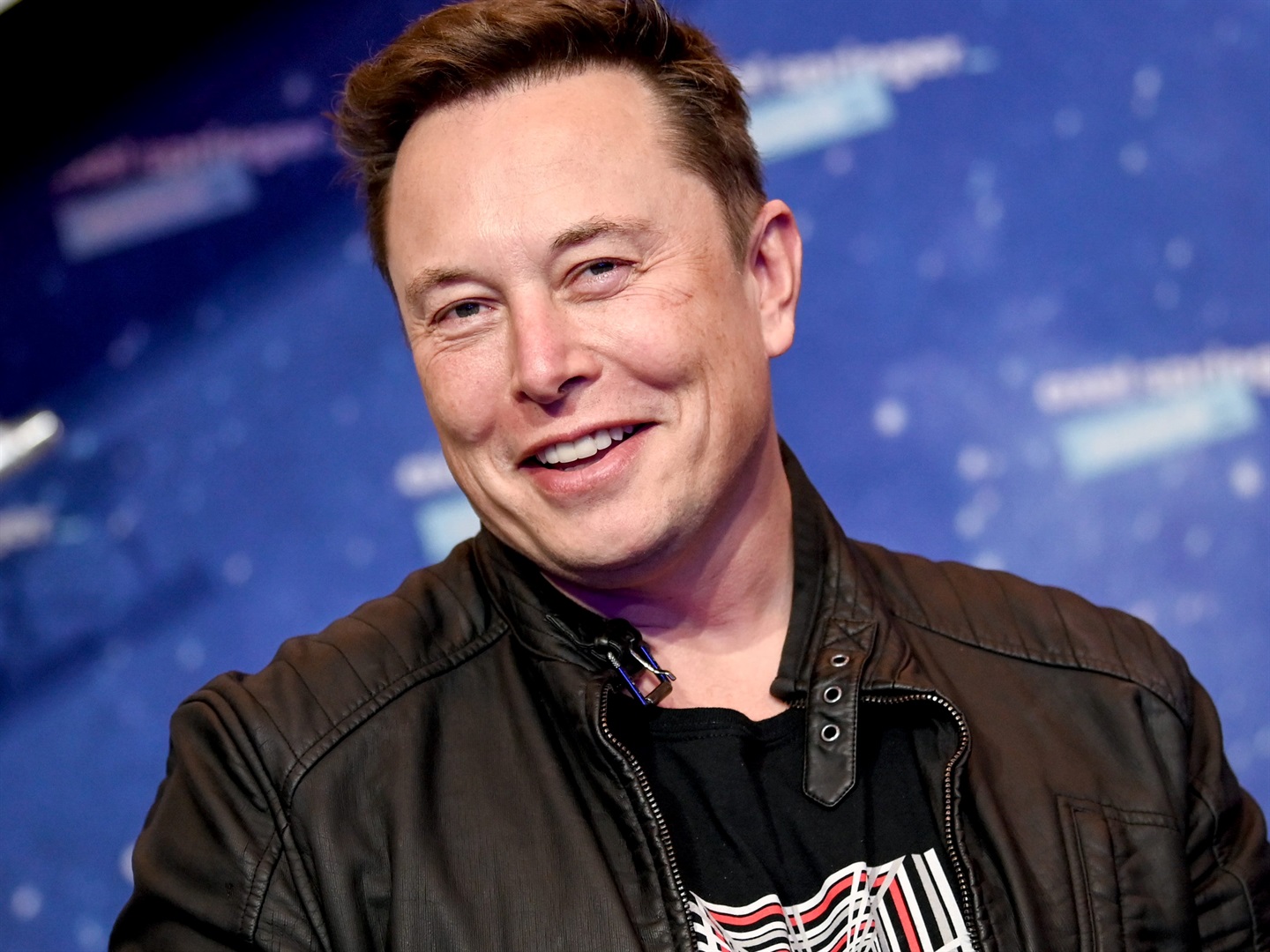
        Elon Musk is selling his last remaining house to fund a colony on Mars


        Elon Musk is selling his last remaining house to fund a colony on Mars

        Grace Dean , Business Insider US
         

        Tesla CEO Elon Musk says he's selling his final house.
        Pool/Getty Images
        • Elon Musk tweeted that he planned to sell his last remaining house, located in California's Bay Area.
        • Musk said that he has already sold all his other houses to fund a Mars colony.
        • Musk called the property a "special place" and said he wanted to sell it to a large family.

        Tech billionaire Elon Musk said Monday that he planned to sell his "last remaining house."

        Musk called the property, in California's Bay Area, a "special place" and said he wanted to sell it to a large family.

        Musk has repeatedly said he plans to sell most of his possessions, including all his houses, to fund a colony on Mars. He has said he wants to send 1 million people to Mars by 2050.

        It follows a ProPublica report last week that said Musk, the CEO of both Tesla and SpaceX, paid $455 million in taxes from 2014 to 2018. His wealth grew $14 billion over the same period.

        In response to the ProPublica report, Musk tweeted on Wednesday that he would continue to pay income taxes in California even after relocating to Texas, and said that he only owned one property - a house in California's Bay Area that he rented out for "events."

        He now plans to sell this house, according to a tweet he posted in the early hours of Monday morning, US time.

        Musk said last week that he had sold all his other houses, and added that he rented his main property in Boca Chica, Texas, from his aerospace company SpaceX.

        "It's going to take a lot of resources to build a city on Mars," Musk told Mathias Döpfner, the CEO of Insider's parent company, Axel Springer, in a December interview. "I want to be able to contribute as much as possible to the city on Mars. That means just a lot of capital."

        https://www.businessinsider.co.za/elon-musk-house-sale-selling-california-mars-colony-spacex-2021-6

        Monday, 5 July 2021

        Airlines to be charged more for pollution under EU’s Green Deal


        Airlines to be charged more for pollution under EU’s Green Deal

        A proposal to be unveiled next week by the European Commission includes a gradual phase-out of emission allowances for airlines, a source familiar with the matter told Bloomberg News.


        The European Commission wants to oblige fuel suppliers to blend an increasingly high level of sustainable aviation fuels into existing jet fuel sold at European Union airports, a source familiar with the proposal told Bloomberg News [File: Nathan Laine/Bloomberg]

        Airlines in the world’s biggest carbon market will eventually have to pay for all the pollution from their planes as the European Union strengthens its climate policies under the Green Deal.

        A proposal by the European Commission includes a gradual phase-out of emission allowances for carriers, and will be part of measures to be announced on July 14, according to a person with knowledge of the matter. The package will also introduce stricter demands on companies in the transport sector to use cleaner fuel.

        The EU aims to make its Green Deal and the ambitious environmental overhaul a new growth strategy as its economy recovers from the pandemic. The planned clean push also includes strengthening and expanding the bloc’s carbon market, creating a new emissions-trading program for buildings and road transport and setting new emissions standards for cars.

        The Commission wants to oblige fuel suppliers to blend an increasingly high level of sustainable aviation fuels into existing jet fuel sold at EU airports, said the person, who asked not to be identified because talks on the draft laws are private. In addition, the EU executive is planning to encourage the uptake of synthetic low-carbon fuels under the so-called Fit for 55 package.

        Cleaner fuels will also get preferential treatment under EU’s new energy taxation framework.

        The legislative push is aimed at aligning the European economy with a new goal to reduce greenhouse gases by at least 55% by 2030 from 1990 levels. The previous objective was a cut of 40%.

        That package will also include proposals to increase the share of renewable energy, boost energy efficiency and toughen national emissions-reduction goals. The Commission will aim to make the transition in a “fair, cost-efficient and competitive way,” it said in the draft document that will be sent to national governments and the European Parliament next week.

        A Climate Action Social Facility Fund will be launched to help the most vulnerable households offset the costs of the transition. To help allay concerns of poorer member states, the EU also wants to bolster carbon market’s Modernization Fund. which supports lower-income countries and to re-distribute one-tenth of carbon allowances for auctions

        https://www.aljazeera.com/economy/2021/7/5/airlines-to-be-charged-more-for-polluting-under-eus-green-deal

        Tuesday, 6 April 2021

        Windhoek is allowed to use its men-only Gerard Butler beer ad again – but mustn’t ignore women

         Windhoek is allowed to use its men-only Gerard Butler beer ad again – but mustn’t ignore women


        • An appeals committee has cleared a Windhoek ad that was previously banned for supposedly suggesting that "real men drink real beer".
        • Regulators had read non-existent sexism into the ad, said the appeals committee of the Advertising Regulatory Bureau in a new decision.
        • The ad features "macho looking" star Gerard Butler, whose manly appearance swayed the initial decision.
        • It is troubling that Windhoek's makers Heineken seems to think it can exclude women from beer advertising just because they don't drink a lot of beer, said the appeal committee. 

        Rugged movie star Gerard Butler may again promote Windhoek's "real beer" in a television ad featuring a small slice of lime, because it is not sexist after all, an appeals body says.

        The ad was banned in January after the Advertising Regulatory Bureau (ARB) said it implies that "real men drink real beer" – a forbidden gender stereotype.

        The message was "unspoken", the ARB said at the time, and pointed to the difference between the "macho looking" Butler and a "gentle looking" red-haired man, who is cured from adding citrus to his Windhoek.

        It actually watched the ad, said the ARB's advertising appeals committee in a decision published on Tuesday. It discovered that the ARB's decision had "involved reading-in messages into the commercial that are not borne out by the presentation of the commercial and the facts relayed or portrayed in the commercial."

        Among other things, the ARB had cited "toxic masculinity" in the ad.

        The appeals committee, on the other hand, said it had seen "that the clear message conveyed is that Windhoek Lager is a real beer that does not require the addition of lime to enjoy."

        With no forbidden gender stereotypes discerned, the appeals committee set aside the original ban, which leaves the ad cleared to run on television again.

        But Windhoek's makers Heineken, and beer companies in general, got a stern warning in the appeal decision, because of the all-male cast in the ad.

        In fighting off the ban, Heineken presented research showing a large majority of beer drinkers in South Africa are men.

        Even if true, the committee said in its formal ruling, "the minority female drinkers of beer must not be treated as a silent minority in the design of marketing material by producers such as Heineken.

        "Their voice and experiences must be represented in commercials intended to publicise producers’ products.

        "This is in line with a non-racial, non-sexist and non-homophobic society that the South African Constitution guarantees and directs all of us to work towards."

        It "trust" that Heineken, and other beer makers, "will always heed this constitutional imperative in all their future research and marketing endeavours," it said.

        https://www.businessinsider.co.za/windhoeks-real-men-advertisement-cleared-on-appeal-but-heineken-urged-not-to-ignore-women-who-drink-beer-2021-4

        Monday, 15 March 2021

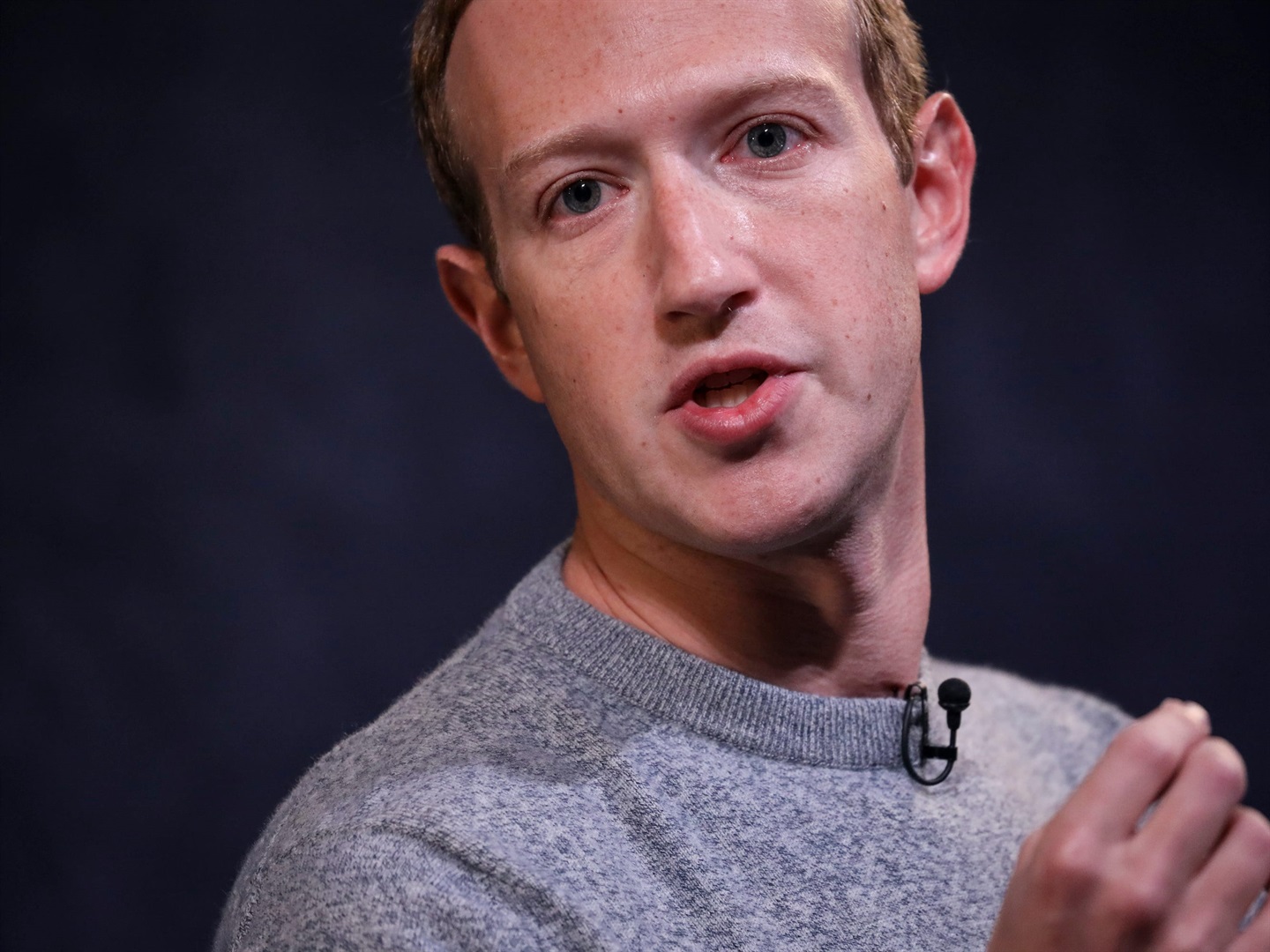
        Zuckerberg, Bezos, Musk, and other US moguls made more than $360 billion during the pandemic


        Zuckerberg, Bezos, Musk, and other US moguls made more than $360 billion during the pandemic

        Zahra Tayeb , Business Insider US
         Mar 15, 2021, 08:53 AM
        Facebook CEO Mark Zuckerberg.
        Drew Angerer/Getty Images
        • The wealth of Mark Zuckerberg, Elon Musk, and other American mega-rich rose beyond $360 billion during the pandemic.
        • Oracle and Dell's leaders are among the other tech billionaires to have profited last year.
        • Their wealth has attracted scrutiny amid systemic inequality in the US.

        The pandemic has been a crisis for many, but not for America's wealthiest billionaires.

        The wealth of nine of that country's top tech titans escalated beyond $360 billion last year, The Washington Post reported.

        Amazon founder Jeff Bezos' title as the world's richest person was challenged as Tesla CEO Elon Musk more than quintupled his wealth. Facebook's Mark Zuckerberg exceeded the $100 billion mark. Google co-founders, Larry Page and Sergey Brin acquired a combined fortune of $65 billion.

        Apple's market capitalisation topped the $2 trillion mark last year, making its CEO, Tim Cook, a billionaire, per The Washington Post.

        Amazon has substantially profited from people shopping online during the pandemic. Consumer demand at the beginning of the crisis was so high that Amazon and other retailers faced supply shortages of items such as toilet paper and disinfectant.

        As companies shifted to remote-work models, employees relied more heavily on cloud computing services, where customers rent data storage from companies including Google, Facebook, and Microsoft.

        Google and Facebook also benefited from a rebound in online marketing, as well as the need for sustainable communication tools, which included Google Classroom and Facebook-owned WhatsApp, per The Washington Post.

        Affluent consumers, who were less likely to become unemployed during the pandemic, benefitted from an increase in disposable income by staying at home, helping Tesla's shares soar 547% last year.

        These tech titans are not the only billionaires whose wealth ballooned. According to Yahoo Finance, Oracle's executive chairman and CTO, Larry Ellison, saw his net worth rise from $59 billion to $90.3 billion in the last year. The net worth of Michael Dell, CEO of Dell Technologies, rose from $22.9 billion to$44.4 billion in the same time period.

        The significant rise in their gains sharply contrasts with the economic destruction faced by millions of Americans, as unemployment and evictions soared. This highlighted deep-rooted societal issues of inequality and the ever-expanding wealth gap.

        A recent report also showed American billionaires could fund two-thirds of the country's massive Covid-19 relief package just using profits generated during the pandemic.

        https://www.businessinsider.co.za/tech-billionaires-zuckerberg-bezos-musk-360-billion-covid-19-pandemic-2021-3